Gochujang is the single most important ingredient in Korean cooking, a fermented red chile paste that is simultaneously spicy, sweet, savory, and deeply umami in a way that no other single ingredient in any cuisine quite achieves.
If you have eaten Korean food and wondered what that deep, complex, slightly sweet heat was that ran through everything, that was gochujang. If you have looked at a Korean recipe and paused at an unfamiliar red paste, that was gochujang. If you have a small red tub in your fridge that someone told you to buy and you are not entirely sure what to do with it, this guide is for you.
This is part of my Korean recipes collection and this article is the one I wish had existed when I first started learning Korean cooking. Everything about gochujang, what it is, what it tastes like, how fermentation creates its flavor, how to use it, where to buy it, and what to do when you cannot find it, answered in one place. Let’s go.
What Is Gochujang: The Real Answer
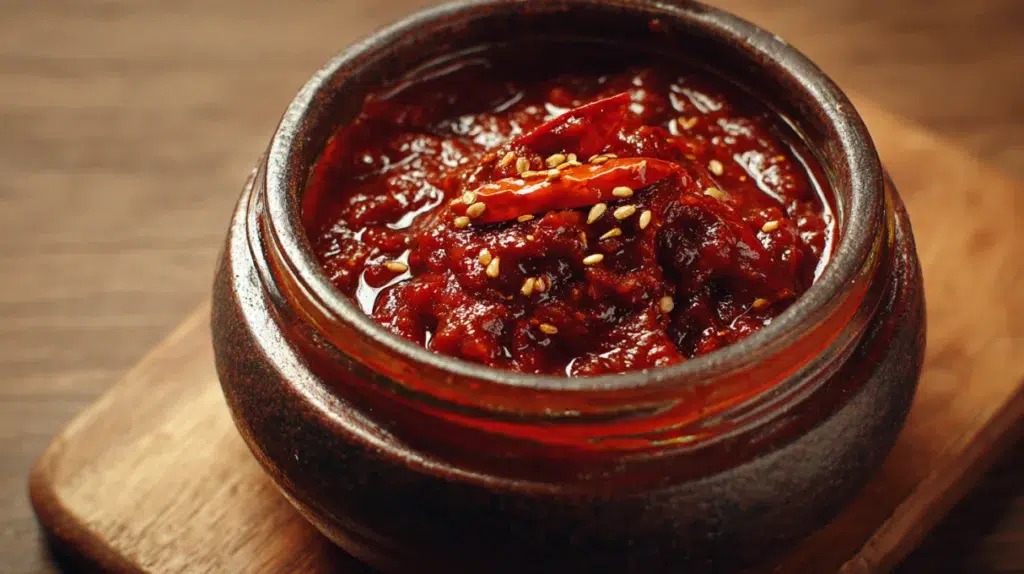
Gochujang (고추장) is a thick, sticky fermented paste made from four primary ingredients: gochugaru (Korean red pepper flakes), fermented soybean powder (meju garu), glutinous rice (chapssal), and salt. These ingredients are combined and then fermented, traditionally in large earthenware pots called onggi for months, sometimes years, developing a flavor complexity that no quick-cooked sauce can replicate.
Gochujang has been a documented part of Korean cuisine since at least the 18th century, appearing in Korean cookbooks and culinary records from the Joseon Dynasty period. Before that, Korean chile pastes existed without the chile component, gochugaru only arrived in Korea via Portuguese traders through Japan in the late 16th century, and was quickly incorporated into the existing fermented paste tradition to create what we now know as gochujang.
This history matters because it explains why gochujang tastes the way it does. It is not a simple hot sauce. It is not sriracha. It is not sambal. It is a fermented product with centuries of culinary tradition behind it, and the fermentation is what gives it the depth and complexity that makes it irreplaceable.
What Does Gochujang Taste Like
This is the question I get most often and the hardest one to answer accurately because gochujang is genuinely unlike anything else.
The closest I can come is this: imagine all five Korean flavor principles, sweet, spicy, salty, savory, and slightly sour, present simultaneously in one thick paste, with the savory depth amplified by months of fermentation into something that sits at the back of your palate long after you’ve swallowed. It is warm rather than fiery, the heat builds slowly and lingers pleasantly rather than hitting you immediately and burning. The sweetness from the glutinous rice rounds the heat. The fermented soybean powder adds umami depth. The salt anchors everything.
It is… I don’t know. It has this quality that I find genuinely hard to describe. Something that just works. Something that makes everything it touches taste more complete.
The heat level varies by brand, most commercial gochujang is medium spicy, equivalent to a mild-medium hot sauce. Some brands make mild and hot versions. If you are heat-sensitive, start with a mild variety and adjust from there.
Why Gochujang Tastes the Way It Does: The Fermentation Science
The flavor complexity of gochujang comes almost entirely from fermentation, the same biological process that creates kimchi, doenjang, and the entire family of Korean fermented condiments.
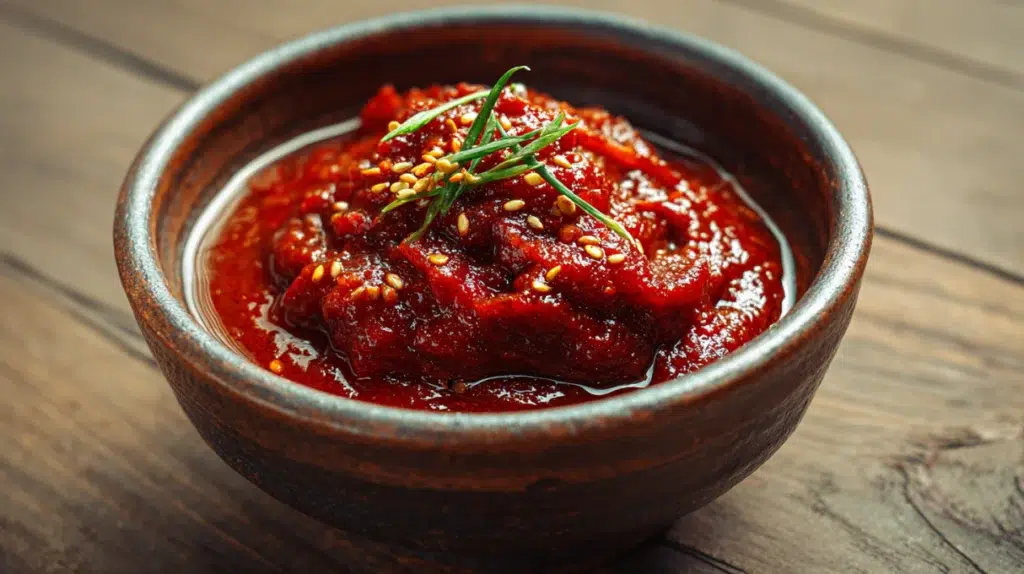
During fermentation, naturally occurring bacteria primarily lactobacillus species, consume the sugars in the rice and produce lactic acid, carbon dioxide, and a cascade of flavor compounds that could not be produced by cooking alone. Fermentation produces lactic acid bacteria with documented gut health benefits, the same bacteria found in yogurt and other fermented foods along with enzymes that break down proteins into amino acids, creating the deep umami quality that makes gochujang so distinctive.
This is why you cannot substitute gochujang with a quick mixture of hot sauce and soy sauce. The fermentation process has created flavor compounds over months that no shortcut can replicate in minutes. You can approximate gochujang. You cannot recreate it without the fermentation.
Traditional gochujang was made at home, each family had their own recipe and their own aging pots and the quality and flavor varied significantly from household to household. Commercial production has standardized the flavor considerably, but good quality commercial gochujang is still a genuinely fermented product with real depth.
How to Use Gochujang? Every Application
Gochujang is one of the most versatile condiments in any cuisine. Here is every practical use:
As a marinade base: Gochujang is the foundation of the yangnyeom sauce used on Korean fried chicken, mixed with honey, soy sauce, garlic, and sesame oil into a sticky glaze. It is also the primary marinade ingredient for spicy pork bulgogi (jeyuk bokkeum), one of the most popular Korean home cooking dishes.
In stews and soups: A tablespoon of gochujang added to a Korean stew (jjigae) adds heat, depth, and color simultaneously. It is used in sundubu jjigae (soft tofu stew), kimchi jjigae, and tteokbokki (spicy rice cake stew).
As a sauce component: Mixed with doenjang, sesame oil, garlic, and green onion to make ssamjang, the essential dipping sauce for Korean BBQ. Mixed with mayonnaise for a quick spicy aioli. Mixed with butter and garlic for a Korean-style compound butter.
In bibimbap: The sauce that goes over bibimbap, the mixed rice bowl, is almost always gochujang-based, thinned with sesame oil and a little water, sweetened with sugar. It ties the whole bowl together.
As a finishing condiment: A small dab of gochujang on the side of a plate, used to dip and season individual bites, the Korean equivalent of hot sauce on the table.
Non-Korean applications: This is where things get interesting. Gochujang works beautifully outside Korean cooking once you understand its flavor profile. A spoonful in a tomato pasta sauce adds depth without identifiable Korean flavor. Stirred into hummus, it adds warmth and complexity. Mixed with butter and slathered on corn on the cob it becomes something spectacular. Used as a glaze on roasted vegetables it caramelizes beautifully. It is one of the most versatile pantry upgrades available.
How Much Gochujang to Use: Quantities and Ratios
One of the most common mistakes with gochujang is using too much too soon. It is concentrated, a little goes a very long way, especially when you are learning its flavor.
General rule: Start with 1 tablespoon in any recipe that serves 4 people. Taste. Add more if needed. It is much easier to add gochujang than to fix a dish that is overwhelmingly spicy.
For marinades: 2-3 tablespoons per 500g of protein, balanced with honey or sugar (sweetness cuts the heat), soy sauce (salt and umami), and sesame oil (richness).
For stews: 1-2 tablespoons per litre of broth. Add at the beginning of cooking so it mellows and integrates.
For sauces: The yangnyeom ratio that works reliably: 3 tablespoons gochujang, 2 tablespoons honey, 2 tablespoons soy sauce, 1 tablespoon sesame oil, 1 tablespoon rice vinegar. Adjust sweetness and heat to taste.
Where to Buy Gochujang in the US
Most accessible options:
- Whole Foods: Bibigo brand (widely available, reliable quality)
- Trader Joe’s: their own brand gochujang, good value
- Target: increasingly stocking Bibigo
- Amazon: every major brand available, delivered
Best quality options:
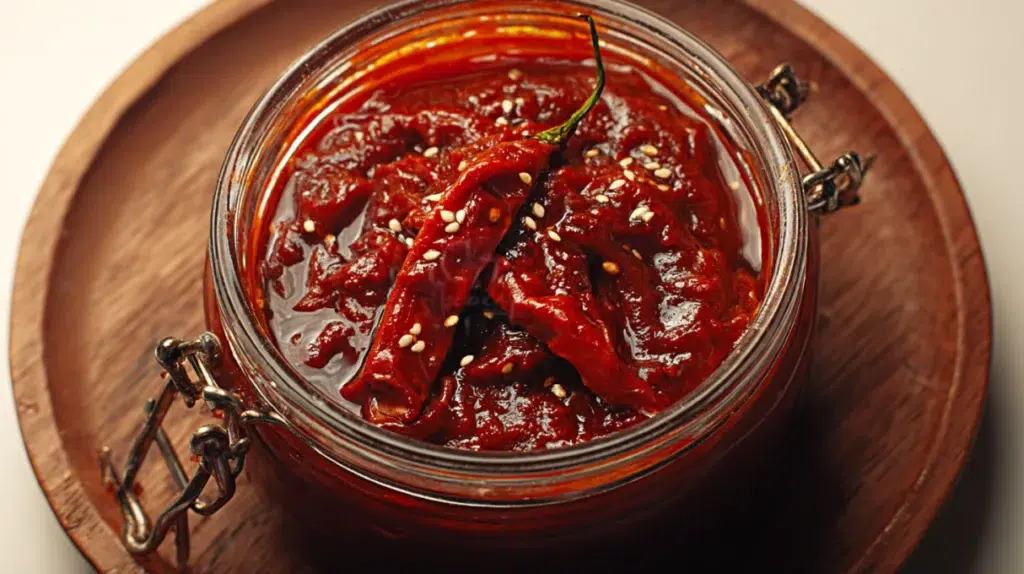
- H Mart or Korean grocery stores, wider brand selection, often better quality and better value than mainstream grocery stores. Chung Jung One and Sempio are excellent reliable brands.
- Asian supermarkets, similar selection to H Mart
What to look for on the label: Good gochujang lists fermented ingredients, gochugaru, fermented soybean powder, glutinous rice as primary ingredients. Avoid varieties where sugar or corn syrup is the first listed ingredient, these are sweeter, less complex, and less fermented.
The Best Gochujang Substitutes: Honest Assessment
The honest truth first: there is no perfect substitute for gochujang. The fermentation cannot be replicated quickly. What you can do is approximate the flavor profile well enough for most recipes.
Best substitute, DIY approximation: Mix 2 tablespoons sriracha + 1 tablespoon white miso + 1 teaspoon soy sauce + 1 teaspoon honey. This gets you closer than any single ingredient substitute the miso provides fermented depth, the sriracha provides chile heat, the honey provides sweetness. Use in equal quantities to gochujang called for in a recipe. Works well in marinades and sauces.
Second best: Sambal oelek (Southeast Asian chile paste) + a small amount of white miso. Less sweet than gochujang, slightly different flavor profile, but closer to the fermented depth than sriracha alone.
What does not work: Regular hot sauce alone, no fermented depth, no sweetness, wrong flavor profile entirely. Chili powder, completely different texture and flavor. Sriracha alone, too sweet and acidic, no fermented quality.
When to bother with a substitute vs when to find the real thing: For weeknight cooking where gochujang is one of several ingredients, substitute fine. For the yangnyeom sauce on Korean fried chicken or for any recipe where gochujang is the primary flavor, find the real thing. Bibigo at Whole Foods is genuinely good and available nationwide. It is worth the trip.
Storing Gochujang: How Long It Lasts
Gochujang keeps remarkably well due to its salt content and fermented nature.
Unopened: Up to 2 years at room temperature in a cool dark place.
After opening: Refrigerate. Keeps for 6-12 months in the fridge. The surface may darken slightly over time, this is normal and does not affect flavor or safety.
Signs it has gone bad: Off smell (rotten rather than fermented), visible mold (unlikely but possible if moisture gets into the container). If it smells sour and fermented rather than rotten, it is fine.
Press plastic wrap directly onto the surface of the gochujang before replacing the lid, this prevents air exposure and extends shelf life significantly.
Frequently Asked Questions
Is gochujang very spicy?
Most commercial gochujang is medium spicy, noticeable heat that builds gradually, not fiery. Milder and hotter versions exist. If you are heat-sensitive, look for mild (순한 pronounced “sunhan”) on the label.
Is gochujang vegan?
Traditional gochujang is vegan, soybeans, rice, chiles, salt. Some commercial versions add small amounts of fish sauce or other non-vegan ingredients. Check the label if this matters to you. Most major brands are vegan.
Can I use gochujang as a hot sauce straight from the tub?
Yes, it works as a direct condiment, though it is quite thick. Thin it with a little sesame oil or water to make it more spreadable and sauce-like.
Does gochujang go bad?
Rarely, because of its salt content. Refrigerate after opening and use within a year. See the storage section above for details.
Can I freeze gochujang?
Yes, portion into ice cube trays, freeze, transfer to a zip-lock bag. Use directly from frozen in cooked dishes. Convenient if you cook Korean food infrequently.
Start Cooking With Gochujang
Now that you understand what gochujang is and what it can do, use it. The best way to learn any ingredient is to cook with it repeatedly until its flavor becomes intuitive.
Start with the Korean fried chicken yangnyeom sauce, it is the most dramatic showcase of gochujang’s flavor and you will understand immediately why this ingredient is so loved. Then use it in Korean BBQ marinades. Then add it to a stew. By the fourth or fifth time you’ve cooked with it, you’ll start reaching for it instinctively in non-Korean contexts too.
That is when you’ll know you’ve really understood it.
Head back to the complete Korean recipes collection whenever you’re ready for more.