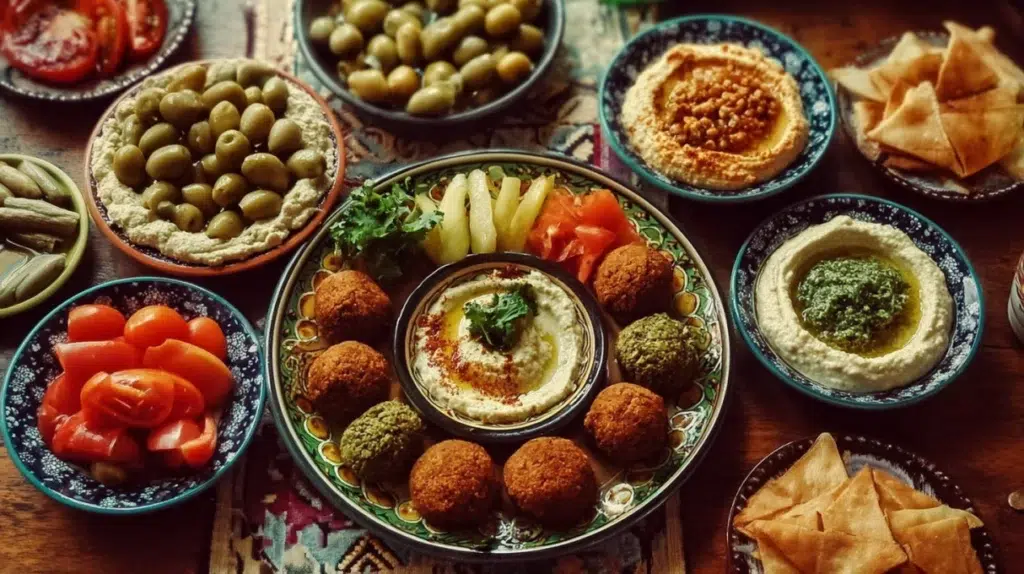
Lebanese mezze recipes are the most joyful, most generous, most visually spectacular way to feed people that I have ever encountered and once you have put a proper mezze spread on a table, every other way of hosting a dinner party will feel slightly inadequate by comparison.
Mezze is not a starter course. I want to be clear about this upfront because the word is often mistranslated as “appetizers” in Western food writing, which misrepresents what it actually is. Mezze culture has been part of Levantine dining tradition for centuries, a way of eating built on abundance and sharing, where many small dishes placed at the center of the table constitute a complete and deeply satisfying meal. You eat from the communal dishes. You combine flavors from different bowls in each bite. You take your time. The meal unfolds over hours rather than minutes.
This is part of my Lebanese recipes collection, a cuisine I learned in kitchens across Lebanon and have been cooking seriously in Nashville for three years. These twelve dishes are the ones I make every time I want to give people a Lebanese feast, built around the silky homemade hummus that anchors every Lebanese table and expanding outward into a landscape of flavors and textures that covers every possible craving simultaneously.
Let’s build the spread.
What You Need to Know Before You Start
A mezze spread does not need to be made all at once or all from scratch. Professional Lebanese hosts and Lebanese home cooks who have been doing this their whole lives approach the mezze table strategically.
Some dishes are made days ahead. Pickles, labneh, hummus, baba ghanoush, all improve with time and are better made 1-2 days before. Some dishes are made hours ahead. Tabbouleh, fattoush, muhammara, these sit happily at room temperature and actually benefit from a short rest. Some dishes are made at the last minute. Kibbeh, grilled halloumi, fried cauliflower, these need to be hot and are worth the last-minute effort.
Build your mezze spread over two days. Make the make-ahead dishes the day before. Make the room-temperature dishes in the afternoon. Fry and grill at the last minute. The result looks like you worked all day and actually takes about 3 hours of active cooking spread over two days.
Serve everything at room temperature or slightly warm, never cold from the refrigerator. Lebanese food loses its character when it is cold.
The 12 Essential Lebanese Mezze Recipes
1. Hummus: The Non-Negotiable Foundation
Every Lebanese mezze table starts with hummus. Not as one dish among many, as the anchor around which everything else is arranged. Wide plate. Generous pool of olive oil in the center. Paprika. Whole chickpeas. Fresh parsley.
The difference between good hummus and extraordinary hummus is dried chickpeas cooked until very soft and excellent tahini blended for longer than you think necessary. The full method including the ice water technique that makes Lebanese hummus silkier than anything from a store is in the complete authentic hummus recipe that will change how you make this dish forever.
Make ahead: up to 3 days
2. Baba Ghanoush: The Smoky Companion
Baba ghanoush is roasted eggplant mashed with tahini, lemon juice, garlic, and olive oil and the key word in that description is roasted. Not baked. Roasted directly over a gas flame or under a broiler until the skin is completely charred and the interior has collapsed into a smoky, silky, deeply flavored pulp.
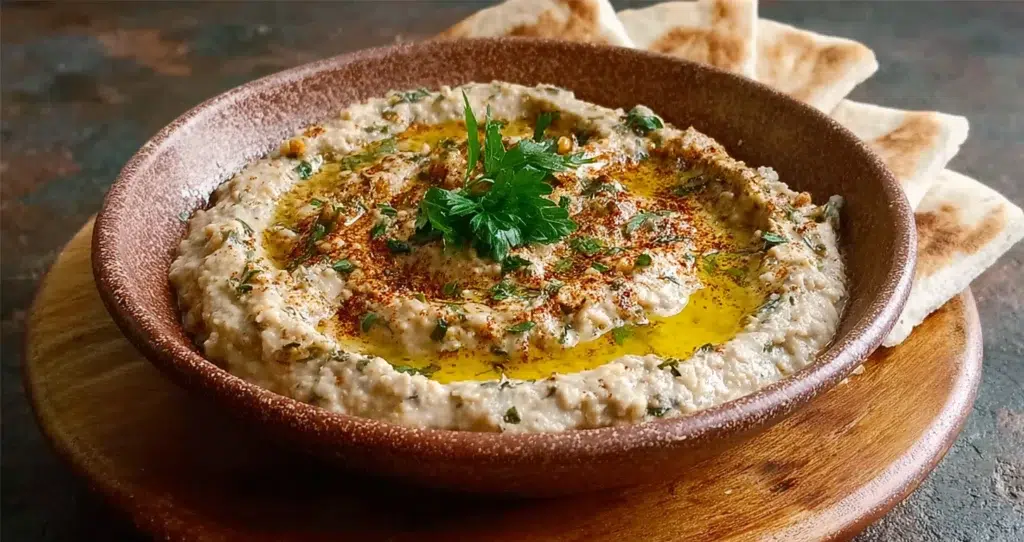
Eggplant was introduced to the Mediterranean from South Asia over a thousand years ago and in Lebanese cooking it has become one of the most beloved and versatile vegetables, appearing in mezze, in stews, and as a side dish throughout the cuisine. Baba ghanoush is its most celebrated form.
The char is not optional. It is the entire point. Without the char you have eggplant dip. With the char you have baba ghanoush, a completely different thing. Hold each eggplant directly over a gas flame on your stove, turning with tongs, until the skin is completely black and the eggplant has collapsed. The interior will be impossibly silky. This is what you want.
Key ingredients: large eggplants, tahini, lemon, garlic, olive oil, fresh parsley Make ahead: up to 2 days
3. Tabbouleh: The Herb Salad
Real Lebanese tabbouleh is not a bulgur salad with herbs. It is a herb salad with bulgur. The ratio is overwhelmingly parsley-forward, the bulgur is a small component, almost a textural element rather than the base.
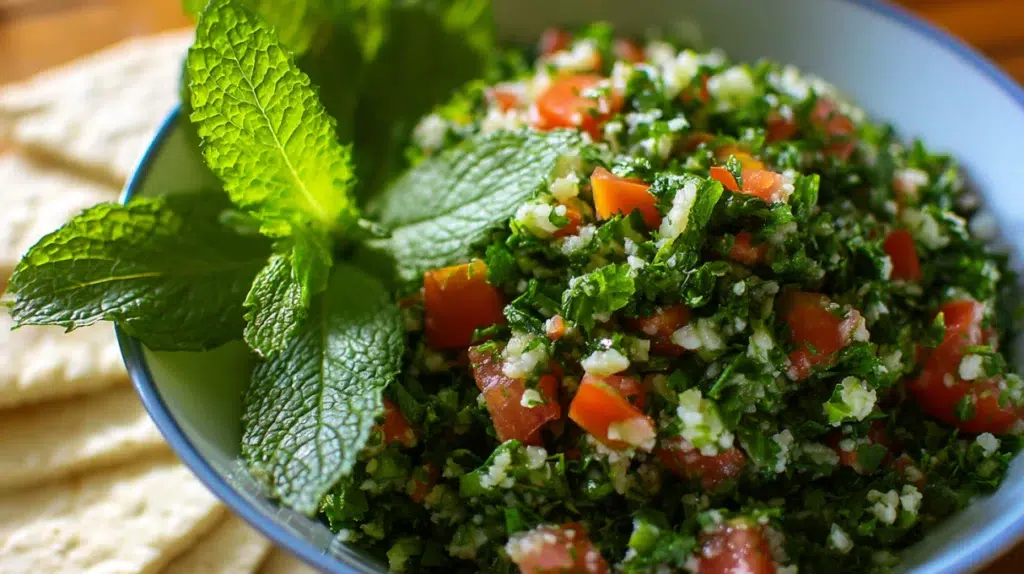
This surprises almost every American who makes it for the first time. A proper Lebanese tabbouleh uses an enormous quantity of very finely chopped flat-leaf parsley, and I mean enormous. Two large bunches for four people. Plus fresh mint, green onion, fine bulgur soaked in lemon juice rather than water, diced tomato, and a dressing of excellent olive oil and lemon.
The key technique is the chopping, the parsley must be chopped very fine, almost to a powder, so that it integrates into the salad rather than sitting in large pieces. Do not use a food processor. Use a sharp knife and patience. The texture of hand-chopped tabbouleh is completely different from machine-chopped.
Key ingredients: flat-leaf parsley, fresh mint, fine bulgur, tomato, green onion, olive oil, lemon Make ahead: 1-2 hours maximum, tabbouleh wilts if left too long
4. Fattoush: The Crunchy Salad
Fattoush is the other essential Lebanese salad, a chopped vegetable salad of tomatoes, cucumber, radishes, mint, and lettuce, dressed with sumac and lemon and olive oil, topped with crispy pieces of toasted or fried flatbread that add crunch and body.
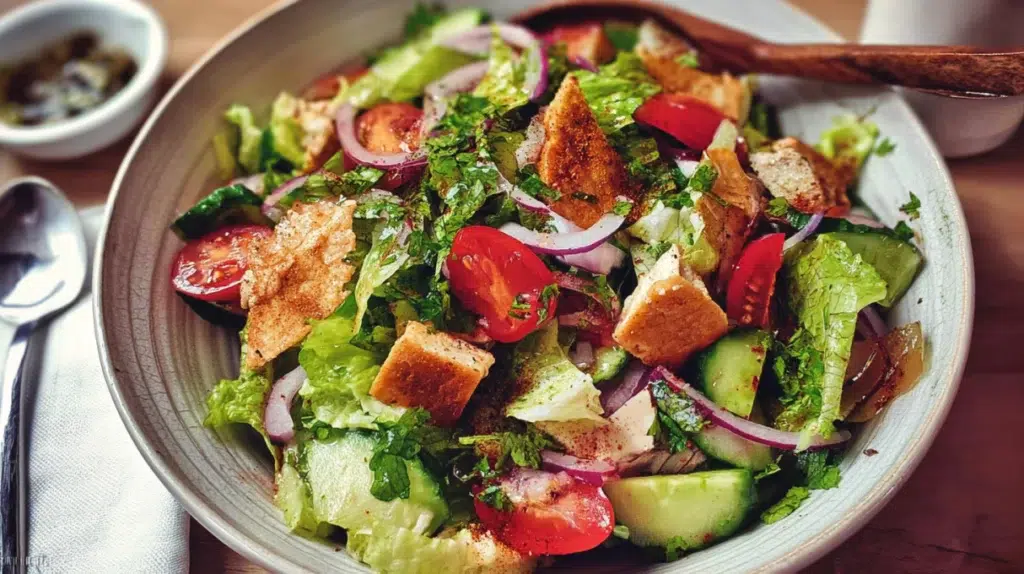
Sumac is what makes fattoush taste like fattoush. That tart, slightly fruity, deeply red spice sprinkled generously over the salad right before serving, it is irreplaceable and the dish is noticeably less interesting without it. Find it at Middle Eastern grocery stores, Whole Foods, or online. See the Lebanese spices guide for everything about sumac and how to use it.
The bread, khubz toasted until crispy or fried in olive oil until golden goes in at the last minute so it stays crunchy. Never dress fattoush more than 10 minutes before serving.
Key ingredients: tomatoes, cucumber, radishes, romaine lettuce, fresh mint, sumac, toasted Lebanese flatbread, lemon, olive oil Make ahead: prep everything separately, assemble just before serving
5. Labneh: Strained Yogurt Cheese
Labneh is yogurt that has been strained through cheesecloth for 24-48 hours until it reaches the consistency of soft cream cheese, tangy, thick, spreadable, with a clean dairy flavor that pairs with almost everything on the mezze table.
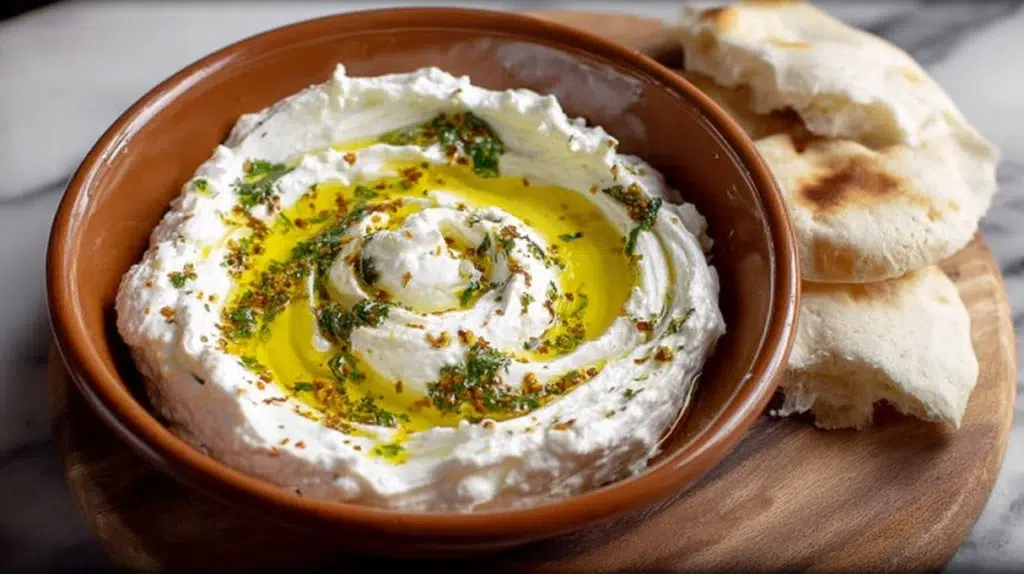
It requires no cooking, just time and a good whole-milk yogurt. Strain overnight in the fridge, season with salt, roll into balls if you like, drizzle with olive oil and za’atar or dried mint. The simplicity is part of the beauty.
Labneh is eaten at every Lebanese meal, at breakfast with olive oil and za’atar, as part of mezze, as a component in other dishes. Once you have it in your fridge you will find constant uses for it.
Key ingredients: good quality whole-milk yogurt, salt, olive oil, za’atar or dried mint Make ahead: 24-48 hours minimum for straining
6. Muhammara: Red Pepper and Walnut Dip
Muhammara is a roasted red pepper and walnut dip from the Levant, deep red, slightly smoky, rich from the walnuts, with a sweet-sour brightness from pomegranate molasses that makes it completely addictive. It is less well-known internationally than hummus or baba ghanoush and deserves significantly more attention.
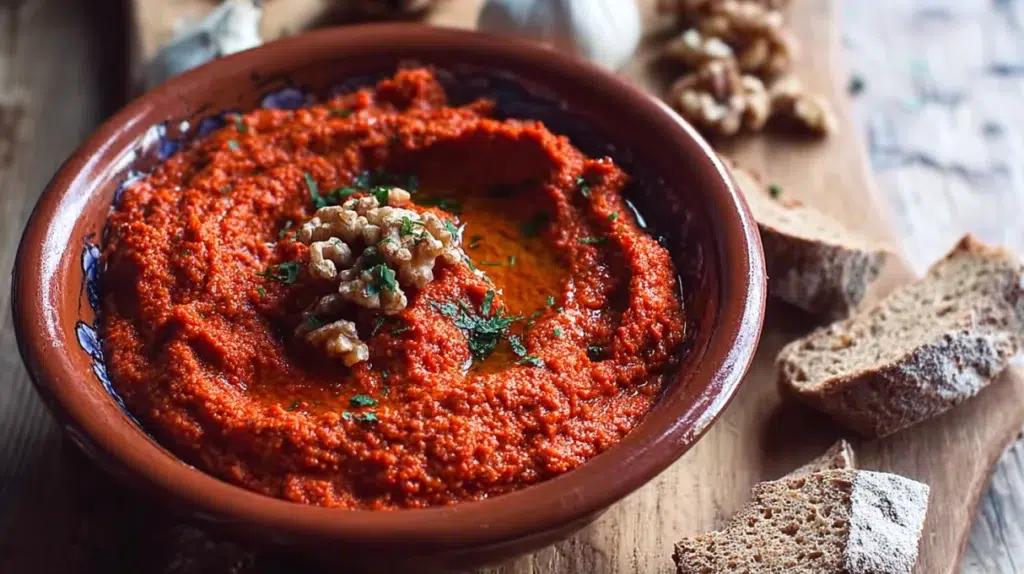
Roast red peppers until completely charred, peel, blend with toasted walnuts, pomegranate molasses, olive oil, cumin, and a small amount of dried chiles or chili flakes for warmth. The result is thick, complex, deeply flavored, outstanding with warm bread.
Pomegranate molasses is available at Middle Eastern grocery stores and Whole Foods. It keeps indefinitely in the fridge and is used throughout Lebanese cooking in salad dressings, marinades, and as a finishing drizzle on many dishes.
Key ingredients: roasted red peppers, walnuts, pomegranate molasses, olive oil, cumin, garlic Make ahead: up to 3 days
7. Kibbeh: The Labour of Love
Kibbeh is the dish that defines Lebanese home cooking, ground lamb mixed with fine bulgur and seven spice, shaped by hand into oval torpedoes around a filling of spiced meat and toasted pine nuts, baked or fried until golden.
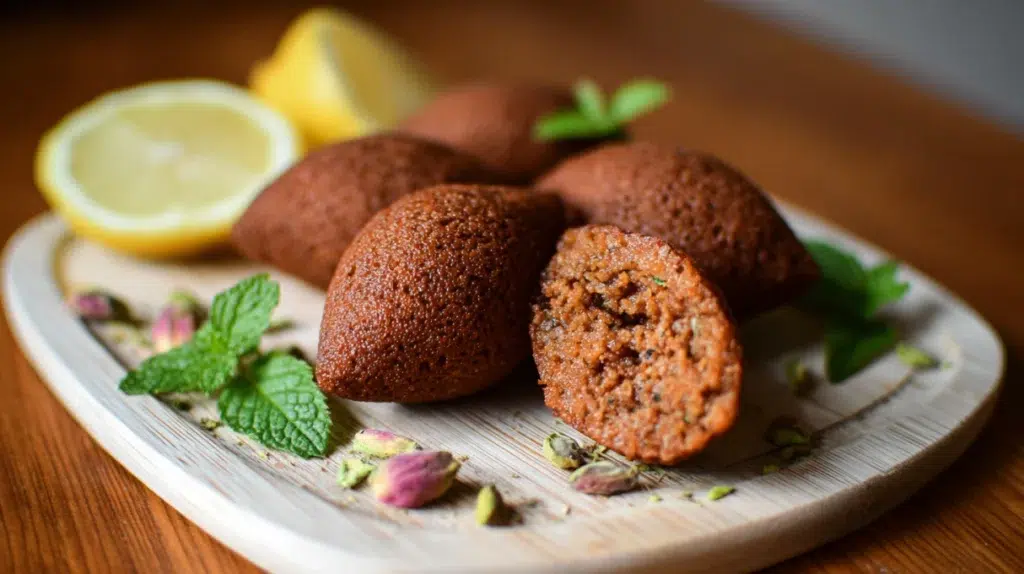
It is also the most technically demanding dish on this list and the one that most rewards patience and practice. The shaping requires a specific technique, a thin shell of meat around the filling, the walls even, the ends sealed tight. My first attempts in the Bekaa Valley were wrong in ways an experienced cook could see immediately. By the thirtieth attempt I was making something I was proud of.
Raw kibbeh, kibbeh nayyeh, is also served as mezze, essentially Lebanese steak tartare made from very fresh lamb, bulgur, onion, and spices. It requires the freshest possible lamb from a trusted source. Extraordinary when done right.
Key ingredients: lean ground lamb, fine bulgur, onion, seven spice (see the Lebanese seven spice blend guide), pine nuts, allspice, cinnamon Time: 1.5 hours | Difficulty: Medium-high, technique takes practice
8. Warak Enab: Stuffed Vine Leaves
Warak enab, stuffed grape leaves are one of the most labor-intensive and most beloved dishes in the Lebanese mezze tradition. Rice and herb stuffed into preserved grape leaves, rolled tightly into small cylinders, layered in a pot and slow-cooked in lemon juice and olive oil until tender.
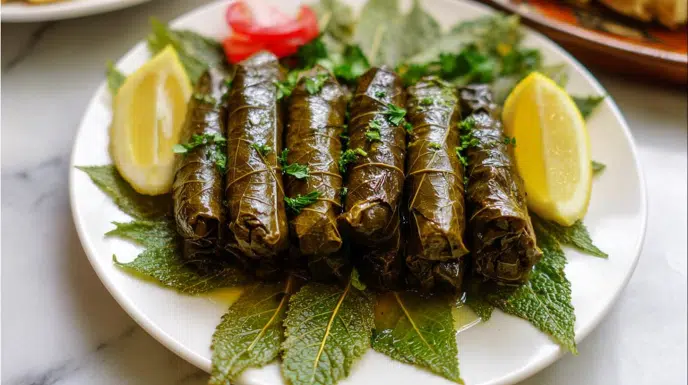
The rolling is meditative once you find the rhythm of it, a small spoonful of filling, a fold, a roll, a tuck at the ends. Make them in large batches with multiple people if you can, this is the kind of dish that benefits from a kitchen full of people working together, talking, rolling, tasting.
Preserved grape leaves are available in jars at Middle Eastern grocery stores, Whole Foods, and online. The vegetarian rice filling is traditional, lamb or beef can be added for a more substantial version.
Key ingredients: jarred grape leaves, short-grain rice, fresh parsley and mint, lemon, olive oil, seven spice Time: 2 hours | Difficulty: Medium, the rolling takes patience
9. Fried Cauliflower with Tahini
This is the dish that converts cauliflower skeptics. Deep-fried cauliflower florets, golden and slightly crispy, served with a bright tahini sauce of tahini, lemon, garlic, and water thinned to a drizzling consistency.
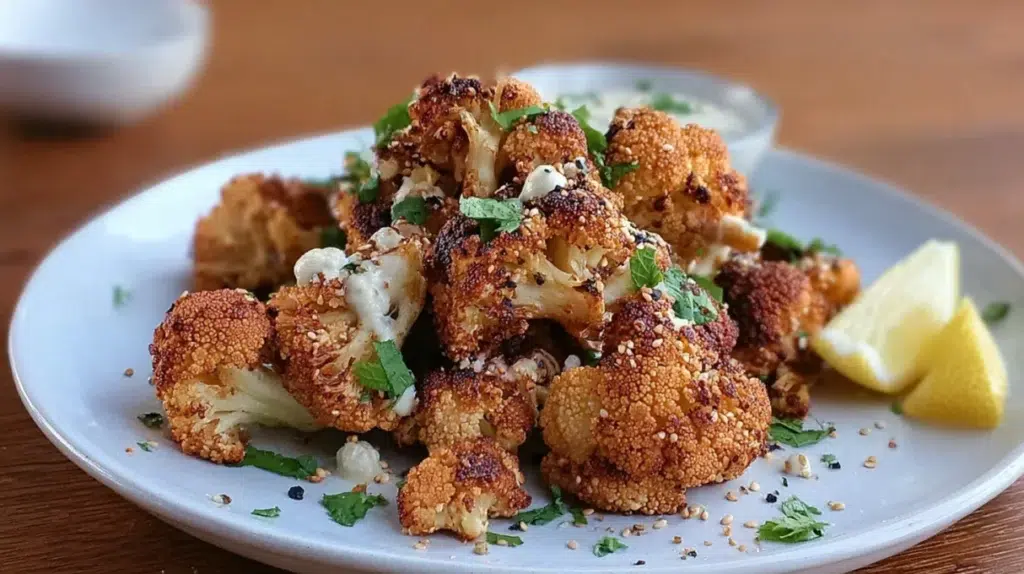
The frying transforms cauliflower into something nutty, slightly sweet, with crispy edges that hold the tahini sauce in every crevice. It takes 20 minutes. It disappears from the table faster than almost anything else in the spread.
You can roast rather than fry, toss with olive oil and roast at 220°C / 430°F until deeply golden. Slightly less indulgent, still excellent.
Key ingredients: cauliflower, neutral oil for frying, tahini, lemon, garlic Time: 20 minutes | Make at the last minute
10. Grilled Halloumi
Halloumi, the high-melting-point cheese from Cyprus that is central to the Lebanese and broader Levantine table grilled or pan-fried until golden on both sides and served immediately while still soft inside and crispy outside.
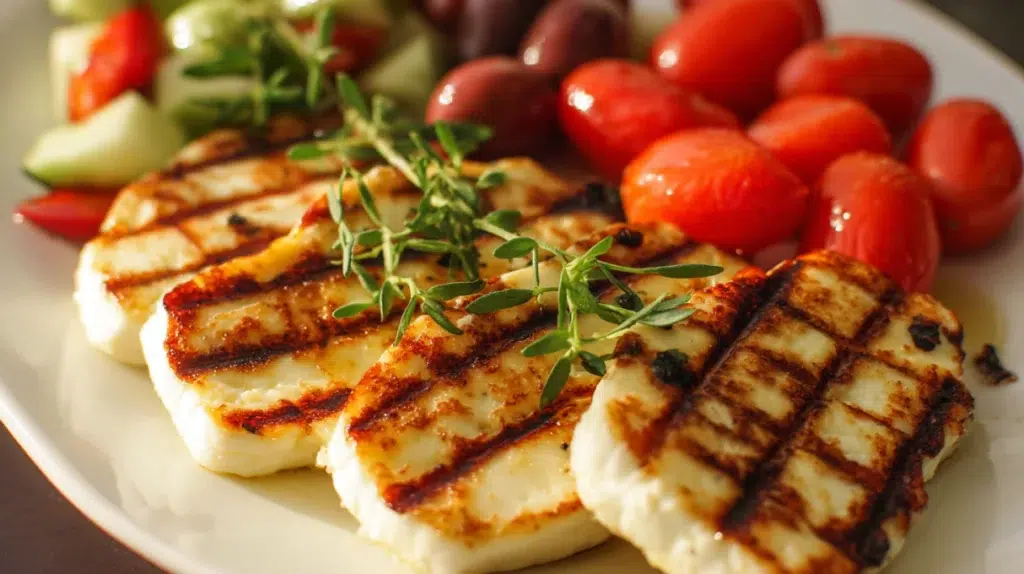
It requires no marinade, no seasoning, no preparation beyond slicing and placing on a hot grill pan. The natural saltiness of halloumi means it seasons itself. A squeeze of lemon over the top immediately before serving and a few leaves of fresh mint, that is all.
The window for perfect halloumi is about 3 minutes, it goes from cold to perfect to rubbery if you leave it too long. Make it last of all the mezze dishes and serve immediately.
Key ingredients: halloumi cheese, fresh lemon, fresh mint Time: 8 minutes | Make at the very last minute
11. Pickled Turnips: Makdous el-Lift
The bright pink, vinegary pickled turnips that appear on virtually every Lebanese table, their color coming from a slice of beet added to the pickling jar are one of the most distinctive and most essential elements of a Lebanese mezze spread.
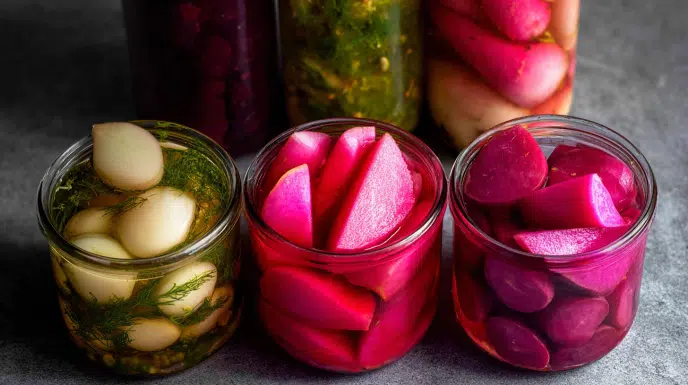
They are made by slicing white turnips, adding a small piece of raw beet for color, and submerging in a brine of white vinegar, water, and salt. After 3-5 days at room temperature they are ready, bright pink, pleasantly tart, crunchy, and perfect alongside the richness of the hummus and baba ghanoush.
Make these 3-5 days ahead. They keep for weeks in the fridge.
Key ingredients: white turnips, beet, white vinegar, water, salt Make ahead: 3-5 days minimum
12. Fresh Bread: The Table Anchor
Every mezze spread needs bread. Lebanese flatbread, khubz is the vessel through which everything else is eaten. Warm, pliable, slightly charred from a hot griddle, torn and used to scoop hummus, wrap meat, mop up olive oil.
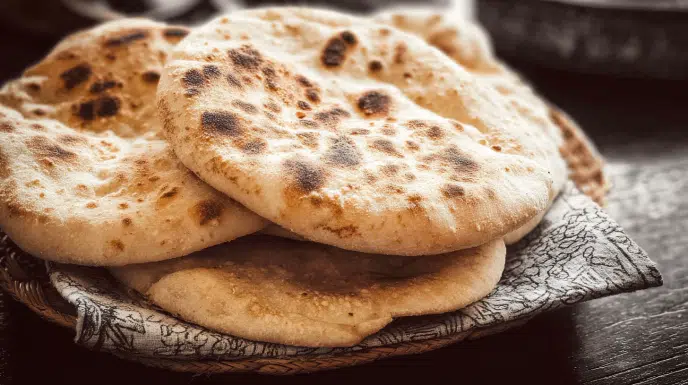
If you have a Middle Eastern bakery nearby, buy their bread the morning of your feast. Fresh-baked Lebanese bread is transformative. If not, the best widely available substitute is Lebanese or Syrian flatbread from a Middle Eastern grocery store. Pita from a regular grocery store warmed in a dry pan for 30 seconds per side is an acceptable weeknight option.
The Mezze Timeline: How to Manage It All
3-5 days before: Make the pickled turnips.
1-2 days before: Start the labneh straining. Make the hummus and baba ghanoush. Make the muhammara.
Day of, 2-3 hours before: Make the kibbeh. Make the stuffed vine leaves. Prep all the vegetables for tabbouleh and fattoush, chop separately, keep refrigerated.
30-60 minutes before: Assemble and dress the tabbouleh. Prep the halloumi for grilling. Prep the cauliflower for frying.
Last 15 minutes: Fry the cauliflower. Grill the halloumi. Warm the bread. Assemble fattoush. Arrange everything on the table.
Head Back to the Collection
This mezze spread is the heart of Lebanese cuisine, but everything else in the Lebanese cooking collection builds on these foundations. The Lebanese chicken dishes make a magnificent centerpiece alongside this spread. And if you’re curious about how Lebanese food compares to its neighbors, the guide to how Lebanese and Syrian food differ answers that question properly.