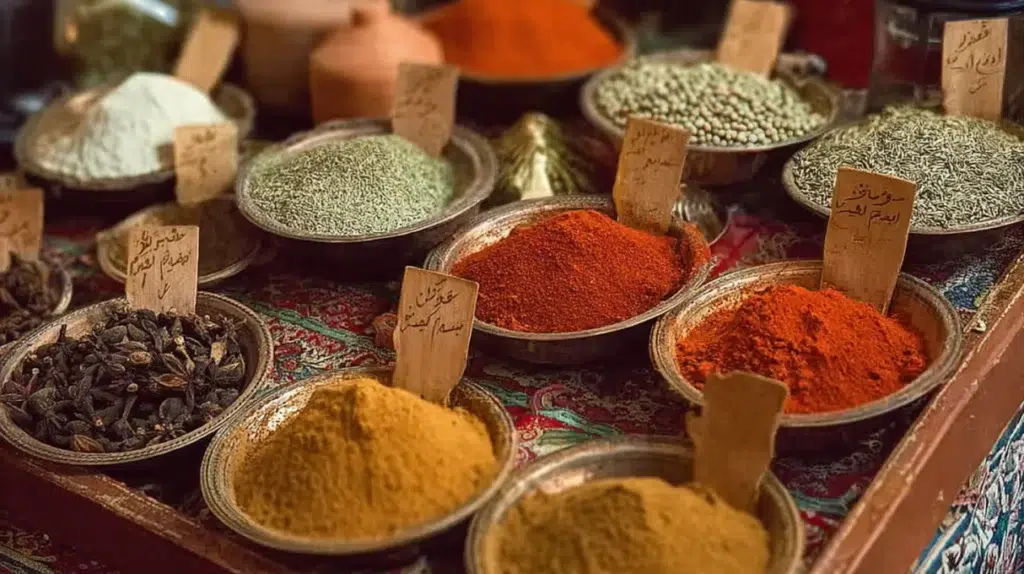
The Lebanese spices guide that most home cooks need does not exist yet, so I wrote this one.
Most spice guides for Middle Eastern cooking either treat the entire region as one undifferentiated cuisine or go so deep into botanical history that you lose sight of the practical question every home cook actually has: what do I buy, where do I find it, and what do I do with it on a Tuesday night?
This guide answers those questions specifically for Lebanese cooking, the cuisine I learned in Beirut and the Bekaa Valley and have been making in my Nashville kitchen for three years. Every spice here appears in the Lebanese recipes collection and every sourcing note reflects what is actually available in American grocery stores right now.
Fifteen minutes here. Then go cook something magnificent.
The Lebanese Spice Philosophy: Warm, Not Hot
Before we get into individual spices I want to establish the most important principle of Lebanese spicing, because it is fundamentally different from what most Americans expect from Middle Eastern food.
Lebanese cooking is warmly spiced, not hot-spiced. The goal is aromatic complexity and depth, cinnamon warmth, allspice earthiness, cumin body, not fiery heat. When heat appears in Lebanese cooking it is usually optional, added separately as chili flakes or fresh green chiles on the side, not built into the base of every dish.
This warm-not-hot principle is why Lebanese food is so accessible for people who are new to Middle Eastern cooking. The spice palette is inviting, not aggressive. Fragrant, not burning. Complex, not overwhelming.
Understanding this upfront will stop you from over-spicing your Lebanese dishes in an attempt to make them taste “more Middle Eastern.” Less is often more. The balance of warm spices, not the quantity is what makes Lebanese food taste the way it does.
Lebanese Spices Guide: The Seven Essential
1. Seven Spice, “Baharat”: The Signature Blend
Seven spice, called baharat in Arabic, which simply means “spices” is the defining spice blend of Lebanese cooking. It appears in kibbeh, in stuffed dishes, in meat marinades, in rice dishes. It is to Lebanese cooking what garam masala is to Indian cooking or ras el hanout is to Moroccan cooking, the blend that makes food taste specifically, unmistakably Lebanese.
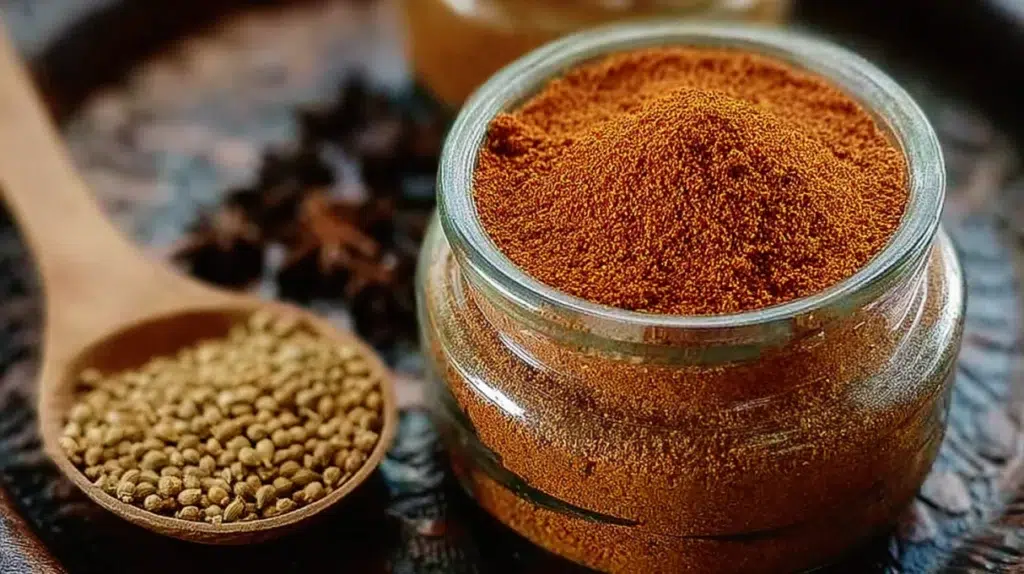
The traditional Lebanese seven spice blend contains exactly these spices in these proportions:
- 2 tablespoons black pepper
- 2 tablespoons allspice
- 1 tablespoon cinnamon
- 1 tablespoon coriander
- 1 tablespoon cumin
- 1 teaspoon cloves
- 1 teaspoon nutmeg
Mix all together and store in an airtight jar away from heat and light. Makes enough for months of Lebanese cooking. Keeps for 6 months at full potency.
The blend you make at home from fresh spices will taste significantly better than any pre-made seven spice blend from a grocery store. The individual spices are all available at any major grocery store. This is worth doing.
Pre-made seven spice is available at Middle Eastern grocery stores if you prefer the Spice House and Penzeys also carry good versions online. But I genuinely recommend making your own.
2. Sumac: The Souring Agent
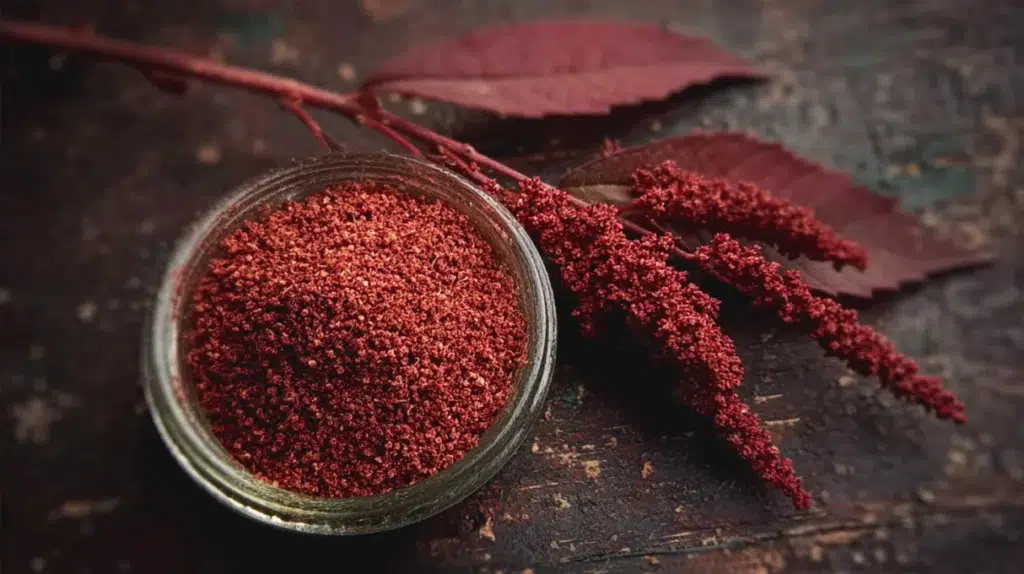
Sumac berries have been used as a souring agent in Middle Eastern cooking since antiquity, long before lemons were widely available in the region, sumac provided the bright, tart, citrusy quality that lifts Lebanese salads, grilled meats, and dips.
The flavor is citrusy but more complex than lemon, slightly astringent, with a mild fruitiness and a deep reddish-purple color that makes everything it touches visually beautiful. Sumac goes over fattoush, sprinkled on hummus, mixed into the fattoush dressing, rubbed on grilled chicken, added to the full Lebanese mezze spread in multiple places.
It is one of the most useful spices you will add to your kitchen and one of the most underused in American cooking. Once you have it you will find yourself reaching for it on things that have nothing to do with Lebanese food on avocado toast, on grilled fish, on roasted vegetables, on yogurt.
Where to buy: Whole Foods (spice section), Middle Eastern grocery stores, The Spice House, Penzeys, Amazon. Do not substitute with lemon juice in recipes where sumac is used as a dry spice, the texture and application are completely different.
3. Za’atar: The Herb Blend
Za’atar is both the name of a specific herb (a wild thyme native to the Middle East) and the name of a spice blend made from that herb combined with sumac, sesame seeds, and salt. The blend is the one most used in cooking.
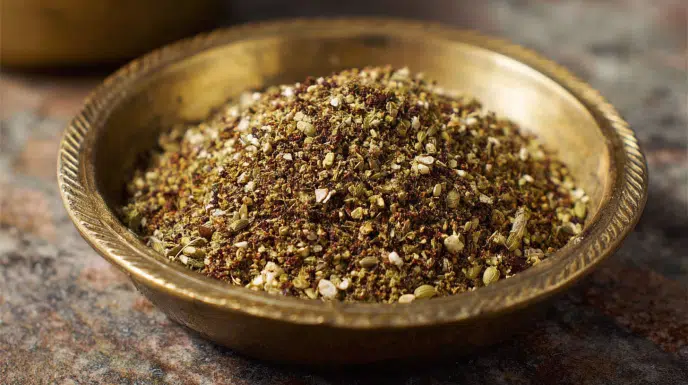
Za’atar blend is used as a dip for bread, mixed with olive oil on a plate and eaten with fresh warm bread for breakfast, which is one of the great simple pleasures in Lebanese food culture. It is sprinkled over labneh, rubbed on chicken before roasting, mixed into marinades. It is present at the Lebanese breakfast table every single morning.
The flavor is herby, tangy from the sumac, nutty from the sesame seeds, and completely distinctive. Each producer has a slightly different blend, Lebanese za’atar is generally more herb-forward and less tangy than Palestinian za’atar. Find one you love and keep it stocked.
Where to buy: Middle Eastern grocery stores, Whole Foods, online. Or make your own, dried thyme, sumac, toasted sesame seeds, salt, in roughly equal proportions.
4. Allspice: The Backbone of Seven Spice
Allspice, despite its name, is a single berry native to the Caribbean, not a blend of spices. The name comes from the fact that it tastes like a combination of cloves, cinnamon, and nutmeg, which is a reasonable description of its warm, complex, slightly peppery flavor.
In Lebanese cooking allspice is one of the most used individual spices, appearing in kibbeh, in stuffed vegetables, in braised meats, in the seven spice blend. It provides a specific warmth and depth that is fundamental to the flavor profile of Lebanese savory cooking.
Buy whole allspice berries and grind as needed for the best flavor. Pre-ground allspice loses potency relatively quickly. Available at any grocery store.
5. Cinnamon: In Savory Dishes
Cinnamon in savory food is one of the flavor signatures of Lebanese and broader Middle Eastern cooking and the first time you encounter it can be disorienting if you grew up thinking of cinnamon as exclusively a sweet spice.
In Lebanese cooking, cinnamon goes into the seven spice blend, into kibbeh, into rice dishes cooked with meat, into some stews. It adds warmth and a slightly sweet depth that rounds the flavor of dishes and ties the other spices together. The quantity is always restrained, enough to feel but not enough to taste separately.
Use Ceylon cinnamon (also called true cinnamon) when you can find it, it is more delicate and more complex than the Cassia cinnamon found in most grocery stores. Whole Foods and specialty spice shops carry it.
6. Cumin: The Earthy Base
Cumin appears throughout Lebanese cooking in the seven spice blend, in silky hummus (where a small amount adds earthiness beneath the tahini), in kibbeh, in some chicken marinades. It provides the earthy, slightly smoky base note that anchors the blend.
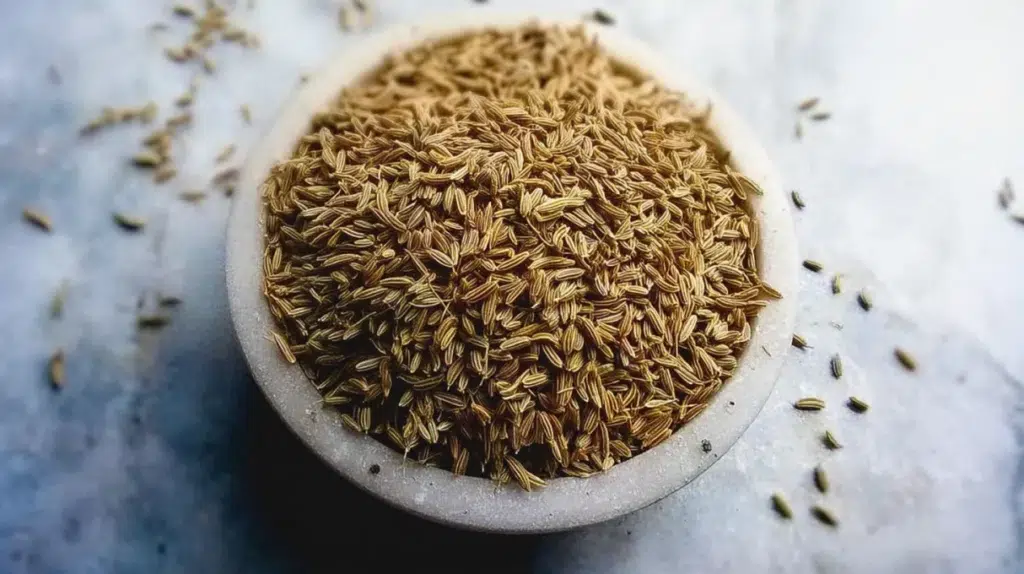
Toast whole cumin seeds in a dry pan and grind fresh when you have the time, the flavor difference over pre-ground is significant. Available at every grocery store.
7. Pomegranate Molasses: The Sweet-Sour Secret
Pomegranate molasses is not a spice technically, it is a reduction of pomegranate juice into a thick, deeply sweet-sour syrup, but it functions like a spice in Lebanese cooking, used in small quantities to add a complex sweet-sour depth to dishes.
It goes into muhammara (the red pepper and walnut dip), into some salad dressings, into marinades for lamb and chicken, as a drizzle over finished dishes. The flavor is intensely pomegranate, sweet and sour simultaneously, slightly tangy, with a richness that lemon juice alone cannot achieve.
Available at Middle Eastern grocery stores, Whole Foods, and online. Keeps indefinitely in the fridge.
Bonus Spices Worth Having
Dried mint: used in labneh, in some soups, in the pickling brine for turnips. Dried mint in Lebanese cooking has a specific dried-herb intensity that fresh mint does not replicate.
Dried rose petals: appear in some regional seven spice blends and in some desserts. Less essential but worth having if you want to make the most complex version of baharat.
Mahleb: a spice made from the pit of wild cherry, used in Lebanese bread and pastries. Slightly bitter, slightly almond-like, unmistakably specific. Available at Middle Eastern grocery stores.
Aleppo pepper: from the Syrian city of Aleppo, a mildly spicy, slightly fruity dried chile flake that adds gentle heat and color. Increasingly available at Whole Foods and online. See how Lebanese and Syrian spice traditions differ, Aleppo pepper is more Syrian than Lebanese but appears in some Lebanese regional cooking.
Where to Buy Lebanese Spices in the US
At any regular grocery store: Cumin, cinnamon, allspice, black pepper, coriander, cloves, nutmeg, everything needed to make your own seven spice blend today.
At Whole Foods or specialty stores: Sumac, za’atar blend, Ceylon cinnamon, pomegranate molasses, Aleppo pepper.
At Middle Eastern grocery stores: Everything above plus pre-made Lebanese seven spice blend, mahleb, dried rose petals, Lebanese za’atar, high-quality pomegranate molasses, dried mint.
Online (The Spice House, Penzeys, Amazon): All of the above delivered particularly useful for sumac, za’atar, and Aleppo pepper if you don’t have a Middle Eastern grocery store nearby.
Make Your Own Seven Spice, Right Now
If you take one practical action from this guide, make it this: mix your own seven spice blend today. The recipe is in the Seven Spice section above. Every ingredient is at your local grocery store. It takes five minutes. And having it on hand means you can make kibbeh, stuffed vine leaves, Lebanese rice, and a dozen other dishes from the full Lebanese collection without another shopping trip.