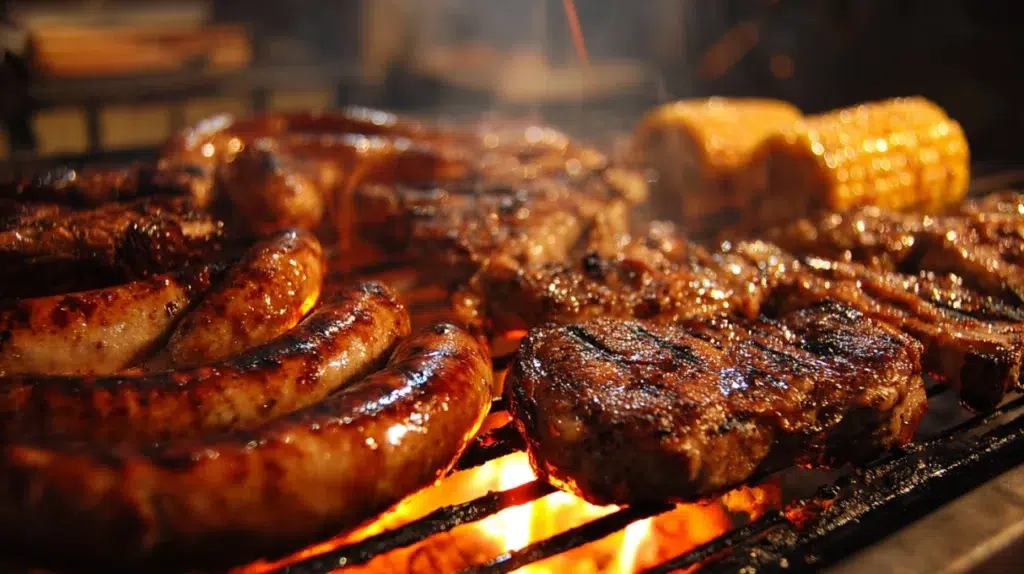
The South African braai guide that most Americans need does not yet exist in English, so here it is, written from scratch, tested in a Nashville backyard with real wood fire and genuine commitment to getting it right.
A braai is not a barbecue. I want to say that clearly at the start because the word “barbecue” carries specific American connotations, the kettle grill, the charcoal, the lighter fluid, the sauce that are completely different from what a braai actually is. A braai is built on real wood. It burns down to coals over time. The cooking happens slowly, communally, with patience. And it is surrounded by an entire social ritual that makes the food taste different from anything cooked any other way.
This is part of my South African recipes collection, the most underrepresented and most rewarding cuisine I have explored on this site. The braai is where South African food culture begins. Start here. Everything else follows.
What the Braai Actually Is
The braai is South Africa’s most universal social tradition, enjoyed across every culture and background and that universality is the most important thing to understand about it before you light your first fire.
South Africa has eleven official languages, an extraordinarily complex history of cultural separation, and communities that were legally divided from each other for decades under apartheid. The braai is one of the very few traditions that cuts across all of those divisions. Afrikaner families braai. Zulu families braai. Cape Malay families braai. English-speaking South Africans braai. Each brings slightly different meats, different marinades, different side dishes, but the fire, the communal gathering, the unhurried pace of cooking and eating together, this is shared.
South Africa’s extraordinary cultural diversity, African, Dutch, British, Malay, and Portuguese is expressed most clearly around the braai fire. Which is why September 24, South Africa’s Heritage Day has become synonymous with the national braai. Archbishop Desmond Tutu endorsed National Braai Day specifically because a fire is something every South African can gather around regardless of background. That is not a trivial observation in a country with South Africa’s history.
Understanding this context changes how you approach the braai. You are not just cooking meat over a fire. You are participating in a social institution that carries genuine cultural weight.
The Fire: The Foundation of Everything
The single most important difference between a braai and an American backyard barbecue is the fire. A braai uses real hardwood, not charcoal briquettes, not gas, not lighter fluid. Real wood, burned down to coals, over which food is cooked slowly and carefully.
Why real wood matters: Real wood produces a specific quality of heat and smoke that charcoal cannot replicate. The coals from hardwood are hotter, more even, and longer-lasting than charcoal briquettes. The smoke from real wood adds a flavor dimension that gas grills and charcoal cannot produce. Most importantly, building a real wood fire requires skill and patience, and that process is part of the braai experience. South Africans will tell you that a man who cannot build a proper braai fire has not yet earned the right to be the braaimeester (braai master).
Building the braai fire: step by step:
Start early. The fire needs 45-60 minutes to burn down to the right cooking coals before any food goes on. This is not a shortcut-friendly process.
Use hardwood, indigenous South African woods like rooikrans or kameeldoring are ideal but obviously not available in the US. American hardwoods that work well: oak, hickory, apple, cherry. Avoid softwoods (pine, cedar) which produce resinous smoke and bitter flavor.
Build a loose pyramid of wood with scrunched newspaper or fire starters at the base. Light from the bottom. Let the fire burn freely, do not rush it with more paper or lighter fluid. The fire will find its own rhythm.
After 30-40 minutes the wood will have collapsed into glowing coals. Spread the coals into an even layer with a braai tool or long tongs. The coals should be orange-red with a grey ash coating, not still flaming. Flaming coals burn the outside of meat before the inside cooks. Coals with grey ash coating are at the right temperature for braai cooking.
Testing fire temperature: Hold your hand 10cm (4 inches) above the grill level. If you can hold it for 3-4 seconds, high heat, good for boerewors and thin meats. 5-6 seconds, medium heat, good for thicker cuts and chicken. 7+ seconds, low heat, good for whole fish and slow-cooking. South African braaimeester will tell you a real one never needs a thermometer. They are right and also slightly annoying about it.
The Essential Braai Meats
Boerewors: The Non-Negotiable
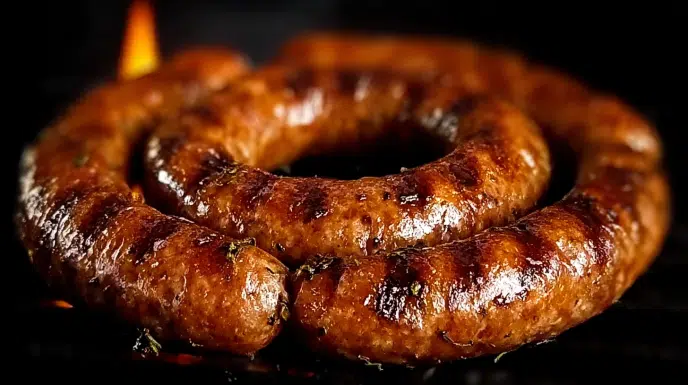
Boerewors, literally “farmer’s sausage” is the heart of any braai. A coiled sausage of beef and pork (minimum 90% meat by law in South Africa) seasoned specifically with coriander seed, cloves, nutmeg, allspice, and black pepper, the spice combination that makes boerewors taste like nothing else in the world.
Cooked on the braai in its coil shape, turned once, served in a bread roll with fried onions and tomato relish (a “boerie roll”) or with pap and chakalaka. Never pierced before cooking, the fat inside the casing is what bastes the sausage as it cooks.
Making boerewors at home: If you cannot find boerewors at a South African butcher or specialty store, make it. The spice blend is specific but all the ingredients are at any grocery store.
- 1.5kg (3.3 lbs) beef chuck, coarsely ground
- 500g (1.1 lbs) pork shoulder, coarsely ground
- 250g (9 oz) pork back fat, diced small
- 3 tablespoons coriander seeds, toasted and ground, this is the defining spice
- 1 teaspoon cloves, ground
- 1 teaspoon nutmeg, ground
- 1 teaspoon allspice, ground
- 1 teaspoon black pepper
- 2 teaspoons salt
- 3 tablespoons red wine vinegar
- 2 tablespoons Worcestershire sauce
- Natural sausage casings, available from butchers or online
Combine all ingredients and mix thoroughly by hand for at least 5 minutes, the mixture should become slightly sticky and cohesive. Stuff into casings in one continuous coil. Refrigerate overnight. Cook on medium braai coals, turning once, about 15-18 minutes total.
Cook time on braai: 15-18 minutes on medium coals | Turn once only
Sosaties: Marinated Lamb Skewers
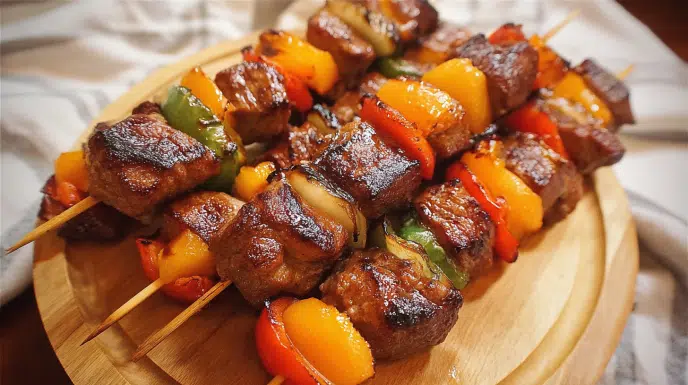
Sosaties are one of the great Cape Malay contributions to South African braai culture, lamb (or pork or chicken) pieces marinated in a sweet-spiced sauce of onion, apricot jam, curry powder, and vinegar, threaded on skewers with dried apricots, and grilled over medium coals.
The marinade does two important things, the acid tenderizes the meat over the overnight marinating period, and the fruit sugars caramelize beautifully over the coals producing a sticky, deeply flavored exterior that is one of the most distinctive flavors in South African cooking.
The sosatie marinade:
- 1kg (2.2 lbs) lamb shoulder, cut into 4cm cubes
- 2 tablespoons vegetable oil
- 2 large onions, finely sliced
- 3 tablespoons curry powder
- 2 tablespoons apricot jam
- 3 tablespoons white wine vinegar
- 2 tablespoons sugar
- 1 teaspoon salt
- 1 bay leaf
- 12 dried apricots for threading
Fry the onions in oil until soft. Add curry powder and cook 1 minute. Add jam, vinegar, sugar, salt, and bay leaf. Cool completely. Pour over the lamb, add dried apricots, mix well. Marinate overnight in the fridge, minimum 4 hours.
Thread onto skewers alternating lamb and dried apricot. Cook over medium coals 12-15 minutes, turning regularly.
Cook time: 12-15 minutes | Turn every 3-4 minutes
Lamb Chops: The Luxury Braai Cut
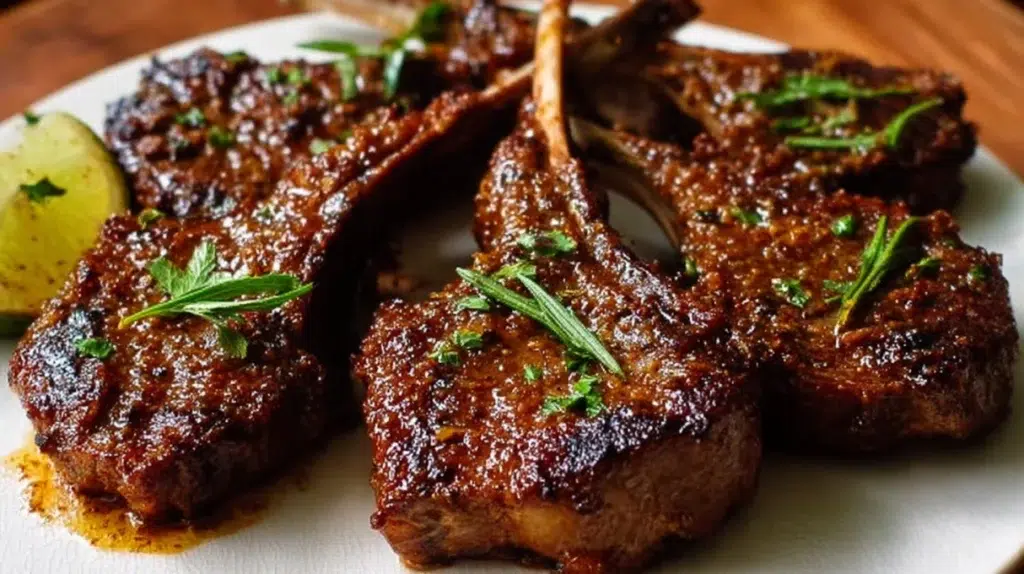
Thick-cut lamb chops, marinated simply in garlic, fresh rosemary, olive oil, lemon juice, salt, and pepper for at least 4 hours, cooked over high braai coals for 4-5 minutes per side until beautifully charred outside and pink inside.
Lamb over a real wood fire develops a flavor that no other cooking method produces. The combination of the garlic-rosemary marinade caramelizing over hardwood coals is one of the most compelling smells in cooking. Keep the marinade simple, the fire does the flavoring work.
Cook time: 8-10 minutes for medium, 4cm thick chops | High coals
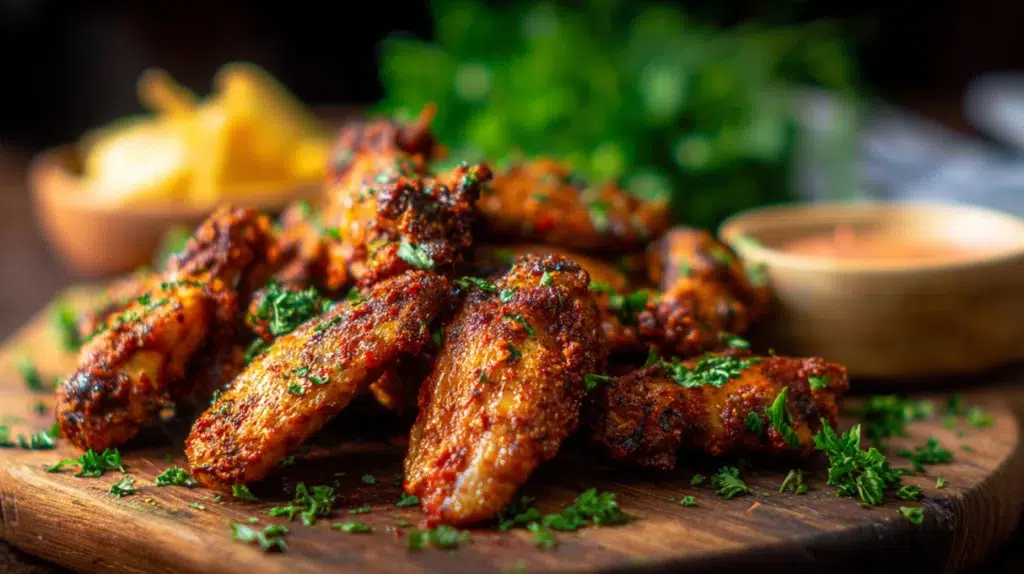
Peri-Peri Chicken Wings
Peri-peri sauce, made from African bird’s eye chiles, garlic, lemon, and olive oil, is the Portuguese Mozambican contribution to South African braai culture and one of the most addictive things you will cook over a fire.
Chicken wings marinated in peri-peri sauce overnight, then cooked over medium coals, basted regularly with extra sauce as they cook until they are deeply charred, sticky, spicy, and completely irresistible.
Quick peri-peri marinade:
- 12 chicken wings
- 8-10 fresh bird’s eye chiles (or 4-6 if you prefer less heat), roughly chopped, seeds included
- 6 cloves garlic
- Juice of 2 lemons
- 4 tablespoons olive oil
- 1 teaspoon paprika
- 1 teaspoon salt
- 1 tablespoon red wine vinegar
Blend everything except the chicken until smooth. Marinate the wings overnight. Cook over medium coals 20-25 minutes, turning and basting every 5 minutes.
Cook time: 20-25 minutes | Medium coals | Baste constantly
The Essential Braai Sides
Pap: Maize Porridge
Pap is the essential starch of South African indigenous cooking and the perfect braai accompaniment, a thick maize porridge made from white corn meal that is served alongside the braai meats to soak up juices and sauces.
Stiff pap (stywe pap) for braai:
- 500g (about 2 cups) white maize meal (available at African grocery stores or online, polenta is a substitute but the texture differs)
- 1 litre (4 cups) water
- 1 teaspoon salt
Bring salted water to the boil. Slowly pour in the maize meal, stirring constantly to prevent lumps. Reduce heat to very low. Cover and cook 20-25 minutes, stirring every 5 minutes, until very thick and pulling away from the sides of the pot. Serve hot alongside braai meats.
Chakalaka: Spicy Vegetable Relish
Chakalaka is South Africa’s essential braai condiment, a spicy, tangy relish of onions, tomatoes, beans, carrots, and peppers cooked with curry powder. It goes on top of pap, alongside boerewors, over grilled meats. Everywhere.
- 2 tablespoons vegetable oil
- 1 large onion, finely diced
- 4 cloves garlic, minced
- 1 tablespoon fresh ginger, grated
- 2 tablespoons curry powder
- 4 medium tomatoes, diced
- 2 large carrots, grated
- 2 green peppers, diced
- 1 can (400g) baked beans
- Salt and chili flakes to taste
Fry onion until soft. Add garlic, ginger, curry powder, cook 2 minutes. Add tomatoes, carrots, peppers. Cook 15 minutes until softened. Stir in baked beans. Season. Serve warm or at room temperature.
Braai Broodjies: Grilled Sandwiches
Braai broodjies are the South African braai sandwich, thick white bread filled with cheese, tomato, onion, and chutney (Mrs Balls chutney specifically, if you can find it, peach chutney otherwise), pressed together and grilled directly on the braai grate over low coals until the bread is golden and the cheese is melted.
They go on the braai after the main meats over the dying coals and are eaten as the fire winds down. The combination of the smoky bread and the sweet chutney and the melted cheese is exactly what it sounds like.
The Complete Braai Timeline
Day before: Marinate the lamb chops, sosaties, and chicken wings overnight. Make the chakalaka, it improves overnight.
2 hours before: Start building the fire. Prepare the pap ingredients. Slice the bread and prepare the braai broodjies filling.
1 hour before: Fire should be burning well. Prepare the boerewors if making from scratch.
45 minutes before eating: Coals should be ready. Start cooking, boerewors first (fastest), then lamb chops and sosaties, then chicken wings (longest). Pap goes on the stove now.
Last 15 minutes: Braai broodjies go on over the dying coals. Everything comes to the table together. Serve homemade biltong as a braai snack while the fire builds, every braai table should have biltong available from the start.
Frequently Asked Questions
Can I do a braai without real wood?
You can use hardwood charcoal, which is closer to the real thing than briquettes, but the flavor and experience will be different. Gas is acceptable for weeknight cooking but not for a real braai event. Real wood is worth the effort when you have the time.
Where do I find boerewors in the US?
South African butchers in major cities (particularly in cities with South African expat communities, Atlanta, Houston, Los Angeles, New York). Some specialty online retailers ship frozen. The homemade recipe above is genuinely excellent and worth making.
What is Mrs Balls chutney?
The most famous South African condiment, a sweet, slightly spiced fruit chutney that appears at virtually every South African table. Available online and at South African specialty stores in the US. Peach chutney from a regular grocery store is the best substitute.
How long should I marinate braai meats?
Overnight is always better than a few hours. The lamb chops and sosaties specifically need overnight marinating for the acid to properly tenderize the meat and for the flavors to fully penetrate.
More From the South African Recipes Collection: