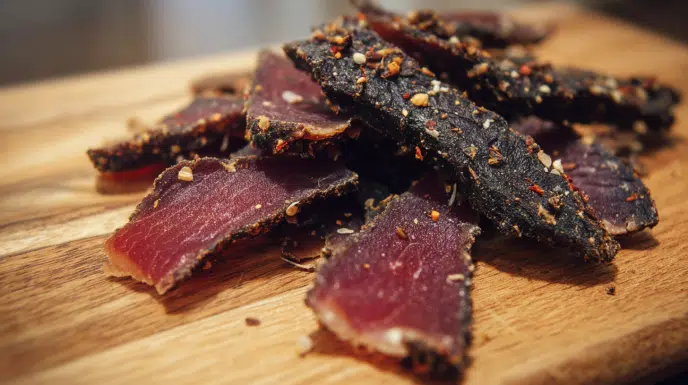
Homemade biltong changed how I think about dried meat and I did not see that coming.
I thought I understood the dried meat category. Beef jerky is a perfectly respectable snack. I have eaten a lot of it. But biltong is operating in a completely different register. Thicker. More tender. The coriander-forward spice blend instead of the smoky sweetness of American jerky. The vinegar cure that gives it a faint tanginess that disappears after the first few bites but leaves something behind in the flavor that makes you want another piece immediately.
The first time I made biltong at home and sliced into the dried strips after four days, still slightly moist in the center, dark on the outside, smelling of coriander and black pepper and something deeply beefy, I understood why South Africans who move abroad list biltong among the things they miss most about home. It is irreplaceable. And it is entirely achievable in your own kitchen with no specialist equipment you cannot either buy cheaply or improvise.
This is part of the South African recipes collection, the final piece of the puzzle for building a complete South African table. Biltong is the ideal braai snack, pass it around while the fire builds and the coals develop to the right temperature. Guests eat it standing, talking, and it disappears faster than anything else on the table.
Biltong vs Jerky: Why They Are Not the Same Thing
This distinction matters because if you approach biltong expecting jerky you will misunderstand what you are making and likely undercook it or season it wrong.
The curing method: Biltong is air-dried, hung in dry moving air for several days with no heat applied. Jerky is typically heat-dried, either in a dehydrator, oven, or smoker, at low temperatures that cook the meat while removing moisture. The air-drying process in biltong produces a fundamentally different texture more like bresaola or South African meat than the leathery chew of jerky.
The cut: Biltong uses thick cuts, strips of 2-3cm thickness from the hindquarter of beef, primarily silverside, topside, or eye of round. The thickness means the inside can remain slightly moist even when the outside is completely dried. This textural contrast, dry dark outside, tender pinkish center is one of biltong’s most distinctive qualities. Jerky uses thin slices because heat-drying thin meat is faster and more consistent.
The spice philosophy: Biltong is coriander-forward with vinegar as a curing agent. Jerky is typically salt, sugar, soy sauce, and smoke. The flavor profiles are genuinely different, biltong tastes of the meat itself plus coriander, black pepper, and a faint vinegar tang. Jerky tastes primarily of its marinade.
The fat content: Traditional biltong includes some fat, the white fat cap is left on the strip and dries to a chewy, intensely flavorful element that serious biltong eaters consider the best part. Jerky uses lean cuts specifically to reduce fat, which goes rancid during the slower drying process. The vinegar in biltong’s cure helps stabilize the fat, making richer cuts possible.
Once you understand these differences, you can approach making biltong on its own terms rather than as a variation of something familiar.
Where Biltong Comes From
South African food culture reflects centuries of Dutch, German, indigenous, and colonial culinary exchange and biltong is perhaps the most direct expression of that history in food form.
The indigenous Khoikhoi and San peoples of Southern Africa had been air-drying strips of game meat for preservation long before European settlers arrived, cutting meat thin, salting it, hanging it in the dry African air. When Dutch settlers established the Cape Colony in 1652 they encountered this tradition and adapted it, adding vinegar and the spices they brought from their own culinary tradition coriander, black pepper, cloves, to create the specific biltong cure we still use today.
The Great Trek of the 1830s cemented biltong’s place in South African identity. When Afrikaner families loaded their wagons and moved northeast away from the Cape Colony into the interior, biltong was one of the most essential foods they carried, lightweight, shelf-stable, protein-dense, and made from the abundant game they hunted along the way. It became the food of survival, of movement, of independence and those associations remain embedded in how South Africans think about it today.
Biltong is not a snack food that happens to come from South Africa. It is a food that is woven into South African identity in a specific and historically significant way.
The Spice Blend: What Makes Biltong Taste Like Biltong
The biltong spice blend is not complicated. But the proportions are non-negotiable and coriander is the non-negotiable center of all of it.
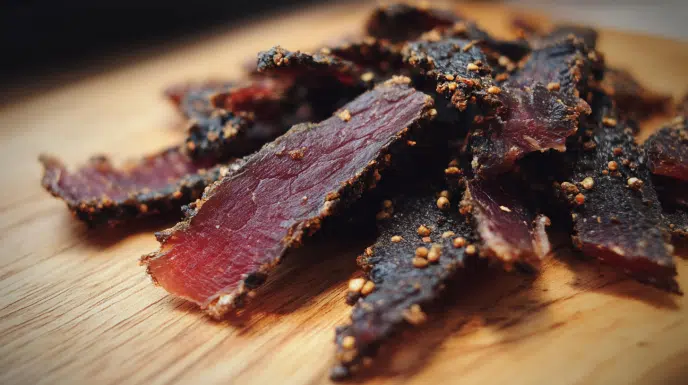
Coriander has been used as a spice since at least 5000 BCE, one of the oldest cultivated spices in the world and in South African biltong making, whole coriander seeds are toasted until fragrant, then roughly ground so they remain partially coarse. The coarse grind produces both flavor and texture, small fragments of coriander cling to the meat surface during drying and create the specific aroma that is the first thing you smell when you cut into a piece of good biltong.
The classic biltong spice blend:
- 3 tablespoons whole coriander seeds, toasted and roughly ground. This is the dominant flavor. Do not reduce it.
- 1½ tablespoons coarse salt, kosher or sea salt, not fine table salt
- 1 tablespoon black pepper, coarsely ground
- 1 teaspoon brown sugar, very small amount, just enough to balance the salt
- Optional additions used by different makers: 1 teaspoon bicarbonate of soda (helps tenderize), dried chili flakes for heat, garlic powder, ground cloves
Toast the coriander seeds in a dry pan over medium heat until fragrant, about 2 minutes, shaking constantly. Remove and roughly crush with a mortar and pestle or the bottom of a heavy pan. The grind should be coarse, not powder, not whole. Somewhere between cracked and coarsely ground.
Equipment: What You Actually Need
You do not need an expensive biltong maker for small home batches, though they are inexpensive ($25-50) and worth buying if you plan to make biltong regularly.
For a simple DIY drying setup: Any cardboard box or wooden box large enough to hang your meat strips with air space between them. Cut small holes at the top and bottom of each side for airflow, the convection between the bottom holes and top holes creates natural air movement. A small USB desk fan can be pointed at the bottom holes to improve airflow. A 60-watt incandescent bulb inside the box creates gentle warmth that speeds drying without cooking the meat, around 25-30°C (77-86°F) inside the box is ideal.
Hang the strips from hooks or bamboo skewers laid across the top of the box. Cover all openings with fine mesh or muslin cloth to keep insects out.
If you have a proper biltong maker: Follow the manufacturer’s instructions. Most have built-in fans and temperature control that make the process more consistent and reliable.
Alternative, oven method (faster, slightly different result): A conventional oven set to its lowest temperature with the door propped open with a wooden spoon creates a slow-drying environment. Hang the strips from the oven rack using S-hooks with a baking tray on the bottom shelf to catch drips. This method takes 4-6 hours rather than days, produces a slightly different texture, more uniformly dried throughout rather than the classic moist center, but works well if you want results quickly.
Ingredients
Makes about 500g (1.1 lbs) finished biltong | Prep: 20 minutes | Drying time: 3-5 days
For the meat:
- 1kg (2.2 lbs) beef silverside, topside, or eye of round, trimmed of sinew but fat cap left on if present
- 125ml (½ cup) brown malt vinegar or apple cider vinegar, the acid cure and primary preservative
- 1 tablespoon Worcestershire sauce
For the spice blend (quantities above):
- 3 tablespoons coriander seeds, toasted and roughly ground
- 1½ tablespoons coarse salt
- 1 tablespoon coarsely ground black pepper
- 1 teaspoon brown sugar
How to Make Homemade Biltong: Step by Step
Step 1: Prepare and Cut the Meat
Cut the beef with the grain into strips approximately 2-3cm (1 inch) thick and 20-25cm (8-10 inches) long. Cutting with the grain, not against it is important. Against-the-grain cuts produce crumblier biltong that falls apart when sliced. With-the-grain cuts dry in longer fibres that slice cleanly and hold together.
If the meat has a fat cap, a strip of white fat along one edge, leave it on. It will render and concentrate during drying into one of the most intensely flavored parts of the finished biltong.
Step 2: Vinegar Cure (30 minutes to 2 hours)
Lay the strips in a shallow dish and pour the vinegar and Worcestershire sauce over them. Turn to coat all surfaces. Leave for 30 minutes for a lighter tang, up to 2 hours for more pronounced vinegar flavor. Most traditional recipes use 30-60 minutes.
Remove the strips and allow excess vinegar to drip off, but do not pat dry. Some surface moisture helps the spice blend adhere.
Step 3: Apply the Spice Blend
Mix all the spice blend ingredients together in a bowl. Place a strip of meat on a flat surface and press the spice blend firmly onto all surfaces, top, bottom, and sides. The coating should be visible and generous but not so thick it falls off when handled.
Lay the coated strips on a rack or plate and refrigerate uncovered for 4-6 hours or overnight, this resting period allows the spices to begin penetrating the meat before drying starts.
Step 4: Hang and Dry (3-5 days)
Thread a metal hook or folded paper clip through one end of each strip. Hang inside your drying box or biltong maker with space between each strip for air circulation, touching strips dry unevenly and risk mold.
The drying time depends on your setup, ambient humidity, and how you prefer your biltong:
3 days, still quite moist throughout, almost like cured beef. Soft and tender. Traditional “wet” biltong preferred in many South African households.
4 days, moist center, dry exterior. The classic balance most people consider ideal.
5 days, drier throughout, firmer chew, more concentrated flavor. “Dry” biltong preferred for longer storage.
Check daily, squeeze the strips gently. They should feel firm but give slightly under pressure. If any white mold appears, wipe with a cloth dipped in vinegar and continue drying. This is normal and harmless.
Step 5: Slice and Eat
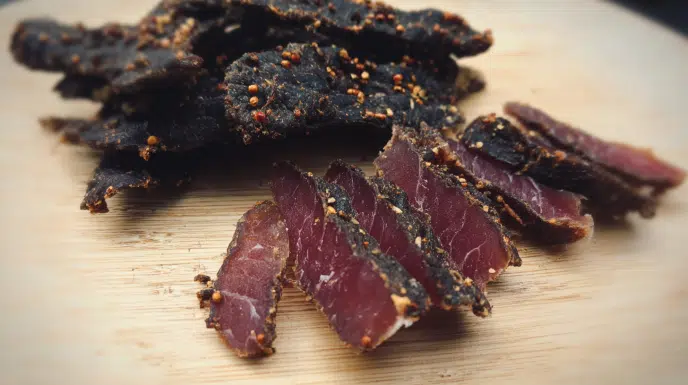
Use a sharp knife to slice thin, about 3-4mm across the grain or on a slight diagonal to the grain. The correct slice reveals the contrast between the dark, dried exterior and the darker-red, more tender interior.
Eat immediately. Or store in a paper bag (not airtight, biltong needs to breathe) at room temperature for up to 1 week, or in the fridge for up to 3 weeks. Vacuum-sealed biltong keeps for several months.
Claire’s Notes
On the vinegar: Brown malt vinegar is the most traditional choice and produces the most distinctly South African flavor. Apple cider vinegar is milder and works well. White wine vinegar is clean-flavored and a good middle ground. Do not use balsamic, too sweet and too dominant.
On humidity: Biltong fails in humid environments. If your kitchen is consistently above 70% humidity, common in coastal areas or in summer, a biltong maker with a built-in fan is worth the investment. In dry environments like Nashville in winter, the DIY box method works beautifully.
On mold: Small amounts of white surface mold during drying are normal and not a problem, wipe with vinegar-dampened cloth and continue. Black or green mold means something has gone wrong with airflow or hygiene. Discard if you see this.
On game meat: Ostrich biltong, available from specialty butchers and online in the US is extraordinary. Leaner than beef, dries faster, has a slightly sweeter flavor. If you can source ostrich, try at least one batch.
Frequently Asked Questions
How is biltong different from beef jerky?
Air-dried vs heat-dried. Thick cuts vs thin slices. Coriander and vinegar vs smoke and sugar. Tender center vs uniformly dry. They are related in concept and completely different in practice, see the full comparison section above.
Is homemade biltong safe to eat?
Yes, when made correctly. The combination of vinegar cure, salt, and air-drying creates an environment hostile to harmful bacteria. The key safety factors are: enough salt in the cure, enough vinegar exposure, adequate airflow during drying, and starting with fresh high-quality meat. When in doubt, dry for longer rather than shorter.
Where can I buy biltong in the US if I do not want to make it?
South African specialty stores in major cities, some specialty food retailers online (BiltongUSA, Safari Biltong), and increasingly at farmers markets in areas with South African expat communities. It is significantly more expensive than making your own.
Can I use chicken or pork?
Chicken is not traditional and the safety margin for air-drying poultry at room temperature is much smaller than for beef, not recommended without controlled temperature equipment. Pork biltong exists but is less common. Stick to beef for your first several batches.
More From the South African Recipes Collection: