Greek lamb recipes represent one of the oldest and most consistently excellent relationships between a cuisine and a single animal anywhere in the world.
Greece is lamb country, has been for thousands of years. The landscape demands it: the rocky, mountainous terrain that covers most of the country is perfect for sheep and goat grazing and impossible for most other livestock farming. The result is a culinary tradition built entirely around lamb slow-braised, fire-grilled, oven-roasted, minced and layered, marinated and skewered with a sophistication and depth that comes from millennia of practice.
This is part of the Greek recipes collection and these five dishes represent the full range of what Greek lamb cooking can do. From the fast and smoky simplicity of souvlaki to the slow, sealed, extraordinary patience of kleftiko to the layered complexity of moussaka, each dish teaches you something different about how Greece thinks about cooking meat.
Start anywhere. All five reward the effort.
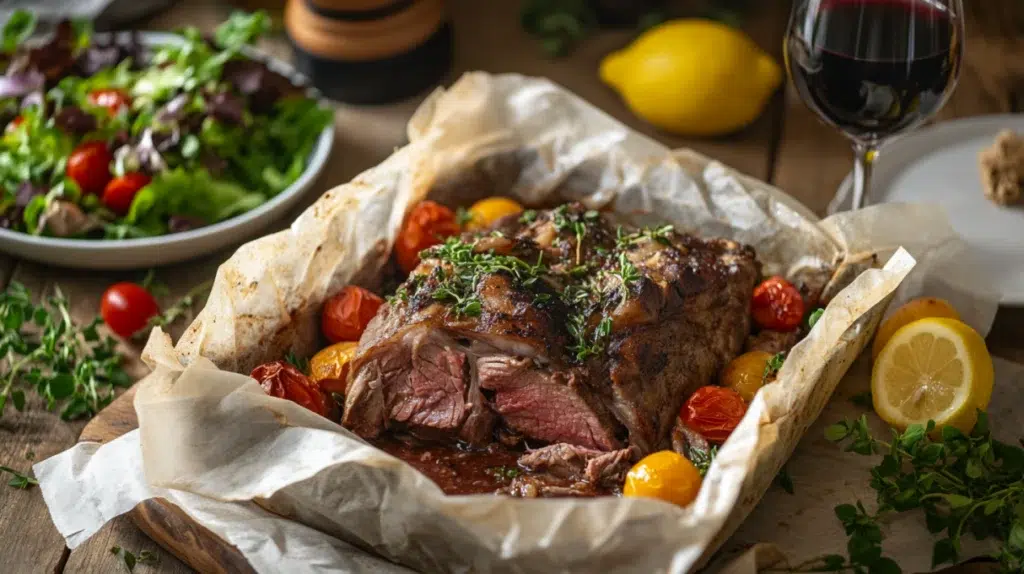
1. Kleftiko: The Sealed Lamb That Takes All Day and Is Worth Every Minute
Kleftiko is the dish that makes people understand slow cooking in a completely new way.
The name comes from kleftis, the Greek word for thief. The story goes that it was cooked by mountain bandits hiding from Ottoman rule in the 18th and 19th centuries, who needed to cook meat underground in sealed clay pots with no visible smoke to betray their location. Whether historically accurate or not, the method is real and the result is extraordinary, lamb sealed with olive oil, lemon, garlic, oregano, and tomatoes in parchment paper or foil, cooked at low heat for three to four hours until the meat has gone so far beyond tender that it falls from the bone at the gentlest pressure and the cooking juices have concentrated into a deep, tomatoey, herby sauce that demands bread.
The key word is sealed. The parchment or foil parcel traps all the moisture inside and creates a steam environment within the package, the lamb essentially braises in its own juices combined with the olive oil and lemon. Nothing escapes. Every flavor stays inside and intensifies. The result is lamb with a depth of flavor that no other cooking method produces in a domestic oven.
The kleftiko method:
Serves 4-6 | Active time: 20 minutes | Cooking time: 3.5-4 hours
- 1.5kg (3.3 lbs) bone-in lamb shoulder or leg, bone-in is essential for this dish, the bone adds flavor to the sauce and helps the meat hold its shape during the long cook
- 6 tablespoons olive oil
- Juice of 2 lemons
- 8 cloves garlic, 4 minced and 4 left whole
- 2 teaspoons dried Greek oregano
- 1 teaspoon ground cinnamon, subtle but important, a characteristic Greek lamb spice
- 1 teaspoon salt
- ½ teaspoon black pepper
- 3 ripe tomatoes, roughly chopped
- 1 large onion, roughly sliced
- Fresh rosemary and bay leaves
- Large sheets of parchment paper or heavy-duty foil
Method: Cut slits all over the lamb with a sharp knife and press minced garlic into each one. Combine olive oil, lemon juice, oregano, cinnamon, salt, and pepper, rub all over the lamb, into every cut. Lay the lamb on a large sheet of parchment, surround with chopped tomatoes, sliced onion, whole garlic cloves, rosemary sprigs, and bay leaves. Wrap tightly, two layers of parchment sealed firmly so nothing escapes. Place in a baking dish. Roast at 160°C / 320°F for 3.5-4 hours. The parchment will puff slightly as steam builds inside. Do not open it early.
When the time is up, open the parcel at the table. The steam and the smell are part of the experience.
Serve with: Authentic Greek salad, good crusty bread for the sauce, roasted potatoes cooked in the same oven.
2. Souvlaki: The Street Food That Became a National Institution
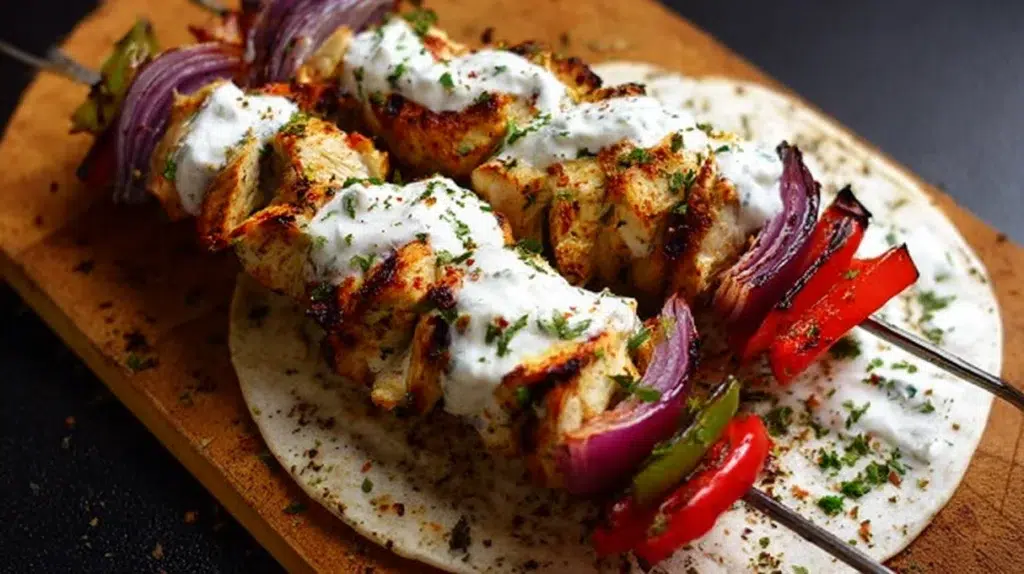
Souvlaki is the Greek version of shish kebab, skewered meat grilled over fire with a history reaching back to ancient cooking traditions. Today it is as much a cultural institution as a recipe the Greek street food, the lunch eaten standing at a stall in Athens, the thing every Greek person abroad misses with a specific physical ache.
The meat is traditionally pork in mainland Greece and lamb on some islands, marinated in olive oil, lemon, oregano, and garlic, threaded onto skewers, grilled over charcoal until charred at the edges and tender inside. Eaten either straight from the skewer or wrapped in warm pita with tzatziki, tomatoes, onion, and paprika-dusted fries tucked inside the wrap (the pita version is technically a gyros-style wrap but the name gets blurred in practice).
The souvlaki marinade:
Serves 4 | Marinade time: minimum 4 hours, overnight better
- 800g (about 1.75 lbs) lamb leg or shoulder, cut into 3cm cubes, or pork shoulder
- 5 tablespoons olive oil
- Juice of 1 lemon
- 4 cloves garlic, minced
- 2 teaspoons dried Greek oregano
- 1 teaspoon dried thyme
- 1 teaspoon paprika
- ½ teaspoon black pepper
- 1 teaspoon salt
Combine all marinade ingredients and toss with the meat. Refrigerate for at least 4 hours. Thread onto flat metal skewers, flat skewers prevent the meat from rotating as you turn them. Cook over a very hot grill or grill pan, turning every 2-3 minutes, for 10-12 minutes total until charred at the edges and cooked through.
Serve with: Warm pita bread, tzatziki, sliced fresh tomatoes, thinly sliced raw onion, dried oregano, lemon wedges. The tzatziki is essential, souvlaki without tzatziki is technically still souvlaki but you have made a significant error.
3. Moussaka: The Dish That Requires Real Commitment and Rewards It Completely
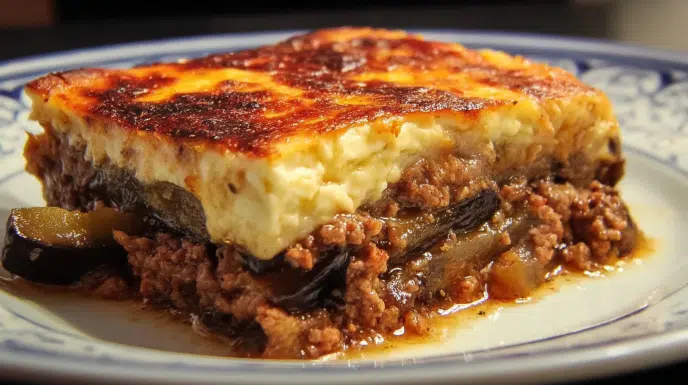
Moussaka, baked lamb and eggplant is most closely associated with Greece and Turkey and is one of the defining dishes of the region. The Greek version, layers of fried eggplant, spiced minced lamb, and a thick béchamel sauce baked until golden, is simultaneously one of the most labor-intensive and most deeply satisfying dishes in the cuisine.
It requires three components made separately: the eggplant, salted and fried until golden; the lamb sauce, cooked with tomatoes, red wine, cinnamon, and allspice until deeply flavored; and the béchamel, made from butter, flour, milk, egg yolks, and nutmeg until thick and slightly custardy. Each component is excellent alone. Together, layered and baked, they become something greater than the sum of their parts.
The cinnamon in the lamb is the flavor signature most people recognize as specifically Greek, it appears in many Greek savory meat dishes and gives moussaka its characteristic warmth that sets it apart from Italian or French-style meat sauces.
The moussaka components:
Serves 6-8 | Total time: 2.5 hours
For the eggplant:
- 3 large eggplants, sliced 1cm thick
- Salt for drawing out moisture, salt the slices, leave 30 minutes, pat completely dry
- Olive oil for frying, generous quantity
For the lamb sauce:
- 600g (1.3 lbs) ground lamb
- 1 large onion, finely diced
- 4 cloves garlic, minced
- 400g (14 oz) can crushed tomatoes
- 125ml (½ cup) dry red wine
- 1 teaspoon ground cinnamon, this is the key Greek spice here
- ½ teaspoon ground allspice
- ½ teaspoon dried oregano
- Salt and pepper to taste
For the béchamel:
- 60g (4 tablespoons) butter
- 60g (½ cup) plain flour
- 600ml (2½ cups) full-cream milk, warmed
- 2 egg yolks
- ¼ teaspoon nutmeg
- Salt and white pepper
- 50g (½ cup) grated graviera or parmesan
Method overview: Salt and fry the eggplant in olive oil until golden on both sides, in batches, not crowded. Drain on paper towels. Cook the lamb sauce: fry onion until soft, add lamb and brown well, add garlic, cinnamon, allspice, wine, tomatoes, season. Simmer 20 minutes until thick. Make the béchamel: melt butter, whisk in flour, cook 1 minute, gradually whisk in warm milk until thick and smooth. Remove from heat, whisk in egg yolks and nutmeg.
Assemble: Layer eggplant slices in a deep baking dish. Spread all the lamb sauce over. Layer remaining eggplant on top. Pour the béchamel over everything and spread to cover completely. Scatter grated cheese over the top. Bake at 180°C / 350°F for 45-50 minutes until the top is golden and set.
Rest for 20 minutes before cutting, hot moussaka is impossible to slice cleanly. Warm moussaka cuts beautifully.
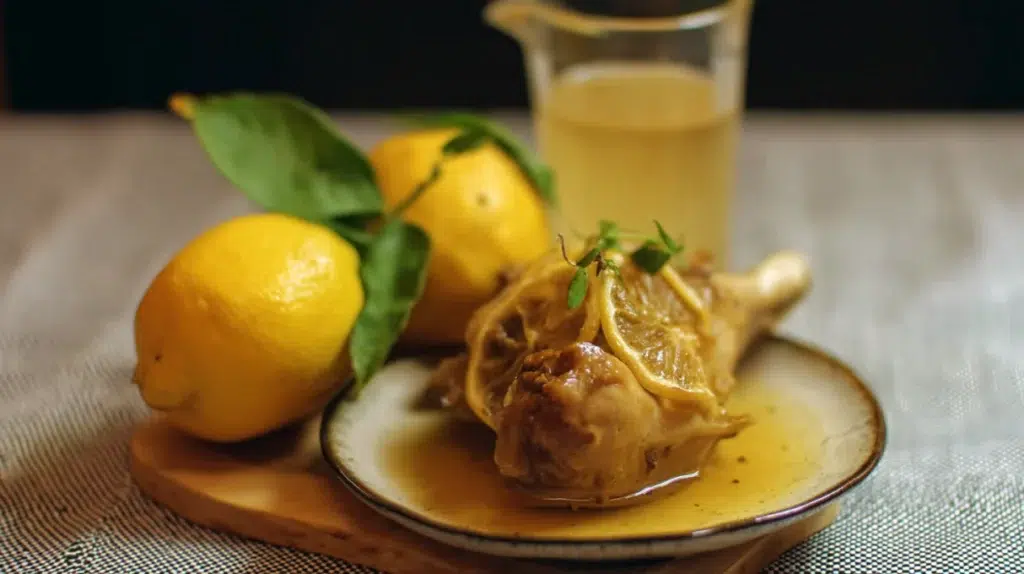
4. Arni Lemonato: Braised Lemon Lamb
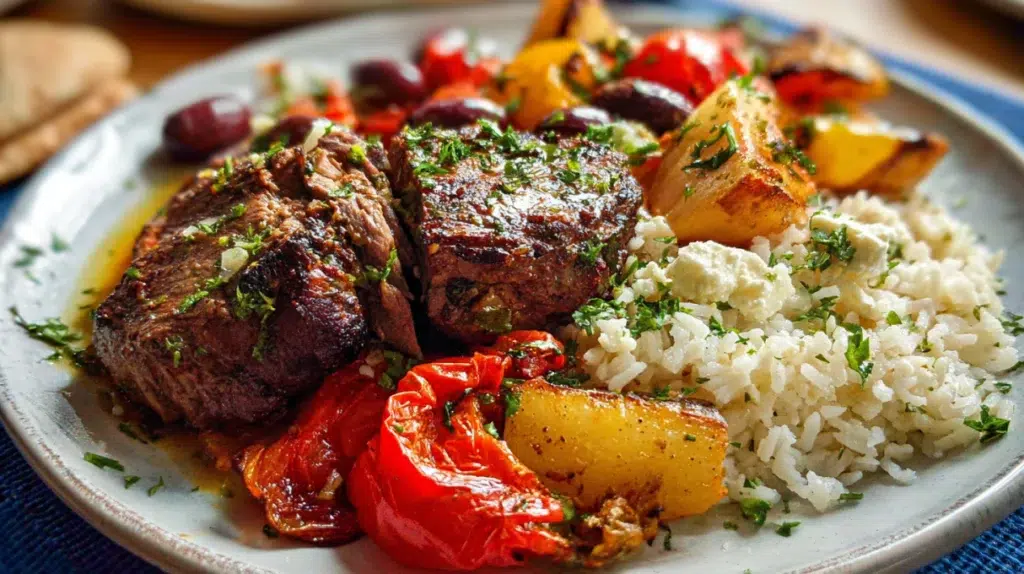
If kleftiko is the showpiece and moussaka is the project, arni lemonato is the weeknight, the simple, reliable, deeply satisfying everyday Greek lamb dish that gets made in Greek households far more often than either of the more famous dishes.
Lamb pieces braised in olive oil with garlic, onion, lemon juice, oregano, and a small amount of water or stock until completely tender, about 1.5 hours on the stovetop or 2 hours in the oven at 170°C / 340°F. The lemon brightens the lamb fat. The oregano anchors everything. The olive oil enriches the sauce without heaviness.
Finished with a squeeze of fresh lemon just before serving and scattered with fresh herbs. Eaten with rice, roasted potatoes, or crusty bread. The cooking liquid, lemony, herby, slightly reduced is one of the great simple sauces in Mediterranean cooking.
Key ingredients: 1kg bone-in lamb shoulder or chops, 4 tbsp olive oil, 4 garlic cloves, juice of 2 lemons, 1 tsp oregano, salt, pepper, 200ml water or stock.
Time: 1.5-2 hours | Difficulty: Easy, almost entirely hands-off
5. Easter Lamb: The Spit-Roasted Celebration
Greek Easter Sunday is organized around a whole lamb on a spit over an open fire and this is less a recipe than a ritual, described here for the people who want to understand what Greek lamb cooking is at its most elemental and most joyful.
The lamb, a young animal, dressed whole, is secured on a long metal spit and rotated slowly over a bed of hardwood coals for three to four hours, basted regularly with a mixture of olive oil, lemon juice, and dried oregano, until the exterior is deeply charred and the interior is falling-tender. The fire is lit at dawn. The lamb goes on mid-morning. It comes off in the early afternoon just as the extended family has gathered completely.
This is the most important meal of the Greek year. The lamb is eaten outdoors, standing, torn from the carcass by hand, eaten with salt and fresh bread and whatever salads and dips the family has prepared. The charred skin is considered the prize. The offal, wrapped in caul fat and cooked separately as kokoretsi, is typically finished while the main lamb is still cooking and eaten as an appetizer while everyone waits.
The home equivalent: a butterflied half leg of lamb, marinated overnight in olive oil, lemon, garlic, and oregano, grilled over the hottest charcoal fire you can build for 40-50 minutes. It is not the same as the full spit. It is still extraordinary.
Serve the entire Greek lamb spread with: The authentic Greek salad and spanakopita for the complete Greek Sunday table that represents the best of this cuisine.
The Greek Lamb Pantry: What You Need
Every lamb dish in this collection draws from the same small, specific pantry:
Dried Greek oregano: the defining herb. More intensely aromatic than Italian oregano. Essential for every dish here.
Ground cinnamon: appears in moussaka, kleftiko, and some braised dishes. The warm spice signature of Greek savory lamb cooking. Do not omit.
Ground allspice: partner to cinnamon in meat sauces. A small amount adds depth.
Fresh lemons: always, for finishing and for marinades. Never bottled.
Excellent olive oil: Greek cooking uses olive oil generously with lamb. Buy more than you think you need.
Garlic: in large quantities. Greek cooking is not timid about garlic.
FAQ About Greek Lamb Recipes
Can I substitute chicken or pork for lamb in these recipes?
Souvlaki works very well with pork, it is actually the more traditional choice in mainland Greece. Kleftiko works with pork shoulder but loses some of the specific lamb flavor that makes it distinctive. Moussaka with beef rather than lamb is common and good. Arni lemonato is specifically a lamb dish and loses its character with other meats.
Where do I buy lamb in the US?
Most major grocery stores carry lamb, leg, shoulder, and ground lamb. Whole Foods and specialty butchers carry bone-in cuts more reliably. Halal butchers carry excellent quality fresh lamb and are often the best source for the specific cuts Greek recipes need.
Why does Greek lamb taste different from American lamb?
Greek lamb is typically younger and smaller than American lamb, with a more delicate flavor. American lamb from the Midwest tends to be slightly stronger in flavor. New Zealand lamb, widely available in the US, is closer in character to Greek lamb: young, mild, and relatively lean. Either works in these recipes.
Is moussaka difficult to make?
It is the most labor-intensive dish in this collection, three separate components, each made properly, then assembled and baked. Allow 2.5 hours from start to finish. The results are completely proportional to the effort. Make it for a dinner party where you want to impress people. It will.
More From the Greek Recipes Collection: