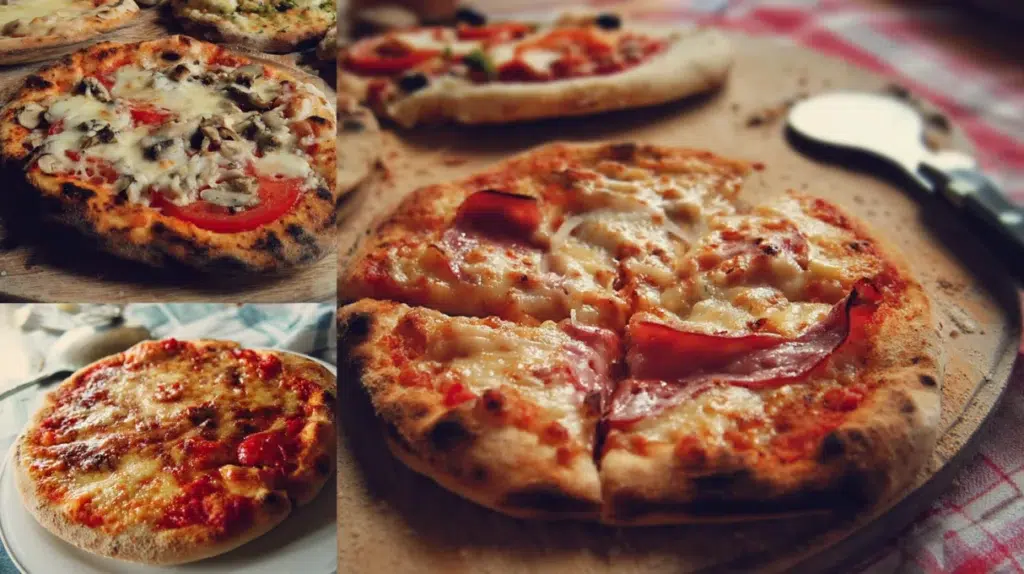
An Italian pizza recipe is not the same as a pizza recipe. The distinction matters, and understanding it will change what you make and what you expect from the result.
The pizza most Americans eat, thick, heavily topped, sauce-sweet, cheese-dominant, is American pizza. It is its own thing with its own logic and its own pleasures. Italian pizza is built on completely different principles: thin dough with specific structural characteristics, restrained toppings chosen for quality not quantity, and a cooking process at temperatures most home ovens cannot reach. The challenge of making Italian pizza at home is understanding these principles and working within them rather than against them.
This guide covers the three distinct Italian pizza traditions you need to know, and the home oven method that gets you as close as possible to the real thing without a wood-fired oven. It is part of the Italian recipes collection, southern Italy specifically, where pizza was born and where it is still taken most seriously.
Where Pizza Actually Comes From
Pizza originated in Naples as a humble dish for the working class, the pizza Margherita named after Queen Margherita who noted its colors matched the Italian flag, and this origin story explains almost everything about what authentic Neapolitan pizza is and why it looks nothing like the pizza sold in most of the world.
Naples in the 18th and 19th centuries was a crowded, poor, intensely alive city. Street food was essential, cheap, fast, portable. Pizza was sold by street vendors and eaten folded in quarters (a libretto, like a small book) so it could be consumed while walking. It was working-class food: a simple dough base, a smear of tomato, a little salt, a drizzle of olive oil. Cheese was a luxury added when affordable. The simplicity was not aesthetic, it was economic.
What makes Neapolitan pizza remarkable is that this simplicity, refined over centuries in specific wood-fired ovens at 450-500°C, produces something of extraordinary quality. The high temperature chars the dough in 60-90 seconds, creating a crust that is simultaneously crispy and chewy, with irregular charred leopard spots, a soft interior, and a flavor that no lower-temperature cooking method replicates.
The Three Italian Pizza Traditions
1. Neapolitan Pizza: The Original
Neapolitan pizza is made specifically with buffalo mozzarella or fior di latte and San Marzano tomatoes, these are the protected specifications of Vera Pizza Napoletana, the official standards maintained by the Associazione Verace Pizza Napoletana that define what Neapolitan pizza actually is.
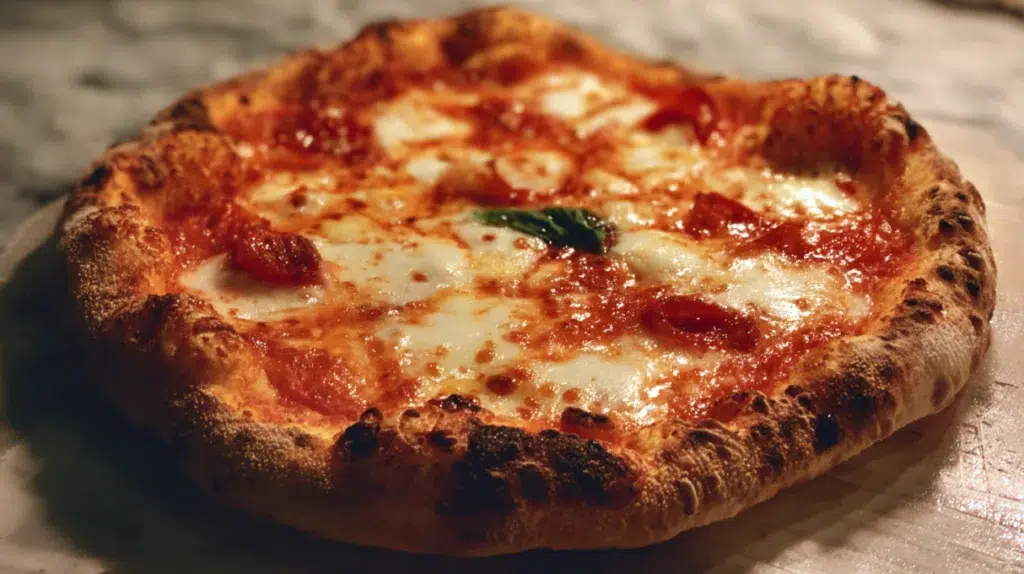
The characteristics that define it:
- Thin, soft, pliable base that pools slightly in the center when topped, not crispy throughout
- Charred spots (leopard spots) on the crust and cornicione (the raised edge)
- Simple toppings, tomato sauce, mozzarella, basil, olive oil. A maximum of 3-4 toppings total.
- Cooked at 450-500°C in a wood-fired oven for 60-90 seconds
- Eaten immediately, Neapolitan pizza does not travel well and is not designed to
The two canonical Neapolitan pizzas are Pizza Marinara (tomato, garlic, oregano, olive oil, no cheese) and Pizza Margherita (tomato, mozzarella, fresh basil, olive oil). Every other topping is a variation on these foundations.
2. Roman Pizza: The Crispy Alternative
Roman pizza is the opposite of Neapolitan in almost every way. Where Neapolitan is soft and pliable, Roman is thin and crispy throughout. Where Neapolitan has a thick, airy cornicione, Roman has an almost uniform thin edge. Where Neapolitan is cooked at extreme heat for seconds, Roman bakes at more moderate heat for longer.
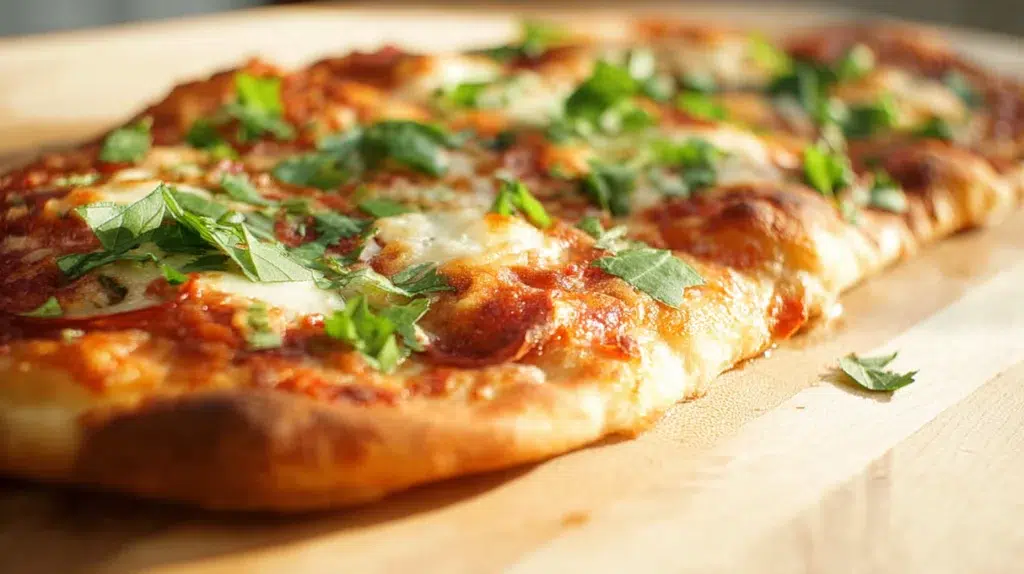
Roman pizza al taglio (by the cut), sold by weight in rectangular slabs from bakeries, is one of the great street food traditions in Rome. The dough is a high-hydration focaccia-like dough that produces a light, slightly airy crumb with a very crispy base. Toppings change daily with what is available. You point to the section you want, it is weighed, heated briefly, and handed to you wrapped in paper.
Roman pizza tonda (round, whole pizza) is thinner and crispier than Neapolitan and cooked in electric deck ovens rather than wood-fired. The result is less dramatic but more consistent.
3. Sicilian Pizza: The Deep South Version
Sicilian pizza, sfincione, is a thick, focaccia-like pizza baked in a rectangular tray, topped with a tomato sauce cooked with onions and anchovies, breadcrumbs, and sometimes caaciovallo cheese. It is a completely different product from Neapolitan pizza, more bread than pizza in its character, served at room temperature, eaten as street food in Palermo bakeries.
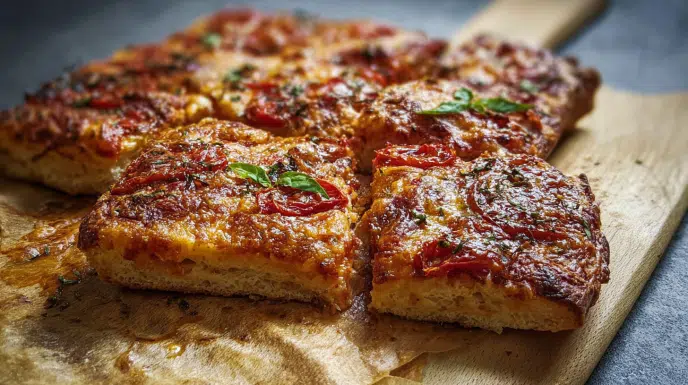
The Sicilian tradition in the US, the thick square pizza sold in many New York pizzerias, is based on this original, though significantly modified over a century of American adaptation.
The Dough: The Foundation of Everything
Neapolitan pizza dough has four ingredients: Italian ’00’ flour, water, salt, and yeast. Nothing else. No oil, no sugar, no eggs. The technique is the recipe.
The key variables:
Flour: ’00’ flour (doppio zero) is finely milled soft wheat flour with a specific protein content (around 12-13%) that produces the characteristic chew and elasticity of Neapolitan crust. Available at Italian specialty stores, Whole Foods, and online. All-purpose flour works but produces a slightly different texture, acceptable for home cooking.
Hydration: Neapolitan dough is typically 60-65% hydration (weight of water as a percentage of flour weight). Higher hydration produces a more open, airy crumb, but is more difficult to work with. 62% is the recommended starting point for home bakers.
Cold fermentation: The single most important upgrade for home pizza. A long, slow cold ferment, 24-72 hours in the refrigerator, develops complex flavor in the dough that a same-day dough simply cannot achieve. The difference is not subtle. Plan ahead.
Yeast quantity: Neapolitan dough uses very little yeast, as little as 0.1-0.2% by flour weight for a 24-48 hour ferment. More yeast = faster rise = less flavor development. Use less than you think you need.
The Neapolitan Home Pizza: Dough Recipe
Makes 4 pizza balls (280g each), enough for 4 pizzas | Start 24-48 hours before baking
Ingredients:
- 1000g ’00’ flour (or strong all-purpose)
- 620ml cold water
- 20g fine sea salt
- 2g instant yeast (less than ½ teaspoon)
Method:
Day 1 (mixing): Dissolve the yeast in 100ml of the water. In a large bowl, combine the flour and most of the remaining water, mix roughly with a fork or hands until a shaggy dough forms. Add the yeast water. Add the salt dissolved in the last splash of water. Mix until combined, the dough will be rough and slightly sticky.
Turn out onto a clean surface. Knead for 10-15 minutes until the dough is smooth, elastic, and slightly tacky but not sticky. It should pass the windowpane test, a small piece stretched between fingers should become thin enough to see light through without tearing.
Divide into 4 equal balls (approximately 280g each). Place each ball in a lightly oiled container or sealed bag. Refrigerate immediately.
Day 2-3 (cold ferment): Leave in the refrigerator for 24-72 hours. The longer the ferment within reason, the more complex the flavor. Remove from the fridge 2-3 hours before baking to come to room temperature.
The Tomato Sauce: Simple Is Correct
Neapolitan pizza sauce is not cooked. It is crushed San Marzano tomatoes, seasoned with salt, a small amount of olive oil, and nothing else. No garlic. No herbs. No cooking.
The uncooked sauce preserves the fresh tomato flavor that would be lost in cooking, the oven does the rest in the 90 seconds of cooking time.
Simple pizza sauce:
- 1 can (400g) San Marzano DOP tomatoes
- 1 teaspoon fine sea salt
- 1 tablespoon olive oil
Crush the tomatoes by hand directly from the can, or blend briefly for a smoother consistency. Season. Use cold, spread thin.
The Home Oven Method: Getting as Close as Possible
The honest truth: a domestic oven at 250°C / 480°F, its maximum temperature, cannot replicate a wood-fired oven at 500°C. The cooking time is 6-8 minutes instead of 90 seconds. The result is good. It is not the same.
Two upgrades that close the gap significantly:
A pizza stone or baking steel: Placed in the oven during preheating for at least 45-60 minutes, a pizza stone or baking steel absorbs and radiates intense heat that dramatically improves the base crust. A baking steel conducts heat better than stone and is the preferred choice for serious home pizza bakers.
The broiler finish: After the pizza has baked for 5 minutes on the stone/steel, switch to the broiler for the final 1-2 minutes. The intense top heat chars the cornicione and the cheese surface in a way that resembles the wood-fired result more closely.
Assembly for the home oven:
Preheat oven with stone/steel to maximum temperature for at least 1 hour. Stretch the dough ball by hand, never use a rolling pin, which crushes the air bubbles in the dough. Work from the center outward with your fingers, rotating the dough, until it reaches 28-30cm. Place on a wooden peel or a piece of parchment. Add sauce thinly, 3-4 tablespoons maximum. Add mozzarella torn into pieces. Slide onto the preheated stone. Bake 5-7 minutes. Broil 1-2 minutes. Add fresh basil after removing from the oven, fresh basil added before baking turns black.
The Toppings: Less Is Always More
The Italian philosophy of pizza toppings is the opposite of the American one. The correct number of toppings for a Neapolitan pizza is 3. The maximum is 4. The cheese and the sauce count as toppings.
Why less? Because each additional topping adds moisture to the pizza. More moisture means a wetter, soggier base. Because each additional topping competes with the others for flavor attention. And because Italian pizza is meant to taste primarily of the dough, the toppings are there to complement, not to overwhelm.
Classic Margherita: San Marzano tomato sauce, fior di latte or buffalo mozzarella, fresh basil, olive oil.
Marinara: San Marzano tomato sauce, garlic, dried oregano, olive oil. No cheese. This is the pizza that predates the Margherita and remains one of the greatest.
Diavola: Tomato sauce, mozzarella, spicy Calabrian salami (nduja or soppressata piccante).
Quattro Formaggi: Four cheeses, no tomato sauce. Fior di latte, gorgonzola dolce, Parmigiano, and a fourth of choice. Rich, creamy, the cheese-lover’s pizza.
Claire’s Notes
On stretching the dough: The dough will resist stretching if it has not rested at room temperature long enough. If it keeps springing back, cover it and rest another 20 minutes. Cold dough tears rather than stretches. Patience is the answer every time.
On the cheese: Fresh mozzarella releases significantly more moisture than low-moisture mozzarella. Tear it into pieces the day before and leave uncovered in the refrigerator overnight, this dries the surface and reduces the moisture release during baking. Or buy low-moisture mozzarella specifically for pizza.
On San Marzano tomatoes: The DOP label matters. Tomatoes labeled “San Marzano style” or “in the style of San Marzano” are not the same product. DOP San Marzano are grown in a specific region near Naples in volcanic soil that gives them a specific sweetness and low acidity. The difference in taste is real.
On leftovers: Cold leftover pizza reheated in a hot dry cast iron pan for 3-4 minutes, base side down, lid on for the last minute, produces a result that is better than the microwave version by a significant margin. The base re-crisps. The cheese melts properly. This is worth knowing.
FAQ About Italian Pizza Recipe
Can I make pizza dough without ’00’ flour?
Yes, strong bread flour (12-14% protein) or all-purpose flour work well. The texture will be slightly different, less extensible, slightly more chewy but perfectly good for home pizza.
Why does my pizza dough keep tearing?
Either the dough is too cold (bring to room temperature for longer), too tight from insufficient fermentation, or overworked during mixing. Rest it. Dough always relaxes with time.
Can I freeze pizza dough?
Yes, freeze individual balls after the cold ferment. Defrost overnight in the refrigerator, then bring to room temperature as normal. The quality is very close to fresh.
Why is my pizza base soggy in the middle?
Either too much sauce, too much cheese releasing water, dough not fully cooked through, or the oven/stone was not hot enough. Address all four, thin sauce, dry the mozzarella, higher heat, longer preheat.
More From the Italian Recipes Collection:
- Authentic Italian Pasta Recipes: The Essential Six
- Risotto Recipe: The Complete Guide to Getting It Right
- Italian Braised Meat: Ossobuco, Porchetta and More
- Italian vs French Food: The Honest Differences