Italian braised meat recipes are the part of Italian cooking that most home cooks never reach, and the part that most rewards the people who do.
Not because they are difficult. Braising is among the most forgiving techniques in cooking: brown the meat, build the aromatics, add liquid, seal the pot, apply low heat, and leave it alone for several hours. The patience required is real but the skill required is minimal. What you get at the end of that patience, ossobuco with its marrow melting into a saffron-gold sauce, porchetta crackling split open at the table to release wild fennel-perfumed steam, ribollita thickened to a stew so dense a spoon stands in it, justifies the wait completely.
This is the unhurried side of the Italian recipes collection. The Sunday dishes. The dishes that fill the kitchen with a smell from mid-morning that tells everyone something good is happening and they should stay close.
Table of Contents
1. Ossobuco alla Milanese: Milan’s Greatest Dish
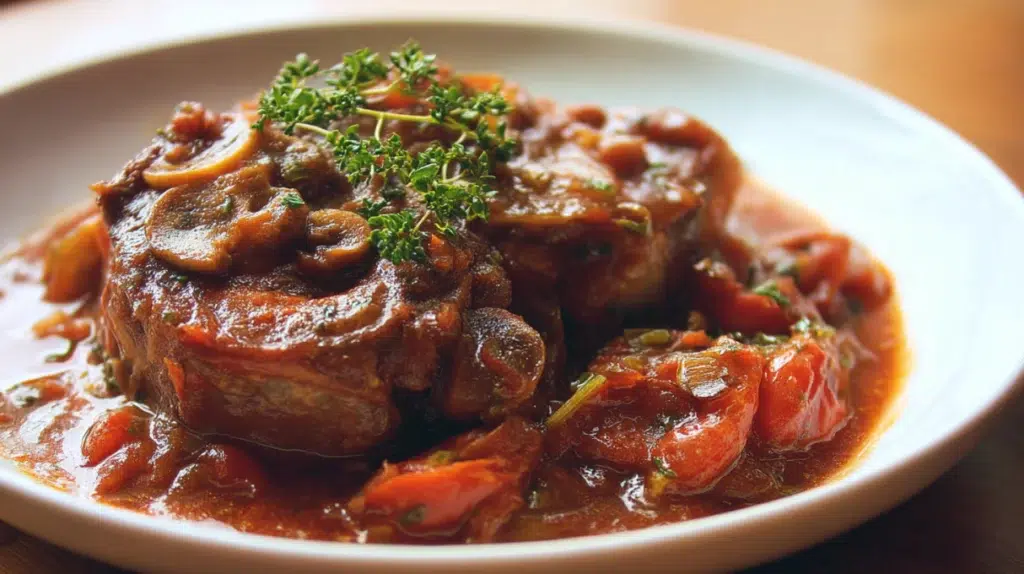
Ossobuco alla Milanese is braised veal shank, cross-cut through the bone so the marrow sits exposed in the center of each piece, cooking down into the braising liquid and enriching it with a depth and unctuousness that no boneless cut can provide. The name means exactly what it describes: bone with a hole.
Lombardy’s productive agriculture, centred on the Po River valley, has long supported the butter, rice, and cattle-rich cooking of northern Italy, and ossobuco is its most celebrated expression. A cold-weather dish, patient and rich, traditionally served in Milan from autumn through early spring. The authentic Milanese version is finished with gremolata, a finely chopped mixture of lemon zest, garlic, and flat-leaf parsley scattered over the braised shanks at the last moment. The brightness of the gremolata against the deep, unctuous sauce is not optional and not decorative, it is structural, cutting through the richness in a way that makes the next bite immediately possible.
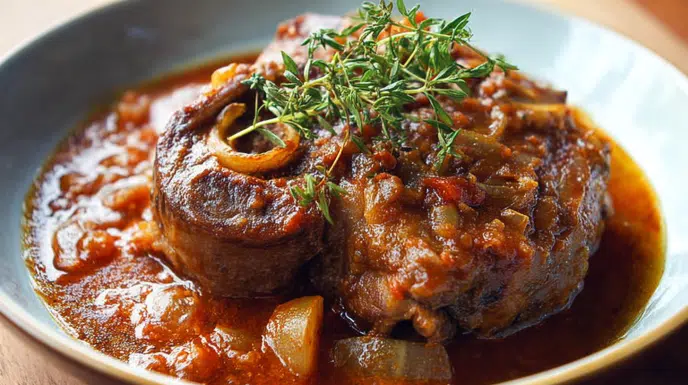
The traditional accompaniment is saffron risotto alla Milanese, the same golden, bone-marrow-enriched rice that carries ossobuco’s braising flavors through the entire meal. They were designed together and they belong together.
Ingredients (serves 4)
- 4 thick-cut veal shanks (ossobuco), about 300-350g each, 4-5cm thick. Ask your butcher specifically for ossobuco-cut veal shank. The thickness matters: too thin and the meat overcooks before the collagen dissolves.
- 4 tablespoons butter
- 2 tablespoons olive oil
- 1 medium onion, very finely diced
- 1 carrot, very finely diced
- 1 celery stalk, very finely diced
- 3 cloves garlic, minced
- 200ml dry white wine
- 400ml good veal or chicken stock, warm
- 400g canned San Marzano tomatoes, crushed, the modern version. The older bianco version uses no tomatoes.
- 2 bay leaves, fresh thyme sprigs
- Salt, white pepper
- Plain flour for dusting
For the gremolata:
- Zest of 1 large lemon, finely grated
- 2 cloves garlic, very finely minced
- Large handful flat-leaf parsley, very finely chopped
- Combine, season lightly, add just before serving
Method:
Tie each veal shank around its circumference with kitchen string, this holds the meat against the bone during the long braise and prevents it from collapsing. Season generously with salt and white pepper. Dust lightly in flour, shaking off any excess.
In a wide, heavy pan or Dutch oven, heat the butter and olive oil over medium-high heat until foaming. Add the shanks and brown deeply on both cut sides, 4-5 minutes per side without moving them. The browning is not cosmetic; it builds the flavor base of the entire sauce. Brown properly or accept a paler result. Remove and set aside.
Reduce heat to medium. In the same pan, cook the soffritto, onion, carrot, celery, in the remaining fat for 10 minutes until completely soft. Add the garlic for 1 minute. Add the wine, scraping up all the browned bits from the pan bottom. Let reduce by half, about 3 minutes. Add the tomatoes and stock. Return the shanks to the pan, they should sit upright, not stacked. The liquid should come two-thirds of the way up the sides of the shanks. Add the herbs.
Bring to a gentle simmer, cover tightly, reduce heat to very low. Cook for 1.5-2 hours until the meat is completely tender, it should yield to a fork with almost no resistance and threaten to leave the bone. Check occasionally; add a splash of stock if the braising liquid reduces too much.
Remove the shanks. Taste and adjust the sauce, reduce briefly over high heat if needed. Remove the string from the shanks. Scatter gremolata generously over everything just before serving.
2. Porchetta: Tuscan Herb-Stuffed Roast Pork
Meat dishes are particularly popular in central Italy, wild boar is cooked in Tuscany and Umbria, and the tradition of whole-roasted, herb-stuffed pork that runs through this region produced porchetta, one of the great Italian street foods and one of the most spectacular things you can cook in a domestic oven.
Traditional porchetta is made from an entire boned-out pig, the belly still attached to the loin, rolled around a filling of wild fennel fronds, garlic, rosemary, and black pepper, tied into a cylinder, and roasted for hours until the skin is crackling-crispy and the interior is perfumed throughout with herbs. It appears at markets, festivals, and roadside stalls across Lazio and Umbria, sold in thick slices stuffed into bread rolls.
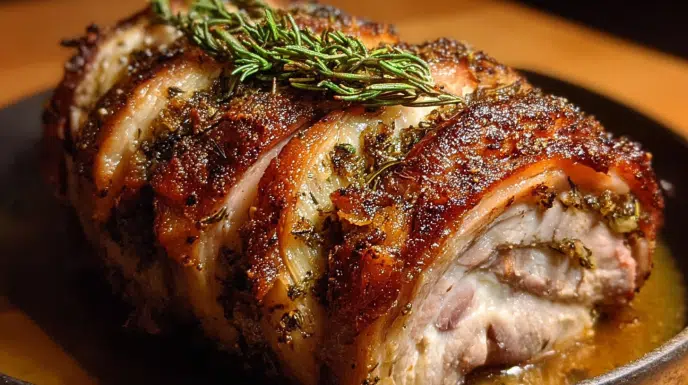
The home version uses a pork belly with the skin still on, available at Italian butchers and many Asian supermarkets, which stock it reliably. The key elements are identical to the professional version: the wild fennel, the garlic, the slow roast, and the high-heat crackle at the end.
Ingredients (serves 6-8)
- 1.5-2kg pork belly, skin on, boned and butterflied flat by the butcher
- 4 cloves garlic, very finely minced
- Large handful fresh rosemary, leaves stripped and roughly chopped
- 3 tablespoons wild fennel fronds, chopped, or 2 teaspoons fennel seeds, lightly crushed if fresh fennel unavailable. Fennel is the defining flavor of porchetta. Do not skip it.
- 1 teaspoon dried chili flakes
- 1 tablespoon fennel pollen if available, intensifies the fennel character significantly
- Zest of 1 lemon
- 2 teaspoons coarse sea salt
- 1 teaspoon black pepper
- 2 tablespoons olive oil
Method:
Score the skin of the pork belly in a crosshatch pattern, cutting through the skin but not deeply into the fat. This scoring helps the skin crackle and allows the seasoning to penetrate. Pat completely dry, the drier the skin, the better the crackling.
Lay the belly skin-side down. Combine the garlic, herbs, chili, lemon zest, salt, pepper, and olive oil into a rough paste. Spread this filling generously and evenly over the exposed meat surface. Roll the belly tightly into a cylinder from one end. Tie firmly at regular intervals with kitchen string, every 3-4cm. The tighter and more cylindrical the roll, the better it will carve.
Season the skin generously with more coarse salt. Refrigerate uncovered overnight if possible, the salt draws moisture from the skin and deepens the crackling quality significantly.
Roast at 160°C / 320°F for 2-2.5 hours until the internal temperature reaches 68°C / 155°F and the meat is cooked through. Increase heat to 230°C / 450°F for the final 20-30 minutes to crackle the skin, listen for the crackling sound, watch for the skin to bubble and turn golden-brown. Rest for 20 minutes before carving. The string will resist, cut it at the table before slicing.
Serve thinly sliced, in bread rolls if you want the street food experience, or as a table centrepiece with braised greens and polenta.
3. Ribollita: The Tuscan Bread Soup That Gets Better for Days
Ribollita means reboiled, and the name is the recipe. A thick Tuscan soup of cavolo nero (black kale), cannellini beans, and bread, made one day and reheated the next and the next until the bread has dissolved completely into the liquid and the whole thing has become something between a soup and a stew so dense you could almost eat it with a fork.
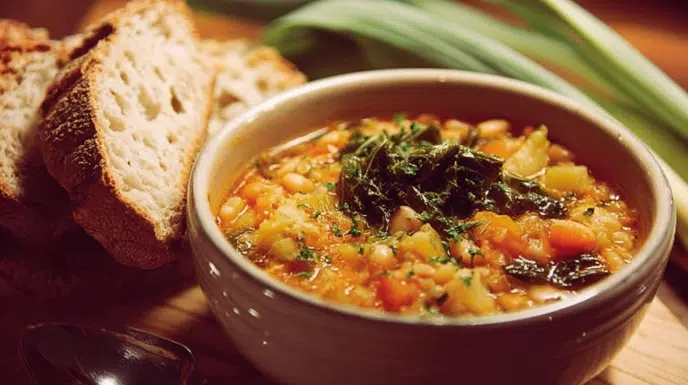
It is peasant food of the most honest kind. The vegetables are the ones that grow through Tuscany’s cold season. The bread is yesterday’s stale unsalted Tuscan bread, pane sciocco, which is specifically designed to absorb liquid without becoming slimy. The beans are dried and cooked from scratch rather than canned, though canned work perfectly well for a home version. And the olive oil, poured generously over the finished soup at the table, is the finishing element that lifts it from filling to extraordinary.
Ingredients (serves 6, improves over 3 days)
- 2 cans (800g total) good cannellini beans, drained, or 300g dried cannellini, soaked overnight and cooked until tender
- 250g cavolo nero (Tuscan black kale), stems removed, roughly chopped, or regular kale
- 200g Savoy cabbage, roughly chopped
- 2 medium carrots, diced
- 3 celery stalks, diced
- 2 medium onions, diced
- 4 cloves garlic, sliced
- 400g canned San Marzano tomatoes, crushed
- 6 tablespoons excellent extra-virgin olive oil, plus more at the table
- Fresh rosemary and sage
- 200g stale Tuscan bread or sourdough, torn into rough pieces
- 1 litre vegetable stock or water
- Salt, black pepper, dried chili flakes
Method:
Heat 3 tablespoons olive oil in a large pot. Cook the onion, carrot, and celery over low heat for 15 minutes until completely soft. Add the garlic, herbs, and chili. Add the tomatoes and cook 5 minutes. Add the cavolo nero and cabbage and stir until wilted. Add the beans, half of them whole, half roughly mashed with a fork to thicken the soup. Add the stock. Simmer partially covered for 45 minutes.
Add the torn bread pieces, stir through, and continue cooking 15 minutes until the bread has absorbed the liquid and the soup is very thick. Season. Drizzle the remaining olive oil over the surface. Serve in deep bowls with more olive oil at the table.
Reheat the next day with a splash of water if needed. The flavors deepen significantly. Day three is the best.
4. Braciole: The Southern Sunday Brag
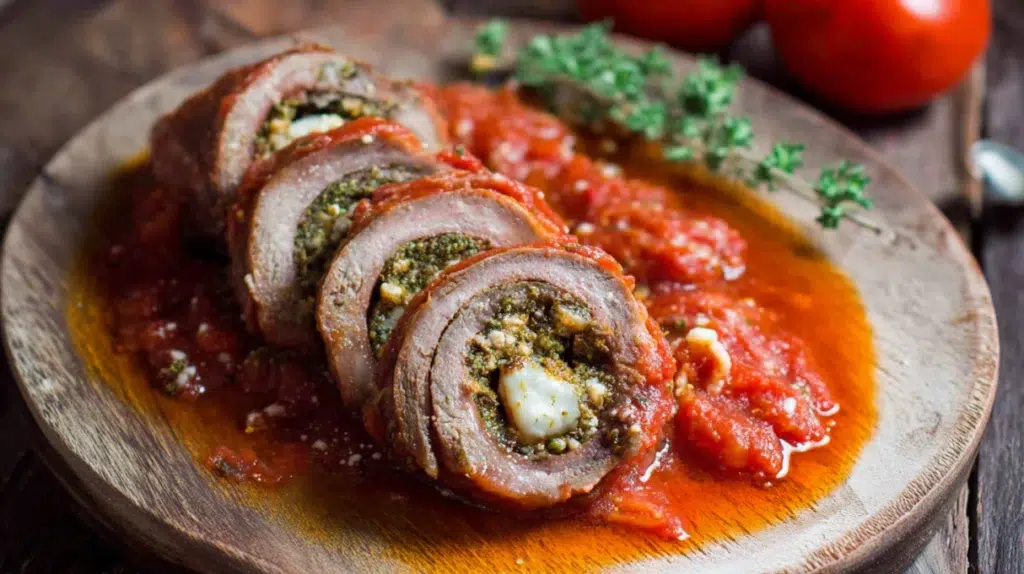
Braciole (bra-CHO-leh) is southern Italian, specifically Calabrian and Campanian, the Sunday dish that signals a family has made the effort. Thin slices of beef (flank or top round) hammered flat, layered with a filling of breadcrumbs, hard-boiled eggs, pine nuts, raisins, parsley, and pecorino, rolled tightly and tied, then braised for hours in a deep tomato and red wine sauce until the beef is completely tender and the sauce has become the kind of rich, complex ragù that you spoon over pasta first as a primo before eating the braciole as a secondo. Two courses from one braise.
Ingredients (serves 4-6)
- 800g beef flank or top round, cut into 4-6 thin slices (about 5mm) and pounded flat
- 80g breadcrumbs, slightly stale, not dried
- 2 hard-boiled eggs, roughly chopped
- 30g pine nuts
- 30g raisins, soaked in warm water 10 minutes and drained
- 50g Pecorino Romano, finely grated
- Handful flat-leaf parsley, chopped
- 3 cloves garlic, minced
- Olive oil for frying
- 250ml dry red wine
- 700ml tomato passata
- Salt and black pepper
Method:
Mix the breadcrumbs, eggs, pine nuts, raisins, pecorino, parsley, and garlic into the filling. Season. Lay each beef slice flat, spread a layer of filling over it, leaving a 2cm border. Roll tightly, tie firmly with string at intervals.
Brown the rolls on all sides in hot olive oil, 8-10 minutes total, until deeply colored. Add the wine and let it reduce by half. Add the passata, season, bring to a simmer. Cover and cook on very low heat for 2-2.5 hours until completely tender. Remove the braciole. Reduce the sauce briefly if needed.
Serve the sauce over pasta first, rigatoni or paccheri, with Pecorino. Then serve the braciole as a second course with a green salad.
The Italian Braising Pantry
Every dish in this guide draws from the same small pantry of essentials:
Good stock: veal, chicken, or vegetable, made or purchased. The braising liquid becomes the sauce. Its quality is the sauce’s quality.
San Marzano tomatoes: DOP labeled. The acidity and sweetness of these tomatoes in a long braise becomes a completely different flavor from generic canned tomatoes.
Dry white wine: for northern braises (ossobuco). Dry red wine for southern ones (braciole). The wine acid tenderizes and the flavor integrates over hours of cooking.
A heavy pot with a tight lid: a Dutch oven or enameled cast iron pot. The seal matters, steam should not escape easily during the braise.
FAQ About Italian Braised Meat Recipes
Can I substitute beef for veal in ossobuco?
Yes, beef shank ossobuco-style is excellent and more economical. The flavor is stronger and more assertive than veal, which some people prefer. Increase the braising time by 30-45 minutes. The technique is identical.
Why does my porchetta crackling fail?
Either the skin was not dry enough before roasting (always refrigerate uncovered overnight), the scoring was not deep enough to let the fat render, or the final high-heat blast was too short. Give the crackling 30 full minutes at 230°C and do not open the oven during that time.
Can ribollita be frozen?
Before the bread is added, yes, freeze the bean and vegetable base. Add the bread when reheating from frozen. The bread-thickened version does not freeze well.
What wine to serve with ossobuco?
A northern Italian red, Barolo, Barbaresco, or Nebbiolo d’Alba from Piedmont. The wine region that produced the dish produces the wine that goes with it.
More From the Italian Recipes Collection:
- Authentic Italian Pasta Recipes: The Essential Six
- Risotto Recipe: The Complete Guide to Getting It Right
- Italian Pizza Recipe: Neapolitan, Roman, Home Oven
- Italian vs French Food: The Honest Differences