French sauces are the foundation of the entire cuisine, and understanding them is the single most useful thing a home cook can do to improve their cooking, not just of French food but of everything.
The mother sauce system is one of the most practical frameworks in all of cooking. Chef Marie-Antoine Carême organized French sauces into categories in the early 19th century. Auguste Escoffier refined and standardized the system in the early 20th century into the five mother sauces that culinary schools still teach today. The logic is elegant: five fundamental sauces, each with a distinct technique and a distinct flavor base, from which dozens of derivative sauces, called daughter sauces, are built by adding a single ingredient or a small group of ingredients to the mother.
Learn the five mothers and the most important daughters. You will never wonder what to do with a pan of cooking juices again.
This is part of the French recipes collection, and sauce technique is what separates French cooking from everything else. The classic French recipes in this collection all depend on at least one of these sauces at their foundation.
The Five Mother Sauces: An Overview
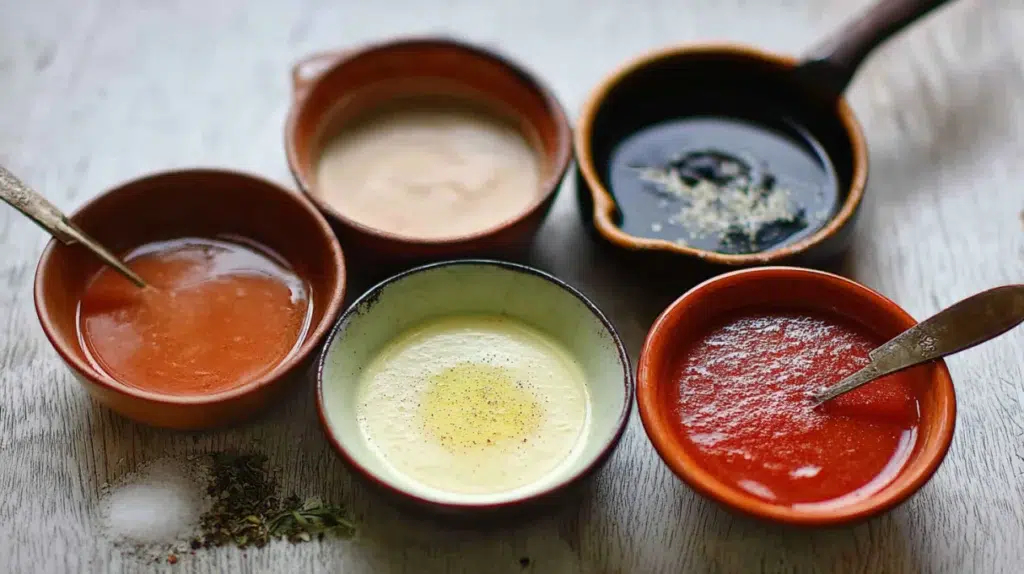
Before going deep on each one, the essential map:
| Mother Sauce | Liquid Base | Thickener | Character |
|---|---|---|---|
| Béchamel | Whole milk | Roux (butter + flour) | Creamy, mild, white |
| Velouté | Light stock (chicken, veal, fish) | Roux | Light, delicate, pale |
| Espagnole | Dark beef/veal stock | Roux + tomato | Rich, deep brown, meaty |
| Hollandaise | Reduction (vinegar/water) | Egg yolk emulsion | Buttery, rich, yellow |
| Sauce Tomat | Tomatoes + stock | Tomato reduction | Bright, acidic, red |
Each of these is made correctly or not made at all, the technique for each is specific and non-negotiable. The good news is that each technique, once understood, is straightforward. The difficulty of French sauces is overstated. The patience they require is real.
1. Béchamel: The White Foundation
Béchamel is the mother sauce most home cooks already make without necessarily calling it that. It is white sauce, roux-thickened milk, the base of lasagne, moussaka, croque monsieur, gratin dauphinois, and a hundred other dishes from France and beyond.
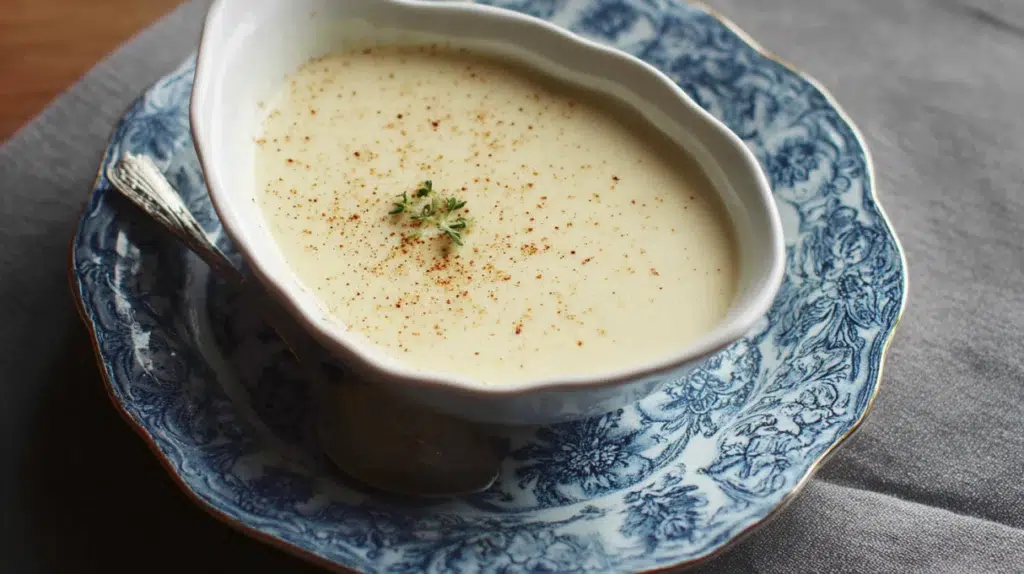
The roux is equal parts butter and flour cooked together briefly until the raw flour smell disappears, about 2 minutes over medium heat, before the milk is added gradually while whisking constantly. The constant whisking while adding the milk prevents lumps. A lumpy béchamel is not failed technique, it is simply whisking that stopped too early or milk added too fast.
Standard Béchamel: Ingredients (makes ~500ml)
- 40g (3 tablespoons) unsalted butter
- 40g (⅓ cup) plain flour
- 500ml (2 cups) whole milk, warmed
- Salt, white pepper, pinch of nutmeg
Method: Melt butter in a heavy saucepan over medium heat. Add flour all at once and stir vigorously for 2 minutes, the mixture will look like a thick paste and smell faintly nutty. This is the roux. Remove from heat briefly. Begin adding the warm milk in a thin stream, whisking constantly. Return to medium heat. Continue whisking until the sauce thickens and begins to bubble gently, about 5-7 minutes. Season with salt, white pepper, and nutmeg. The nutmeg is not optional in French béchamel, it is the seasoning.
The key daughter sauces from béchamel:
Mornay sauce: béchamel with grated Gruyère and sometimes Parmigiano stirred in off the heat until melted. This is the sauce of croque monsieur, cauliflower gratin, and macaroni gratin. It is not complicated. It is one of the best things butter, flour, milk, and cheese can become.
Soubise: béchamel with a large quantity of very slowly cooked onions added and blended smooth. Served with lamb, pork, and roasted vegetables. Sweet, creamy, and completely different from its parent.
Nantua: béchamel enriched with crayfish butter and cream. A Lyonnaise specialty. Technically demanding and magnificent with seafood quenelles.
2. Velouté: The Delicate Stock Sauce
Velouté is the sophisticated sibling of béchamel, built on the same roux technique but using light stock instead of milk, which produces a more complex, more refined flavor. Chicken velouté uses chicken stock. Veal velouté uses veal stock. Fish velouté uses fish stock.
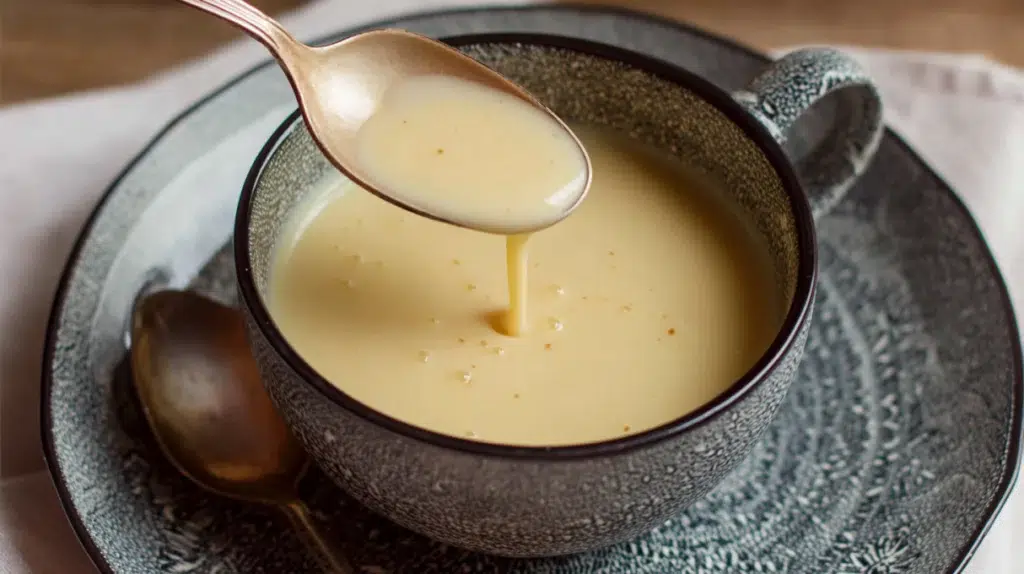
The word velouté means velvety, and a properly made velouté has exactly that quality when strained through a fine sieve after cooking: smooth, glossy, and lightly coating.
Standard Chicken Velouté: Ingredients (makes ~500ml)
- 40g (3 tablespoons) unsalted butter
- 40g (⅓ cup) plain flour
- 500ml (2 cups) good chicken stock, warm, quality matters here more than in béchamel
- Salt, white pepper
Method: Identical to béchamel, make the roux, add warm stock gradually while whisking, cook until thickened. The difference is in the liquid and in the lightness of the result. Strain through a fine-mesh sieve before using.
The key daughter sauces from velouté:
Sauce suprême: chicken velouté finished with heavy cream and a touch of butter beaten in off the heat. Served with poached chicken, veal, and white fish. The default “cream sauce” in French bistro cooking.
Sauce allemande: velouté thickened with egg yolks and cream (called a liaison) and finished with lemon juice. Richer and more complex than suprême. Used with veal, chicken, and vegetables.
Sauce vin blanc: fish velouté reduced with dry white wine and shallots, finished with butter and lemon. The classic sauce for sole, sea bass, and poached white fish. Light, bright, elegant.
3. Espagnole: The Brown Mother
Espagnole is the most labor-intensive of the five mothers and the one most home cooks will never make from scratch, because making it properly requires a dark, deeply flavored beef or veal stock, a brown roux, tomato purée, and several hours of slow simmering. Professional kitchens produce espagnole as the foundation for their entire sauce section. Home cooks produce it occasionally, for special occasions, or skip to its most important daughter.
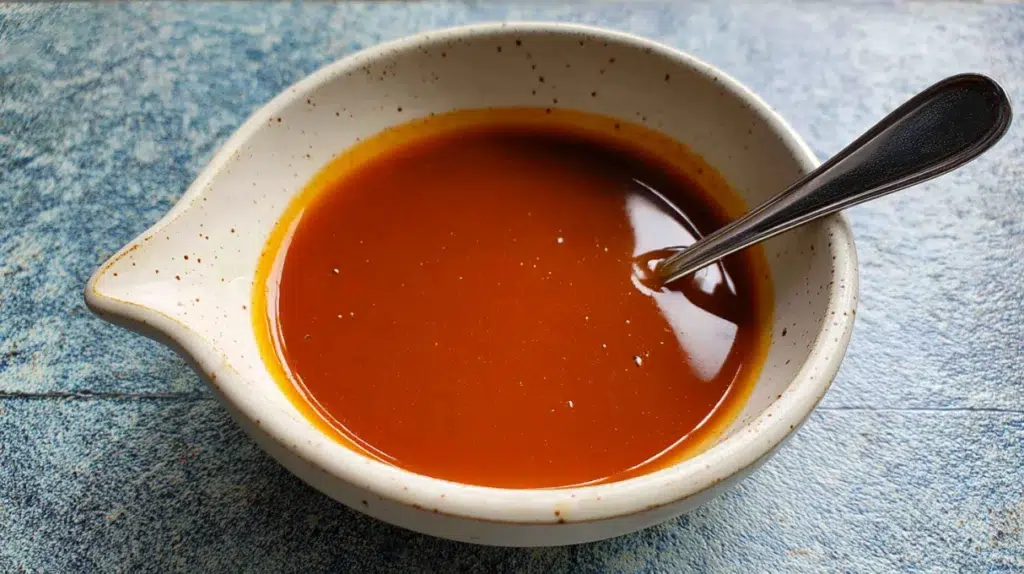
Demi-glace stems from sauce espagnole, one of the five mother sauces from which all other French sauces are made, and demi-glace is the version most home cooks should focus on. Espagnole reduced by half, producing a sauce so concentrated and rich that a single tablespoon added to a pan sauce transforms it completely.
For home cooks, the practical approach: Making espagnole and demi-glace from scratch is a weekend project, 4-6 hours from start to finish. The result freezes beautifully in ice cube trays, giving you individual portions to add to pan sauces throughout the month. Many good-quality dehydrated demi-glace products are available at specialty food stores for those days when making it from scratch is not practical.
The key daughter sauces from espagnole:
Sauce bordelaise: demi-glace reduced with red Bordeaux wine, bone marrow, shallots, and thyme. The classic sauce for steak, grilled red meat, and roasted lamb.
Sauce chasseur (Hunter’s sauce): espagnole or demi-glace with mushrooms, shallots, white wine, and tomato. One of the most popular French bistro sauces. Served with chicken, rabbit, and veal.
Sauce Robert: espagnole with onion, mustard, and white wine. Sharp, pungent, particularly good with pork chops.
4. Hollandaise: The Emulsion Mother
Hollandaise is one of the five mother sauces of French cuisine, classified by Escoffier and standard on menus worldwide by the early 20th century. It is the most technically demanding of the five, an emulsion sauce built by whisking egg yolks with a reduction of white wine vinegar and water over gentle heat, then incorporating clarified or very soft butter in a thin stream until a thick, glossy, warm emulsion forms.
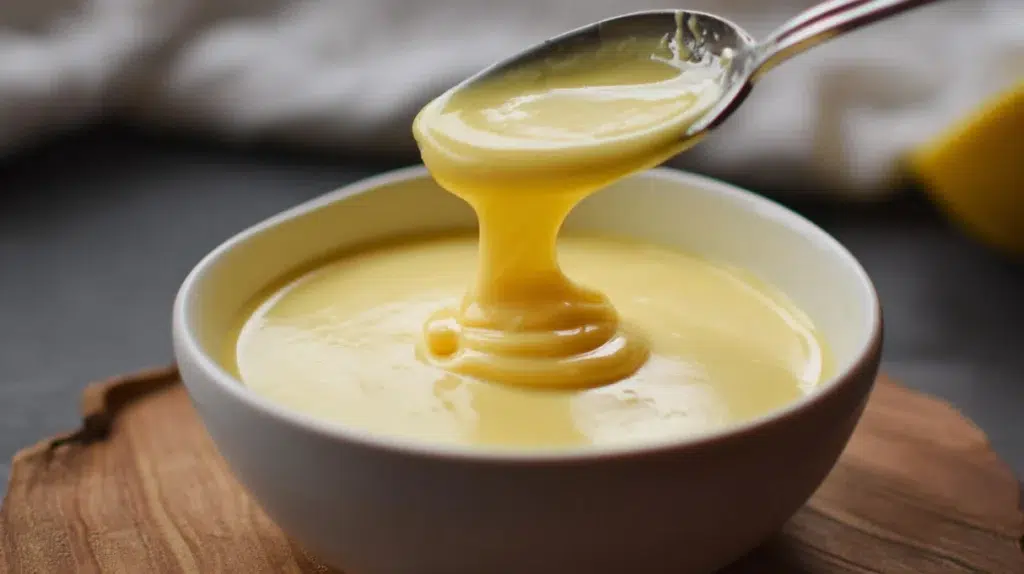
The heat must be gentle, hot enough to cook and thicken the egg yolks but not so hot they scramble. The butter must be added slowly, fast enough to emulsify, slow enough not to break the sauce. A broken hollandaise, where the butter separates from the egg yolks, is visible immediately as an oily, grainy mess. It is recoverable: start a fresh egg yolk in a clean bowl over heat and whisk the broken sauce into it drop by drop.
Standard Hollandaise: Ingredients (makes ~250ml, serves 4)
- 3 egg yolks
- 2 tablespoons white wine vinegar
- 2 tablespoons water
- 200g (14 tablespoons) unsalted butter, clarified or very soft
- Salt, white pepper, pinch of cayenne
- Squeeze of lemon to finish
Method: Combine vinegar and water in a small saucepan. Reduce by half over medium heat. Cool slightly. In a heatproof bowl over a pot of barely simmering water (the bowl must not touch the water), whisk the egg yolks with the reduction until pale and thick enough to hold a ribbon, about 3-4 minutes. Remove from heat. Begin adding the butter in the thinnest possible stream while whisking constantly. When all the butter is incorporated and the sauce is thick, glossy, and coats the whisk, season with salt, white pepper, cayenne, and lemon.
Keep warm by leaving over the pot of hot water with the heat off. Hollandaise must be served within 1-2 hours of making.
The key daughter sauces from hollandaise:
Béarnaise: the most beloved daughter sauce in French cooking. Hollandaise made with a reduction of white wine, vinegar, shallots, and fresh tarragon instead of the plain vinegar reduction. The tarragon makes it. Served with grilled steak, lamb, and roasted fish. Incomparably good alongside a piece of properly cooked beef.
Sauce Choron: béarnaise with tomato purée added. The tomato cuts the richness and adds color. Served with fish and shellfish.
Sauce Paloise: hollandaise made with fresh mint instead of tarragon. A Béarnaise variation specific to the Béarn region. Unusual and remarkable with lamb.
5. Sauce Tomat: The French Tomato Sauce
French sauce tomat is not Italian pomodoro. It is not Spanish sofrito. It is its own thing, a tomato sauce enriched with pork belly, thickened with a light roux, and slowly cooked with mirepoix, stock, and a bouquet garni into something deeper and more savory than a simple reduced tomato sauce.
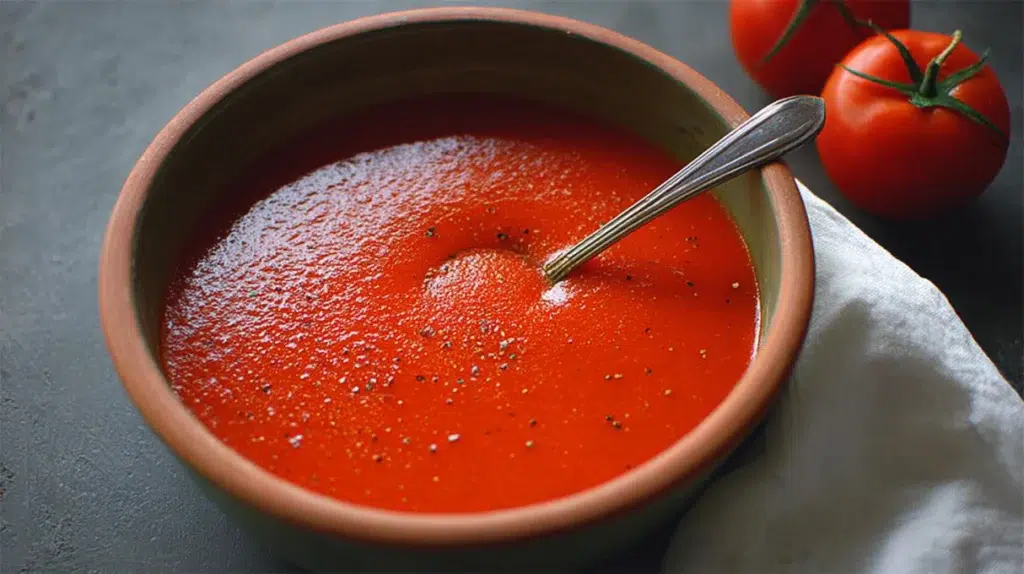
In modern practice, many French cooks simplify sauce tomat to a high-quality tomato sauce without the pork belly and roux, especially when used as a component in other dishes rather than served on its own. The classic technique is worth knowing even if the simplified version is what you use day-to-day.
Standard Sauce Tomat: Simplified Version (makes ~600ml)
- 800g (28 oz) very ripe tomatoes, or 2 cans San Marzano DOP, crushed
- 1 medium onion, finely diced
- 2 cloves garlic, minced
- 1 carrot, finely diced
- 1 celery stalk, finely diced
- 2 tablespoons butter or olive oil
- 100ml (⅓ cup) chicken stock
- 1 tablespoon sugar, balances the acidity
- Fresh thyme, bay leaf
- Salt, black pepper
Method: Cook the mirepoix (onion, carrot, celery) in butter until completely soft, 12-15 minutes. Add garlic. Add tomatoes, stock, herbs, sugar. Simmer uncovered over medium-low heat for 30-40 minutes until reduced and concentrated. Blend smooth if desired. Pass through a sieve for an ultra-fine finish. Season.
The key daughter sauces from sauce tomat:
Sauce portugaise: sauce tomat with sautéed onion, garlic, and peeled, seeded tomatoes added. Brighter and fresher than the mother. Served with eggs, fish, and veal.
Sauce provençale: sauce tomat with olive oil, garlic, olives, and herbes de Provence. The Mediterranean version. Served with fish, lamb, and roasted vegetables.
The Pan Sauce: The Everyday Application
Most home cooks will never make all five mother sauces from scratch in the same week. But every home cook will roast a chicken, sear a steak, or braise pork chops, and every one of those cooking events produces the foundation of a pan sauce.
The pan sauce technique, deglazing the fond (the caramelized residue on the bottom of the pan) with wine or stock, reducing, finishing with butter, is the daily expression of French sauce philosophy. It takes 3 minutes. It transforms a simple piece of meat into something that tastes considered.
The basic pan sauce method: After cooking your protein, remove it and set aside to rest. Pour off most of the fat but leave the fond. Add a minced shallot and cook 1 minute over medium heat. Add 100ml wine or stock, it will sizzle and steam. Scrape the bottom of the pan with a wooden spoon. Reduce by half. Add another 100ml stock. Reduce until the sauce coats a spoon. Remove from heat. Beat in a knob of cold butter until glossy. Season. Strain if desired. Spoon over the rested protein.
This is French sauce logic applied in three minutes. It requires no recipe and no mother sauce, only the understanding of what fond is and what it can become.
Frequently Asked Questions
Why does my hollandaise break?
Either the heat was too high (the eggs scrambled) or the butter was added too fast (the emulsion could not form). If it breaks, start a fresh egg yolk in a clean bowl over gentle heat and whisk the broken sauce into it drop by drop. It will usually come back together.
Can I make béchamel without butter?
Technically yes, olive oil roux produces a lighter, less rich result. The flavor is different. For French cooking specifically, butter is the correct fat for béchamel. Use it.
What is the difference between velouté and béchamel?
The liquid base. Béchamel uses milk, mild, creamy, white. Velouté uses light stock, more complex, more savory, more suitable for savory main dishes. Both use the same roux technique.
Do I need to make demi-glace to cook French food at home?
No, but having it available in the freezer transforms pan sauces completely. Make a batch once every few months, freeze in ice cube trays, and add cubes to pan sauces as needed. Alternatively, buy a good-quality dehydrated demi-glace from a specialty store.
Planning your week? Add a French dinner to your weekly meal planner alongside your everyday staples.