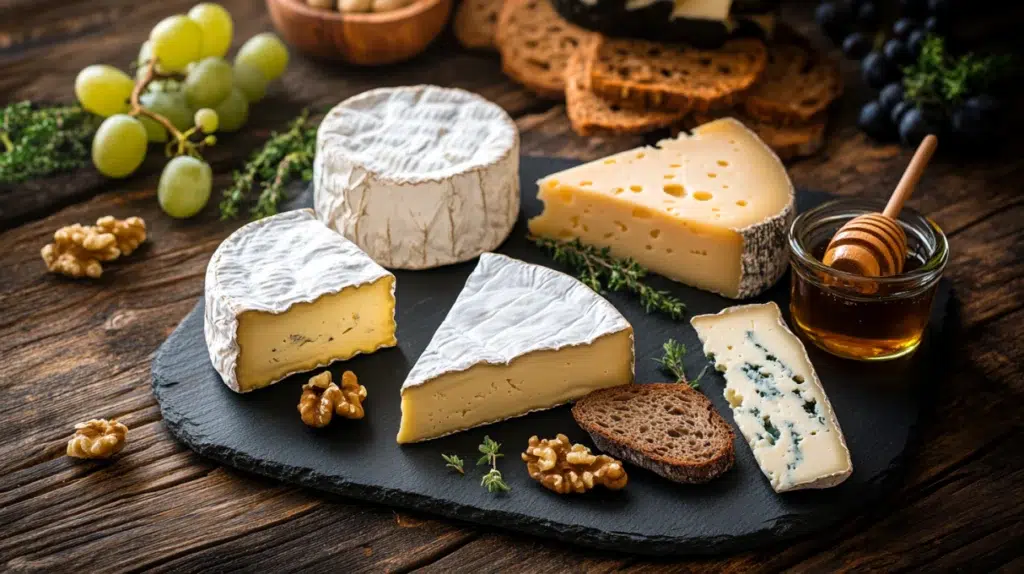
French cheese guide might be the most useful two-word combination in French food education, because France produces more than 300 named cheese varieties, the single largest cheese culture in the world, and most people outside France have encountered perhaps five of them.
This is not a problem of limited supply. French cheeses are available throughout the United States, at Whole Foods, specialty cheese shops, and even many Kroger locations in the cheese aisle. The problem is that without a framework for understanding what you are looking at, the array is overwhelming. Soft whites next to aged yellows next to rinds that smell alarming next to perfect blues, organized by nothing except the shop’s shelving decisions.
This guide gives you the framework. Five types of French cheese, the most important examples in each, what they taste like, how to use them, what to drink alongside, and how to build a proper French cheese course at home.
This is part of the French recipes collection, and the cheese course is one of the most specific and most rewarding elements of French food culture to bring into your home.
The Five Types of French Cheese: The Framework
French cheeses are organized by how they are made and how they ripen. Understanding these five categories tells you what a cheese will taste like before you open it.
Type 1: Soft-Ripened (Bloomy Rind)
The most recognizable French cheeses. White, downy exterior. Creamy, increasingly runny interior as they ripen. Made from cow’s milk. The mold on the outside (Penicillium candidum) ripens the cheese from the outside in, the center stays firmer and more chalky when young, becomes fully soft and oozing when perfectly ripe.
Brie
Brie, soft-ripened cow’s milk cheese named for the district in northeastern France, ripens from the outside in over three to four weeks. The authentic farmhouse versions, Brie de Meaux and Brie de Melun, both AOC-protected, are made from unpasteurized milk and have significantly more flavor and character than the pasteurized factory Brie that dominates American cheese counters. When you find Brie de Meaux at a specialty cheese shop, buy it. The difference from generic Brie is not subtle.
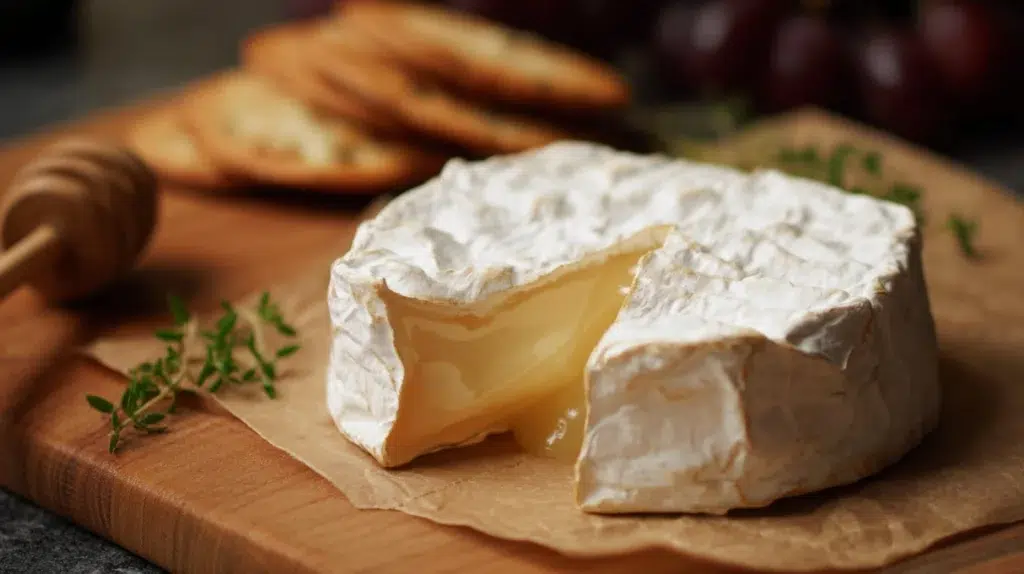
How to tell if it is ripe: the whole wheel should give evenly when pressed gently. A chalky resistance in the center means it needs more time at room temperature. An ammonia smell means it has gone too far. The ideal window between underripe and overripe is about two to three days, which is why buying it and serving it the same evening is the French approach.
Serve with: Good baguette. Champagne or a light Burgundy Pinot Noir. Fig jam if you want sweetness alongside. Do not serve cold, Brie at refrigerator temperature tastes of almost nothing.
Camembert
Camembert comes from Normandy and is structurally similar to Brie, same bloomy white rind, same creamy interior, but smaller (a 250g disk versus Brie’s large wheel), slightly more assertive in flavor, and with a more pronounced earthiness that reflects Normandy’s rich dairy pastures. The story of its creation involves a Normandy farmer named Marie Harel and a priest from Brie in the 1790s, historically contested but persistently told.
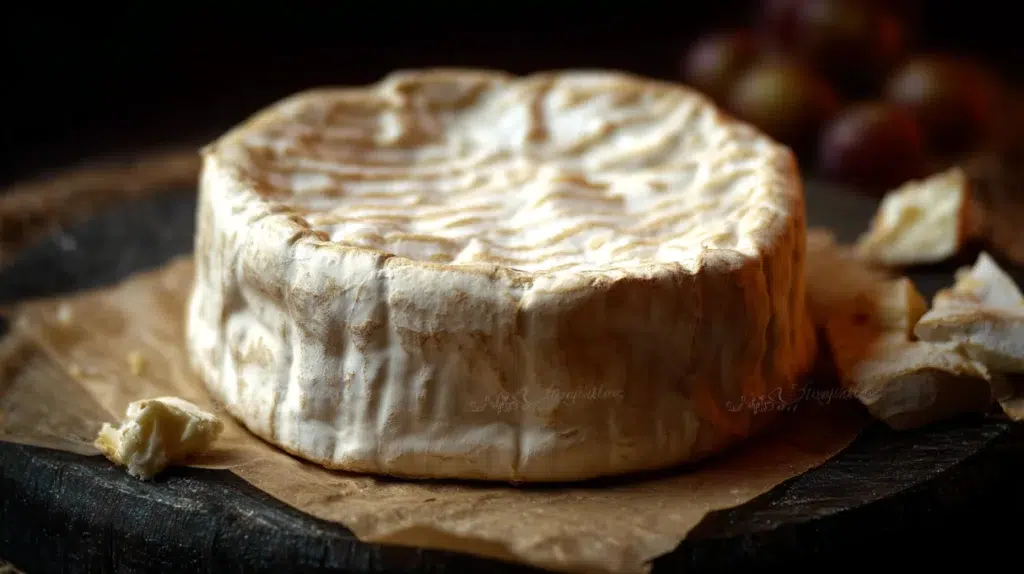
Real Camembert de Normandie is made from unpasteurized Normande cow’s milk and has a raw-milk depth that generic Camembert cannot approach. Look for the label “Camembert de Normandie AOP” and the wooden box it traditionally comes in.
The baked Camembert: Camembert is the French cheese most commonly baked at home, the entire wheel placed in its wooden box in a 180°C / 350°F oven for 20 minutes until completely molten inside, then served with bread for dipping. This is not particularly refined but it is enormously satisfying and one of the easiest entertaining gestures in French cooking.
Type 2: Washed-Rind (Smear-Ripened)
The cheeses that smell the most alarming and taste the most interesting. The rind is washed during aging with brine, beer, wine, or spirits, this encourages specific bacteria (Brevibacterium linens) that create a sticky, orange-pink exterior and a powerfully funky aroma. The interior, despite the smell, is typically mild to medium in flavor, gentler and more buttery than the rind suggests.
The rule with washed-rind cheeses: smell the rind separately from tasting the paste. The rind is there to protect the cheese during aging. The paste is what you are buying.
Époisses
The most celebrated washed-rind French cheese and arguably the most pungent thing in the entire French cheese canon. Made in Burgundy, washed with Marc de Bourgogne (a local pomace brandy), aged until the rind is deep orange and aggressively aromatic. The interior is completely soft, almost liquid at perfect ripeness, and tastes of mushrooms, cream, and something vaguely animal in the best possible way.
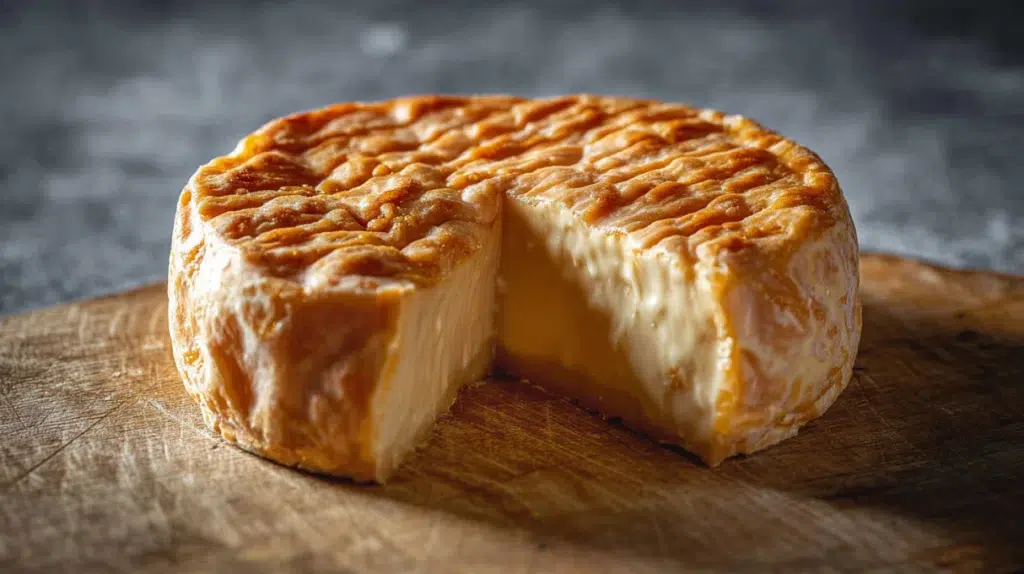
Époisses is sold in a small round wooden box. It is so strongly scented that it is reportedly banned on French public transport. Serve it at room temperature, eat the paste with a spoon or bread, and pair with a rich white Burgundy, the wine from the same region cuts through the intensity perfectly.
Munster (Alsace)
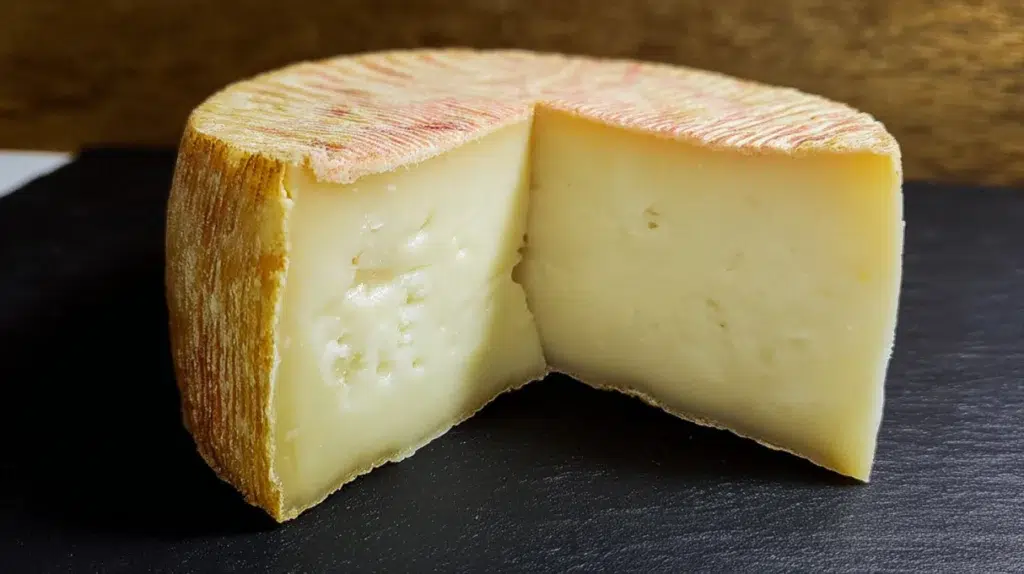
From Alsace in northeastern France, smaller than Époisses, less aggressive, washed with brine and sometimes cumin seeds are pressed into the rind. The interior is elastic and pale yellow with a flavor that is earthy, slightly tangy, and markedly less terrifying than the smell suggests. Traditional Alsatian pairing: Gewürztraminer, whose aromatic richness and slight sweetness balances the cheese’s savory intensity.
Type 3: Blue Cheese
Roquefort, often considered one of the greatest cheeses of France, is protected by French law and aged exclusively in the limestone caves near Toulouse. This cave-aging requirement is not ceremonial, the specific microclimate of those caves (cold, humid, with natural air currents through fissures called fleurines) creates the conditions for Penicillium roqueforti to develop precisely the sharp, tangy, salty flavor that makes Roquefort one of the most recognizable flavors in world cheese culture.
Roquefort is made exclusively from the milk of Lacaune ewes, which is why it has that specific quality different from cow’s milk blues. Sheep’s milk has a higher fat content and a richer, more complex flavor base that contributes to Roquefort’s extraordinary depth.
The French blue family beyond Roquefort:
Fourme d’Ambert, a gentle, milder blue from the Auvergne, made from cow’s milk, much less sharp than Roquefort. Excellent for people who find Roquefort too intense. The entry point to French blues.
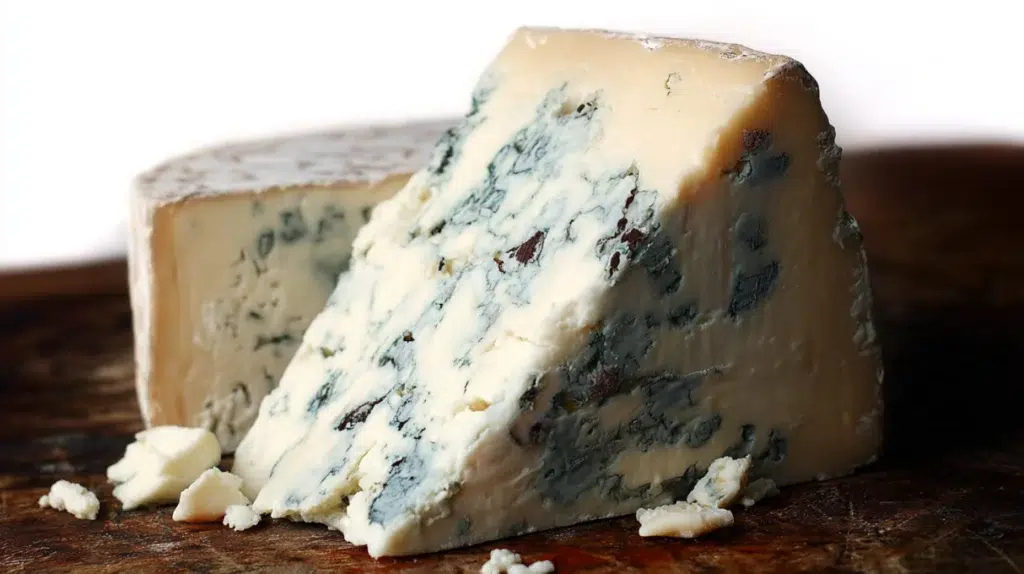
Bleu d’Auvergne, assertive cow’s milk blue from central France, less salty than Roquefort, with a creamier texture. Good in sauces and dressings as well as on the cheese board.
Classic Roquefort pairings: Sauternes (the French sweet wine from Bordeaux, sweet wine with blue cheese is one of the great pairings anywhere in the world), Côtes du Rhône red, walnuts, pears, honey on the board alongside.
Cooking with Roquefort: Crumbled into a warm dressing for bitter greens (endive, radicchio). Mixed with butter and fresh herbs into a compound butter melted over steak. Stirred into a cream sauce for pasta or gnocchi.
Type 4: Semi-Hard and Hard (Pressed, Cooked)
The cheeses used most in cooking and the ones that reward the longest aging. Made by pressing the curds to expel moisture and then cooking the curd mass, producing cheeses that are dense, firm, and able to age for months or years.
Comté
The most consumed cheese in France by volume, a pressed, cooked cow’s milk cheese from the Jura mountains in eastern France. Made in large wheels (up to 50kg), aged for a minimum of 4 months and often 12-24 months or more. The flavor develops from mild and buttery at young ages to complex, crystalline, and deeply savory with notes of toasted nuts, dried fruit and long grass at 24 months plus.
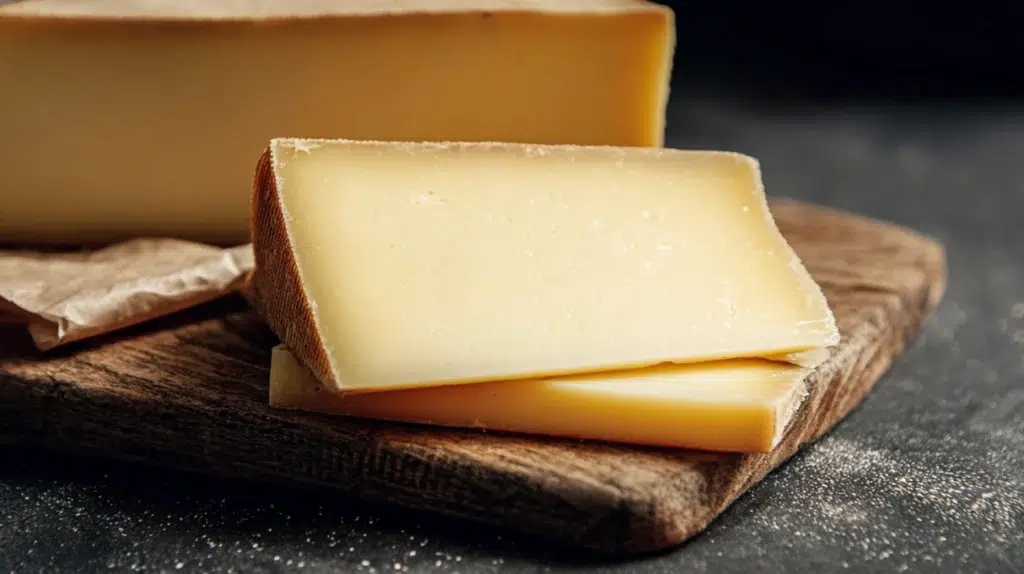
Comté is the cheese Claire finds herself eating in larger quantities than intended every single time she opens the block. It is that specific kind of excellent, the kind where one slice becomes five before you notice.
Use in cooking: The best gratin cheese in French cooking. Essential in croque monsieur and croque madame. The French fondue (fondue Savoyarde) uses Comté alongside Gruyère. Grate it fresh, pre-grated Comté loses its character quickly.
Gruyère
Technically Swiss in origin but produced extensively in the Savoie and Franche-Comté regions of France, where it is often labeled Gruyère de Comté. Slightly sweeter and more hole-free than Swiss Gruyère. The classic cheese for soupe à l’oignon gratinée, its specific melting character and flavor depth are what make the soup’s cheese crust right rather than merely adequate.
Type 5: Fresh and Soft (Unaged)
The youngest cheeses, no aging, sold fresh, mild and clean in flavor. Used in cooking, spread on bread, eaten with herbs and olive oil.
Chèvre (Fresh Goat Cheese)
The category of fresh goat cheese in France is enormous, from pure white fresh logs to aged buttons to ash-covered cylinders. Fresh chèvre is bright, tangy, slightly chalky and works in everything from salads to tarts to pasta. Crottin de Chavignol (Loire Valley), Sainte-Maure de Touraine (Loire), Valençay (Berry), each has its own AOC designation and distinct character.
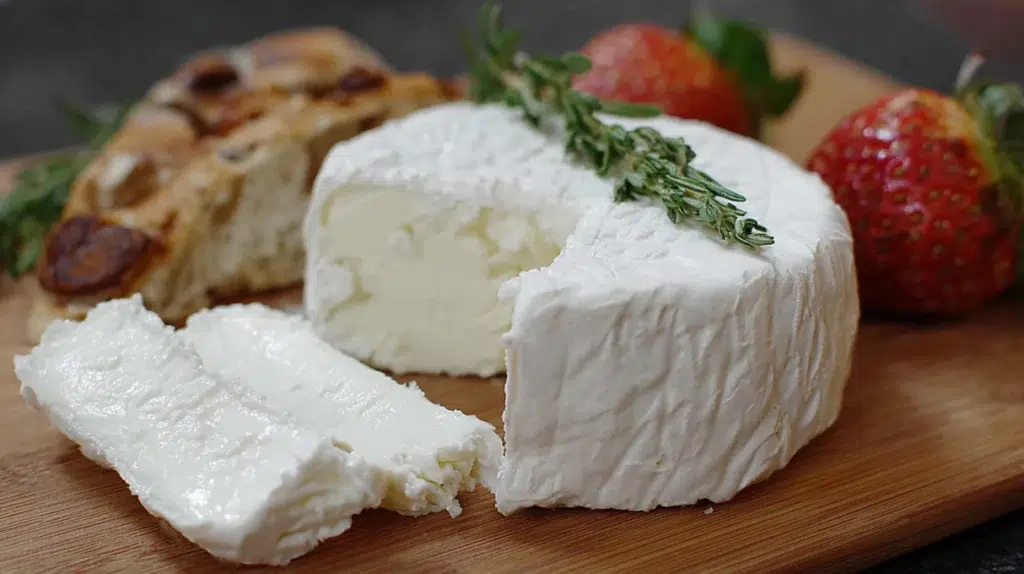
Classic use: Warm chèvre on a dressed green salad, sliced rounds placed on baguette toasts, grilled briefly until just melting, placed on top of dressed bitter salad greens. One of the great simple French first courses.
Fromage Blanc
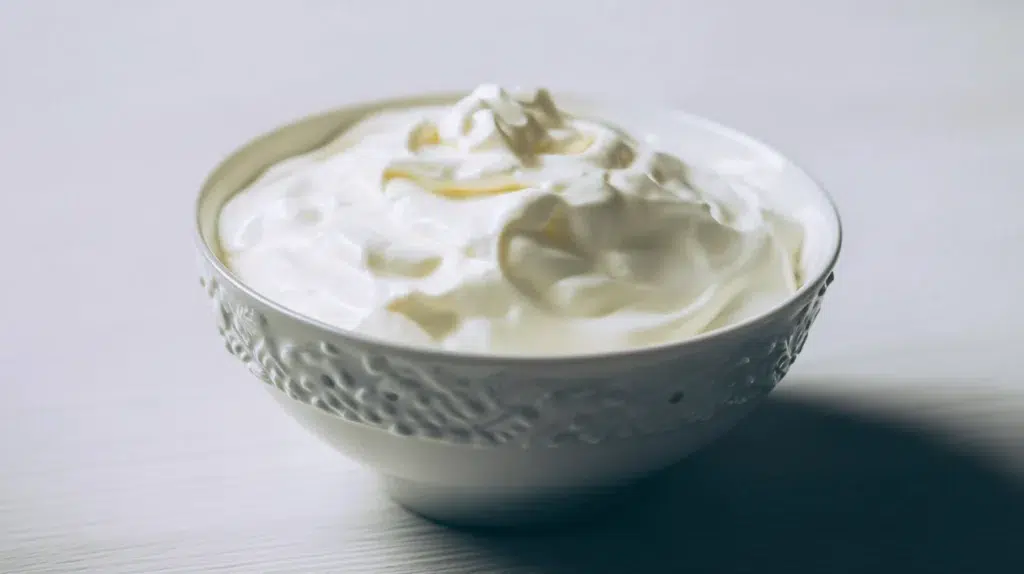
Fresh white cheese similar to a very light cream cheese or a thick Greek yogurt. Used in both sweet and savory applications, stirred into mashed potato (the French version is much lighter than the butter-heavy American version because of the fromage blanc), used as the base of a fresh herb dip, eaten for breakfast with honey. The fat content varies from 0% to 40%, for cooking, use the fuller-fat version.
Building a French Cheese Course at Home
The French cheese course, served after the main dish, before dessert, is one of the most specific pleasures of French hospitality and one of the easiest to recreate.
The rule of three: A minimum of three cheeses, representing different types. The classic combination: one soft (Brie or Camembert), one hard (Comté or Gruyère), one strong (Roquefort or Époisses). This covers the full range of flavor and texture in a single course.
Temperature: Take the cheeses out of the refrigerator 45-60 minutes before serving. Cold cheese mutes flavor dramatically, most of what makes a cheese extraordinary happens at room temperature.
The board: A wooden board, a slate, a large ceramic plate, the presentation surface matters less than the arrangement. Space the cheeses so each has room and the flavors do not bleed into each other. Add accompaniments around them: walnut bread or a good baguette, a small bowl of honey, a few walnuts, dried figs or fresh grapes, quince paste. Nothing else needed.
Wine: Red Burgundy (Pinot Noir) alongside Brie and Comté. Sauternes alongside Roquefort. White Burgundy or Alsace Gewürztraminer alongside Époisses and Munster. If in doubt, Champagne works with almost every French cheese and is never wrong.
After the cheese course: A small dessert, something light and sweet. A French pastry or simply fresh fruit. The cheese course is not the end of the meal, it is the penultimate pleasure before the sweet finish.
Shopping for French Cheese in the US
Where to find it: Whole Foods reliably carries Brie de Meaux, Comté, Roquefort, and several chèvres. Murray’s Cheese counters (inside Kroger and Ralph’s) carry an excellent French selection. Specialty cheese shops in major cities carry the full range including Époisses, Camembert de Normandie and aged Comté.
What to look for on the label:
- AOP or AOC designation: Appellation d’Origine Protégée / Contrôlée. The European equivalent of a wine appellation. Guarantees the cheese is made in the correct region by the correct method.
- “Au lait cru”: raw milk. More flavor, better complexity, the authentic version of most great French cheeses.
- The producer and region: a named producer from the correct region is always preferable to a generic factory version.
The Brie situation in America: By US law, soft-ripened cheeses made from raw milk must be aged at least 60 days before sale. Real Brie de Meaux is aged only 4 weeks, which means authentic raw-milk Brie cannot legally be sold in the US. Most American Brie is made from pasteurized milk. It is good. It is not the same as the real thing. When you travel to France, eat the real Brie de Meaux immediately. It is worth the comparison.
FAQ About French Cheese Guide
What is the difference between Brie and Camembert?
Both are soft-ripened cow’s milk bloomy rind cheeses, Brie is from Île-de-France, Camembert from Normandy. Camembert is smaller and has a slightly more assertive, earthier flavor. Brie is milder and more buttery. Both are excellent. The main practical difference is that Camembert comes in a smaller format (one wheel serves 2-3 people as a course) while Brie is sold as wedges from a larger wheel.
Can I eat the rind?
On Brie and Camembert, yes, absolutely. The white rind is edible, slightly mushroomy, and part of the flavor profile. On washed-rind cheeses like Époisses, the rind is edible but very strong and most people set it aside. On hard pressed cheeses like Comté, the rind is too hard and waxy to eat comfortably, set it aside.
How do I store French cheese?
Wrap each cheese individually in wax paper or cheese paper (not cling film, which suffocates the cheese). Store in the warmest part of the refrigerator, the vegetable drawer. Soft cheeses keep 1-2 weeks after cutting. Hard cheeses keep 3-4 weeks. Roquefort keeps 3-4 weeks tightly wrapped.
Is Roquefort the same as blue cheese?
No. By French law, only blue cheese aged in the caves of Roquefort-sur-Soulzon can be called Roquefort. Other French blue cheeses, Fourme d’Ambert, Bleu d’Auvergne, are excellent in their own right but are categorically different products. Roquefort is a specific protected designation, not a generic blue cheese label.
Planning your week? Add a French cheese and wine evening to your weekly meal planner alongside your everyday staples.