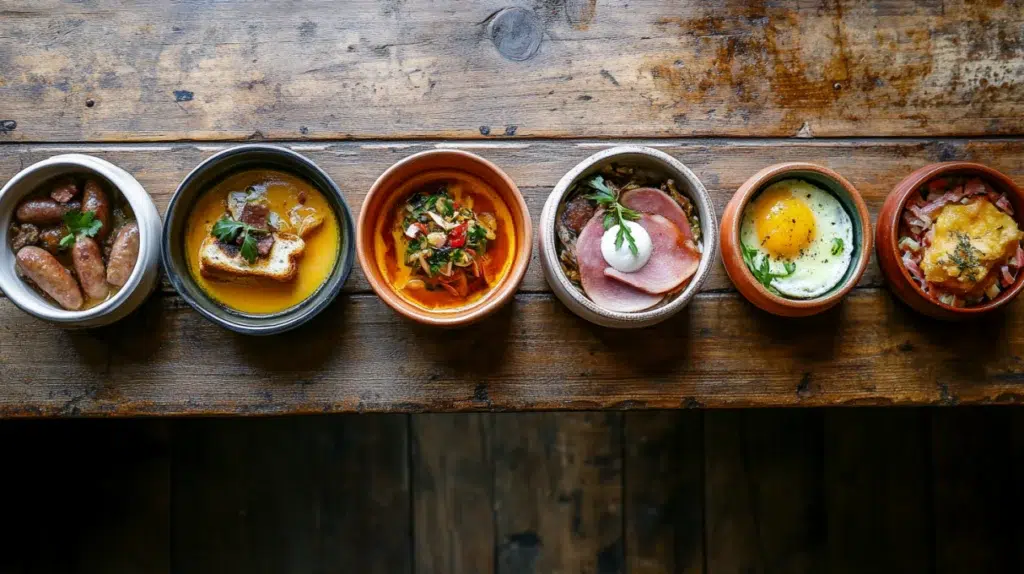
French regional cuisine is the key that unlocks everything confusing about French food for the home cook who has tried to understand it from the outside.
Why does French cooking seem to use cream and butter everywhere in some recipes and olive oil and herbs everywhere in others? Why is cassoulet, a hearty bean and sausage stew, described as French in the same breath as bouillabaisse, a refined saffron seafood soup? Why does choucroute garnie, a dish of pickled cabbage, pork and beer that looks and tastes German, carry a French regional identity? Why is the food in Lyon so different from the food in Bordeaux, which is so different from the food in Marseille?
The answer is that France is not one food culture. It is six, or eight, or ten, depending on how you count, distinct regional traditions that emerged from different geographies, different climates, different agricultural landscapes, different historical influences, and different relationships to the land and sea. French cuisine varies significantly by region, bouillabaisse from Provence, choucroute garnie from Alsace, cassoulet from Languedoc and coq au vin from Burgundy are all iconic regional dishes that have almost nothing in common with each other except the language of the people who make them.
Understanding the six major regional food cultures does more to clarify French cooking than any single recipe or technique. This is part of the French recipes collection, the geographic context that makes everything else make sense.
Region 1: Provence and the South: Olive Oil, Herbs and the Mediterranean
Provence is where French cooking becomes Mediterranean, and where it stops looking like the butter-rich, cream-heavy French food that most people picture when they hear the word French.
The cooking of Provence runs on olive oil. Not as a cooking medium only, as a primary flavor, poured generously over everything from fish to vegetables to bread. Garlic appears in quantities that would alarm a northern French cook. Tomatoes, olives, anchovies, capers, thyme, rosemary and lavender define the flavor palette. The sun-drenched landscape of the region, vineyards, olive groves, lavender fields, the Mediterranean coast, produces ingredients that make their own argument for simplicity.
The defining dishes:
Bouillabaisse, the great Provençal seafood stew from Marseille, is technically the most demanding dish in Provençal cooking and one of the most debated in all of French cuisine. Traditionally made with at least five different types of Mediterranean fish (rascasse, grondin, saint-pierre, conger, vive are the classic choices), saffron, tomatoes, fennel and a powerful garlic-and-saffron paste called rouille spread on toasted croutons for the broth. In Marseille, the question of which fish are acceptable and in what proportion is a genuine point of local pride approaching the intensity of a religion.
Ratatouille, the Provençal vegetable stew of eggplant, zucchini, bell peppers, tomatoes and herbs that is one of the great simple dishes of the region. See the method in the French classics guide, the separate-cooking technique is specifically Provençal in its insistence on preserving each vegetable’s individual character.
Tapenade, a paste of black olives, capers, anchovies and olive oil blended to a thick, intensely savory spread. The most Provençal of all condiments. Spread on toasted baguette. Served alongside grilled fish or lamb. Stirred into pasta. Used as a sauce for roasted tomatoes.
Pissaladière, the Provençal flat tart that predates the Neapolitan pizza in its general concept: a thick bread-like base topped with caramelized onions, anchovies and black olives. Made in Nice specifically. The local answer to Italian pissaladiera. Eaten as a street food, as a first course, or as a light lunch.
Region 2 Burgundy: Wine, Beef and the Greatest Braises in France
Burgundy is France’s most celebrated wine region and one of its greatest cooking regions, and the two facts are inseparable. The cooking of Burgundy is built on its wine in a way no other French region quite matches. The wines go into the braises, the sauces, the marinades, the everything.
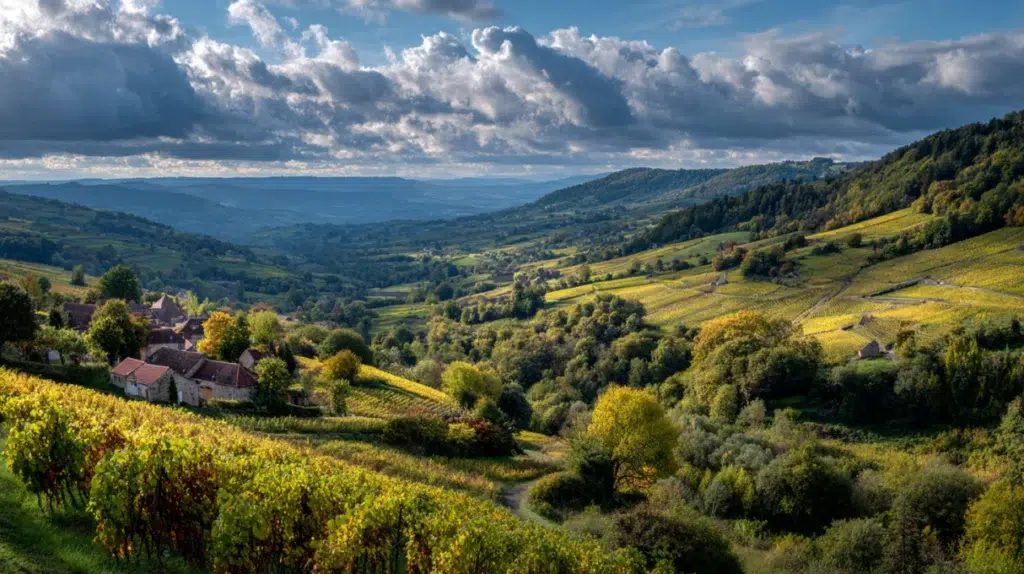
Coq au vin from Burgundy. Boeuf bourguignon from Burgundy, the name says it. Oeufs en meurette, poached eggs in a red wine sauce with lardons and mushrooms that is one of the great Burgundian first courses. The escargots de Bourgogne, Burgundy snails baked in their shells with garlic butter and parsley, one of the most misunderstood French dishes abroad and one of the most natural and delicious in context.
Dijon mustard, from the city of Dijon in the heart of Burgundy, is the condiment that defines the region as much as its wine. The sharp, clean heat of genuine Dijon mustard (made from brown mustard seeds and verjuice or white wine) appears in Burgundian cooking constantly: in salad dressings, in cream sauces for rabbit and chicken, slathered inside croque monsieur before the béchamel goes on, rubbed onto a leg of lamb before roasting.
The Charolais beef raised on Burgundy’s upland pastures is among the finest beef in France, the Charolais breed produces large, muscular animals that benefit from the long, slow braises that Burgundian cooking favors. The combination of exceptional beef, exceptional wine, and exceptional mustard in one small region is either coincidence or the universe making a point.
Region 3 Alsace: The German-French Frontier Kitchen
Alsace sits on the Rhine River border with Germany and has been part of France, then Germany, then France again through its modern history. The food reflects every century of this back-and-forth in a cuisine that is completely unlike anything else in France.
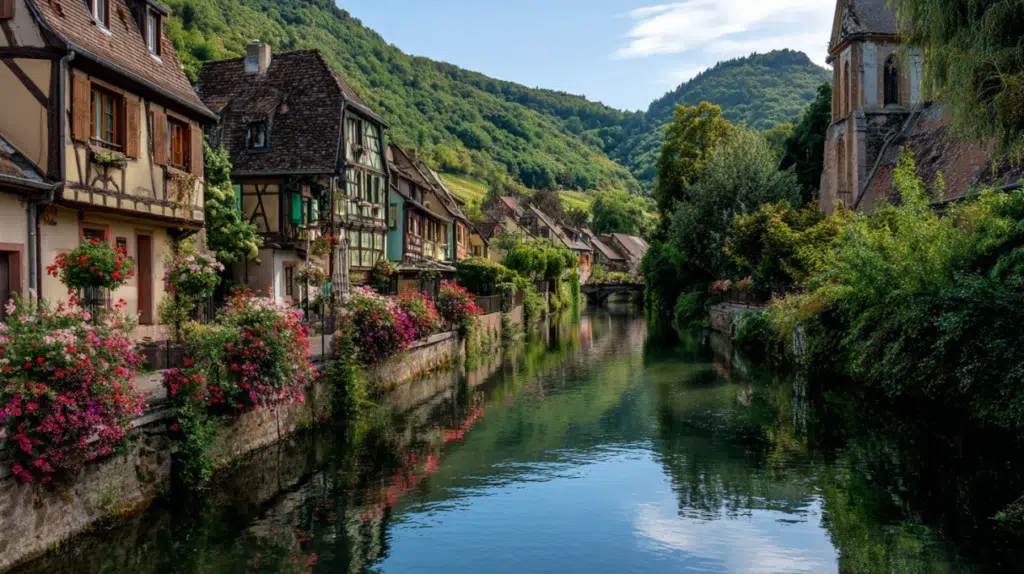
Choucroute garnie, fermented cabbage cooked with Alsatian Riesling, juniper berries and bay leaves, topped with a generous assortment of pork in its many forms: smoked pork belly, pork shoulder, saucisse de Strasbourg (the Alsatian sausage), blood sausage, occasionally duck confit. Served with boiled potatoes. A mountain of food that makes perfect sense in January in the Vosges mountains but seems impossible to imagine in Provence.
Flammkuchen (tarte flambée in French), a thin, crispy flatbread topped with crème fraîche, fromage blanc, thinly sliced onions and lardons. The Alsatian answer to pizza, baked in a wood-fired oven at high heat, eaten immediately. The name means “flame cake”, it was originally used by bakers to test whether their oven had reached the correct temperature.
The Alsatian wine tradition, Riesling, Gewürztraminer, Pinot Gris, Muscat, is the most aromatic in France and pairs specifically with the cuisine of the region. Gewürztraminer alongside Munster cheese. Riesling alongside choucroute or flammkuchen. The wine and the food evolved together in the same landscape.
Alsatian pastry: kugelhopf, the ring-shaped yeast cake studded with raisins and almonds that is the signature Alsatian bake, and bretzel (the soft pretzel, salted and mustard-dipped, sold from bakeries). French pastry elsewhere in France has almost nothing in common with this Germanic baking tradition.
Region 4 Lyon: The Gastronomic Capital
Lyon is considered by most food professionals to be the gastronomic capital of France, a claim that Paris makes about itself and that the rest of France largely accepts for Lyon. The city sits at the confluence of the Rhône and Saône rivers, at the junction of Burgundy to the north, the Alps to the east, and Provence to the south, drawing the best ingredients from all three directions.
The Lyonnais bouchon, a specific type of small, simple, unpretentious bistro serving traditional Lyonnais food, is one of the most specific dining institutions in France. Linen tablecloths. Paper menus. A chalkboard of daily specials. Wine from the nearby Beaujolais and Côtes du Rhône. Food that is rich, fortifying, and made from the less fashionable parts of the animal: tablier de sapeur (fried tripe), quenelles de brochet (pike fish dumplings in cream sauce), cervelle de canut (a fresh herb and fromage blanc spread whose name translates as “silk worker’s brain”), tête de veau (calf’s head), salade lyonnaise (frisée lettuce with lardons, croutons and a poached egg).
The quenelle de brochet is worth singling out, a dish of extraordinary delicacy that requires skill to make properly. Pike flesh is pounded and combined with butter, eggs and cream to form a mousse, then shaped into oval dumplings (quenelles) and poached. Served with a Nantua sauce, a French sauce made from crayfish butter and cream, the combination is one of the great refined dishes of bourgeois French cooking. Not easy. Completely worth learning.
Region 5 Brittany: The Atlantic Coast and Buckwheat
Brittany occupies the northwestern tip of France, surrounded on three sides by the Atlantic Ocean, with a Celtic cultural heritage that makes it feel at times like a different country within France. The food reflects the sea, the flat land, and the specific Breton agricultural tradition, most importantly, buckwheat.
Galettes de sarrasin, buckwheat crêpes, darker and more robust than the wheat flour crêpes of Parisian tradition, are the defining savory food of Brittany. Filled with ham, egg and melted cheese (the classic complète), with mushrooms and cream, with smoked salmon and crème fraîche. The galette is not a crêpe in the way a Parisian would make one, the buckwheat flavor is earthy, slightly bitter, completely distinct, and specifically right with savory fillings.
The butter of Brittany, specifically the salted, cultured butter from Échiré and Deux-Sèvres, is considered the finest in France. This is the butter used for croissants au beurre (the straight ones, distinguished from the curved butterless versions as described in the French pastry guide), for tarte Breton (a thick, extraordinarily buttery shortcrust tart), and for kouign-amann (a caramelized butter pastry that is one of the most spectacular simple bakes in French baking).
The seafood of Brittany, oysters from Cancale and the Belon River, langoustines from the Breton coast, moules marinière (mussels cooked with white wine and shallots), is the finest in France and the foundation of the region’s most celebrated dishes.
Region 6 Bordeaux and the Southwest: Duck, Wine and Cassoulet
The southwest of France, Bordeaux, Périgord, Gascony, Languedoc, produces food that is richer, more abundant, and more uncompromisingly hedonistic than anywhere else in the country. This is the region of duck confit, foie gras, Armagnac, cassoulet, and the world’s most famous wine.
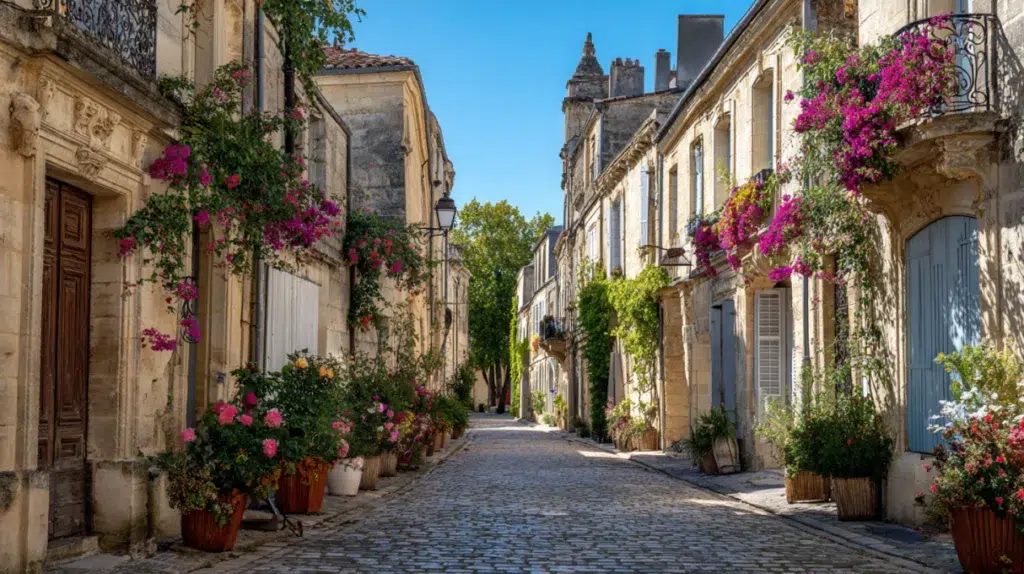
Regional differences in France are marked, bouillabaisse from Marseille, choucroute from Alsace and magret de canard from Bordeaux are among the local dishes that have achieved international fame. Magret de canard, the breast of a duck fattened for foie gras, is one of the great regional specialties: the breast is scored in a crosshatch pattern, cooked skin-side down in a cold pan that comes slowly to temperature, rendering the thick layer of fat underneath the skin until it is crispy and golden, then rested and sliced thin. Served rare to medium-rare, with a simple pan sauce made from the rendered duck fat and a splash of red wine.
Duck confit, the entire leg of duck cured in salt, then cooked slowly submerged in its own fat until completely tender and preserved in that fat, is one of the great slow cooking traditions in French cuisine. The confit can be stored in the fat for weeks, then crisped in a hot pan to order. It appears in cassoulet, on salads with dressed bitter greens, alongside white beans, everywhere in the southwest.
Cassoulet, the great slow-cooked bean and meat casserole from Languedoc, is the dish that most divides the southwest into competing camps (Toulouse, Castelnaudary and Carcassonne each claim the original and correct version) and the dish that best represents the region’s philosophy: take the best local ingredients, white beans grown in the Tarn valley, Toulouse sausage made from pork with wine and garlic, duck confit, pork belly, combine them patiently over many hours, and produce something that is greater than the sum of its considerable parts.
The French cheese of the southwest, Roquefort from the limestone caves near Toulouse, aged Comté from the alpine foothills to the east, completes a table that has everything.
FAQ About French Regional Cuisine
Which region of France has the best food?
Lyon is the most commonly cited answer among food professionals, it has the deepest bistro tradition, the most celebrated ingredient sources, and the highest concentration of excellent restaurants per capita. Burgundy is the answer among those who prioritize wine and braises. Provence is the answer among those who want fresh, vegetable-forward cooking. The most honest answer is that each region is the best at what it does.
What is the difference between Provençal and Parisian French food?
Provençal food is Mediterranean, olive oil, garlic, tomatoes, herbs, fish. Parisian food is northern French, butter, cream, refined sauces, classic bistro cooking. They share a language and a culinary tradition at the highest level but are day-to-day completely different in their flavors and philosophies.
Is Alsatian food French or German?
Both and neither. Alsace has been part of both countries at different points in modern history and its food reflects both traditions simultaneously. Choucroute garnie is German in character. Flammkuchen is Alsatian specifically. The wines are in a French tradition but entirely unlike wines from any other French region. It is the most genuinely borderless cuisine in either country.
What is the easiest French regional recipe to start with?
Ratatouille for Provençal, simple ingredients, forgiving technique, spectacular result. Salade lyonnaise for Lyonnais, frisée, lardons, croutons and a poached egg, one of the best salads in the world and straightforward to assemble. Galettes de sarrasin for Brittany, buy buckwheat flour, follow the crêpe method in the classics guide.
Planning your week? Add a French regional dinner to your weekly meal planner alongside your everyday staples.