⏱ Prep: 20 min 🔥Fry pita: 8 min 👤Serves: 4–6 🌿Diet: Vegan option
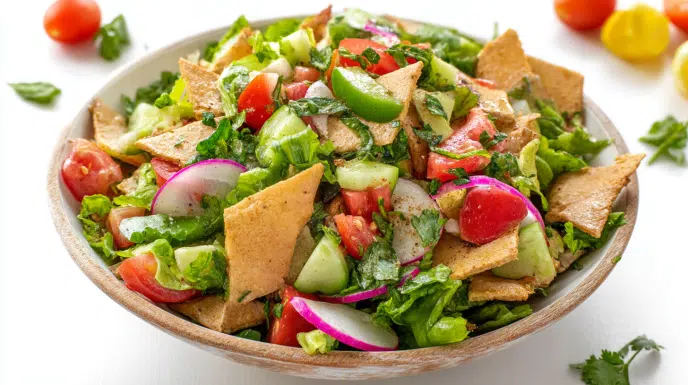
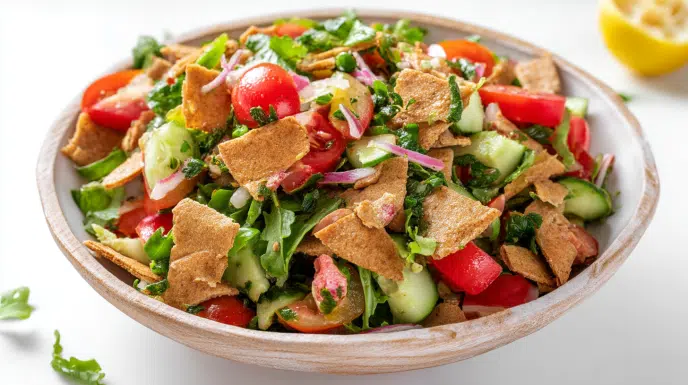
Fattoush salad recipe is the Lebanese bread salad that makes you wonder why every salad does not have fried pita in it. Crispy golden pita chips seasoned with za’atar, romaine lettuce, ripe tomatoes, Persian cucumber, radishes, red onion, fresh mint and flat-leaf parsley, tossed in a dressing of fresh lemon juice, sumac, pomegranate molasses, garlic and the best olive oil you own. The dressing is tangy, slightly sweet, deeply herby and unlike any Western salad dressing you have made before. Twenty minutes. No cooking beyond the pita chips. The most vibrant salad in the Middle Eastern collection.
Ingredients
For the pita chips
- 2 large pita breads, day-old or slightly stale pita fries better than fresh, it has less moisture and crisps more evenly. Split each pita into two rounds, then cut into 1-inch (2.5cm) rough pieces.
- 3 tablespoons olive oil, for frying
- 1 tablespoon za’atar, sprinkled over the pita pieces before frying. The za’atar toasts in the oil and seasons the chips with a specific herby, sesame-forward flavor that plain salted pita cannot match.
- ¼ teaspoon salt
- ¼ teaspoon sumac, sprinkled over the hot chips immediately after frying while the oil is still wet
For the salad
- 1 head romaine lettuce, roughly chopped, or iceberg. Roughly chopped not fine, not torn to shreds. Large pieces hold their structure against the dressing.
- 3 ripe Roma or vine tomatoes, cut into wedges, or 8 oz (225g) cherry tomatoes, halved. Ripe only, underripe tomatoes are the most common fattoush mistake.
- 4 Persian cucumbers, diced, or 1 English cucumber. Persian cucumbers have the thinnest skin and fewest seeds, no peeling needed.
- 5–6 radishes, very thinly sliced, a mandoline produces the ideal paper-thin slice. Radishes add a mild peppery crunch that no other vegetable in this salad provides.
- ½ red onion, very thinly sliced, or 3–4 spring onions. If using red onion, soak in cold water for 5 minutes to remove the raw harshness then drain completely.
- 1 red bell pepper, diced, optional but adds sweetness and color
- ¼ cup fresh flat-leaf parsley, roughly chopped
- ¼ cup fresh mint leaves, roughly torn, fresh only. Mint is the herb that makes fattoush taste unmistakably Lebanese.
- 3 tablespoons pomegranate seeds, optional but traditional and beautiful. Adds pops of sweetness against the tangy dressing.
For the sumac dressing
- ¼ cup (60ml) extra virgin olive oil, your best quality
- 3 tablespoons fresh lemon juice, from 1½ large lemons. Fresh only, never bottled.
- 1 tablespoon pomegranate molasses, the ingredient that makes fattoush dressing distinctly Lebanese. Adds a specific sweet-tart depth that lemon alone cannot produce. Available at Middle Eastern grocery stores, Whole Foods and Amazon. Substitute: 1 teaspoon balsamic vinegar plus 1 teaspoon honey, not identical but acceptable.
- 1½ tablespoons ground sumac, the most important spice in fattoush. Provides the tangy, fruity, slightly astringent quality that gives the dressing its signature character. Do not skip or reduce.
- 1 clove garlic, finely grated
- ½ teaspoon dried mint, adds a background herby depth distinct from the fresh mint in the salad
- ½ teaspoon salt, plus more to taste
- ¼ teaspoon black pepper
Let’s make Fattoush Salad
- Make the dressing first. Combine lemon juice, pomegranate molasses, grated garlic, sumac, dried mint, salt and black pepper in a jar with a tight lid. Add the olive oil. Seal and shake vigorously for 30 seconds until completely emulsified. Taste, it should be bold, tangy, slightly sweet and deeply savory. The dressing should taste almost too strong on its own, it mellows significantly once it hits the salad. Adjust: more lemon for brightness, more pomegranate molasses for sweetness, more sumac for tang. Set aside, the dressing can be made up to 3 days ahead.Make the dressing before everything else. The sumac and pomegranate molasses need a few minutes to hydrate and bloom in the lemon juice, the dressing is noticeably better after 10 minutes than immediately after shaking.
- Fry the pita chips. Split each pita bread into two thin rounds by pulling them apart. Cut into rough 1-inch pieces, they do not need to be uniform. Heat olive oil in a wide skillet over medium-high heat. Add the pita pieces and za’atar. Fry for 4–6 minutes, stirring frequently, until golden brown and crispy on all sides. Season with salt. Remove from the pan and immediately sprinkle with sumac while still hot and glistening with oil, the oil helps the sumac adhere. Drain on paper towels.Fried pita chips are significantly better than baked, crispier, more golden and with a richer flavor. Baked chips produce a drier, less satisfying crunch. If you must bake: 400°F (200°C) for 8–10 minutes, turning once. The fried version is worth the extra oil.
- Prepare the vegetables. Roughly chop the romaine. Cut tomatoes into wedges. Dice cucumbers. Slice radishes paper-thin. Soak red onion in cold water for 5 minutes then drain completely and pat dry. Roughly chop parsley and tear mint leaves.Cut everything to roughly the same size, each forkful should contain all components in balance. Very large pieces mean some bites have only lettuce. Very small pieces make the salad lose its individual textures. Roughly 1-inch pieces across the board is correct.
- Assemble, timing matters. Place all vegetables and herbs in a large bowl. Pour the dressing over everything and toss gently until every piece is coated. Taste and adjust, more salt, more lemon, more sumac. Add the pita chips and pomegranate seeds at the very last moment before serving, they go from crispy to soggy within 5 minutes of contact with the dressing. Serve immediately.This is the non-negotiable rule of fattoush: the pita chips go in last and the salad is eaten immediately. A dressed fattoush salad sitting for 20 minutes before serving is a soggy disappointment. Time the pita chips to be ready as the guests sit down.
What actually matters here
Sumac and pomegranate molasses are not interchangeable with anything else in this dressing and together they are what makes fattoush taste like fattoush rather than a generic lemon vinaigrette poured over vegetables. The special ingredient that makes fattoush uniquely Lebanese rather than just another lemon dressing is pomegranate molasses, a tart, sweet syrup that adds flavor, sweetness, tang and slightly thickens the dressing. Sumac provides the lemony, tangy quality with a distinctive red color. The two work together: sumac provides sharp citrus-forward tang, pomegranate molasses provides deep sweet-tart complexity. Use both. Use enough of both, 1½ tablespoons of sumac and a full tablespoon of pomegranate molasses is correct. Reducing either produces a flatter, less interesting dressing.
A shortcut that works
Claire’s note
Make-ahead fattoush is possible if you treat each component separately. The dressing keeps 3 days refrigerated in a sealed jar, shake before using. The vegetables can be chopped and refrigerated for up to 24 hours in a sealed container, separately from the dressing. The pita chips are the only component that cannot be made ahead, fry them fresh when you are ready to serve. This means a dinner party fattoush takes 8 minutes of active work at serving time: fry the pita, pour the dressing, toss and add the chips. Everything else was done earlier. Stale pita actually produces better chips than fresh, if your pita has been sitting on the counter overnight, that is ideal.
Serve with
Fattoush is the bright, acidic counterpoint that every rich Middle Eastern meal needs alongside it. It belongs with chicken shawarma and beef kafta kebabs, the tangy sumac dressing cuts through the richness of the spiced meats in exactly the right way. On a full Lebanese mezze spread it sits alongside tabbouleh, hummus and labneh as the bright green element the table needs. For everything else in the Lebanese collection the complete Lebanese recipes guide has it all.
Add fattoush to your weekly meal planner, make the dressing Sunday and the vegetables keep chopped for 24 hours. Weeknight fattoush is 8 minutes of work. And for more recipes, follow us on Pinterest.
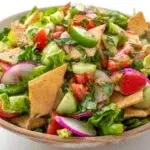
Fattoush Salad
- Total Time: 28 minutes
- Yield: 4–6 servings 1x
- Diet: Vegan
Description
A vibrant Lebanese bread salad with crispy pita chips, fresh vegetables, and a tangy sumac dressing.
Ingredients
- 2 large pita breads, day-old or slightly stale
- 3 tablespoons olive oil, for frying
- 1 tablespoon za’atar
- ¼ teaspoon salt
- ¼ teaspoon sumac
- 1 head romaine lettuce, roughly chopped
- 3 ripe Roma or vine tomatoes, cut into wedges
- 4 Persian cucumbers, diced
- 5–6 radishes, very thinly sliced
- ½ red onion, very thinly sliced
- 1 red bell pepper, diced (optional)
- ¼ cup fresh flat-leaf parsley, roughly chopped
- ¼ cup fresh mint leaves, roughly torn
- 3 tablespoons pomegranate seeds (optional)
- ¼ cup extra virgin olive oil
- 3 tablespoons fresh lemon juice
- 1 tablespoon pomegranate molasses
- 1½ tablespoons ground sumac
- 1 clove garlic, finely grated
- ½ teaspoon dried mint
- ½ teaspoon salt
- ¼ teaspoon black pepper
Instructions
- Make the dressing first: Combine lemon juice, pomegranate molasses, grated garlic, sumac, dried mint, salt, and black pepper in a jar with a tight lid. Add olive oil, seal, and shake vigorously for 30 seconds.
- Fry the pita chips: Heat olive oil in a skillet over medium-high heat. Add pita pieces and za’atar, frying for 4–6 minutes until golden and crispy.
- Prepare the vegetables: Roughly chop romaine, cut tomatoes into wedges, dice cucumbers, slice radishes, soak red onion for 5 minutes, and chop parsley and mint.
- Assemble the salad: Place all vegetables and herbs in a large bowl, pour the dressing over, and toss gently. Add the pita chips and pomegranate seeds just before serving.
Notes
Fry pita chips fresh for the best crunch. Serve immediately after adding chips to avoid sogginess.
- Prep Time: 20 minutes
- Cook Time: 8 minutes
- Category: Salad
- Method: Frying
- Cuisine: Lebanese
Nutrition
- Serving Size: 1 serving
- Calories: 250
- Sugar: 3g
- Sodium: 350mg
- Fat: 14g
- Saturated Fat: 2g
- Unsaturated Fat: 10g
- Trans Fat: 0g
- Carbohydrates: 30g
- Fiber: 5g
- Protein: 6g
- Cholesterol: 0mg