
⏱ Active: 5 min 🕐Strain: 24–48 hrs 👤Makes: 2 cups 🌿Diet: Vegetarian, Gluten-free
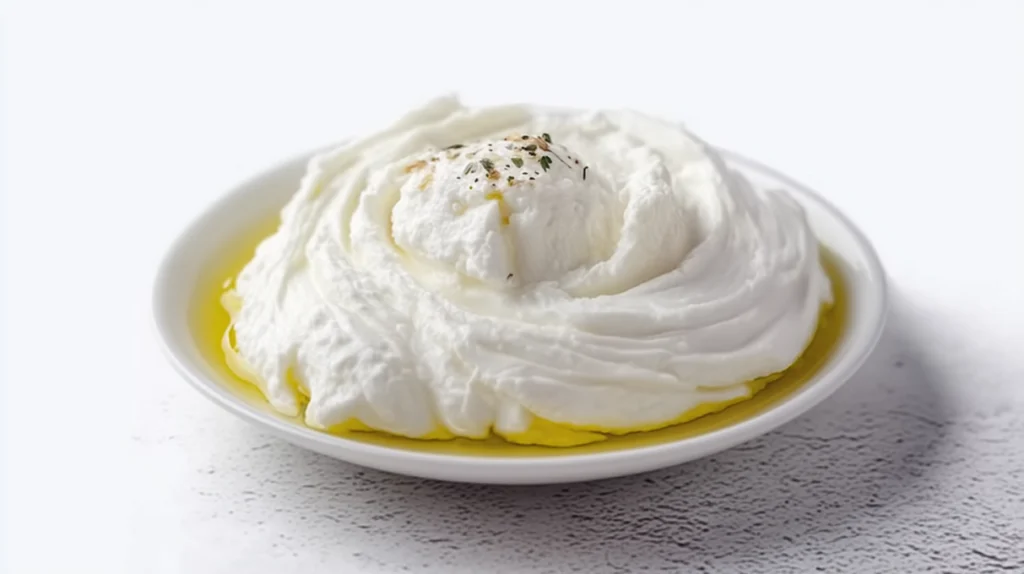
Labneh recipe is the simplest thing in this entire collection, full-fat yogurt mixed with salt, wrapped in cheesecloth and hung to drain overnight. That is the whole recipe. What comes out of the cheesecloth the next morning is something thicker than Greek yogurt and creamier than cream cheese, with a deep tangy richness that two ingredients have no right to produce. Drizzled with good olive oil, scattered with za’atar and served with warm pita, it is the Middle Eastern dip that belongs on every table, at every meal, with everything.
I first had labneh at breakfast in Beirut, served on a flat plate with a pool of olive oil, a scatter of dried mint and a stack of warm bread. I have never looked at plain yogurt the same way since.
Ingredients
For the labneh: 2 ingredients
- 4 cups (900g) full-fat plain yogurt, full-fat is non-negotiable. Low-fat and fat-free yogurts do not have enough fat content to produce a creamy, stable labneh, they produce a watery, grainy result. Use the best quality whole-milk yogurt you can find. Goat’s milk yogurt produces the most authentic flavor. Cow’s milk yogurt is excellent. Greek yogurt works but strains faster, check at 12 hours.
- ¾ teaspoon fine sea salt, or kosher salt in equal amounts. Mix thoroughly into the yogurt before straining, the salt draws moisture out and seasons the labneh throughout, not just on the surface.
For serving: classic presentation
- 3 tablespoons extra virgin olive oil, use your best olive oil here. Labneh amplifies the flavor of the oil it is drizzled with. A peppery, grassy olive oil is extraordinary. A flat, cheap olive oil is noticeable.
- 1 tablespoon za’atar, Middle Eastern herb blend of dried thyme, sesame seeds and sumac. Available at Middle Eastern grocery stores, Whole Foods and Amazon. Non-negotiable for the classic presentation.
- Warm pita bread, for dipping and scooping
Optional toppings, choose your direction
- Pomegranate seeds and honey, the sweet version, extraordinary at breakfast
- Dried mint and a pinch of Aleppo pepper, the Lebanese morning presentation
- Cherry tomatoes, sliced cucumber and fresh herbs, the mezze spread version
- Confit garlic and fresh thyme, the dinner party version
- Dukkah, Egyptian nut and herb blend, spectacular with labneh on bread
The method
- Salt the yogurt. Pour the full-fat yogurt into a large bowl. Add the salt. Stir thoroughly for 60 seconds until the salt is completely and evenly distributed throughout, not just stirred in superficially. The salt is what draws the whey out of the yogurt during straining. Uneven salting produces uneven drainage and uneven flavor.Taste the salted yogurt directly. It should taste pleasantly seasoned, not aggressively salty, not flat. Adjust now. Once strained the salt flavor concentrates slightly as volume reduces.
- Set up the straining. Place a large fine-mesh strainer over a deep bowl, the bowl must be deep enough that the straining labneh does not sit in the collected whey. Line the strainer generously with cheesecloth, use 2–3 layers if the cheesecloth is thin. Alternatively use a clean cotton kitchen towel or a flour sack towel. Pour the salted yogurt into the center of the cloth.The bowl underneath must be deep enough to hold 1–2 cups of liquid (the whey). If the labneh touches the whey it stops straining and sits in its own liquid. Do not let them touch.
- Hang or refrigerate to strain. Gather the edges of the cheesecloth and tie tightly at the top. Two options: hang the tied bundle from a kitchen faucet over the sink (traditional, strains at room temperature, faster) or set the strainer and bowl setup in the refrigerator (slower but safer for warm kitchens). Cover loosely and leave for 24–48 hours.Check at 24 hours, the labneh should be thick, creamy and spreadable, similar to soft cream cheese. For a firmer labneh suitable for rolling into balls, strain for the full 48 hours. For a softer, more spreadable labneh that is closer to Greek yogurt in texture, 12 hours is enough.
- Unwrap and transfer. Open the cheesecloth carefully. The labneh will have reduced to roughly half its original volume. It should be smooth, white and thick, if you press it with a finger it holds the impression. Transfer to a serving bowl or airtight container using a spatula. Do not discard the whey, it is nutritious liquid protein that works in smoothies, bread dough, soup bases and bean-soaking water.
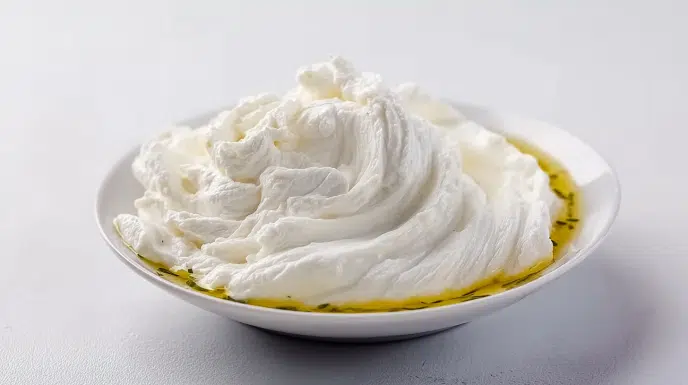
- Serve. Spread the labneh onto a wide, shallow plate using the back of a spoon, swirl from the center outward to create a natural wave pattern across the surface. Use the spoon to press a shallow well in the center. Drizzle 3 tablespoons of your best olive oil into the well and over the surface. Scatter za’atar generously over everything. Add any optional toppings. Serve immediately with warm pita alongside.
What actually matters here
The yogurt is the recipe. Everything else, the salt, the cheesecloth, the straining time, are just the method. Use full-fat, high-quality yogurt and the labneh will be extraordinary. Use low-fat or average yogurt and the labneh will be adequate. The fat content is not negotiable, it is what produces the creamy, stable texture that makes labneh different from just thick yogurt. Goat’s milk yogurt produces the most complex, tangy, authentically Middle Eastern labneh. Whole-milk cow’s milk yogurt produces something slightly milder and equally excellent. Both are correct. Both are worth making. The only version that produces a disappointing result is low-fat. Buy the full-fat version and make no apologies.
A shortcut that works
Claire’s note
Store-bought labneh is available at Middle Eastern grocery stores, Whole Foods and some Trader Joe’s locations, skip the straining entirely and go straight to the serving step. The homemade version is better. But the store-bought version is perfectly good and takes 30 seconds. For labneh balls, the preserved version popular across Lebanon and the Levant: roll the fully strained 48-hour labneh into walnut-sized balls with lightly oiled hands. Pack into a clean jar with dried herbs (thyme, mint, chili flakes, za’atar), whole peppercorns and garlic cloves. Cover completely with extra virgin olive oil. Seal and refrigerate, ready to eat in 24 hours, keeps for up to 1 month. The olive oil takes on the labneh flavor and is extraordinary for dipping bread.
15 ways to use labneh
Once you have labneh in the fridge it replaces at least five other condiments. Here is every direction worth taking it:
- Spread on warm pita with olive oil and za’atar, the classic
- Swirl under roasted vegetables as a base on the plate
- Serve with eggs at breakfast instead of butter
- Use as a pizza base instead of tomato sauce
- Stir into pasta with lemon zest and herbs
- Spread in a sandwich instead of mayo
- Drizzle with honey and pomegranate seeds for dessert
- Use as a dip for crudités instead of hummus
- Dollop onto soup instead of cream
- Smear under grilled chicken on the plate
- Mix with garlic as a sauce for grilled lamb
- Serve with shakshuka instead of plain yogurt
- Use in place of cream cheese on a bagel
- Roll into balls in herbs and pack in olive oil
- Add to a mezze spread alongside hummus and muhammara
For the complete Middle Eastern table, the spreads, the bread and the full mezze collection, the Lebanese mezze guide, hummus and muhammara are the natural companions. Everything together on one table is the Middle Eastern recipes collection.
Add labneh to your weekly meal planner, make a batch Sunday night, unwrap Monday morning and eat it all week with everything. And for more recipes, follow us on Pinterest.
Print
Labneh
- Total Time: 1445 minutes
- Yield: 2 cups 1x
- Diet: Vegetarian, Gluten-free
Description
A creamy and tangy Middle Eastern yogurt dip made from just two ingredients.
Ingredients
- 4 cups (900g) full-fat plain yogurt
- ¾ teaspoon fine sea salt
- 3 tablespoons extra virgin olive oil (for serving)
- 1 tablespoon za’atar (for serving)
- Warm pita bread (for serving)
Instructions
- Salt the yogurt. Pour the full-fat yogurt into a large bowl. Add the salt. Stir thoroughly for 60 seconds until the salt is completely and evenly distributed throughout.
- Set up the straining. Place a large fine-mesh strainer over a deep bowl lined with cheesecloth. Pour the salted yogurt into the center of the cloth.
- Hang or refrigerate to strain. Gather the edges of the cheesecloth and tie tightly. Hang the tied bundle from a kitchen faucet over the sink or set in the refrigerator to strain for 24–48 hours.
- Unwrap and transfer. Open the cheesecloth carefully. The labneh should be smooth, white, and thick. Transfer to a serving bowl.
- Serve. Spread the labneh onto a wide, shallow plate, drizzle with olive oil, scatter za’atar, and add optional toppings. Serve immediately with warm pita.
Notes
Use full-fat, high-quality yogurt for the best results. Goat’s milk yogurt gives the most authentic flavor, but cow’s milk yogurt also works well.
- Prep Time: 5 minutes
- Cook Time: 1440 minutes
- Category: Appetizer
- Method: Straining
- Cuisine: Middle Eastern
Nutrition
- Serving Size: 1 cup
- Calories: 280
- Sugar: 6g
- Sodium: 180mg
- Fat: 20g
- Saturated Fat: 12g
- Unsaturated Fat: 8g
- Trans Fat: 0g
- Carbohydrates: 6g
- Fiber: 0g
- Protein: 14g
- Cholesterol: 50mg