⏱ Char: 20–25 min 🕐Cool: 20 min 👤Makes: 2 cups 🌿Diet: Vegetarian, Gluten-free
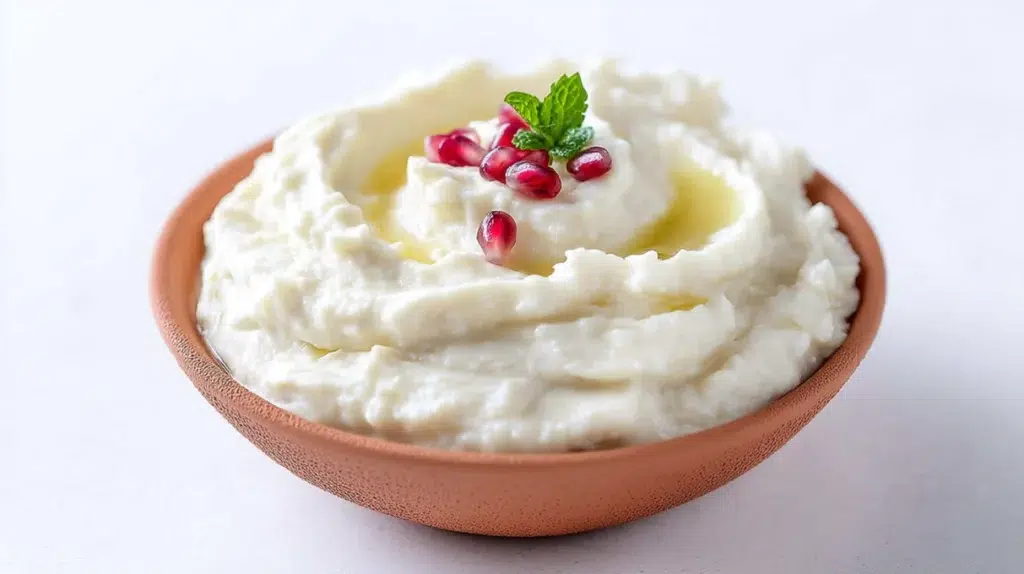
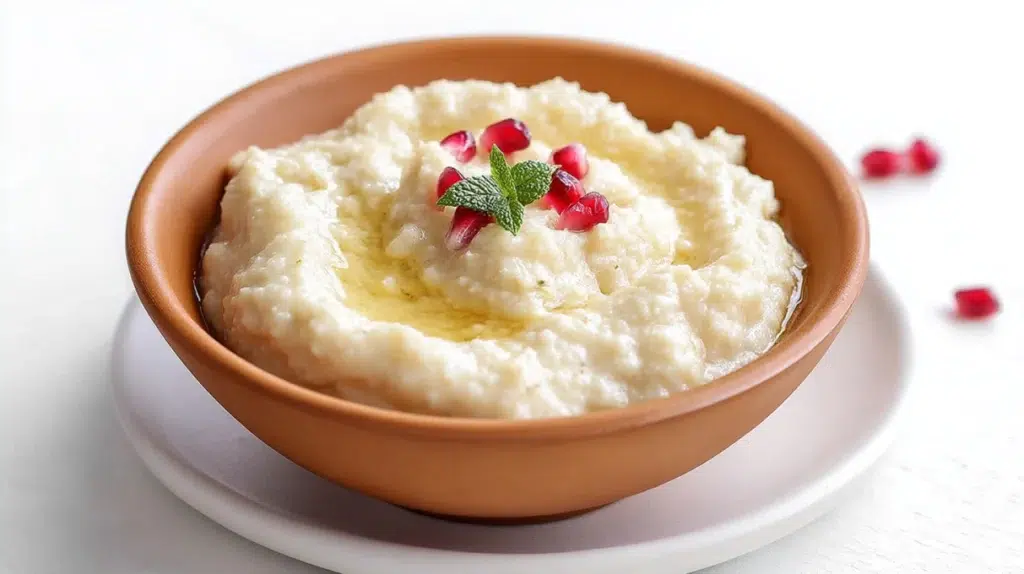
Mutabbal recipe is the eggplant dip that belongs next to the hummus on a Lebanese mezze table, charred eggplant blended smooth with a generous amount of tahini, thick yogurt, garlic and fresh lemon until the texture is silky and almost mousse-like, finished with olive oil, pomegranate seeds and sumac. Richer than baba ganoush, smoother than baba ganoush, and the version you will find at every serious mezze restaurant from Beirut to Amman.
Ingredients
- 2 large eggplants, roughly 1 lb (450g) each. Charred directly over a gas flame, under the broiler or on a grill until completely blackened all over and collapsed. The char is the whole recipe, the eggplants must be genuinely blackened, not just dark. See step 1.
- ⅓ cup (80g) tahini, stir the jar thoroughly before measuring, tahini separates during storage. Mutabbal uses significantly more tahini than baba ganoush, this is what creates its characteristic silky, nutty richness. Use a good quality tahini: Soom, Seed + Mill or Cedar’s.
- ¼ cup (60g) full-fat Greek yogurt, this is the defining ingredient that separates mutabbal from baba ganoush. It adds a tangy creaminess and lightens the color. Full-fat only, low-fat yogurt makes the dip watery. Can substitute with 2 tablespoons labneh for an even richer result.
- 3 tablespoons fresh lemon juice, from 1½ lemons. Fresh only. Mutabbal needs generous lemon, the acidity cuts through the richness of the tahini and yogurt.
- 2 cloves garlic, finely grated, grated on a microplane for the smoothest integration into the blended dip
- ½ teaspoon ground cumin, adds a warm earthy note that deepens the smoky flavor
- ½ teaspoon salt, plus more to taste
- 1 tablespoon pomegranate molasses, stirred through the finished dip for a distinctive sweet-tart depth. This is what differentiates Lebanese and Syrian mutabbal from simpler versions. Available at Middle Eastern grocery stores and Whole Foods. Substitute: ½ teaspoon sumac dissolved in 1 teaspoon lemon juice.
- 2 tablespoons extra virgin olive oil, plus extra for serving. Your best quality.
For serving
- Extra virgin olive oil, drizzled generously
- Pomegranate seeds, the jewel-like garnish that makes mutabbal visually stunning on a mezze table
- Ground sumac, a light dusting adds tartness and a deep red color
- Fresh flat-leaf parsley or mint, finely chopped
- Toasted pine nuts, optional but beautiful
- Warm pita bread
The method
- Char the eggplants. Pierce each eggplant all over with a fork. Choose your method:Gas stovetop (best):Place directly over a medium-high flame. Turn with tongs every 4–5 minutes. Char for 20–25 minutes total until completely blackened all over and the eggplant is soft and collapsed, press it, it should yield with no resistance anywhere.Broiler:Line a tray with foil. Broil at highest setting turning every 5 minutes for 20–30 minutes until completely blackened and very soft.Grill:Over high heat directly on the grates. Turn every 5 minutes for 25–30 minutes.The eggplant must look destroyed, fully blackened, slumped and collapsed. An undercooked eggplant produces a bitter, watery mutabbal regardless of what else you add to it.
- Steam, peel and drain. Place charred eggplants in a bowl and cover tightly with plastic wrap. Steam for 15 minutes, this concentrates the smoky flavor and continues cooking any remaining raw spots. Uncover, peel off all the blackened skin and discard. Place the flesh in a colander and press gently. Drain for 5 minutes, this step removes excess liquid and prevents a watery dip.Discard the dark liquid that collects. Do not add it back to the dip, it is bitter and watery.
- Whisk the tahini base first. In a large bowl, whisk together the tahini, yogurt, lemon juice, grated garlic, cumin and salt until completely smooth, the mixture will initially seize and look clumpy, then loosen into a creamy, pale paste as you whisk. This is the technique that gives mutabbal its characteristic lighter color and silky texture, whisking the tahini with the lemon and yogurt before adding the eggplant aerates and lightens it significantly.Whisk the tahini mixture until it looks pale and creamy before adding anything else. If it is still thick, add 1 tablespoon of ice-cold water and whisk again. The pale, creamy tahini base is what gives mutabbal its distinct lighter color compared to baba ganoush.
- Add the eggplant. Unlike baba ganoush, which uses a fork for a chunky texture, mutabbal is blended smooth. Add the drained eggplant to the tahini base. Use a food processor or immersion blender for 30–60 seconds until smooth and creamy. Or mash with a fork and stir vigorously for a slightly more textured result. Add the pomegranate molasses and olive oil. Blend briefly to incorporate.Taste now and adjust: more lemon for brightness, more tahini for richness, more salt. The dip should taste smoky, nutty, tangy and creamy all at once. The pomegranate molasses adds a subtle sweet-tart finish that rounds everything.
- Rest and serve. Refrigerate for at least 30 minutes, the flavors meld and the texture firms slightly. Spread onto a wide plate, creating a swirl. Drizzle generously with olive oil. Scatter pomegranate seeds, a dusting of sumac, fresh parsley and toasted pine nuts. Serve with warm pita.
Mutabbal vs baba ganoush: the actual difference
The names are used interchangeably in the West but the dishes are distinct. Here is what separates them:
Mutabbal: More tahini. Greek yogurt or labneh in the dip itself. Blended smooth, almost mousse-like. Paler color. Pomegranate molasses stirred through. Richer, creamier, more complex.
Baba Ganoush: Less tahini. No yogurt. Mixed with a fork, chunky and rustic. Darker color. Olive oil and smoked paprika on top. More smoky and earthy, less rich.
Both start with the same charred eggplant. The yogurt and the extra tahini in mutabbal are what create the silky, mousse-like texture that is absent from baba ganoush. If you want a rustic, chunky, smoke-forward dip, make baba ganoush. If you want a smooth, creamy, tahini-forward dip, make this.
Make it ahead
Claire’s note
Mutabbal improves overnight, the smoky flavor deepens, the garlic mellows and the tahini and yogurt fully integrate. Make it the day before and refrigerate in a sealed container for up to 4 days. It keeps better than baba ganoush because the yogurt stabilizes the dip and prevents it from separating. Bring to room temperature for 20 minutes before serving, cold mutabbal is dense and the flavors are muted. Add the garnishes, olive oil, pomegranate seeds, sumac, fresh at serving only. The eggplants can be charred and stored in the fridge up to 2 days before blending, peel, drain and refrigerate the flesh, then blend when ready to make the dip.
Serve with
Mutabbal belongs on a full Lebanese mezze spread alongside hummus, labneh, tabbouleh and warm pita, it is the creamy eggplant counterpoint that the spread needs. It also works as a sauce under grilled lamb or alongside beef kafta kebabs. For everything else on the Middle Eastern table the complete Middle Eastern recipes collection has it all.
Add mutabbal to your weekly meal planner, char the eggplants Sunday and the dip is made in 10 minutes, better Monday and excellent Tuesday. And for more recipes, follow us on Pinterest.
Print
Mutabbal: Lebanese Eggplant Dip
- Total Time: 45 minutes
- Yield: 2 cups 1x
Description
A silky and creamy Lebanese eggplant dip blended with tahini, yogurt, garlic, and lemon, served with olive oil and garnished with pomegranate seeds and sumac.
Ingredients
- 2 large eggplants (roughly 1 lb each)
- ⅓ cup (80g) tahini
- ¼ cup (60g) full-fat Greek yogurt
- 3 tablespoons fresh lemon juice
- 2 cloves garlic, finely grated
- ½ teaspoon ground cumin
- ½ teaspoon salt (plus more to taste)
- 1 tablespoon pomegranate molasses
- 2 tablespoons extra virgin olive oil (plus extra for serving)
- Extra virgin olive oil for drizzling
- Pomegranate seeds for garnish
- Ground sumac for garnish
- Fresh flat-leaf parsley or mint, finely chopped
- Toasted pine nuts (optional)
- Warm pita bread for serving
Instructions
- Char the eggplants by piercing them with a fork, then grilling, broiling, or placing over a gas flame until completely blackened.
- Steam, peel, and drain the charred eggplants for 15 minutes, then press gently to remove excess liquid.
- Whisk the tahini, yogurt, lemon juice, garlic, cumin, and salt in a bowl until smooth and creamy.
- Add the drained eggplant to the tahini mixture and blend until smooth. Mix in the pomegranate molasses and olive oil.
- Rest in the refrigerator for at least 30 minutes before serving.
- Serve the dip on a plate, drizzled with olive oil and garnished with pomegranate seeds, sumac, parsley, and pine nuts, alongside warm pita.
Notes
Mutabbal tastes better the next day as the flavors meld together. Can be made ahead and stored in the refrigerator for up to 4 days.
- Prep Time: 20 minutes
- Cook Time: 25 minutes
- Category: Appetizer
- Method: Blending
- Cuisine: Lebanese
Nutrition
- Serving Size: 1 serving
- Calories: 250
- Sugar: 3g
- Sodium: 300mg
- Fat: 15g
- Saturated Fat: 2g
- Unsaturated Fat: 11g
- Trans Fat: 0g
- Carbohydrates: 18g
- Fiber: 6g
- Protein: 6g
- Cholesterol: 5mg