⏱ Prep: 30 min 🔥Cook: 1 hr 30 min 👤Serves: 6–8 🌍Origin: Igbo, Eastern Nigeria
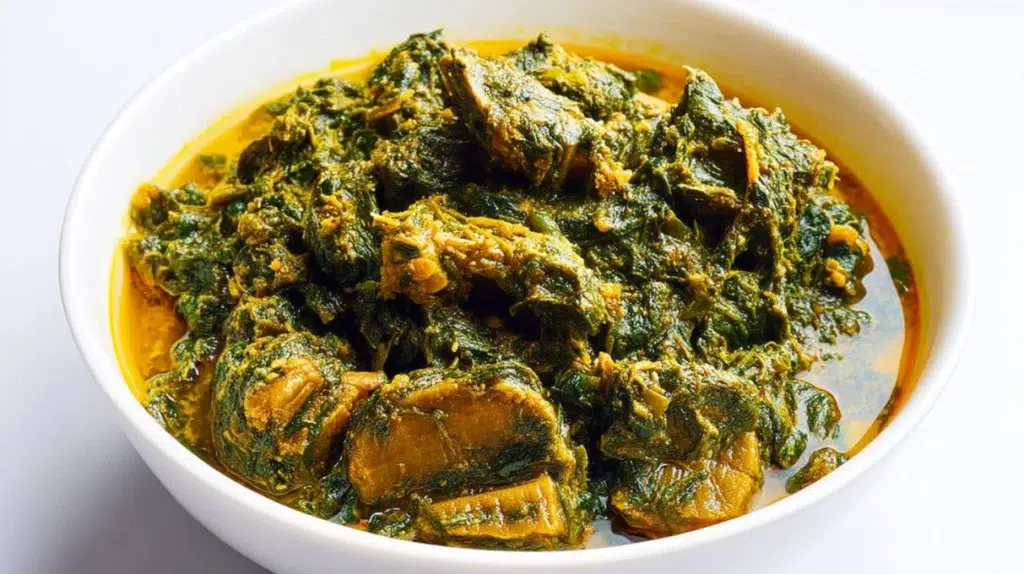
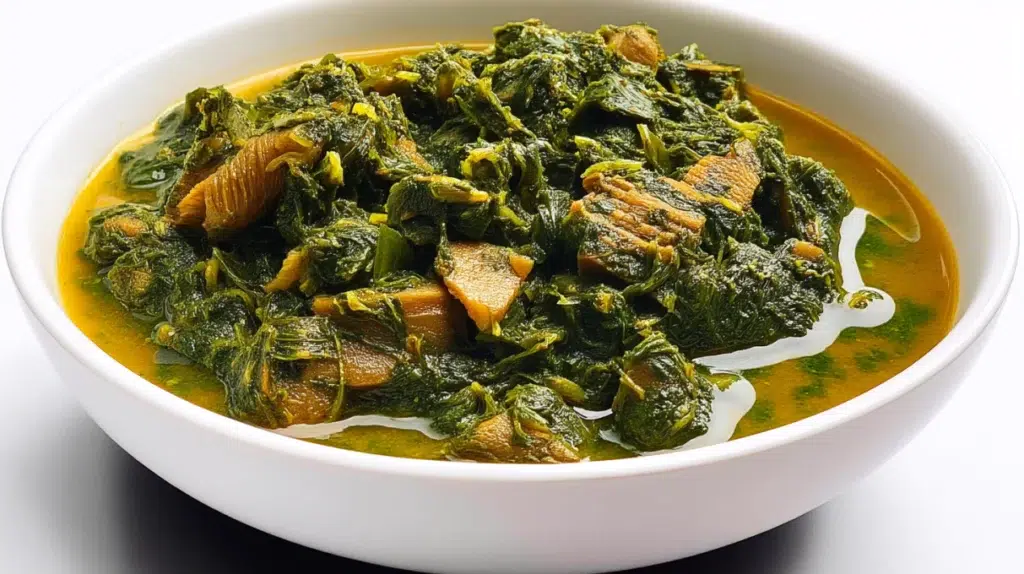
Ofe onugbu recipe, bitter leaf soup is the crown jewel of Igbo cuisine and the soup every Anambra woman is judged by. Assorted beef, stockfish and dried fish slow-cooked in a rich broth with palm oil, ground crayfish, ogiri Igbo and scotch bonnet, thickened with pounded cocoyam paste and finished with carefully washed bitter leaves that add an earthy, slightly bitter depth that no other ingredient in Nigerian cooking replicates. Bold, complex and deeply satisfying.
Ingredients
For the meat and fish base
- 1 lb (450g) assorted beef, a combination of beef chunks, shaki (cow tripe), ponmo (cow skin) and offal produces the most authentic result. Shaki and ponmo take longest to cook, start them first. Available at African grocery stores and halal butchers. Substitute: beef chuck and oxtail for a simpler version.
- 2 oz (55g) stockfish, salted dried cod, soaked in hot water for 30 minutes to soften. Stockfish adds a deep, funky umami that is irreplaceable in Igbo soups. Available at African grocery stores and online.
- 2 oz (55g) smoked dry fish, smoked catfish or eja osan. Rinse in boiling water, drain, remove bones. Adds smokiness and depth.
- 1 medium yellow onion, half into the meat boiling pot, half reserved for the soup
- 2 seasoning cubes (Maggi or Knorr), crumbled
- Salt to taste
For the soup
- 4–5 medium cocoyams (ede), the non-edible drawing type, smaller, whiter and stickier when boiled. This is the thickener. The edible type (larger, reddish when peeled) does not thicken the soup. Ask specifically at an African grocery store. Substitute: 4 tablespoons cocoyam flour (ede flour) dissolved in ½ cup warm water, available at African grocery stores and on Amazon.
- ½ cup (120ml) red palm oil, the real red palm oil, not refined or bleached. This is what gives ofe onugbu its characteristic rich color and flavor. Available at African and Caribbean grocery stores.
- 3 tablespoons ground crayfish, the umami backbone of Igbo soups. Dried ground crayfish available at African grocery stores.
- 4–6 scotch bonnet peppers, or habanero. Blended smooth. Adjust to heat preference but do not omit, the pepper is structural to the flavor.
- 1 tablespoon ogiri Igbo, fermented locust beans, the most important seasoning ingredient in authentic ofe onugbu. Has a pungent, deeply savory fermented character that gives the soup its distinctive Igbo identity. Available at African grocery stores and online. Substitute: 1 tablespoon iru/dawadawa (similar fermented locust bean product). The Pretend Chef specifically notes you cannot substitute ogiri, it is too important.
For the bitter leaves
- 2 cups fresh or processed bitter leaves (onugbu), fresh or pre-processed. Fresh bitter leaves need extensive washing, see step 2. Pre-processed (already washed and squeezed) are available at African grocery stores and save significant time. Frozen bitter leaves work too, thaw and squeeze dry before using. Substitute: if completely unavailable, African spinach or washed kale, the flavor profile changes significantly but the soup is still good.
Step by step
- Prepare the cocoyam. Boil the cocoyams with their skins on in salted water for 25–30 minutes until completely soft, a skewer should pass through with no resistance. Peel while still hot. Pound in a mortar with a pestle until completely smooth and slightly sticky, no lumps remaining. Alternatively purée in a blender with a small amount of warm water. Set aside. This is the thickener that gives ofe onugbu its body.Use the drawing cocoyam (smaller, white, sticky when pounded), not the edible type. The drawing cocoyam dissolves into the soup and creates a characteristic thick, slightly glutinous texture. The edible cocoyam stays in pieces and does not thicken.
- Wash the bitter leaves. Place fresh bitter leaves in a large bowl of water. Squeeze and rub the leaves firmly between your palms in the water, the water will turn dark and bitter. Pour off the water. Refill and repeat. Do this 5–8 times, changing the water each time, until the water runs clear and the leaves have lost most of their bitterness. Taste a small piece, it should be very mildly bitter at most, not harshly so.As All Nigerian Recipes confirms, one will be deemed a bad cook if the soup tastes bitter. The washing is not optional and not a shortcut step. Pre-processed bitter leaves from an African grocery store have already been washed and squeezed, use them directly and skip this step.
- Cook the meat and fish. Place the shaki and ponmo in a pot first, they take the longest. Add the half onion, 1 crumbled seasoning cube and enough water to cover. Boil for 20 minutes. Add the beef chunks and continue cooking for another 20–25 minutes until all the meat is tender. Add the soaked stockfish and dry fish in the final 10 minutes. Reserve all the cooking stock, this is the flavor base of the soup. Do not discard it.
- Build the soup. Add enough water to the meat and stock in the pot to give you approximately 6–8 cups of liquid total. Bring to a boil. Add the palm oil, blended scotch bonnet pepper, ground crayfish, ogiri Igbo and the remaining crumbled seasoning cube. Stir well. Simmer for 10 minutes.Add the palm oil directly to the boiling stock, do not fry it separately first. The palm oil incorporates into the broth and gives the soup its characteristic red-orange color and rich flavor as it simmers.
- Add the cocoyam paste. Add the pounded cocoyam paste to the simmering soup in small lumps, golf ball sized portions dropped in one at a time. Do not stir immediately. Cover and cook on medium-high heat for 10–15 minutes until the lumps dissolve completely and the soup thickens visibly. Stir gently to check, the soup should coat a spoon thickly. Add more water if too thick, cook longer uncovered if too thin.The cocoyam must dissolve completely before the bitter leaves go in. Undissolved cocoyam lumps in the final soup means it was not cooked long enough at this stage.
- Add the bitter leaves. Stir the washed squeezed bitter leaves into the thickened soup. Simmer for 5–8 minutes, long enough for the leaves to cook through and meld into the soup but not so long they lose their color and become mushy. Taste and adjust salt. The soup should be rich, thick, deeply savory and only very faintly bitter, the bitterness of a well-made ofe onugbu is a background note, not the foreground flavor.
- Rest and serve. Remove from heat. Leave to rest for 5 minutes before serving, the flavors continue melding as it sits. Serve hot with pounded yam, fufu, eba or semolina. Ofe onugbu is best eaten immediately, it thickens significantly as it cools.
What makes this ofe onugbu
Ogiri Igbo is the ingredient most Western recipes for bitter leaf soup omit and the one that makes the largest flavor difference. It is a fermented locust bean seasoning with a pungent, savory depth, similar in function to Japanese miso or Italian aged cheese, that gives the soup its distinctly Igbo character. Without it the soup is good. With it the soup is authentic.
The drawing cocoyam is the second non-negotiable. It thickens the soup into the characteristic glutinous, body-rich consistency that distinguishes ofe onugbu from a thin broth with leaves in it. Cocoyam flour is an acceptable shortcut, available at African grocery stores, but the pounded cocoyam produces a noticeably better texture.
Make it ahead
Claire’s note
Ofe onugbu improves significantly the next day, the flavors deepen and the soup develops a richer, more complex character overnight. Refrigerate for up to 4 days. Reheat over medium heat with a splash of water, the soup thickens in the fridge and needs loosening. It also freezes well for up to 3 months, freeze without the bitter leaves and add fresh leaves when reheating. The meat and stockfish can be cooked a day ahead and refrigerated in their stock, this breaks the recipe into manageable steps over two days. The cocoyam paste can also be made ahead and refrigerated for up to 2 days.
Serve with
Ofe onugbu is traditionally served with pounded yam, the most celebrated pairing in Igbo cuisine, or with fufu, eba (garri), semolina or amala. It sits alongside Nigerian pepper soup and jollof rice as one of the defining dishes of the Nigerian table. For everything else in Nigerian and West African cooking the complete Nigerian recipes collection have it all.
Add ofe onugbu to your weekly meal planner, make a large pot Sunday and it feeds the family all week, improving with every reheating. And for more recipes, follow us on Pinterest.
Print
Ofe Onugbu (Bitter Leaf Soup)
- Total Time: 120 minutes
- Yield: 6–8 servings 1x
- Diet: Non-Vegetarian
Description
A rich and complex bitter leaf soup from Igbo cuisine, celebrated for its unique flavor and authenticity, perfect for family gatherings.
Ingredients
- 1 lb (450g) assorted beef (beef chunks, shaki, ponmo, offal)
- 2 oz (55g) stockfish, soaked in hot water
- 2 oz (55g) smoked dry fish
- 1 medium yellow onion, halved
- 2 seasoning cubes, crumbled
- Salt to taste
- 4–5 medium cocoyams (ede)
- ½ cup (120ml) red palm oil
- 3 tablespoons ground crayfish
- 4–6 scotch bonnet peppers, blended
- 1 tablespoon ogiri Igbo
- 2 cups bitter leaves (fresh or processed)
Instructions
- Prepare the cocoyam. Boil cocoyams in salted water for 25–30 minutes until soft. Peel and pound until smooth.
- Wash the bitter leaves. Squeeze and rub in water until it runs clear. This may take 5–8 washes.
- Cook the meat and fish. Start with shaki and ponmo. Boil with onion and seasoning for 20 minutes, then add beef. Cook until tender.
- Build the soup. Add water to the meat, bring to a boil, add palm oil, blended peppers, crayfish, and ogiri Igbo. Simmer for 10 minutes.
- Add the cocoyam paste in small lumps and cook for 10–15 minutes until dissolved.
- Add the bitter leaves, simmer for 5–8 minutes, adjust salt, and remove from heat.
- Rest the soup for 5 minutes before serving. Enjoy hot with pounded yam or fufu.
Notes
Let the soup sit for a while before serving to enhance flavors. Can be made ahead and stored; improves the next day.
- Prep Time: 30 minutes
- Cook Time: 90 minutes
- Category: Main Course
- Method: Boiling
- Cuisine: Nigerian
Nutrition
- Serving Size: 1 serving
- Calories: 500
- Sugar: 2g
- Sodium: 500mg
- Fat: 20g
- Saturated Fat: 8g
- Unsaturated Fat: 10g
- Trans Fat: 0g
- Carbohydrates: 40g
- Fiber: 5g
- Protein: 25g
- Cholesterol: 100mg