⏱ Prep: 25 min🔥Bake: 15–20 min 👤Serves: 6–8 🌏Style: Filipino-American
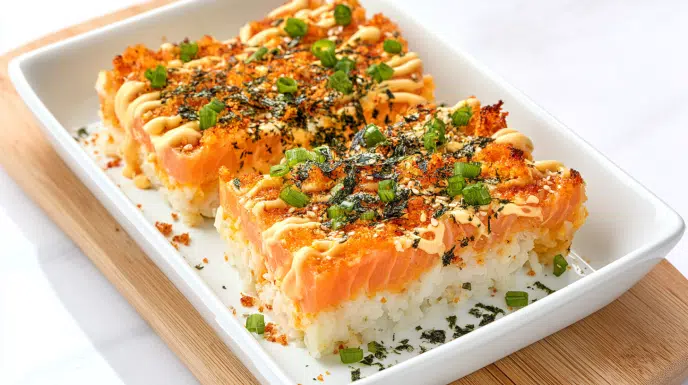
Salmon sushi bake is a Filipino-American invention that went viral for a reason, it delivers everything you want from a spicy salmon roll, made in a casserole dish for a crowd, in about 45 minutes. Seasoned sushi rice pressed into a baking dish, furikake scattered over the top, a creamy layer of salmon and imitation crab mixed with Kewpie mayo and cream cheese, broiled until golden and bubbling, finished with sriracha mayo and unagi sauce drizzled over the top, and scooped warm into little roasted seaweed sheets. It is technically a deconstructed sushi roll baked into a casserole. It tastes like the best thing at a potluck, every time.
The technique is simple but the ingredient choices matter more than the method. The rice has to be short-grain sushi rice, not jasmine, not basmati, not anything with the word “long” in the name. The mayo has to be Kewpie, the Japanese mayo made with egg yolks only, not whole eggs; it is richer, slightly tangier, and produces a noticeably different result from regular supermarket mayo. The cream cheese has to be at room temperature. Everything else is flexible.
The three layers
Layer 1: Base
Seasoned sushi rice + furikake
Short-grain rice seasoned with rice vinegar, sugar and salt while still warm, pressed firmly into the baking dish. Furikake, the Japanese seasoning blend of dried fish flakes, sesame seeds, seaweed and salt is scattered over the rice before the salmon layer goes on. It adds umami, crunch and the unmistakably Japanese note that makes this feel like more than just a fish casserole.
Layer 2: Topping
Salmon, imitation crab, Kewpie, cream cheese
Diced raw salmon and shredded imitation crab bound with Kewpie mayo, cream cheese, sriracha, soy sauce and sesame oil. This layer cooks in the oven and broiler, going from a loose, creamy mixture to a golden, slightly caramelised top with bubbling edges. Spread it all the way to the edges of the dish, leaving gaps means the rice along the sides dries out during baking.
Layer 3: Finish
Drizzles + garnish after baking
Kewpie mayo, sriracha and unagi sauce drizzled over the hot dish straight from the oven, followed by more furikake, sesame seeds and green onion. These go on after baking so they stay bright and don’t lose their texture in the heat.
Ingredients
Sushi rice layer
- 400g (2 cups) short-grain sushi rice, or Calrose medium-grain rice. Rinsed until the water runs clear. Do not substitute long-grain rice, it won’t hold together when pressed and scooped.
- 3 tablespoons rice vinegar, plain, unseasoned. Seasoned rice vinegar works but reduce the sugar and salt slightly.
- 1 tablespoon sugar
- 1 teaspoon salt
- 4 tablespoons furikake, the Japanese rice seasoning, available at any Asian grocery store or most mainstream supermarkets in the international aisle. Classic furikake (katsuo or nori variety) is the standard choice. Spicy furikake adds extra heat.
- 1 tablespoon toasted sesame oil or neutral oil, to grease the baking dish; sesame oil adds a subtle background note
Salmon-crab layer
- 400g fresh salmon fillet, skin removed and cut into 1cm dice, the salmon goes in raw and cooks in the oven; diced small means it cooks evenly and integrates into the creamy layer rather than sitting as large chunks. Sashimi-grade salmon is ideal but not required any fresh skinless salmon fillet works.
- 200g imitation crab sticks (surimi), shredded into thin strands then roughly chopped, the mix of shreds and small pieces gives the best texture. Real lump crab meat also works and is excellent; if using real crab, drain it thoroughly and press gently before using.
- 120g (4 oz) full-fat cream cheese, at room temperature, cold cream cheese will not mix smoothly into the mayo and creates a lumpy, uneven topping. Take it out of the fridge 30–45 minutes before you start.
- 4 tablespoons Kewpie mayonnaise, the Japanese mayo in the distinctive soft squeeze bottle with the red cap. Available at Asian grocery stores and increasingly at regular supermarkets. Regular mayo can substitute but the result will be noticeably less rich and slightly flatter in flavour.
- 2 tablespoons sriracha, adjust to heat preference; 1 tablespoon for mild, 3 for serious heat
- 1 tablespoon soy sauce
- 1 teaspoon toasted sesame oil
- 3 green onions (spring onions), whites and greens separated, whites go into the salmon mixture, greens are reserved for garnish
Garnish (added after baking)
- 2–3 tablespoons Kewpie mayonnaise, for drizzling
- 1–2 tablespoons sriracha, for drizzling
- 2 tablespoons unagi sauce (eel sauce), sweet, thick, soy-based glaze available at Asian grocery stores. Substitute: 1 tablespoon soy sauce + 1 tablespoon honey warmed together until slightly thickened.
- 1 tablespoon furikake
- 1 tablespoon sesame seeds
- Reserved green onion greens, sliced
For serving
- Roasted seaweed snack sheets, the small rectangular sheets (not full-sized nori). This is how sushi bake is eaten: scoop a spoonful of the bake, lay it on a seaweed sheet, fold and eat. Available at Asian grocery stores and most supermarkets.
- Optional: sliced avocado, sliced cucumber, pickled jalapeño
Step by step
- Cook the sushi rice. Rinse the rice in cold water, swirling and draining, until the water runs completely clear, this removes excess surface starch and prevents the rice from being gluey. Cook according to your rice cooker’s instructions or on the stovetop: combine with 480ml (2 cups) cold water, bring to a boil, cover and reduce to the lowest heat for 15 minutes, then remove from heat and rest covered for 10 minutes. Do not lift the lid during cooking or resting.
- Season the rice. In a small bowl, combine the rice vinegar, sugar and salt. Microwave for 20 seconds or warm gently in a small saucepan until the sugar dissolves, it does not need to come to a boil, just warm enough to dissolve. Turn the cooked rice into a wide bowl and pour the vinegar mixture over it. Fold through gently with a rice paddle or flat spatula, using cut-and-fold motions rather than stirring, which would make the rice mushy. Fan the rice or leave uncovered as you fold, the goal is to season it and allow some steam to escape while it remains warm. Let it cool to room temperature before using, about 20 minutes. Season the rice while it’s still warm, not cold. The vinegar mixture absorbs into warm rice; it sits on the surface of cold rice. The fanning is traditional, it gives sushi rice its characteristic slight sheen.
- Make the salmon layer. In a bowl, combine the cream cheese and Kewpie mayo and mix until completely smooth, this is where room-temperature cream cheese matters. Add the sriracha, soy sauce, sesame oil and green onion whites. Stir to combine. Add the diced salmon and shredded imitation crab. Fold gently, you want the salmon and crab mixed into the creamy base but not so broken up that they disappear. Some visible pieces is correct. Taste and adjust sriracha and soy sauce.
- Preheat and prepare the dish. Preheat the oven to 220°C / 425°F. Brush or drizzle a 9×9 inch or 9×13 inch baking dish with sesame oil or neutral oil, this prevents the rice from sticking and adds a background flavour.
- Assemble layer one: rice. Transfer the seasoned rice to the baking dish. Wet your hands or a spatula with cold water and press the rice into an even, compact layer across the whole dish, including right to the edges and corners. The rice should hold together when pressed, firm enough to scoop cleanly, not so compacted it becomes a brick. Sprinkle 3 tablespoons of furikake evenly over the rice surface. Press the rice all the way to the edges. If the topping doesn’t reach the edges in the next step, the exposed rice along the sides dries out during baking and becomes unpleasantly hard. Full edge-to-edge coverage on both layers is what gives you those desirable creamy, bubbly corners.
- Assemble layer two: salmon. Spoon the salmon-crab mixture over the rice in large spoonfuls, distributing it across the whole surface before spreading. Use a spatula to spread it into an even layer, all the way to the edges. Press down gently so the layer is compact and won’t slide around when the dish goes into the oven.
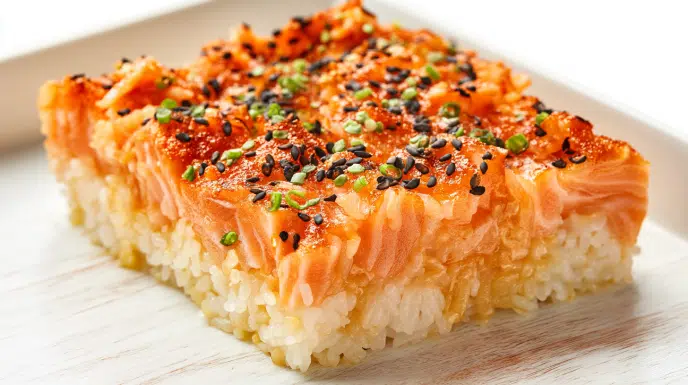
- Bake then broil. Bake at 220°C / 425°F for 12–15 minutes until the edges of the salmon layer are bubbling and the top looks set and heated through. Then switch the oven to broil (high) and cook for 2–4 minutes until the top develops light golden spots and slightly caramelised edges. Watch this stage constantly, it can go from perfectly golden to burnt in under a minute under a hot broiler.The bake stage heats everything through and cooks the raw salmon completely. The broil stage adds colour and a light crust on the surface. Both are needed; baking alone produces a pale, steamed-looking top without the caramelisation that makes the dish visually appealing and adds flavour.
- Rest and garnish. Remove from the oven and rest for 5 minutes, this allows the layers to firm up slightly so the dish scoops cleanly rather than collapsing. Drizzle the Kewpie mayo, sriracha and unagi sauce over the top in whatever pattern you like. Scatter the remaining furikake, sesame seeds and green onion greens. Serve immediately directly from the dish, with seaweed snack sheets on the side for scooping and wrapping.
How to eat it
Scoop a spoonful of the sushi bake, getting rice and salmon topping together and lay it on a roasted seaweed snack sheet. Fold the seaweed around the filling and eat in one or two bites. This is the intended method, and it works because the seaweed provides the textural contrast and the concentrated umami that makes the dish taste like an actual sushi roll rather than just a warm fish casserole. Avocado and cucumber slices laid on top of the scoop before wrapping are excellent additions.
Make it your own
Claire’s note
A few things worth knowing from testing this multiple times. First, Kewpie is not optional. I tried it with standard grocery store mayonnaise and the difference was significant enough that I’d go out of my way to find Kewpie before making the dish again. Second, the cream cheese must be soft, not cold. I have skipped this step exactly once and spent ten minutes with a fork trying to mash cold cream cheese into Kewpie mayo while the oven was preheated. Third, the seaweed sheets matter for serving without them you have a warm salmon casserole, which is fine but misses the whole point.
The Trader Joe’s seaweed snack packs are the easiest option in the US; otherwise any Asian grocery store carries several varieties. For a no-cream-cheese version, double the Kewpie mayo and add a teaspoon of sesame oil for richness, the result is lighter and still very good.
Serve with
Salmon sushi bake is a complete meal on its own, the rice, protein and garnishes provide everything. Sliced cucumber and avocado alongside for scooping, and pickled ginger on the side if you want to lean into the sushi angle, are the most natural additions. For a Japanese-inspired meal spread it sits alongside the Japanese kani salad, the Japanese gyoza, or miso salmon for a different salmon preparation entirely. The complete Japanese recipes collection has the full picture.
Add salmon sushi bake to your weekly meal planner as a shareable weekend dish or potluck contribution, it travels well and holds at room temperature for up to 2 hours before the rice starts to firm up too much. And for more recipes, follow us on Pinterest.
Print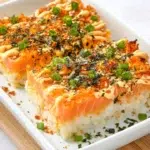
Salmon Sushi Bake
- Total Time: 45 minutes
- Yield: 6–8 servings 1x
- Diet: Pescatarian
Description
A Filipino-American casserole that brings together the flavors of a spicy salmon roll, made for a crowd.
Ingredients
- 400g (2 cups) short-grain sushi rice, rinsed
- 3 tablespoons rice vinegar, plain, unseasoned
- 1 tablespoon sugar
- 1 teaspoon salt
- 4 tablespoons furikake
- 1 tablespoon toasted sesame oil
- 400g fresh salmon fillet, diced
- 200g imitation crab sticks, shredded
- 120g (4 oz) full-fat cream cheese, at room temperature
- 4 tablespoons Kewpie mayonnaise
- 2 tablespoons sriracha
- 1 tablespoon soy sauce
- 1 teaspoon toasted sesame oil
- 3 green onions, whites and greens separated
- 2–3 tablespoons Kewpie mayonnaise, for drizzling
- 1–2 tablespoons sriracha, for drizzling
- 2 tablespoons unagi sauce
- 1 tablespoon furikake, for garnish
- 1 tablespoon sesame seeds, for garnish
- Reserved green onion greens, sliced
- Roasted seaweed snack sheets, for serving
Instructions
- Cook the sushi rice: Rinse the rice until the water runs clear and cook according to instructions.
- Season the rice: Combine rice vinegar, sugar, and salt, then mix with the cooked rice.
- Make the salmon layer: Mix cream cheese and Kewpie mayo; add sriracha, soy sauce, and green onion whites. Fold in salmon and imitation crab.
- Preheat the oven to 220°C / 425°F and prepare the baking dish with sesame oil.
- Assemble the rice layer: Press the seasoned rice into the baking dish and sprinkle furikake on top.
- Assemble the salmon layer on top of the rice, spreading it evenly.
- Bake for 12–15 minutes, then broil for 2–4 minutes until golden.
- Rest the dish for 5 minutes, then garnish with Kewpie mayo, sriracha, unagi sauce, furikake, sesame seeds, and green onion greens.
Notes
Serve with roasted seaweed snack sheets and optional avocado, cucumber, or pickled jalapeños.
- Prep Time: 25 minutes
- Cook Time: 20 minutes
- Category: Main Course
- Method: Baking
- Cuisine: Filipino-American
Nutrition
- Serving Size: 1 serving
- Calories: 450
- Sugar: 8g
- Sodium: 600mg
- Fat: 18g
- Saturated Fat: 6g
- Unsaturated Fat: 10g
- Trans Fat: 0g
- Carbohydrates: 52g
- Fiber: 2g
- Protein: 18g
- Cholesterol: 70mg