
⏱ Marinate: 30 min 🔥Broil: 8–10 min 👤Serves: 4 🌡Oven: Broiler high
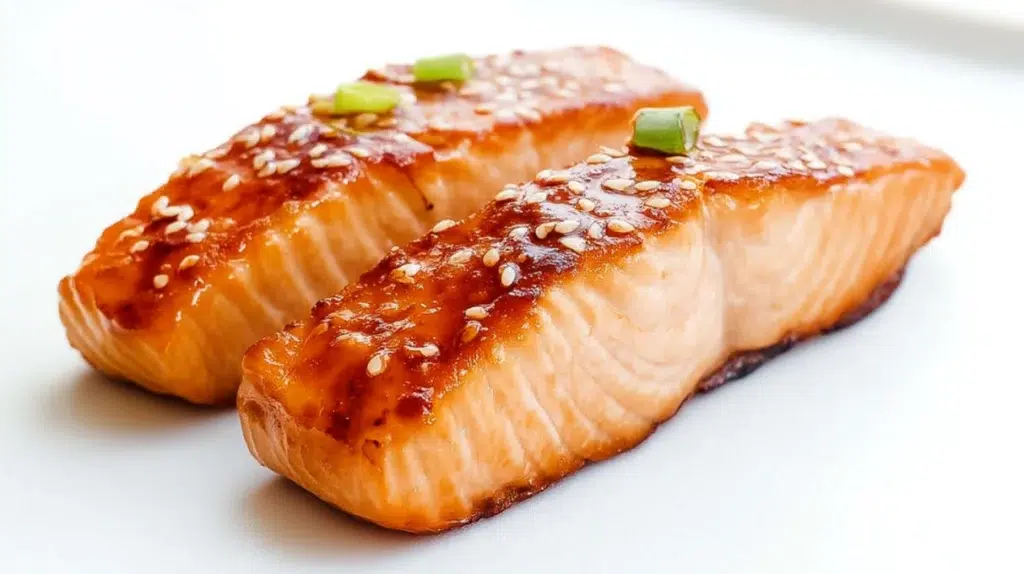
Miso salmon recipe is the dinner that makes every person who eats it ask for the recipe immediately, a caramelized, lacquered glaze of white miso, mirin, sake, soy sauce, honey and sesame oil that coats salmon fillets and turns an eight-minute broil into something that tastes as if it took considerably longer and cost considerably more. This is the dish that made Nobu famous. The version you make at home is genuinely better, fresher fish, no reservation, fifteen minutes from fridge to table.
Gather these first
- 4 salmon fillets, 6 oz (170g) each, skin-on preferred. Skin-on fillets hold their shape better under the broiler and the skin crisps beautifully. Center-cut fillets of even thickness cook most evenly. Pat completely dry with paper towels before marinating wet salmon prevents the marinade from adhering properly.
- 3 tablespoons white miso paste (shiro miso),white miso is the correct choice for this recipe. It is the mildest type, shorter fermentation period, subtly sweet, creamy and not aggressively salty. Red miso or dark miso is too strong and too salty for a delicate fish like salmon. Available at H Mart, Whole Foods, Trader Joe’s and most well-stocked grocery stores.
- 2 tablespoons mirin, Japanese sweet rice wine, essential for the glaze. Adds sweetness, body and a specific Japanese flavor that no substitute fully replicates. Available at H Mart, Whole Foods and Asian grocery stores. Substitute: 1 tablespoon sake plus 1 teaspoon sugar per tablespoon of mirin.
- 2 tablespoons sake, Japanese rice wine. Adds acidity, depth and helps tenderize the fish. Use drinking sake not cooking sake, cooking sake contains added salt that makes the marinade too salty. Substitute: dry sherry or Chinese Shaoxing wine.
- 1 tablespoon low-sodium soy sauce, low-sodium only, the miso already contributes significant salt. Regular soy sauce makes this dish too salty.
- 1 tablespoon honey, helps the glaze caramelize under the broiler. Substitute: brown sugar, maple syrup or granulated sugar in equal amounts.
- 1 teaspoon toasted sesame oil, added to the marinade for fragrance. Do not use plain sesame oil, the toasted version has the nutty aroma that defines Japanese cooking.
- 1 teaspoon fresh ginger, finely grated, optional but adds brightness. Ground ginger also works, use ¼ teaspoon.
To serve: steamed jasmine or short-grain Japanese rice, toasted sesame seeds (black and white), sliced scallions, pickled ginger and cucumber slices.
The method
- Make the miso marinade. Whisk together white miso paste, mirin, sake, soy sauce, honey, sesame oil and grated ginger in a bowl until completely smooth, no lumps of miso remaining. The marinade should be thick, glossy and deeply fragrant. Taste it, it should be sweet, savory, slightly fermented and complex. This is the whole flavour profile of the finished dish.Reserve 2 tablespoons of the marinade in a separate small bowl before it touches the raw fish. This reserved portion is used for basting during cooking. Never baste with marinade that has been in contact with raw fish.
- Marinate the salmon. Pat the salmon fillets completely dry with paper towels. Place in a shallow glass or ceramic dish, not metal, which can react with the acidic sake. Spoon the marinade over the salmon, turning each fillet to coat all surfaces generously including the sides. Cover tightly and refrigerate for 30 minutes minimum, 1–2 hours produces significantly better flavor penetration. Do not marinate overnight, miso is high in salt and extended marinating will cure the fish rather than season it, changing the texture.30 minutes produces good miso salmon. 2 hours produces extraordinary miso salmon. Plan accordingly.
- Prepare the broiler. Position an oven rack 4–6 inches below the broiler element. Preheat the broiler to high for 5 minutes. Line a baking sheet with foil and spray or brush lightly with oil, the miso sugar content makes the glaze stick aggressively. Remove the salmon from the marinade and gently wipe off excess, a thin coating is correct, not a thick layer which will burn before the fish cooks through.The rack position is critical. Too close to the broiler (less than 4 inches) and the glaze burns before the salmon is cooked through. Too far (more than 6 inches) and the salmon cooks but the glaze does not caramelize properly.
- Broil. Place the salmon skin-side down on the prepared baking sheet. Broil for 7–10 minutes depending on thickness, do not flip. Check at 7 minutes: the glaze should be deeply golden to dark amber with slightly charred edges and the thickest part of the fillet should flake easily when pressed with a fork. Internal temperature 125°F–130°F (52°C–54°C) for medium, slightly translucent at the very center. 145°F (63°C) for fully cooked through.Watch constantly from the 6-minute mark. The miso and honey glaze goes from perfectly caramelized to burnt in 60–90 seconds. Do not walk away from the oven.
- Baste and finish. In the final 2 minutes of broiling, brush the reserved clean marinade over the top of each fillet. This adds a fresh layer of miso flavor on top of the caramelized base, the difference between a single application and this two-layer finish is significant and completely worth the extra 30 seconds.
- Rest and serve. Remove from the broiler. Rest 2 minutes. Scatter toasted sesame seeds and sliced scallions over the top. Serve immediately over steamed rice with pickled ginger and cucumber alongside.
Why this Miso salmon works
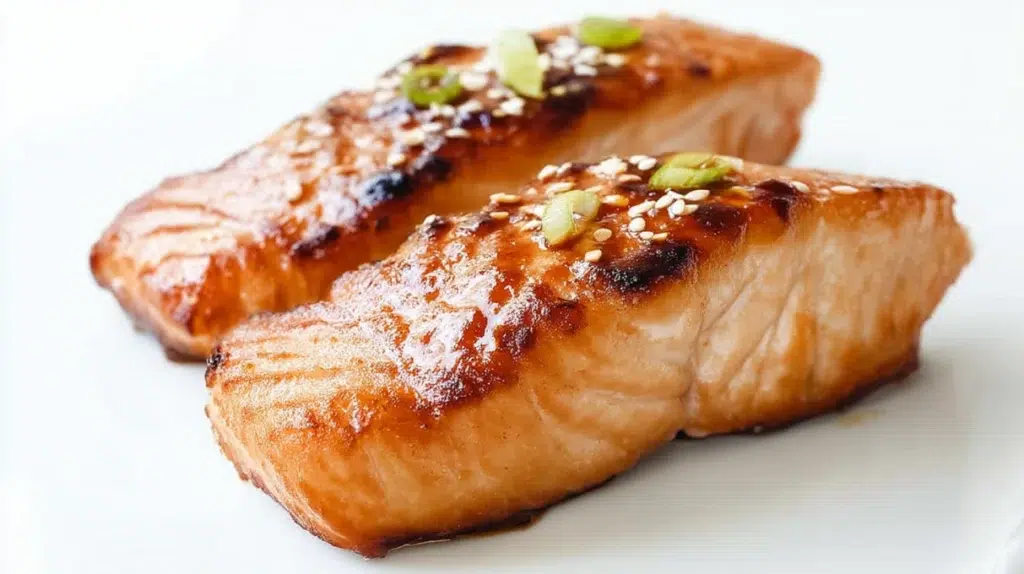
White miso is the backbone of the glaze and the reason this dish tastes so complex for something made from six ingredients. Miso is fermented, like good wine, aged cheese or quality vinegar and that fermentation produces glutamates, the amino acids responsible for umami. When glutamates meet high heat they caramelize through the Maillard reaction and produce flavor compounds that are simultaneously sweet, savory, nutty and deeply satisfying in a way that unferemented ingredients simply cannot replicate. This is why the broiled miso glaze on salmon tastes so disproportionately good relative to the time it takes to make.
The fermentation did the hard work over months. The broiler does the rest in eight minutes. Use white miso specifically, it is the mildest type of miso with the shortest fermentation period, a great entry-level miso that adds rich umami flavor without the stronger funk that comes from yellow or red miso.
The variation worth trying
Claire’s note
Pan-seared miso salmon: if you do not want to use the broiler, heat a heavy oven-safe skillet (cast iron is perfect) over medium-high heat until very hot. Add a small amount of avocado oil. Place the marinated salmon skin-side up in the hot pan. Sear 3 minutes without moving until a caramelized crust forms on the flesh side. Flip so skin is down. Transfer the pan to the oven at 400°F (200°C) for 6–8 minutes until the salmon reaches your preferred doneness. Finish with the reserved marinade brushed over the top. The pan-sear method produces a more dramatic crust on the flesh side than broiling. The broiler method produces more even caramelization across the whole surface. Both are excellent, the broiler is faster and simpler.
Serve with
Miso salmon is at its most complete over steamed short-grain Japanese rice, the clean, slightly sticky rice absorbs the glaze that drips from the salmon and is extraordinary with every bite. It also works beautifully over Japanese Chicken Yakitori as a full Japanese dinner alongside pickled vegetables and edamame. For the complete Japanese kitchen, the techniques, the pantry and every recipe, the Japanese recipes collection has everything.
Add miso salmon to your weekly meal planner, marinate in the morning, broil in 10 minutes at dinner. The fastest elegant dinner in the collection. And for more recipes, follow us on Pinterest.
Print
Miso Salmon
- Total Time: 45 minutes
- Yield: 4 servings 1x
- Diet: Pescatarian
Description
A quick and flavorful miso-marinated salmon dish, broiled to perfection with a sweet and savory glaze.
Ingredients
- 4 salmon fillets (6 oz each, skin-on preferred)
- 3 tablespoons white miso paste
- 2 tablespoons mirin
- 2 tablespoons sake
- 1 tablespoon low-sodium soy sauce
- 1 tablespoon honey
- 1 teaspoon toasted sesame oil
- 1 teaspoon fresh ginger, finely grated (optional)
- Steamed jasmine or short-grain Japanese rice (for serving)
- Toasted sesame seeds (for garnish)
- Sliced scallions (for garnish)
- Pickled ginger and cucumber slices (for serving)
Instructions
- Make the miso marinade by whisking together white miso paste, mirin, sake, soy sauce, honey, sesame oil, and grated ginger in a bowl until smooth.
- Reserve 2 tablespoons of the marinade in a separate bowl before it touches the raw fish.
- Pat the salmon fillets dry and place them in a shallow dish. Spoon the marinade over the salmon, coating all surfaces.
- Cover the dish and refrigerate for 30 minutes to 2 hours.
- Preheat the broiler to high and prepare a baking sheet lined with foil.
- Broil the salmon skin-side down for 7–10 minutes, checking for doneness.
- Baste the fillets with the reserved marinade in the final 2 minutes of broiling.
- Rest the salmon for 2 minutes, then serve over rice, garnished with sesame seeds and scallions.
Notes
For a variation, try pan-searing the salmon instead of broiling for a different texture.
- Prep Time: 15 minutes
- Cook Time: 10 minutes
- Category: Main Course
- Method: Broiling
- Cuisine: Japanese
Nutrition
- Serving Size: 1 fillet
- Calories: 350
- Sugar: 12g
- Sodium: 600mg
- Fat: 18g
- Saturated Fat: 3g
- Unsaturated Fat: 15g
- Trans Fat: 0g
- Carbohydrates: 8g
- Fiber: 0g
- Protein: 31g
- Cholesterol: 70mg