⏱ Prep: 10 min 🔥Cook: 35–40 min 👤Serves: 4 🌿Vegan
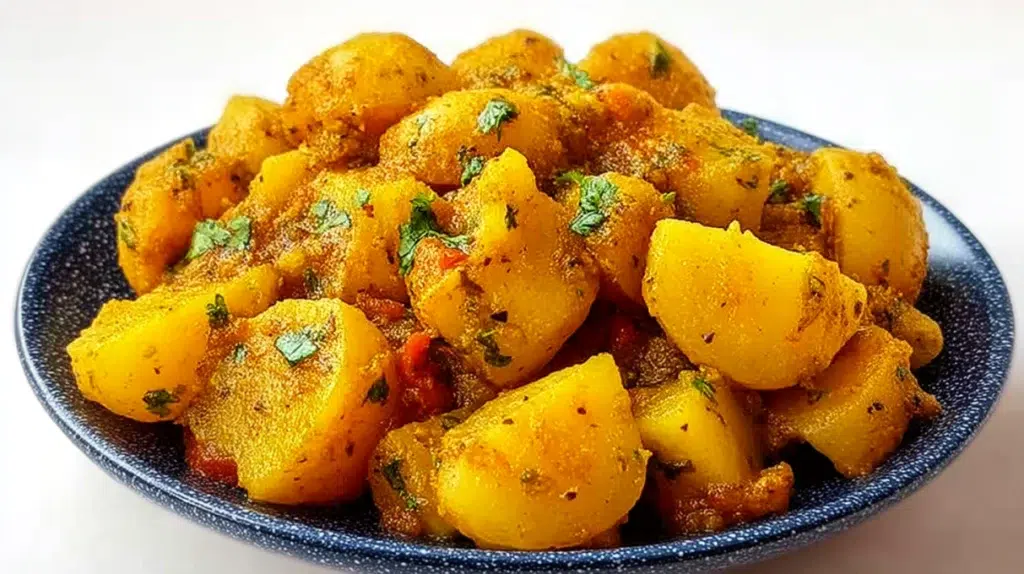
Dopiazeh aloo is a Persian potato curry from Shiraz, the city in southern Iran known for its poets, its gardens, and its food, which tends to be spicier and more aromatic than the cooking of Tehran or Isfahan. The name tells you exactly what you’re getting: do piaz means two onions in Persian, referring to the generous use of onion that defines the dish; aloo in Shirazi dialect means potato, which in the rest of Iran would be sib zamini. Two onions, potatoes. That’s the dish. Everything else, the turmeric, the cumin, the tomatoes, the dried mint, the squeeze of lime at the end, builds around that central relationship.
It is a humble dish. It was designed to be cheap and filling, the kind of thing made when there isn’t much in the house but there are always onions and there are always potatoes. What elevates it is the double-onion technique: half the onion is caramelised slowly until deeply golden and sweet, the piyaz dagh, the flavour foundation that runs through Persian cooking the way a soffritto runs through Italian cooking and the other half is added later with the tomatoes, providing a fresher note that stops the dish from becoming a single flat flavour. The result is a potato curry that tastes layered and considered, despite being entirely pantry-based and ready in forty minutes.
Ingredients
- 800g Yukon Gold or waxy potatoes, cut into 3–4cm chunks. Waxy potatoes hold their shape in the sauce and provide a creamy, smooth interior without dissolving. Avoid floury potatoes (Russet, Maris Piper) which break down in the sauce and turn the curry starchy and thick rather than keeping the potato pieces distinct. Charlotte, Desiree, or any waxy variety all work well.
- 3 medium yellow onions, thinly sliced, divided: 2 onions for the initial caramelised base (piyaz dagh), 1 onion added later with the tomatoes for freshness
- 5 cloves garlic, finely minced or grated
- 1 teaspoon fresh ginger, grated, optional but adds warmth. More prominent in the Shirazi version of this dish which has some influence from spice trade routes.
- 3 tablespoons olive oil or vegetable oil
- 2 tablespoons tomato paste, cooked out in the oil before the fresh tomatoes are added. Essential step, raw tomato paste is sharp and harsh; cooked tomato paste is sweet, deep and rich.
- 400g canned chopped tomatoes, or 3 medium fresh tomatoes, peeled and roughly chopped. Canned is more consistent outside of peak tomato season.
- 200ml water
- 1½ teaspoons ground turmeric, the spice that defines the colour and one of the two that define the flavour. More present here than in many Western potato dishes, it should produce a genuinely golden sauce.
- 1 teaspoon ground cumin
- ½ teaspoon ground coriander
- ¼ teaspoon ground cinnamon, a small amount, barely perceptible on its own but adding the warmth that distinguishes Persian spicing from other regional styles
- ½ teaspoon black pepper
- ¼–½ teaspoon cayenne pepper or red chili flakes, Shirazi food is spicier than other Iranian regional cooking. Adjust to taste, ¼ teaspoon for warmth, ½ for a proper kick.
- 1 teaspoon dried mint, a distinctly Persian touch that separates dopiazeh aloo from any other potato curry. Bloom it in a small spoonful of hot oil for 20 seconds and stir through just before serving, this activates the flavour in a way that simply stirring dry mint into a hot sauce does not.
- Juice of 1 lime, or 1 teaspoon dried lime powder (gard limoo). The sourness at the end is not optional, it lifts every other flavour in the dish and provides the characteristic tart note that defines Persian cooking. Without it the dish is flat and one-dimensional.
- Salt to taste
Optional protein additions
- 400g lamb shoulder or chicken thighs, cut into 3cm pieces, brown in the pot before the onions if adding meat. Brown in batches, remove, build the onion and spice base, return meat to simmer 30–40 min before adding potatoes.
- OR 200g large prawns, peeled, added in the final 5 minutes only. Prawns overcook quickly and become rubbery; they need only 3–5 minutes in the sauce to cook through.
Step by step
- Par-cook the potatoes. Place the potato chunks in a pot of cold well-salted water. Bring to a boil and cook for 8–10 minutes until the potatoes are just barely tender, a skewer should enter but still meet some resistance in the centre. They are not fully cooked yet. Drain and set aside. Par-cooking separately gives control, potatoes added raw to the sauce absorb liquid unevenly and can become waterlogged on the outside before the inside is done. Don’t skip or abbreviate the par-cooking stage. Potatoes that go directly into the sauce from raw take significantly longer and release more starch into the sauce, making it thicker and starchier than intended. Par-cooked potatoes finish in the sauce in 10–12 minutes, absorbing flavour without losing their shape.
- Build the piyaz dagh, caramelise two onions. Heat the oil in a wide, heavy pot or Dutch oven over medium heat. Add two of the three sliced onions with a generous pinch of salt. Cook, stirring occasionally, for 15–18 minutes until the onions have collapsed completely, turned a deep, even golden-amber, and smell sweet and almost caramel-like. Do not rush by raising the heat, the colour and sweetness come from slow, even cooking, not from high heat which burns the edges before the rest caramelises. The piyaz dagh is the flavour backbone of this dish, just as it is in most Persian khoresh. Pale, under-caramelised onion produces a thin, sharp result. Deeply golden onion provides the sweetness, body and depth that holds the whole curry together. The time invested here, 15 to 18 minutes, pays back every single minute in the finished dish.
- Add aromatics and spices. Add the garlic and ginger to the caramelised onion and stir for 1–2 minutes until fragrant. Add the turmeric, cumin, coriander, cinnamon, black pepper and cayenne. Stir into the onion for 1 minute until the spices coat everything and the pot smells intensely aromatic. Add the tomato paste and stir it in, cooking for 2–3 minutes until it darkens from bright red to a deeper, rust-brown colour and smells cooked rather than raw.
- Add the second onion and tomatoes. Add the remaining sliced onion, the third onion, to the pot and stir through the spiced base. Cook for 3–4 minutes until just softened but not caramelised, this onion stays slightly fresher and adds a different textural and flavour note from the deeply caramelised base. Add the canned tomatoes and water. Stir to combine, scraping up any caramelised bits from the base of the pot. Season with salt. Bring to a gentle boil, then reduce to a simmer.
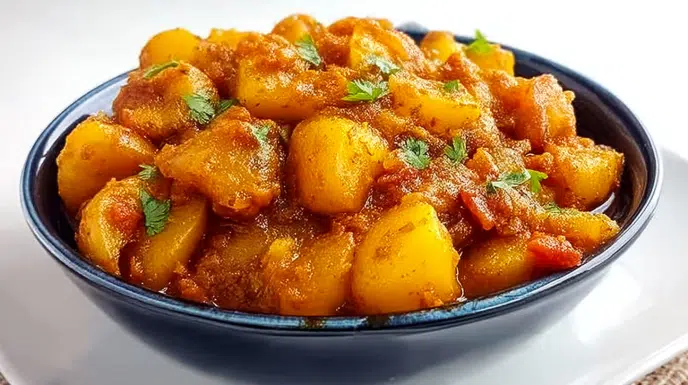
- Add the potatoes and simmer. Nestle the par-cooked potato chunks into the sauce. They should be mostly submerged, add a small splash more water if needed to bring the sauce level up around the potatoes. Cover and simmer over low-medium heat for 12–15 minutes until the potatoes are completely tender, have absorbed the colour and flavour of the sauce, and the sauce has thickened to a consistency that coats a spoon. Taste and adjust salt.The finished sauce should cling to the potatoes rather than sitting as a thin pool around them. If the sauce is too thin after 15 minutes, remove the lid and simmer for another 3–4 minutes to reduce. If it seems too thick or is catching on the bottom, add a small splash of water and stir gently.
- Finish with dried mint and lime. In a small pan or the edge of the pot, heat a teaspoon of oil until shimmering. Add the dried mint and stir for 20–30 seconds until fragrant, it will darken slightly and release its oils into the hot fat. Pour this mint oil directly over the curry and stir through. Squeeze the lime juice over the pot and stir. Taste one more time, the lime should be present and bright, cutting through the richness of the onion and spice base. Adjust with more lime if needed.
Claire’s note
The dried mint finish is the thing that most people leave out when they make a version of this dish for the first time, either because they don’t have it or because it seems like a small optional garnish. It isn’t. Bloomed in hot oil and stirred through at the end, dried mint changes the character of the whole curry, it adds a cool, herbal note that sits against the warm spices in a way that is very specifically Persian and very specifically right.
If you have fresh mint and not dried, use it differently: chop it and scatter it over the finished dish rather than blooming in oil, since fresh mint wilts and turns bitter when cooked. Dried mint can be bloomed; fresh mint should not.
The same logic applies to the lime. A squeeze of lime at the end is not a garnish, it is a structural ingredient that lifts every other flavour in the pot. Persian cooking consistently uses sour elements to balance richness in a way that most Western potato dishes simply don’t, and dopiazeh aloo is a clear demonstration of how much difference that final acidity makes.
Don’t skip it, don’t reduce it. Squeeze it generously and taste.
Serve with
Dopiazeh aloo is traditionally served with Persian steamed basmati rice or Moroccan-style flatbread for scooping. As part of a Persian meal it pairs naturally alongside the Persian eggplant stew (khoresh bademjan), the two dishes complement each other in both colour and spice profile, or alongside the Persian saffron chicken as a vegetable side. A simple cucumber and tomato salad dressed with lime juice and dried mint alongside is the natural fresh counterpoint to the warm, rich curry.
The full Mediterranean & Middle East collection has everything from this cuisine region, Persian, Lebanese, Moroccan, Turkish and Greek dishes all in one place.
Add Persian potato curry to your weekly meal planner as a fast weeknight vegetarian main, all pantry ingredients, one pot, forty minutes start to finish. And for more recipes, follow us on Pinterest.
Print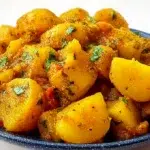
Persian potato curry: Dopiazeh Aloo
- Total Time: 45 minutes
- Yield: 4 servings 1x
- Diet: Vegan
Description
A flavorful Persian potato curry featuring a unique double-onion technique for a layered, aromatic dish.
Ingredients
- 800g Yukon Gold or waxy potatoes, cut into 3–4cm chunks
- 3 medium yellow onions, thinly sliced, divided
- 5 cloves garlic, finely minced or grated
- 1 teaspoon fresh ginger, grated (optional)
- 3 tablespoons olive oil or vegetable oil
- 2 tablespoons tomato paste
- 400g canned chopped tomatoes or 3 medium fresh tomatoes, peeled and roughly chopped
- 200ml water
- 1½ teaspoons ground turmeric
- 1 teaspoon ground cumin
- ½ teaspoon ground coriander
- ¼ teaspoon ground cinnamon
- ½ teaspoon black pepper
- ¼–½ teaspoon cayenne pepper or red chili flakes
- 1 teaspoon dried mint
- Juice of 1 lime or 1 teaspoon dried lime powder
- Salt to taste
Instructions
- Par-cook the potatoes. Place the potato chunks in a pot of cold well-salted water. Bring to a boil and cook for 8–10 minutes until just barely tender. Drain and set aside.
- Build the piyaz dagh, caramelise two onions. Heat oil in a wide pot over medium heat. Add two onions with a pinch of salt. Cook for 15–18 minutes until deep golden.
- Add aromatics and spices. Add garlic and ginger to the onions and stir for 1–2 minutes. Add turmeric, cumin, coriander, cinnamon, black pepper, and cayenne. Stir for 1 minute.
- Add the second onion and tomatoes. Stir in the remaining onion and cook for 3–4 minutes. Add canned tomatoes and water. Stir to combine and season with salt. Bring to a gentle boil.
- Add the potatoes and simmer. Nestle par-cooked potatoes into the sauce. Cover and simmer over low-medium heat for 12–15 minutes until tender.
- Finish with dried mint and lime. Heat oil and add dried mint. Pour mint oil over the curry and squeeze lime juice. Stir and taste.
Notes
The dried mint finish is essential for enhancing the flavor. Do not skip the lime juice; it balances the richness.
- Prep Time: 10 minutes
- Cook Time: 35 minutes
- Category: Main Course
- Method: Braising
- Cuisine: Persian
Nutrition
- Serving Size: 1 serving
- Calories: 400
- Sugar: 6g
- Sodium: 300mg
- Fat: 12g
- Saturated Fat: 1.5g
- Unsaturated Fat: 8g
- Trans Fat: 0g
- Carbohydrates: 60g
- Fiber: 8g
- Protein: 10g
- Cholesterol: 0mg