⏱ Prep: 30 min 🔥Cook: 1 hr 30 min 👤Serves: 4–6 🌍Origin: Iran (Persia)
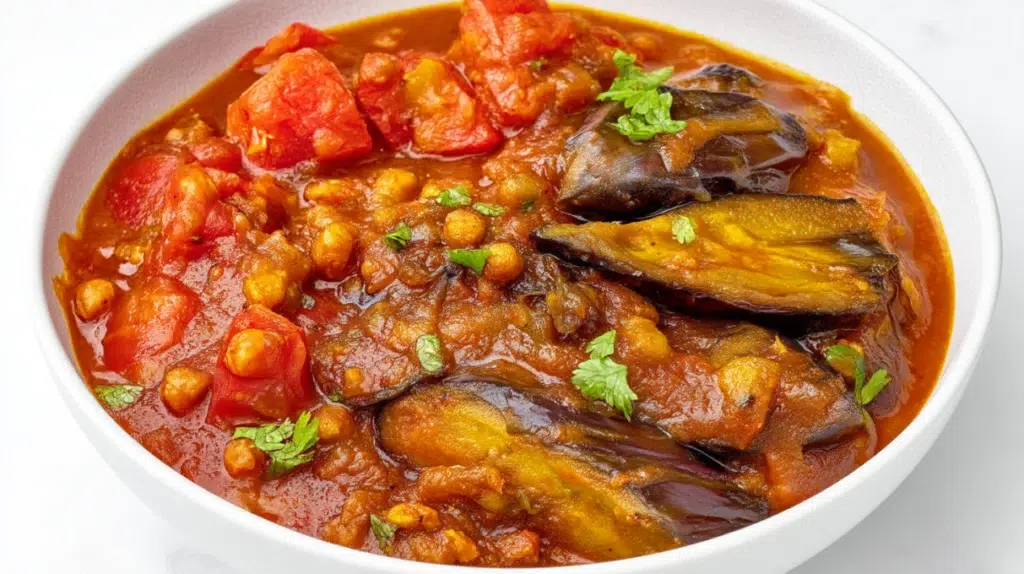
Persian eggplant stew, Khoresh bademjan, is one of Iran’s most beloved dishes, a deep, aromatic stew of golden-fried eggplant and tender lamb in a turmeric and saffron tomato sauce, lifted with the unmistakable tartness of limoo amani, the dried Persian lime that gives Persian cooking its distinctive sour edge. It is served over saffron rice with a crispy tahdig crust, and it is the kind of dish that arrives at the table already smelling like the most important meal of the week.
The name translates simply: khoresh means stew, bademjan means eggplant. But the dish itself is not simple in the way simple usually means. It is layered, every component built and developed separately before coming together in a long, slow simmer that merges everything into something the individual ingredients never quite suggested on their own. The eggplant must be salted and then properly fried or roasted until golden; the onion must be caramelised past translucent, past soft, to a deep amber that provides the backbone of the whole stew; the saffron must be bloomed correctly in hot water to release its colour and aroma rather than dropped whole into the pot where it contributes almost nothing.
The tartness, from dried lime, pomegranate molasses, or sour grapes, is not optional. It is what makes khoresh bademjan taste Persian rather than just a tomato and eggplant stew.
Ingredients
For the eggplant
- 3 medium globe eggplants (about 900g total), cut into long wedges or thick lengthwise slices, about 2cm thick. The elongated shape is traditional and holds together better than cubes during cooking. Smaller Italian or Indian eggplants, halved lengthwise, are excellent if available.
- 1 tablespoon fine salt, for salting the eggplant. Draws out moisture and bitterness before cooking.
- 4–5 tablespoons olive or vegetable oil, for frying or roasting. Eggplant is thirsty and needs generous oil to colour properly; too little and it steams rather than fries.
For the stew
- 600g lamb shoulder or leg, cut into 4cm chunks, bone-in pieces add depth to the sauce; boneless is easier to eat. Beef stew meat (chuck or shin) is an equally authentic substitute. Leave enough fat on the meat, it renders into the sauce during the long simmer and adds richness.
- 2 large onions, thinly sliced, the caramelisation of the onion is the flavour foundation of the whole stew. Do not rush this stage.
- 4 cloves garlic, finely minced
- 3 tablespoons tomato paste, cooked out in the oil with the spices before any liquid is added. Raw tomato paste tastes sharp and tinny; cooked-out tomato paste tastes rich and deep.
- 400g canned chopped tomatoes, or 3 medium fresh tomatoes, peeled and roughly chopped
- 350ml water or light chicken/lamb stock
- 1 teaspoon ground turmeric
- ½ teaspoon ground cinnamon
- ½ teaspoon ground black pepper
- 1 teaspoon advieh (Persian khoresh spice blend), optional but excellent. Advieh for khoresh typically contains dried rose petals, cardamom, coriander, cinnamon and cumin, available at Iranian grocery stores and online. Substitute: ¼ tsp each of ground cardamom, ground coriander, and a pinch of ground dried rose petals.
- Salt to taste
The sour element, essential, choose one
- 3–4 limoo amani (dried Persian limes), the most traditional choice for this dish. Also called dried lime, black lime, loomi or omani lime. Small, hard, dark limes that have been sun-dried until completely desiccated. Pierced multiple times with a fork and added whole, they infuse the stew with a distinctive bitter-sour citrus note that is genuinely irreplaceable. Available at Middle Eastern grocery stores and online. Do not substitute dried lime powder, which is much weaker.
- OR 2 tablespoons pomegranate molasses, provides the tartness with an additional fruity sweetness. The most accessible substitute for limoo amani and produces a delicious result, though the flavour profile is somewhat sweeter and less bitter than the dried lime version.
- OR 3 tablespoons sour grape juice (abghooreh) or verjuice, the most traditional souring agent of all, particularly in northern Iranian cooking. A clean, pure tartness without bitterness.
- Squeeze of fresh lemon or lime juice to finish, even if using dried limes, a final squeeze of fresh citrus at the end brightens the stew noticeably
The saffron
- ¼ teaspoon good-quality saffron threads, Persian saffron is the most intensely coloured and flavoured. Must be bloomed correctly to release its colour and aroma, see step 1. Saffron added directly to a hot pot of stew contributes almost nothing. Bloomed saffron transforms both the colour and the fragrance of the finished dish.
- 3 tablespoons hot water, for blooming the saffron
To serve
- Saffron basmati rice, the only correct accompaniment. Persian rice cooked with the steaming method (kateh or traditional), finished with a drizzle of bloomed saffron water and served with a crispy tahdig crust if possible.
- Pomegranate seeds, scattered over the finished stew just before serving. They provide a jewel-like visual contrast and a burst of cold, fresh tartness against the rich, warm stew.
- Fresh flat-leaf parsley or mint leaves, for garnish
Step by step
- Bloom the saffron. Using a mortar and pestle or the back of a spoon, grind the saffron threads with a tiny pinch of sugar to a fine, deep orange powder, the sugar acts as an abrasive and helps break down the threads. Transfer to a small bowl or glass. Pour 3 tablespoons of hot (not boiling, around 80°C) water over the ground saffron and stir once. Set aside to steep for at least 10–15 minutes. The liquid will turn a deep, saturated gold. This is what goes into the stew. The grinding step is the difference between saffron that colours and flavours a dish and saffron that dissolves invisibly and contributes almost nothing. The cell walls of whole saffron threads are tough, grinding breaks them open and allows the colour compounds and essential oils to dissolve fully into the water. Steep in hot water rather than boiling water, which destroys some of the more delicate aromatic compounds.
- Salt and drain the eggplant. Cut the eggplants into long, thick wedges or lengthwise slices and lay them in a colander in a single layer. Sprinkle the salt evenly over all surfaces. Set aside for 20–30 minutes, you will see droplets of moisture forming on the surface. Rinse under cold water and pat completely dry with paper towels or a clean cloth. Dry thoroughly, wet eggplant spits violently in hot oil.
- Fry or roast the eggplant.Traditional fry method: Heat 3–4 tablespoons of oil in a wide pan over medium-high heat until shimmering. Fry the eggplant in batches, do not crowd the pan, for 3–4 minutes per side until deep golden brown on the cut surfaces and soft enough to yield when pressed. The eggplant will absorb the oil quickly; add a little more between batches if the pan looks dry. Transfer to a plate lined with paper towels. Do not stir the eggplant constantly, let it sit in contact with the hot pan to develop colour before turning. Lighter roast method: Brush or toss the dried eggplant pieces with 2 tablespoons of olive oil. Spread in a single layer on a baking tray. Roast at 220°C / 425°F for 20–25 minutes, flipping once halfway, until deeply golden and tender. Uses significantly less oil than frying with excellent results. ,The eggplant must be genuinely golden, not pale, not lightly coloured, but a deep amber-brown on the cut surfaces. Undercooked eggplant is spongy and bitter in the finished stew. Properly cooked eggplant is silky, almost melting, and rich. This stage cannot be rushed.
- Caramelise the onion deeply. In a large, heavy pot or Dutch oven, heat 2 tablespoons of oil over medium heat. Add the sliced onions with a pinch of salt and cook, stirring occasionally, for 12–15 minutes until they have collapsed completely, turned a deep golden amber, and smell sweet and rich. This is caramelisation, not just softening, the onion should be darker than you think is right and significantly reduced in volume. Add the garlic and cook for another 2 minutes. The onion is the flavour foundation of khoresh bademjan. Pale, under-caramelised onion produces a thin, one-dimensional stew. Deeply caramelised onion provides the sweetness, depth and body that holds the whole dish together. 15 minutes over medium heat is not too long, do not rush this stage by raising the heat, which burns rather than caramelises.
- Brown the meat. Push the onion to the sides of the pot. Increase the heat to medium-high. Add the lamb chunks in a single layer in batches if necessary, never crowding and sear without moving for 2–3 minutes per side until properly browned on all surfaces. Return all the meat to the pot with the onion. Add the turmeric, cinnamon, black pepper and advieh if using, stir to coat everything in the spices, and cook for 1 minute until fragrant.
- Cook out the tomato paste. Add the tomato paste to the pot and stir it into the meat and onion. Cook over medium heat, stirring frequently, for 3–4 minutes until the tomato paste darkens from bright red to a deeper, rustier colour and smells cooked and sweet rather than raw and sharp. This step removes the acidic raw taste that tomato paste contributes when added directly to liquid.
- Build the stew. Add the canned tomatoes and water or stock. Stir to combine, scraping up any caramelised bits from the base of the pot. If using limoo amani, pierce each one 6–8 times with a fork or skewer, this allows the liquid to enter and the flavour to leach out and add them whole to the pot. If using pomegranate molasses or sour grape juice, add now. Pour in the bloomed saffron liquid. Season with salt. Bring to a boil, then reduce to a gentle simmer, cover, and cook for 30 minutes until the lamb is about 80% tender.
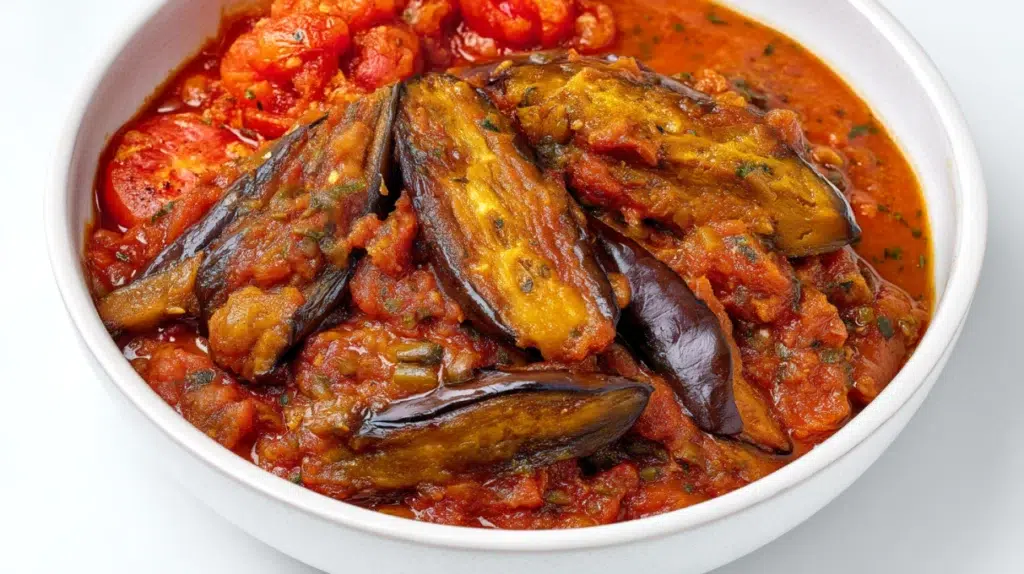
- Add the eggplant and finish. Nestle the fried or roasted eggplant pieces gently into the stew, do not stir vigorously, which would break them up. They should sit in the sauce and simmer, not be stirred into it. Cover and continue to simmer on the lowest possible heat for 30–40 minutes more until the lamb is completely tender and falling from any bones, the eggplant is soft and silky throughout but still holding its shape, and the sauce has thickened to a rich, coating consistency. The eggplant’s shape is part of khoresh bademjan’s identity, it should be recognisable as eggplant in the finished dish, not dissolved into the sauce. Gentle heat and minimum stirring are what preserve the shape. If the sauce seems too thick, add a small splash of water and tilt the pot to distribute it without disturbing the eggplant.
- Taste and finish. Taste the stew and adjust salt. Add a squeeze of fresh lemon or lime juice if the tartness needs brightening, even if you used dried limes, a small squeeze of fresh citrus added right at the end lifts the entire flavour. Remove and discard the limoo amani before serving (they are not eaten). Transfer to a serving dish. Scatter pomegranate seeds and fresh herbs over the top.
Claire’s note
Two things that make an outsized difference to this stew. First: the limoo amani. I know dried Persian limes sound like a specialist ingredient and they are, a little, but they are available at any Iranian or Middle Eastern grocery store and online, and the flavour they give to this stew is genuinely irreplaceable. Pomegranate molasses produces a very good stew. Dried lime produces the right stew, the one that tastes like what Iranians who make this dish every week are making. If you are going to put 90 minutes into a khoresh bademjan, spend ten more minutes finding the right souring agent. Second: this stew is better the next day.
The flavours settle, the sauce thickens, the lamb relaxes further into the eggplant, and the saffron deepens throughout the whole pot in a way that the freshly made version simply doesn’t have. Make it the evening before, refrigerate overnight, and reheat gently on the stovetop with a small splash of water. It will be the best thing you cooked all week.
Serve with
Khoresh bademjan is served over Persian saffron rice, basmati cooked with the steaming method, the top layer tinted golden with a drizzle of bloomed saffron water, with a crispy tahdig crust at the base of the pot that gets broken into pieces and served alongside. This is not negotiable, Persian khoresh and Persian rice are a single dish in two components. Plain boiled basmati is an acceptable substitute; steamed saffron rice is the correct one.
For more Persian cooking: the Persian saffron chicken uses the same saffron blooming technique and is the natural companion dish on a Persian table. The Mediterranean & Middle East collection covers the full breadth of this cuisine region.
Add Persian eggplant stew to your weekly meal planner as a Saturday cook, it takes unhurried time but rewards you with dinner that night and an even better lunch the next day. And for more recipes, follow us on Pinterest.
Print
Persian Eggplant Stew (Khoresh Bademjan)
- Total Time: 120 minutes
- Yield: 4–6 servings 1x
- Diet: None
Description
Khoresh bademjan is a beloved Persian stew featuring golden-fried eggplant and tender lamb in a rich turmeric and saffron tomato sauce, highlighted by the tartness of dried Persian limes.
Ingredients
- 3 medium globe eggplants (about 900g total), cut into long wedges
- 1 tablespoon fine salt
- 4–5 tablespoons olive or vegetable oil
- 600g lamb shoulder or leg, cut into 4cm chunks
- 2 large onions, thinly sliced
- 4 cloves garlic, finely minced
- 3 tablespoons tomato paste
- 400g canned chopped tomatoes
- 350ml water or light chicken/lamb stock
- 1 teaspoon ground turmeric
- ½ teaspoon ground cinnamon
- ½ teaspoon ground black pepper
- 1 teaspoon advieh (optional)
- Salt to taste
- 3–4 limoo amani (dried Persian limes) or 2 tablespoons pomegranate molasses or 3 tablespoons sour grape juice
- ¼ teaspoon good-quality saffron threads
- 3 tablespoons hot water
- Saffron basmati rice for serving
- Pomegranate seeds for garnish
- Fresh flat-leaf parsley or mint leaves for garnish
Instructions
- Bloom the saffron by grinding it with sugar, then steeping it in hot water for 10–15 minutes.
- Salt and drain the eggplant, then fry or roast until golden and tender.
- Caramelise the onions deeply in oil over medium heat.
- Brown the lamb in the pot with the caramelised onions.
- Cook out the tomato paste until it darkens.
- Build the stew by adding tomatoes, water or stock, and preserved limes or pomegranate molasses.
- Add the eggplant and simmer gently until the lamb is tender.
- Taste and adjust seasoning, finishing with fresh lemon juice.
- Serve over saffron basmati rice with pomegranate seeds and herbs.
Notes
Khoresh bademjan is best made a day in advance, allowing flavors to settle and deepen. Serve over saffron rice with crispy tahdig.
- Prep Time: 30 minutes
- Cook Time: 90 minutes
- Category: Main Course
- Method: Stewing
- Cuisine: Persian
Nutrition
- Serving Size: 1 serving
- Calories: 450
- Sugar: 8g
- Sodium: 600mg
- Fat: 20g
- Saturated Fat: 6g
- Unsaturated Fat: 11g
- Trans Fat: 0g
- Carbohydrates: 30g
- Fiber: 7g
- Protein: 30g
- Cholesterol: 70mg