⏱ Prep:15 min 🔥Simmer: 25–30 min ❄️Cool: 2+ hrs 🍶Makes: 2–2.5 litres 🌿Vegan
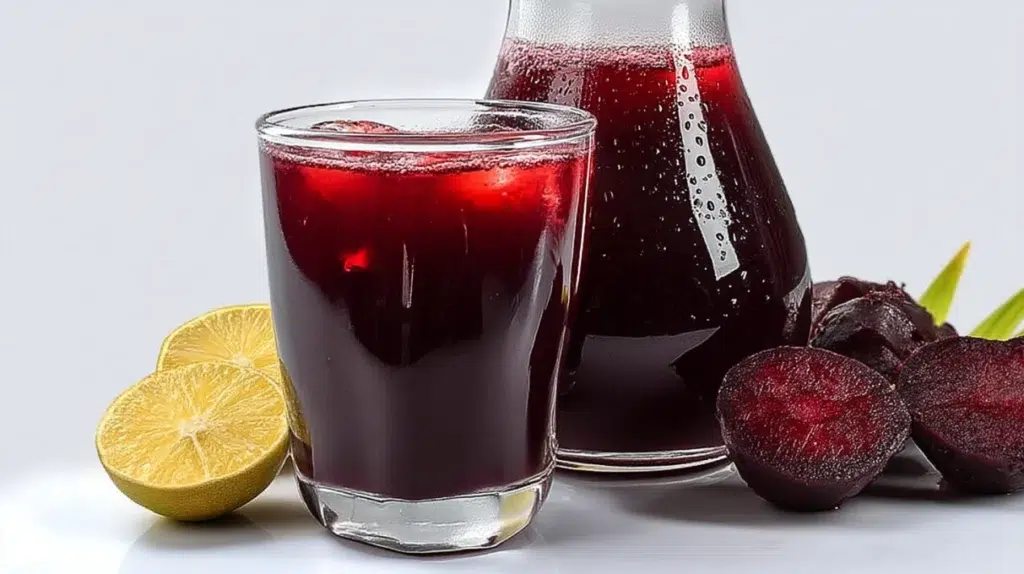
Nigerian Zobo Juice, also called zoborodo is a Hausa word for the roselle plant (Hibiscus sabdariffa) and for the drink made from its dried calyces. It has been made by the Hausa people of northern Nigeria for centuries and is now one of the most recognisable drinks across the whole country: deep crimson, tart, floral, spiced with cloves and ginger, sweetened to taste and served ice cold. It appears at weddings, naming ceremonies, parties and family gatherings as a gesture of hospitality as fundamental as the food itself. When a Nigerian household makes zobo, they make a lot of it. It is not a drink you make for yourself alone.
The same drink exists across the world under different names, bissap in Senegal and Francophone West Africa, sobolo in Ghana, sorrel in the Caribbean, agua de Jamaica in Latin America. It traveled from West Africa to the New World on slave ships, carried as knowledge by enslaved people who preserved what they could of their food traditions under the most extreme circumstances imaginable. The Nigerian version is distinguished from its descendants by its spice load: cloves, ginger, cinnamon, sometimes star anise and black pepper, a complexity of flavour that the Caribbean sorrel and Latin American agua de Jamaica, both simpler in their spicing, don’t quite replicate. This recipe makes the full Nigerian version.
Ingredients
- 100g (about 4 cups loosely packed) dried zobo leaves, the dried calyces of Hibiscus sabdariffa. Sold as “zobo leaves,” “dried hibiscus,” “sorrel,” or “roselle” at Nigerian, West African, Caribbean, and Latin American grocery stores, and increasingly at mainstream supermarkets and health food shops. Look for deep burgundy-red colour, pale or brownish leaves have lost their pigment and will produce a dull, weak drink. They are often dusty from market storage; rinse them thoroughly.
- 2 litres cold water, plus more for rinsing. Use clean, potable water throughout.
- 1 medium pineapple, the peel and core go into the pot during the boil; fresh pineapple chunks can be blended and strained in after cooling for extra tropical sweetness. Pineapple is the most characteristic flavour addition in Nigerian zobo and the element that most distinguishes it from a simple hibiscus tea. Do not use canned pineapple in syrup, it makes the drink too sweet before you’ve had a chance to control the sweetness yourself.
- 1 tablespoon whole cloves (kayan kanshi), the most traditional and essential spice in zobo. Warm, intensely aromatic, with a mild antiseptic quality that also helps the drink keep slightly longer. Do not substitute ground cloves, which cloud the drink. Whole cloves are strained out cleanly.
- 1 thumb-sized piece of fresh ginger (about 30g), peeled and roughly sliced, adds brightness, heat and a citrusy sharpness that cuts through the hibiscus tartness. Fresh ginger produces a noticeably more vibrant result than ground ginger.
- 2 cinnamon sticks, or 1 teaspoon ground cinnamon. Adds warmth and a sweet, woody note. Ground cinnamon works but will require more vigorous straining to remove.
- 1 teaspoon black peppercorns, optional but traditional in many households. Adds a subtle background heat that doesn’t announce itself but rounds out the spice profile.
- 2 star anise, optional. Adds a faint licorice-anise depth that works beautifully in the background without being identifiable as star anise in the finished drink.
For sweetening, add after cooling, not during boiling
- Sugar, honey, or dates (dabino) to taste, add only once the drink is completely cool. Boiling sweetener dulls the flavour and can promote faster fermentation during storage. The drink will taste less sweet cold than it does warm, sweeten slightly more than tastes right at room temperature.
- Options: 150–250g granulated sugar (most common); 4–5 tablespoons honey (more rounded, floral sweetness); a handful of soft Medjool dates, blended with a little water to a smooth paste then stirred in (most traditional natural sweetener in northern Nigeria, adds slight thickness and depth).
For finishing and serving
- Juice of 1 lime or lemon, optional but recommended. Adds brightness and extends the shelf life of the finished drink through its acidity. Add after sweetening.
- Ice, for serving
- Fresh mint, orange slices, or frozen pineapple chunks, for serving
Step by step
- Rinse the zobo leaves, thoroughly. Place the dried hibiscus calyces in a large colander or bowl. Rinse under cold running water, swirling and turning the leaves, until the water running off them runs noticeably clearer. They are often dusty, gritty and sometimes contain small stones or debris from market storage. Two to three rinses is usually sufficient. Drain well. This step is not optional. Zobo leaves sold at open markets have often been dried outdoors and stored in open raffia baskets, the dust and grit they carry goes directly into the drink if you skip the rinse. A properly rinsed batch of leaves produces a cleaner, brighter colour in the finished drink.
- Prepare the pineapple. Wash the pineapple thoroughly. Cut off the top and bottom, then peel, remove the peel in strips and set the peel aside. Cut out the core. Add both the peel and core directly to the pot, they contain concentrated pineapple flavour and will steep into the drink during the boil. The fresh pineapple flesh can be cut into chunks and set aside, they will be blended separately and added after the drink has cooled and been strained.
- Boil with spices. Place the rinsed zobo leaves, pineapple peel and core, cloves, ginger, cinnamon sticks, peppercorns and star anise in a large pot. Pour in the 2 litres of cold water. Bring to a boil over high heat, stirring once or twice, then reduce to a steady simmer. Simmer uncovered for 25–30 minutes. The liquid will turn a deep, dark crimson and the kitchen will smell intensely of hibiscus and cloves. Simmer, not boil aggressively. A sustained rolling boil for longer than 30 minutes can introduce bitterness and destroy some of the vitamin C content. Keep it at a steady, active simmer, bubbles breaking the surface but not a vigorous rolling boil. The colour is your guide: when the liquid is a deep, saturated burgundy-red, the extraction is complete.
- Optional, blend the pineapple flesh. If using the fresh pineapple flesh for extra sweetness: add the pineapple chunks to a blender with about 100ml of water and blend to a smooth purée. Set aside, this will be added after straining.
- Cool completely before straining. Remove the pot from the heat. Leave to cool at room temperature for at least 1–2 hours, or until completely cool. Do not attempt to strain or sweeten while warm, hot liquid forces through a sieve unevenly and the sweetener added to a warm drink tastes different from one added cold. For the best result, allow the pot to steep overnight at room temperature or in the fridge, the spices continue to develop and the flavour deepens significantly with more time.
- Strain twice. First pass: pour the cooled zobo through a fine-mesh sieve into a large bowl or jug, pressing the solids gently with a spoon to extract as much liquid as possible. Discard the spent leaves and spices. Second pass: line the sieve with a piece of cheesecloth, a clean muslin cloth, or a nut milk bag and strain the liquid again. This second pass removes fine particles and produces a completely clear, silky drink with a jewel-like colour. If using the blended pineapple purée, add it to the liquid now and stir through, then strain once more through the cheesecloth.The difference between once-strained and twice-strained zobo is significant in appearance and mouthfeel. Once-strained zobo is slightly cloudy and has a rougher texture on the tongue. Twice-strained zobo is clear, smooth and looks exactly like the drinks sold at Nigerian parties and events. The second strain takes two minutes and is worth doing.
- Sweeten and finish. Add your chosen sweetener to the strained, cooled zobo and stir until completely dissolved. Taste and adjust, cold temperatures suppress sweetness perception, so the drink can be sweetened slightly more than feels right at room temperature. Add the lime or lemon juice and stir. Taste one final time. Pour into clean, sealed bottles or a large jar and refrigerate.
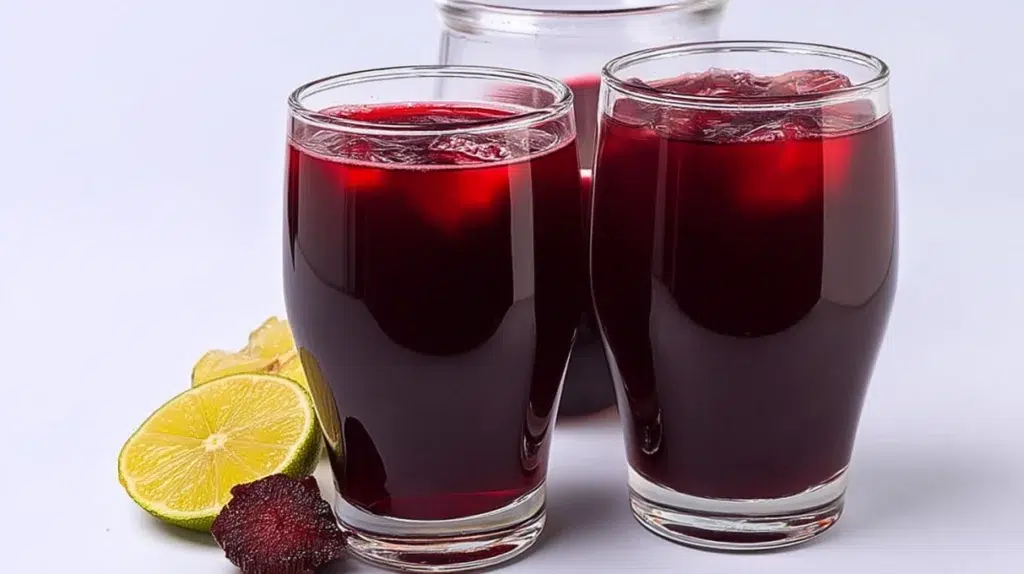
- Serve ice cold. Pour over ice in tall glasses. Add fresh mint, a slice of orange or a few frozen pineapple chunks for serving. Zobo is always served cold, it is not a warm drink in the Nigerian tradition, though it can be drunk warm as a herbal tea if preferred.
Claire’s note
Two things consistently separate a good batch of zobo from a remarkable one. The first is the overnight rest. Making zobo the day before you plan to serve it, letting it steep in the fridge after the initial boil and strain, produces a noticeably deeper, more rounded, more complex drink than one made and served the same day. The spices settle into the hibiscus rather than sitting alongside it. If you are making this for a party or gathering, make it the night before. It will be better.
The second is the cloves. Every Nigerian home has its own ratio, and opinions are strong. The amount in this recipe, one tablespoon of whole cloves for 2 litres, produces a drink where the cloves are present and warm but don’t overpower. If you want a more intensely spiced zobo, increase to 1½ tablespoons. If you are sensitive to clove or making this for children, reduce to 1 teaspoon. Taste the drink before straining, it should smell deeply aromatic from the cloves without smelling like a dentist’s waiting room. That is the line.
Serve with
Zobo is a standalone drink, served ice cold at any occasion, it doesn’t need food to accompany it, though it is the natural partner to the full spread of Nigerian party food. It sits beautifully alongside Nigerian puff puff, Nigerian suya, Nigerian meat pies, and chin chin as part of a full Nigerian celebration spread. The complete Nigerian recipes collection covers the full breadth of this cuisine, and the African food collection has the broader West African context.
Add Nigerian zobo juice to your weekly meal planner as a batch-prep drink for the week, one batch takes about 45 minutes of active time and keeps refrigerated for 5–7 days. And for more recipes, follow us on Pinterest.
Print
Nigerian Zobo Juice
- Total Time: 45 minutes
- Yield: 2–2.5 litres 1x
- Diet: Vegan
Description
A refreshing, tart, and floral beverage made from dried hibiscus leaves, served ice cold and spiced with cloves and ginger.
Ingredients
- 100g dried zobo leaves (Hibiscus sabdariffa)
- 2 litres cold water
- 1 medium pineapple (for peel and core)
- 1 tablespoon whole cloves
- 1 thumb-sized piece of fresh ginger (about 30g)
- 2 cinnamon sticks or 1 teaspoon ground cinnamon
- 1 teaspoon black peppercorns (optional)
- 2 star anise (optional)
- Sugar, honey, or dates (to taste)
- Juice of 1 lime or lemon (optional)
- Ice (for serving)
- Fresh mint, orange slices, or frozen pineapple chunks (for serving)
Instructions
- Rinse the zobo leaves thoroughly.
- Prepare the pineapple by washing and cutting it.
- Boil with spices in a large pot with cold water.
- Blend pineapple flesh if using fresh pineapple.
- Cool completely before straining.
- Strain the mixture twice for clarity.
- Sweeten the cooled zobo and finish with lime or lemon juice.
- Serve ice cold with optional garnishes.
Notes
Make the zobo a day in advance for better flavor. The cloves’ amount can be adjusted based on preference.
- Prep Time: 15 minutes
- Cook Time: 30 minutes
- Category: Beverage
- Method: Simmering
- Cuisine: Nigerian
Nutrition
- Serving Size: 1 cup
- Calories: 120
- Sugar: 20g
- Sodium: 5mg
- Fat: 0g
- Saturated Fat: 0g
- Unsaturated Fat: 0g
- Trans Fat: 0g
- Carbohydrates: 30g
- Fiber: 0g
- Protein: 0g
- Cholesterol: 0mg