⏱ Prep: 20 min 🔥Bake: 18–22 min 🧁Makes: 12 cakes 🌿Dairy-free
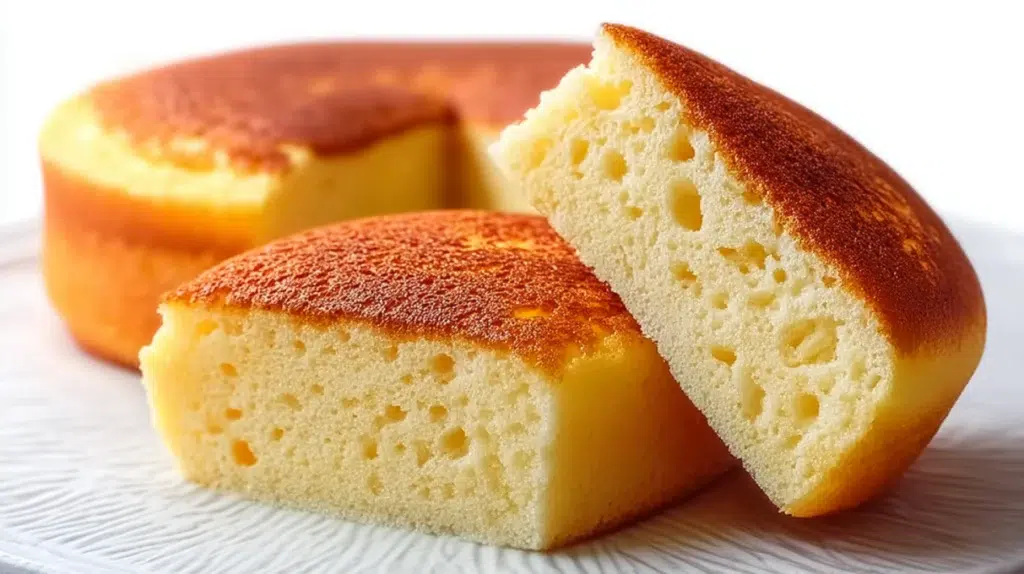
Chinese egg cake, Ji dan gao is one of the most honest things you can bake. The ingredient list is three items: eggs, sugar, flour. Everything the cake is comes from what you do with those three things, specifically from how completely you beat the eggs and sugar before anything else goes in. Get that right and the cake is impossibly light, faintly golden, with a delicate crumb that dissolves on the tongue and a clean egg flavour that makes you understand why this has been a staple of Chinese bakeries and home kitchens for generations.
Get it wrong, pull the mixer out too early, fold the flour in too aggressively and the cake is dense, flat, and more or less indistinguishable from a mediocre cupcake.
Ingredients
- 4 large eggs, at room temperature, room temperature eggs whip to significantly greater volume than cold eggs, the fat in cold egg yolks is stiffer and resists forming a stable foam. Take them out of the fridge at least 30 minutes before you start. Room temperature is the single most practical step you can take before you begin.
- 120g (½ cup + 1 tbsp) caster sugar, caster (superfine) sugar dissolves faster into the egg foam than granulated, producing a more uniform batter with fewer undissolved sugar crystals. If only granulated is available, process briefly in a blender or food processor to reduce the grain size before using.
- 120g (1 cup) cake flour, sifted, cake flour’s lower protein content (around 8–9%) produces the fine, tender, gossamer crumb that defines ji dan gao. All-purpose flour at the same quantity produces a noticeably denser, slightly chewier cake. If cake flour is unavailable: for every 100g of cake flour needed, use 85g all-purpose flour + 15g cornstarch, sifted together twice.
- 2 tablespoons neutral oil, vegetable, sunflower or light corn oil. Added at the end, folded in gently. Oil keeps the cake moist for longer and produces a more tender crumb than butter would at this quantity; butter also weighs down the foam slightly. Do not use sesame oil or any strongly flavoured oil.
- 1 teaspoon vanilla extract, optional but recommended. Masks the faint sulphurous note that eggs can carry, particularly noticeable in a cake with no dairy to soften it. A few drops of pandan essence (see variations) can substitute for a Southeast Asian flavour profile.
- 2 tablespoons cream soda, 7-Up or Sprite, optional. Some traditional recipes use a few tablespoons of fizzy drink in place of chemical leavening, the carbonation adds lift without baking powder flavour. Substitute with 2 tablespoons of water and ¼ teaspoon baking powder if preferred. Either approach works.
Step by step
- Preheat and prepare. Preheat the oven to 180°C / 350°F. Line a 12-cup muffin tin with paper cupcake liners, the standard paper cup presentation of Chinese egg cake. Alternatively, use individual paper cup molds placed on a flat baking tray. If you have tulip-style paper molds (taller and more cylindrical), these produce the traditional bakery look. Set the prepared tin aside.
- Optional: warm water bath for faster whipping. Fill a large bowl or the kitchen sink with warm water, around 40–43°C / 104–110°F, which feels comfortably warm but not hot to the touch. Place your mixing bowl in or over this warm water for 2 minutes before adding the eggs and sugar. The gentle warmth helps the sugar begin dissolving and encourages the eggs to whip to a greater volume faster. This step is optional in a warm kitchen but noticeably helpful when the kitchen is cool.
- Beat eggs and sugar to ribbon stage, this is the whole recipe. Add the room-temperature eggs and caster sugar to the mixing bowl. Using a stand mixer fitted with the whisk attachment, or a hand mixer, begin beating on medium speed for 1 minute until the mixture is combined and frothy. Increase to medium-high and continue beating, adding the vanilla extract partway through, for 8–12 minutes with a stand mixer, or 15–20 minutes with a hand mixer.You are beating until the mixture reaches the ribbon stage: the batter has tripled in volume, turned pale yellow (almost white), is thick and mousse-like, and when you lift the beater, the batter that falls back into the bowl holds its shape as a thick ribbon on the surface for at least 3–5 seconds before slowly dissolving back in. This is the only reliable test. Check early and check often, once the ribbon stage is reached, stop immediately. Over-beaten eggs produce large, unstable bubbles that collapse in the oven. The ribbon stage is the reason some ji dan gao bakes succeed and others fail. Under-beaten eggs produce a thin, fast-dissolving ribbon and a cake that comes out dense and barely risen. Properly beaten eggs produce a thick, slow-dissolving ribbon, the batter looks almost like softly whipped cream and holds a figure-8 drawn on the surface for a few seconds. Beat past this and the foam becomes grainy and unstable. The visual test is more reliable than the timer.
- Fold in the flour in two additions, gently. Sift the cake flour over the egg mixture in two additions, folding after each with a large silicone spatula. Use slow, deliberate cut-and-fold motions: cut down through the centre of the batter, sweep along the bottom and fold up and over in a single motion, rotating the bowl slightly between each fold. After the first addition, fold until no large flour patches remain before adding the second. After the second addition, fold only until just combined, stop the moment you see no more dry flour. Twenty to twenty-five gentle folds is usually enough. The entire leavening of this cake is the air in the egg foam. Every unnecessary fold after the flour is incorporated deflates that foam and reduces the final rise. Overmixed ji dan gao bakes flat and dense regardless of how perfectly the eggs were whipped. Stop folding at “just combined”, a few faint flour streaks are preferable to an over-folded batter.
- Add the oil and soda water. Drizzle the neutral oil around the edge of the batter rather than into the centre, this distributes it more evenly and reduces the number of folds needed. If using soda water or cream soda, add it now as well. Fold gently, 6–8 folds maximum until the oil is incorporated and the batter looks uniform and glossy. The oil will initially sit on the surface; be patient and fold slowly until it disappears.Adding oil to the edge rather than the centre means it encounters the batter gradually rather than creating a heavy pool in the middle that requires vigorous mixing to incorporate. The less you fold at this stage, the more air remains in the batter.
- Fill and bake. Using a ladle or large spoon, divide the batter evenly between the 12 prepared cups, filling each about three-quarters full. Tap the muffin tin gently on the counter once or twice to release any large air bubbles near the surface. Place immediately in the preheated oven.Bake at 180°C / 350°F for 18–22 minutes. Do not open the oven door in the first 15 minutes, the delicate foam structure is still setting and a temperature drop will cause the cakes to sink. The cakes are done when the domes are a deep golden colour, spring back when gently pressed with a fingertip, and a toothpick inserted in the centre comes out clean. Every oven is slightly different. Start checking at 18 minutes, if the tops are deep golden and the toothpick is clean, remove them. Overbaked ji dan gao are dry and the delicate crumb becomes crumbly. Slightly underbaked is preferable to overbaked for this particular cake.
- Cool and unmold. Remove from the oven. Allow to cool in the tin for 5 minutes, then transfer the cakes (still in their paper cups) to a wire rack. Cool for a further 10 minutes before eating, they are at their best slightly warm or at room temperature. If using paper cups without a muffin tin, peel the paper away while the cakes are still warm; once fully cold they can stick.
The steamed version
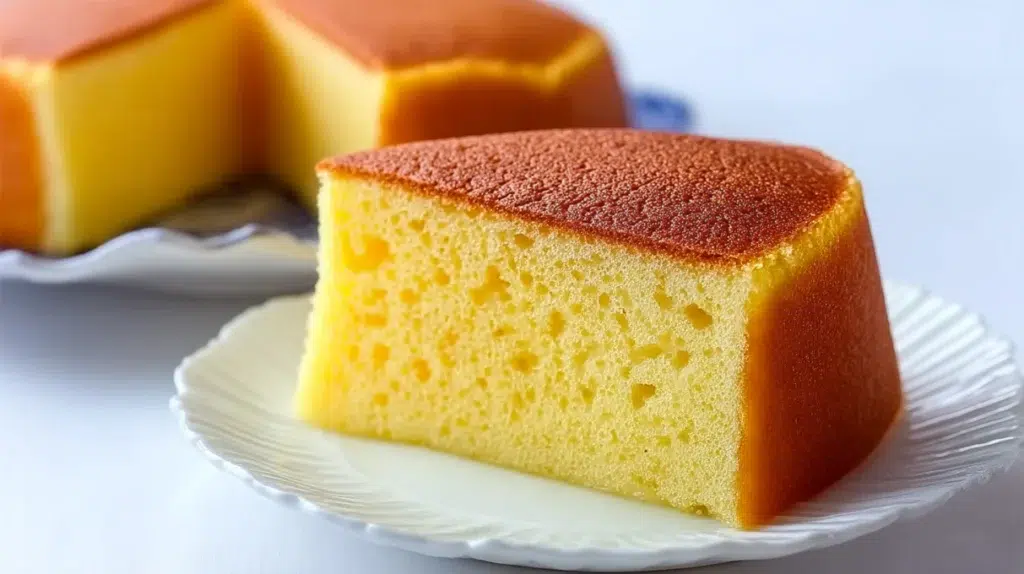
The steamed ji dan gao is the older, more traditional form made in a bamboo basket or lined cake tin, steamed over vigorously boiling water for 30–45 minutes, producing a cake that is moister, slightly denser and more yielding than the baked version. The characteristic feature of the steamed version is the smiling top: a natural crack that forms across the surface of the cake as it rises during steaming, resembling a smile, considered a sign of proper technique and a well-whipped egg foam.
Follow the same ingredient ratios and the same beating technique, pour into a parchment-lined 20cm round cake tin or bamboo basket, and steam over high heat (with the lid wrapped in a towel to prevent dripping condensation onto the cake surface) for 35–45 minutes. The cake is done when a skewer comes out clean and the surface has cracked and set.
Claire’s note
The two things I did wrong the first time I made ji dan gao, and the two things I now watch for every time. First, I stopped beating the eggs too early, at around six minutes, the batter looked thick and pale and I assumed it was done. It wasn’t at ribbon stage yet. The cake came out half the height it should have been and with a dense, slightly gummy crumb. The ribbon test is the only reliable checkpoint: lift the beater, watch the batter fall, wait. If it dissolves in under three seconds, keep beating.
Second, I added the oil directly into the centre of the batter rather than around the edge, and then over-folded trying to incorporate it, deflating everything I’d spent twelve minutes building. Oil around the edge, six to eight gentle folds, stop. The batter should look glossy and uniform without you having to work for it. If it still looks streaky after eight folds, give it two more and then stop regardless. The oven will take care of the rest.
Variations
Pandan ji dan gao
Replace the vanilla extract with ½ teaspoon pandan essence (or 2 tablespoons fresh pandan juice extracted from blended pandan leaves). The cake will be pale green, fragrant, and floral, the Southeast Asian version of this cake found in Malaysian and Singaporean Chinese communities.
Matcha ji dan gao
Sift 1½ teaspoons of high-quality matcha powder with the cake flour before folding in. Produces a pale green, slightly bitter, deeply aromatic cake that pairs particularly well with a cup of hojicha or gyokuro tea.
Brown sugar ji dan gao
Replace the caster sugar with an equal weight of dark muscovado or dark brown sugar. The cake takes on a deeper, more caramel-like sweetness and a slightly darker crumb. Reduce the sugar to 100g if using very dark muscovado, which is intensely flavoured.
Serve with
Chinese egg cake is eaten as a snack or at tea time, plain, at room temperature, with a cup of strong Chinese tea, oolong or milk tea alongside. It needs nothing with it. As part of a Chinese baking spread it sits naturally next to Japanese matcha souffle cheesecake for a comparison of East Asian egg-based cakes. The full Chinese recipes collection and the broader Asian recipes collection have the wider context.
Add Chinese egg cake to your weekly meal planner as a weekend baking project, active time is under 30 minutes and the cakes keep well in an airtight container for 2 days at room temperature. And for more recipes, follow us on Pinterest.
Print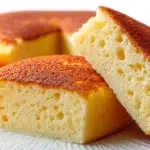
Ji Dan Gao (Chinese Egg Cake)
- Total Time: 42 minutes
- Yield: 12 cakes 1x
Description
A light and delicate Chinese egg cake made with just three simple ingredients: eggs, sugar, and flour, baked until golden and fluffy.
Ingredients
- 4 large eggs, at room temperature
- 120g (½ cup + 1 tbsp) caster sugar
- 120g (1 cup) cake flour, sifted
- 2 tablespoons neutral oil (vegetable, sunflower, or light corn oil)
- 1 teaspoon vanilla extract (optional)
- 2 tablespoons cream soda, 7-Up or Sprite (optional)
Instructions
- Preheat the oven to 180°C / 350°F. Line a 12-cup muffin tin with paper cupcake liners.
- Fill a large bowl or the kitchen sink with warm water and place mixing bowl in it for 2 minutes.
- Add the room-temperature eggs and caster sugar to the mixing bowl and beat on medium speed for 1 minute until frothy.
- Increase the speed to medium-high and continue beating for 8–12 minutes until reaching the ribbon stage.
- Fold in the sifted flour in two additions, using gentle cut-and-fold motions.
- Drizzle the neutral oil around the edge of the batter and add optional soda. Fold gently until incorporated.
- Fill the prepared cups with batter about three-quarters full and gently tap the muffin tin to release air bubbles.
- Bake for 18–22 minutes, checking for a deep golden top and a clean toothpick.
- Remove from the oven, let cool in the tin for 5 minutes, then transfer to a wire rack.
Notes
Serve at room temperature with tea. For variations, try adding pandan essence or matcha powder.
- Prep Time: 20 minutes
- Cook Time: 22 minutes
- Category: Dessert
- Method: Baking
- Cuisine: Chinese
Nutrition
- Serving Size: 1 cake
- Calories: 150
- Sugar: 10g
- Sodium: 10mg
- Fat: 5g
- Saturated Fat: 0.5g
- Unsaturated Fat: 4g
- Trans Fat: 0g
- Carbohydrates: 21g
- Fiber: 0g
- Protein: 3g
- Cholesterol: 122mg