⏱ Prep: 20 min 🌡️Rise: 1 hr 🔥Bake: 5–6 min per bread 🫓Makes: 6 breads Origin:Palestine
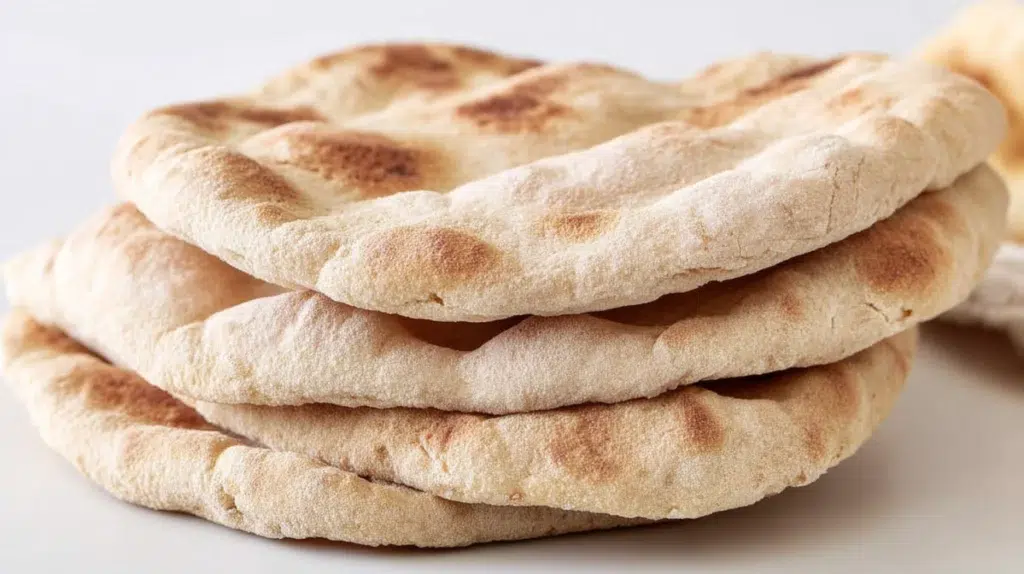
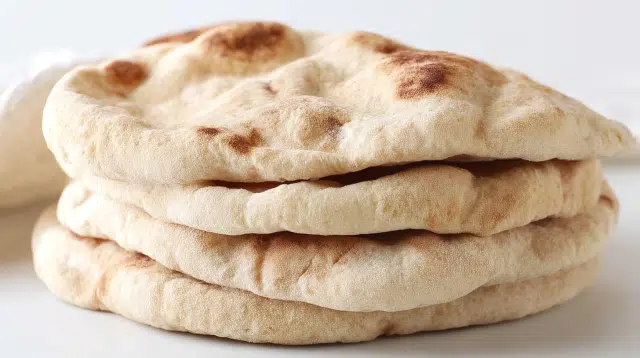
Palestinian Taboon is a flatbread named after the clay oven in which it is traditionally baked, a dome-shaped structure whose floor is lined with smooth river rocks or pebbles, heated by fire from below. The bread is slapped onto the hot stones or pressed against the oven walls, baking in minutes at high heat, producing a soft, slightly chewy interior with a dimpled underside and a few charred spots where it touched the stones. It has been made this way across Palestine for centuries.
In a home kitchen the closest approximation uses clean stones laid in a cast iron skillet or on a baking tray, preheated in the oven at the highest setting for at least 30 minutes before the dough goes on. The heat transferred from the stone to the dough in those first seconds of contact creates the characteristic underside, earthy, slightly crisp, dimpled. A pizza stone alone works almost as well. A plain cast iron skillet is the easiest option and still produces an excellent bread. What it cannot reproduce is the smell of a wood-fired clay oven, but the taste is genuinely close.
Ingredients
- 350g (2¾ cups) bread flour or plain flour, bread flour gives a slightly chewier result; plain (all-purpose) flour gives a softer, more yielding bread. Both are authentic. For a more traditional flavour: use 280g plain flour + 70g whole wheat flour, the whole wheat adds earthiness that nods to the original stone-ground grain.
- 7g (1 sachet) instant yeast, or 10g fresh yeast. Instant yeast can be added directly to the flour; active dry yeast should be dissolved in the warm water for 10 minutes first until frothy.
- 1 teaspoon sugar, feeds the yeast; does not make the bread sweet
- 1 teaspoon fine salt
- 2 tablespoons good olive oil, Palestinian cooking runs on olive oil. Use a decent extra virgin, it flavours the dough and keeps the bread soft longer.
- 220ml (¾ cup + 1 tbsp) warm water, 40–43°C / 104–110°F, comfortably warm to the touch. Too hot kills the yeast; too cold slows the rise significantly.
Step by step
- Prepare your baking surface and preheat. Choose your method, stones, pizza stone, or cast iron:Stones (most authentic): Collect smooth, clean river pebbles or purchase food-safe baking stones. Wash thoroughly with hot soapy water, rinse well and dry. Arrange in a single layer in a cast iron pan or on a heavy baking tray.
Pizza stone: Place on the oven rack.
Cast iron skillet: Place on the oven rack.Set the oven to its maximum temperature, 250°C / 480°F or as high as it goes. Leave the stones or skillet in the oven to preheat for a minimum of 30 minutes before any dough goes on. The surface must be ripping hot, this initial burst of heat is what creates the characteristic taboon bottom.The preheat is non-negotiable. Dough placed on a surface that isn’t sufficiently hot simply bakes slowly from above and never develops the crispy, slightly charred underside that defines taboon. 30 minutes minimum at maximum temperature. - Make the dough. Combine flour, instant yeast, sugar and salt in a large bowl and stir to mix. Add the olive oil and warm water. Mix until a shaggy dough forms, then turn out onto a lightly floured surface and knead for 8 minutes until the dough is smooth, elastic and slightly tacky, it should pull away from your hands but not stick aggressively. By stand mixer with a dough hook: 5 minutes on medium. Taboon dough is softer and slightly stickier than pizza dough, this is correct. A stiffer dough produces a denser, tougher bread. Resist the urge to add extra flour if the dough feels a little sticky; it will firm up during the rise.
- First rise. Shape the dough into a ball, rub the surface lightly with olive oil and place in a clean bowl. Cover with a damp kitchen towel or cling film. Leave in a warm place for 1 hour until doubled in size.
- Divide and rest. Punch the risen dough down gently. Divide into 6 equal pieces, each roughly 95g. Shape each piece into a smooth ball by pulling the surface of the dough underneath and pressing it together at the bottom. Place on a lightly floured surface, cover with a damp towel, and rest for 10 minutes. This short rest relaxes the gluten and makes the dough easier to roll out without springing back.
- Roll out the breads. On a lightly floured surface, roll each ball into a round about 20–22cm across and roughly 5mm thick, thinner than pita but not as thin as a tortilla. The edges can be slightly thicker than the centre. Optional: press your fingertips firmly all over the surface of the rolled dough to create dimples, these simulate the indentations made by the stones in a traditional taboon oven.
- Bake on the hot surface. Working quickly and carefully, the stones and pan will be extremely hot, use a wide spatula or pizza peel to lay one round of dough directly on the preheated stones or skillet. Close the oven. Bake for 4–5 minutes until the top is lightly golden with some puffed air pockets and a few darker spots, and the underside is golden-brown and dimpled from the stones. Each bread bakes one at a time unless your pan is large enough for two. Do not open the oven in the first 3 minutes, the initial steam from the dough helps the bread puff and develop structure. Check at 4 minutes. It should look slightly blistered on top and smell of bread and char.
- Wrap immediately. Remove from the oven and wrap in a clean kitchen towel immediately. The steam trapped inside the towel keeps the bread soft and pliable. Taboon left uncovered on a cooling rack for more than a few minutes becomes tough and dry, the towel is essential. Stack finished breads inside the towel as you work through the remaining rounds.
Claire’s note
The two things that matter most: how hot the surface is and how fast the bread goes on it. Both are about the same principle, contact heat in the first seconds of baking is what makes taboon taboon and not just a flatbread baked in an oven. If the stone or skillet is genuinely hot, the dough hits it and immediately begins crisping from below while steaming from above. That combination produces the soft-chewy interior and slightly crisp, dimpled bottom.
If the surface is warm rather than hot, the bread bakes slowly and evenly in all directions and you get something closer to pita. Thirty minutes at maximum oven temperature is the minimum. And wrap every single bread in a towel the second it comes out, do not skip this, taboon goes from perfect to tough in about five minutes in open air.
What to serve with taboon
Taboon is the bread of musakhan, Palestine’s national dish: chicken roasted with sumac and deeply caramelised onions, piled onto taboon that has been soaked in the cooking juices, drizzled with olive oil. It is the most important use of this bread. Beyond musakhan, taboon is eaten at breakfast with a pool of good olive oil and dried zaatar for dipping, alongside hummus, labneh or baba ganoush. It works as a wrap for lebanese kafta burger or falafel. The complete Mediterranean & Middle East collection has the full picture of this cuisine’s table.
Add Palestinian taboon to your weekly meal planner, make a batch of 6 on the weekend and keep wrapped in a towel or sealed bag for up to 2 days. Warm briefly in a dry pan before eating. And for more recipes, follow us on Pinterest.
Print
Palestinian Taboon Bread
- Total Time: 50 minutes
- Yield: 6 servings 1x
- Diet: Vegetarian
Description
Palestinian Taboon is a traditional flatbread baked on hot stones or in a cast iron skillet, producing a soft, slightly chewy texture with a dimpled underside.
Ingredients
- 350g (2¾ cups) bread flour or plain flour
- 7g (1 sachet) instant yeast
- 1 teaspoon sugar
- 1 teaspoon fine salt
- 2 tablespoons good olive oil
- 220ml (¾ cup + 1 tbsp) warm water (40–43°C / 104–110°F)
Instructions
- Prepare your baking surface and preheat the oven at maximum temperature (250°C / 480°F). Lay smooth stones or a cast iron skillet in the oven for at least 30 minutes.
- Combine flour, instant yeast, sugar, and salt in a bowl. Add olive oil and warm water; mix until a shaggy dough forms.
- Knead the dough on a floured surface for 8 minutes until smooth and elastic.
- Shape the dough into a ball, lightly oil its surface, and let it rise covered for 1 hour until doubled.
- Punch down the dough, divide into 6 pieces, and shape each into a ball. Rest for 10 minutes covered.
- Roll each ball into a round about 20–22cm across and 5mm thick.
- Bake each piece on the preheated stones or skillet for 4–5 minutes until golden and puffed.
- Wrap each bread in a clean kitchen towel immediately after removing from the oven to keep it soft.
Notes
Ensure the baking surface is very hot before placing the dough to achieve the characteristic dimpled bottom.
- Prep Time: 20 minutes
- Cook Time: 30 minutes
- Category: Bread
- Method: Baking
- Cuisine: Middle Eastern
Nutrition
- Serving Size: 1 bread
- Calories: 180
- Sugar: 1g
- Sodium: 200mg
- Fat: 5g
- Saturated Fat: 1g
- Unsaturated Fat: 3g
- Trans Fat: 0g
- Carbohydrates: 32g
- Fiber: 2g
- Protein: 6g
- Cholesterol: 0mg