
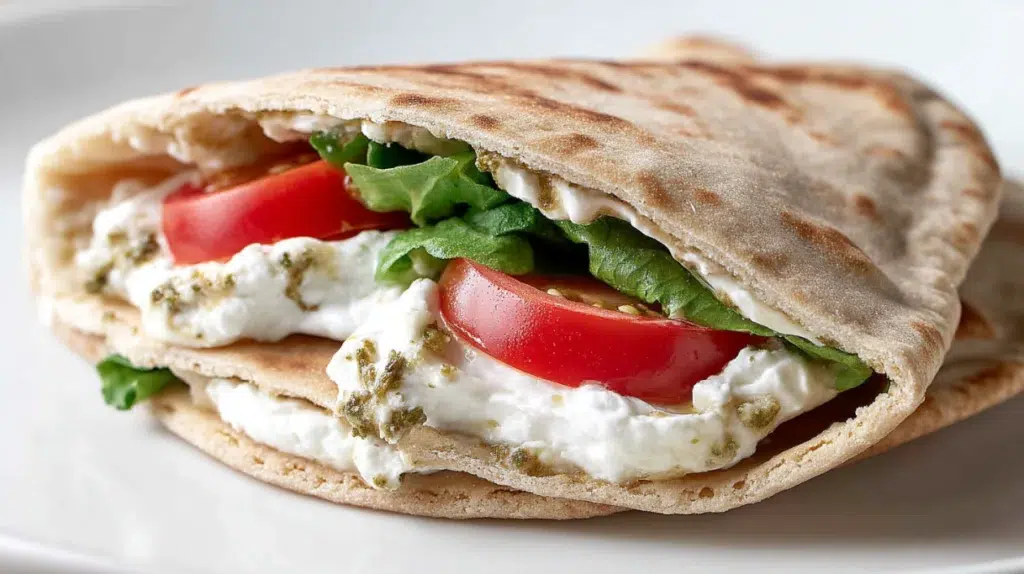
⏱ Time: 5 min 🥙Makes: 2 wraps 🌿Vegetarian
The labneh pita sandwich is what Lebanese mornings taste like. Thick, tangy labneh spread across the inner side of a split pita, sprinkled with za’atar, drizzled with good olive oil, layered with thin cucumber slices, ripe tomato, fresh mint and green olives, then rolled into a tight cylinder and eaten immediately, sometimes standing up, sometimes on the way out the door, always with a glass of strong tea alongside. It appears on every Lebanese breakfast table and in every Lebanese household regardless of anything else on the table.
It takes five minutes. The quality of the result depends almost entirely on three things: the labneh (thick and tangy, not thin and mild), the za’atar (aromatic and fresh, not stale powder), and the olive oil (genuinely good). These three ingredients do the work. Everything else follows.
Ingredients
Per sandwich (scale as needed)
- 1 Lebanese pita bread, split in half so you have two thin circles. Use the thicker inner side as your base, rough side facing up. The rough inner surface grips the labneh better than the smooth outer side, which tends to let it slide. If the pita is not fresh enough to split cleanly, warm it briefly in a dry pan or microwave for 10 seconds to make it pliable.
- 3–4 tablespoons labneh, thick, strained yogurt cheese. Store-bought labneh works well, look for it at Middle Eastern grocery stores or make your own. See the labneh recipe for the homemade version. Spread it generously, labneh is the primary filling here, not a condiment. A thin scrape is not enough.
- 1 teaspoon za’atar spice blend,the dried herb blend of thyme, sesame, sumac and salt that is fundamental to Lebanese cooking. Sprinkled directly onto the labneh so it adheres and distributes evenly in every bite. Quality varies dramatically between brands, find one that smells aromatic and slightly floral, not dusty. Lebanese and Palestinian za’atar brands are reliably better than generic versions.
- 1–2 teaspoons extra-virgin olive oil, drizzled over the za’atar. The oil carries the za’atar’s flavour and makes it bloom. Use the best olive oil you have in a sandwich this simple the olive oil is directly tasted, not hidden.
- ½ Persian cucumber, thinly sliced, or ¼ regular cucumber. Persian cucumbers are crispier and have a more delicate flavour. Slice thin, thick cucumber pieces make the sandwich difficult to roll and unbalance the bite ratio.
- 1 small ripe tomato, thinly sliced, use a firm, ripe tomato. Overripe tomato releases too much liquid and makes the pita soggy within minutes.
- 5–6 fresh mint leaves, not dried. Fresh mint is a signature flavour of Lebanese breakfast and gives the sandwich a clean, slightly cooling note that lifts all the other elements. Do not skip it.
- 4–5 Lebanese green olives, pitted and halved, or Castelvetrano olives. Green olives are traditional and their slight bitterness contrasts well with the creamy labneh. Black olives also work but have a different flavour profile.
- Pinch of flaked sea salt
- Extra drizzle of olive oil before rolling
Step by step
- Prepare the pita base. Split the pita bread in half carefully to produce two thin circles. Set the thicker inner half rough-side-up on a flat surface, this is your sandwich base. If the pita feels dry or stiff, warm briefly in a dry pan over medium heat for 20 seconds per side until just pliable. Set the other half aside for the crispy topping version, or use as a second sandwich base.
- Spread the labneh. Spoon 3–4 tablespoons of labneh onto the pita. Spread it in an even layer across the entire surface, leaving a 2cm border at the edges. The labneh layer should be thick enough that you cannot see the pita through it, about 4–5mm. This generous layer is what makes the sandwich distinctly Lebanese rather than a light smear. The traditional way to spread labneh, as done in Lebanese households for generations, is to use a small torn piece of the pita itself rather than a knife. Press and drag the bread through the labneh, spreading it in one motion. It produces a slightly thicker, more uneven result that catches the za’atar and olive oil better than a knife-smooth surface.
- Za’atar and olive oil. Sprinkle the za’atar evenly over the entire labneh surface. Drizzle the olive oil over the za’atar. The oil darkens the za’atar immediately and the kitchen should smell of thyme, sesame and good oil. Leave for 30 seconds, the za’atar absorbs the oil slightly and becomes more aromatic.
- Layer the fillings in a line. Arrange the cucumber slices, tomato slices, mint leaves and halved olives in a line down the centre third of the pita, not scattered over the whole surface. A neat line down the middle allows the pita to be rolled tightly without the fillings spilling out the sides. Season with a pinch of flaked salt over the vegetables. Drizzle a little more olive oil over the top. The line matters. A randomly scattered filling means ingredients fall out when you roll and the cylinder collapses. A neat line down the centre third produces a tight, secure wrap that holds together when you pick it up and bite.
- Roll and eat immediately. Fold the bottom third of the pita upward over the filling. Fold the left side over the top. Roll the sandwich tightly from left to right into a cylinder, like a burrito. Hold firmly for a moment so the labneh acts as a seal. Eat immediately or wrap in parchment paper for up to 30 minutes. After 30 minutes the pita begins to soften from the labneh moisture.
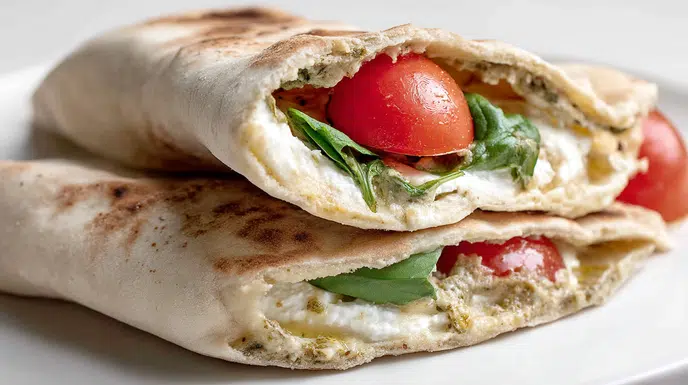
Claire’s note, the crispy version
Split the pita as normal. Take the second circle, the thinner outer half, brush it with olive oil and sprinkle generously with za’atar. Toast in a dry pan over medium heat for 2 minutes, or bake at 200°C for 4–5 minutes, until golden and lightly crispy. Break it into large pieces and lay the crispy pieces over the labneh and vegetables before rolling, the contrast between cold, creamy labneh and hot, shatteringly crispy pita is one of the best textural experiences in simple food.
Lebanese bakeries that serve this for breakfast often do exactly this, one half soft and labneh-spread, one half toasted and crispy, broken and combined in the final assembly. It takes 5 extra minutes and the difference is dramatic.
Variations
- With harissa: Swirl 1 teaspoon of harissa paste into the labneh before spreading for heat and a North African note, very popular.
- With avocado: Add thin avocado slices alongside the cucumber, a more modern version.
- With hard-boiled egg: Sliced hard-boiled egg added alongside the vegetables makes this a more substantial breakfast.
- Plain version: Just labneh, za’atar and olive oil, no vegetables. This is the most traditional form and arguably the best.
- Open-faced on toasted bread: Spread on toasted sourdough with za’atar and olive oil, the entry point for anyone who hasn’t eaten labneh before.
Serve with
The labneh pita sandwich is eaten at breakfast in Lebanon, alongside strong black tea (Lebanese tea, sweetened), a bowl of olives, sliced tomato and cucumber on the side, and sometimes a plate of hummus. It also works as a packed lunch. For a full Lebanese breakfast spread: cheese fatayer alongside, a bowl of plain labneh with olive oil for dipping, and the Lebanese mezze collection for everything else from this cuisine.
Add labneh pita sandwich to your weekly meal planner as a 5-minute breakfast or packed lunch, buy a tub of labneh on Sunday and it keeps for a week, ready whenever you need it.
And for more recipes, follow us on Pinterest.
Print
Labneh Pita Sandwich
- Total Time: 5 minutes
- Yield: 2 wraps 1x
- Diet: Vegetarian
Description
A quick and delicious Lebanese breakfast staple featuring thick labneh, za’atar, and fresh vegetables wrapped in pita bread.
Ingredients
- 1 Lebanese pita bread, split in half
- 3–4 tablespoons labneh
- 1 teaspoon za’atar spice blend
- 1–2 teaspoons extra-virgin olive oil
- ½ Persian cucumber, thinly sliced
- 1 small ripe tomato, thinly sliced
- 5–6 fresh mint leaves
- 4–5 Lebanese green olives, pitted and halved
- Pinch of flaked sea salt
- Extra drizzle of olive oil before rolling
Instructions
- Prepare the pita base by splitting the pita bread in half and setting the thicker inner half rough-side-up on a flat surface.
- Spread the labneh evenly across the pita, leaving a border at the edges.
- Sprinkle the za’atar evenly over the labneh and drizzle the olive oil on top.
- Layer the cucumber, tomato, mint, and olives down the center of the pita.
- Roll the sandwich tightly from left to right and eat immediately or wrap for later.
Notes
For a crispy version, toast the other half of the pita with olive oil and za’atar before breaking it into pieces and adding it to the wrap.
- Prep Time: 5 minutes
- Cook Time: 0 minutes
- Category: Breakfast
- Method: No Cooking Required
- Cuisine: Lebanese
Nutrition
- Serving Size: 1 wrap
- Calories: 250
- Sugar: 3g
- Sodium: 350mg
- Fat: 10g
- Saturated Fat: 1g
- Unsaturated Fat: 9g
- Trans Fat: 0g
- Carbohydrates: 28g
- Fiber: 4g
- Protein: 7g
- Cholesterol: 0mg