⏱ Prep: 20 min 🔥Cook: 1 hr 👤Serves: 6 🌍Origin: Niger Delta, Nigeria
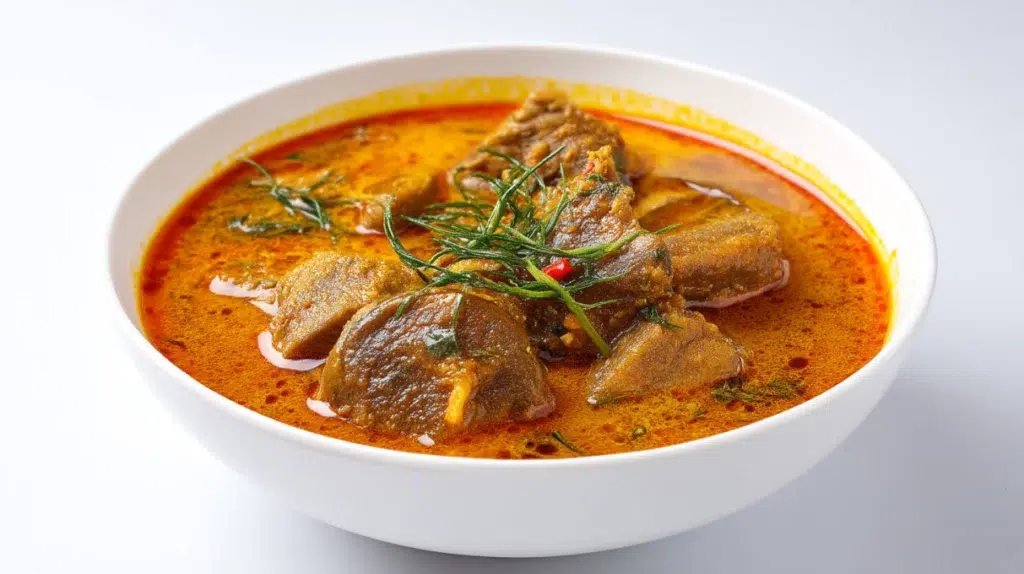
Banga soup recipe is the palm nut soup of the Niger Delta, beloved across the Urhobo, Itsekiri and Igbo communities of southern Nigeria and one of the most deeply layered, uniquely aromatic soups anywhere on the African continent. Rich orange-red palm nut extract simmered with assorted beef, stockfish, dried catfish, smoked prawns and ground crayfish, spiced with the banga spice blend of ataiko and iruguje, finished with scent leaves and the aromatic oburunbebe stick that gives the Delta version its signature herbal depth. One pot. The soup that fills the entire house with its smell.
Ingredients
For the meat and fish
- 1 lb (450g) beef, stew beef or assorted cuts including tripe (shaki) or cow foot. Cut into chunks. Season with salt, Cameroon pepper and 1 crumbled bouillon cube before boiling.
- 2 oz (55g) stockfish, soaked in hot water for 30 minutes until pliable. Adds deep umami foundation. Available at African grocery stores.
- 2 oz (55g) dried catfish, soaked in boiling hot water for 2 minutes, drained and rinsed. Remove centre bones. The dried catfish is the primary fish flavour in Delta-style banga.
- ½ cup smoked prawns or dried shrimp, rinsed and picked over. Adds a sweet, smoky seafood depth throughout the soup.
- 2 bouillon cubes (Maggi or Knorr), crumbled
- Salt to taste
For the palm nut base
- 1 large can (800g) palm nut concentrate, the shortcut that every experienced Nigerian cook endorses. Sisi Jemimah confirms: I will be using the canned palm nut extract, it’s much easier to use and cuts the cooking time down tremendously. Brands: Ayam, Grace, or Tropical Sun palm fruit concentrate. Dilute with hot water or reserved meat stock, the diluted extract should be thick but pourable. From fresh palm nuts: boil 2 lbs palm nuts for 20–30 minutes until soft, pound, add warm water, squeeze and strain. Available at African grocery stores.
- 2–3 cups (480–720ml) reserved meat stock, used to dilute the palm nut concentrate and add to the soup as needed for consistency
For the banga spice and seasoning
- 1½ tablespoons banga spice (ataiko and iruguje blend), the most important flavouring in banga soup. Ataiko is a small dark aromatic seed with a warm, slightly medicinal, intensely aromatic quality. Iruguje (also called calabash nutmeg or ehuru) is a large seed with a rich nutty, slightly floral character. Both are sold together as “banga spice” at African grocery stores. Available online through Nigerian food retailers. This spice blend is what makes banga soup taste like banga soup, nothing else produces the same flavour.
- 1 oburunbebe stick, a small dried aromatic bark stick used specifically in Delta-style banga soup. It floats in the pot during simmering and releases a distinctive, slightly minty herbal depth. Available at Nigerian grocery stores alongside other dried spices. Remove before serving. Optional but traditional in the Urhobo version, omit if unavailable.
- 2 tablespoons ground crayfish, the essential oceanic depth of Nigerian soup cooking
- 2–3 scotch bonnet peppers, blended or whole. Adjust for heat.
- 1 teaspoon Cameroon pepper, or cayenne. A smoky, deeply hot dried pepper specific to West African cooking. Available at African grocery stores. Substitute: ½ teaspoon cayenne.
For the finish
- ½ cup fresh scent leaves (nchanwu/efirin), finely sliced. Added in the final 3–5 minutes of cooking. Scent leaves are the aromatic herb that gives Delta banga its characteristic slightly anise-like herbal finish. Available fresh at African grocery stores. Substitute: fresh basil leaves are the closest widely available alternative, they share a similar anise and clove fragrance.
- Variation: the Igbo ofe akwu version adds ugu (fluted pumpkin leaves) or bitter leaves instead of scent leaves, equally traditional and delicious.
Step by step
- Cook the meat and prepare the fish. Season the beef with salt, Cameroon pepper and 1 crumbled bouillon cube. Add the stockfish in the final 15 minutes of cooking. Boil in enough water to cover for 30–40 minutes until tender. Reserve all the cooking stock. Soak the dried catfish in boiling water for 2 minutes, drain, rinse and remove centre bones. Set all proteins aside.
- Prepare the palm nut base. Empty the canned palm nut concentrate into a large pot. Add 2 cups of the reserved hot meat stock and 1 cup of hot water. Stir vigorously to dissolve any thick clumps until you have a smooth, pourable, deep orange liquid. Place over medium-high heat and bring to a boil.The diluted palm nut extract should be thick but pourable, roughly the consistency of heavy cream. If too thick it will cook unevenly. If too thin it will take a long time to reduce and the soup will lack body. Adjust with more stock or water as needed.
- Add the proteins and first round of seasoning. Once the palm nut extract is boiling, add the cooked beef, stockfish, dried catfish and smoked prawns to the pot. Add the blended scotch bonnet peppers, ground crayfish and Cameroon pepper. Add the remaining crumbled bouillon cube and salt. Stir well to combine.Do not cover the pot from this point. Banga soup is cooked uncovered. The uncovered simmer allows steam to escape, the palm nut extract to concentrate and the oil to rise naturally to the surface, the visual sign that the soup is developing correctly.
- Add the banga spice and oburunbebe stick. Add the banga spice blend (ataiko and iruguje). Drop in the oburunbebe stick. Stir through. Allow to cook uncovered over medium heat for 20–25 minutes, stirring occasionally, until the soup has thickened noticeably and red palm oil has begun to rise and pool on the surface.The banga spice fills the kitchen with an aroma unlike any other spice, deeply earthy, slightly medicinal and distinctly West African. The moment it goes into the hot soup the fragrance is immediate and unmistakable. This is the soul of banga soup.
- Taste, adjust and finish with scent leaves. Taste the soup carefully. Banga should be intensely savoury, slightly smoky from the palm nut, fragrant from the banga spice and have a building heat from the peppers. Adjust salt, pepper and seasoning. Add extra stock if the soup is too thick. Add the finely sliced scent leaves in the final 3–5 minutes of cooking, stir through gently. Remove the oburunbebe stick before serving.
- Check for oil and serve. A properly cooked banga soup will have red palm oil visibly pooled on the surface, this is correct and desirable. Serve immediately with starch (Nigerian usi or fufu starch), eba, pounded yam, fufu or boiled white rice. Eat by scooping the swallow into the soup rather than spooning the soup over the swallow.
What makes Delta banga soup different
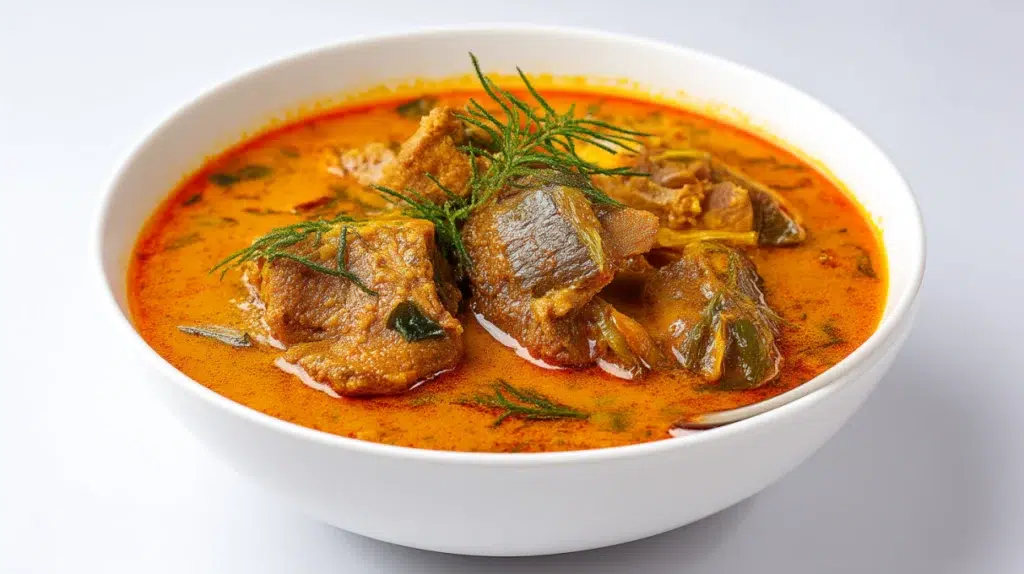
The preparation method of banga soup varies from tribe to tribe. The Igbo version is called ofe akwu and includes ugu or scent leaves. The Efik version is called abak atama and uses atama leaves, more bitter and pungent. The Urhobo and Itsekiri Delta version uses banga spice and the oburunbebe stick, which are specific to the coastal Niger Delta tradition.
The banga spice blend is the defining difference. Ataiko and iruguje together produce an aromatic complexity that has no substitute in Nigerian cooking, an earthy, slightly floral, deeply warm fragrance that penetrates the entire pot. The oburunbebe stick adds a herbal bark note that floats through the soup during the long simmer. Without both, the soup is still good. With both, it is unmistakably Delta banga.
Make it ahead
Claire’s note
Banga soup improves significantly the next day as the banga spice flavour deepens into the palm nut base overnight. Refrigerate for up to 5 days, reheat gently over medium heat, adding a splash of water or stock if too thick. Freeze for up to 3 months without the scent leaves, add fresh scent leaves when reheating. The palm nut base thickens considerably when cold and reheated, always add liquid and stir vigorously when reheating. If fresh palm nuts are used instead of canned: boil and extract the palm nut juice up to 2 days ahead and refrigerate, use in place of the canned concentrate.
Serve with
Banga soup is traditionally served with Nigerian starch, a gelatinous cassava and palm nut preparation specific to the Delta region that is the most authentic swallow for this soup. Eba, fufu, pounded yam and semolina are all excellent alternatives. For everything else across the Nigerian and African collections, the jollof rice, the efo riro, the ofe onugbu and the complete Nigerian recipes guide have it all.
Add banga soup to your weekly meal planner, make a large pot Sunday and it feeds the family all week, improving with every reheating. And for more recipes, follow us on Pinterest.
Print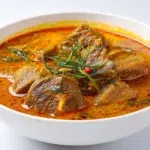
Banga Soup
- Total Time: 80 minutes
- Yield: 6 servings 1x
- Diet: Pescatarian
Description
A richly aromatic palm nut soup from the Niger Delta, Nigeria, featuring assorted meats and fish, simmered with a unique banga spice blend.
Ingredients
- 1 lb (450g) beef, cut into chunks
- 2 oz (55g) stockfish, soaked
- 2 oz (55g) dried catfish, soaked
- ½ cup smoked prawns, rinsed
- 2 bouillon cubes, crumbled
- Salt to taste
- 1 large can (800g) palm nut concentrate
- 2–3 cups (480–720ml) reserved meat stock
- 1½ tablespoons banga spice (ataiko and iruguje blend)
- 1 oburunbebe stick
- 2 tablespoons ground crayfish
- 2–3 scotch bonnet peppers
- 1 teaspoon Cameroon pepper
- ½ cup fresh scent leaves, finely sliced
Instructions
- Cook the meat and prepare the fish. Season the beef and boil with stockfish.
- Prepare the palm nut base by dissolving the canned palm nut concentrate in stock and water.
- Add the cooked proteins and seasonings to the pot with the palm nut base.
- Incorporate the banga spice and oburunbebe stick, cooking uncovered.
- Taste and adjust seasonings, then finish with scent leaves.
- Check for oil pooling on the surface, then serve.
Notes
Banga soup improves in flavor when made a day ahead. Serve with Nigerian starch like eba or fufu.
- Prep Time: 20 minutes
- Cook Time: 60 minutes
- Category: Main Course
- Method: Simmering
- Cuisine: Nigerian
Nutrition
- Serving Size: 1 serving
- Calories: 450
- Sugar: 2g
- Sodium: 600mg
- Fat: 20g
- Saturated Fat: 8g
- Unsaturated Fat: 10g
- Trans Fat: 0g
- Carbohydrates: 35g
- Fiber: 4g
- Protein: 25g
- Cholesterol: 70mg