⏱ Prep: 25 min 🔥Cook: 20 min 👤Serves: 4 🌶 Spicy
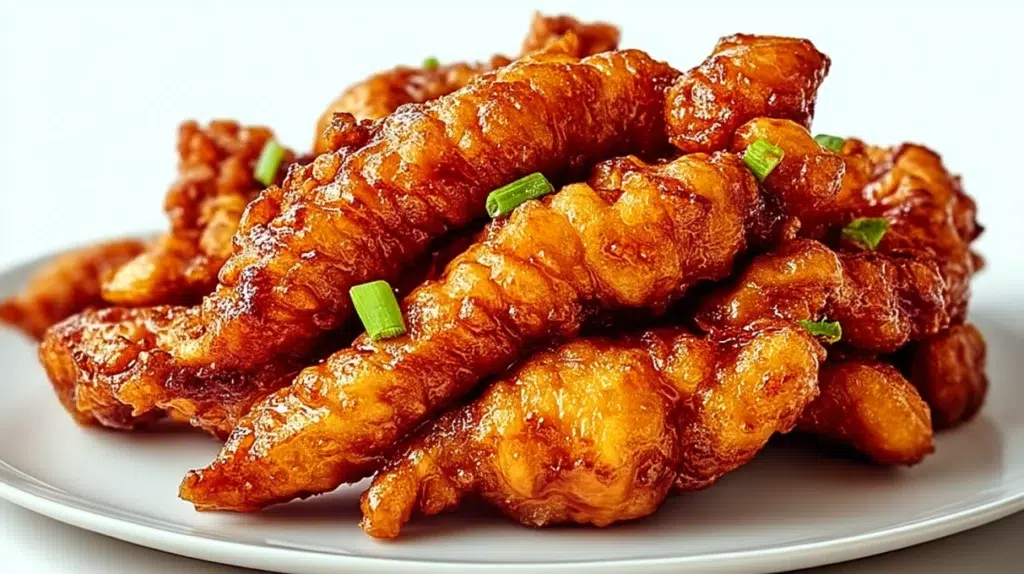
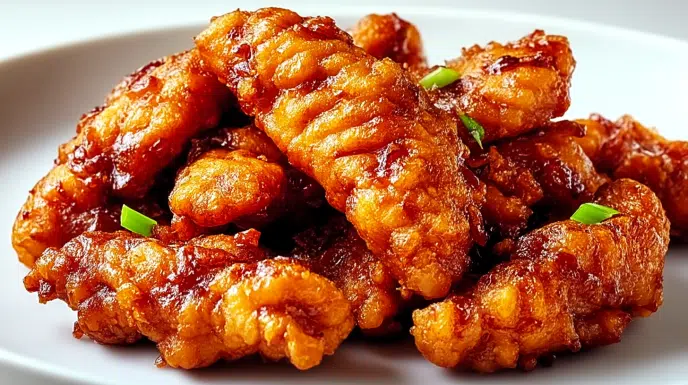
Dragon chicken is an Indo-Chinese dish, the cuisine that emerged when Chinese immigrants settled in Kolkata in the early twentieth century and began adapting their cooking to Indian tastes, which meant more heat, more ginger and garlic, and more sauce. The result was a category of food that belongs to neither tradition and is better than both for what it is: spicy, bold, deeply savoury, and genuinely addictive. Dragon chicken sits right at the centre of that tradition. It looks like it means business, the colour is a deep, glossy red, the cashews are golden and fragrant, the sauce clings to every piece of chicken, and it tastes exactly the way it looks.
The dish is simple in structure. Chicken thighs cut into strips, marinated with ginger-garlic paste, Kashmiri red chili powder, soy sauce and black pepper, coated in a thin egg-white-and-cornstarch batter, and fried until crackling crisp. Then tossed in a wok over high heat with toasted cashews, onion, bell pepper and a sauce of Kashmiri red chili paste, soy sauce, ketchup, vinegar and sugar, sweet, sour, hot and savoury all at once, the four flavours that define Indo-Chinese cooking. Serve immediately, before the crust softens into the sauce. The crunch is the entire point.
Ingredients
For the chicken marinade and batter
- 600g boneless skinless chicken thighs, cut into thin strips, about ½ inch wide and 2–3 inches long. Thighs over breast: thighs withstand the high-heat double frying and subsequent wok toss without drying out. Breast works but should be cut slightly thicker to prevent overcooking. Thin strips mean faster cooking, more surface area for crust, and easier eating.
- 1 tablespoon ginger-garlic paste, equal parts fresh ginger and garlic, grated fine or blended together. The aromatic foundation of Indo-Chinese cooking. Pre-made paste from an Asian or Indian grocery store works; freshly made from equal quantities of ginger and garlic is noticeably more fragrant.
- 1 tablespoon soy sauce, light or regular. Goes into the marinade, not just the sauce, it seasons the chicken from the inside and begins tenderising the protein.
- 1 teaspoon Kashmiri red chili powder, the spice that gives dragon chicken its characteristic deep red hue from the inside out. Kashmiri chili is prized for vivid colour and moderate heat, more pigment, less fire than regular chili powder. Substitute: ½ teaspoon paprika + ½ teaspoon cayenne, which approximates both the colour and heat level.
- ½ teaspoon black pepper
- ½ teaspoon salt
- 1 tablespoon rice vinegar, or apple cider vinegar. A small amount in the marinade adds background acidity that brightens the finished flavour.
- 1 large egg white, not the yolk. Egg white creates a light, tempura-style coating that crisps without becoming cakey or heavy. Egg yolk contains fat which softens the crust during frying. This is the most common batter mistake in home versions of this dish.
- 4 tablespoons cornstarch (cornflour), the primary crisping agent. Cornstarch creates a thinner, more glass-like, jagged coating than flour alone, the crust that shatters slightly when you bite through it. Use generously.
- 2 tablespoons plain (all-purpose) flour, a smaller amount alongside the cornstarch adds structure so the coating doesn’t crumble off. The cornstarch-to-flour ratio here (2:1) produces the best restaurant-style crust.
For the dragon sauce, mix in a bowl before cooking
- 2 tablespoons soy sauce
- 2 tablespoons tomato ketchup, yes, ketchup. It is the authentic Indo-Chinese sweet-sour element and not something to be embarrassed about or substituted with something fancier. The combination of tomato, vinegar and sugar in ketchup does specific, irreplaceable work in the sauce balance.
- 1 tablespoon rice vinegar
- 1 teaspoon sugar, balances the vinegar and tempers the chili heat. Also promotes caramelisation and the glossy finish of the sauce.
- 1 teaspoon cornstarch mixed with 3 tablespoons water, the slurry that thickens the sauce to a glossy, clinging consistency when it hits the hot wok. Mix thoroughly before using, cornstarch settles quickly.
For the Kashmiri red chili paste
- 8–10 dried Kashmiri red chilies, deseeded and soaked in ½ cup boiling water for 20 minutes until completely soft. Blend with just enough of the soaking liquid to form a smooth, deep-red paste. The soaking liquid is packed with colour compounds, use it in the blend rather than discarding. Kashmiri chilies produce a vivid scarlet colour and a fruity, moderately hot flavour. Substitute: 2–3 tablespoons sambal oelek (hotter, less vibrant) or 1 tablespoon chili garlic sauce.
For the stir-fry
- Oil for deep frying, neutral oil with a high smoke point: vegetable, sunflower or groundnut oil. Enough to fill a wok or deep pan to a depth of at least 5cm.
- 75g (½ cup) unsalted cashews, raw or roasted. Toasted in oil in the wok first until golden, this is their most flavourful state and the step that makes cashews worth having in the dish. Do not skip or use pre-salted cashews, which make the dish too salty when combined with the soy-heavy sauce.
- 8–10 whole dried red chilies, deseeded or left whole depending on heat preference. Fried briefly in oil with the cashews, they darken and release their flavour into the oil, adding smoky depth and visual drama.
- 1 large onion, cut into rough 2cm chunks, cubed rather than sliced. Chunks retain more crunch through the high-heat stir-fry.
- 1 large green bell pepper (capsicum), cut into 2cm chunks, green rather than red or yellow, green bell pepper adds a slight bitterness and grassiness that contrasts well with the sweet-sour sauce. Red or yellow bell pepper can substitute but produces a sweeter result.
- 6 cloves garlic, finely minced
- 1 tablespoon fresh ginger, finely minced
- 2 tablespoons oil, for the stir-fry stage (separate from the deep frying oil)
- 3 green onions (spring onions), sliced, for garnish
- 1 teaspoon toasted sesame oil, drizzled over the finished dish only, never used for cooking
- Sesame seeds, for garnish
Step by step
- Make the Kashmiri red chili paste. Deseed the dried Kashmiri chilies and place in a small bowl. Pour ½ cup boiling water over them and press down to submerge. Soak for 20 minutes until completely soft and pliable. Transfer the soaked chilies and most of the soaking liquid to a blender and blend to a completely smooth, deep scarlet paste. Set aside. This can be made up to 3 days ahead and refrigerated. The soaking liquid carries a significant amount of colour compounds and flavour, use it in the blend rather than discarding it. The finished paste should be the colour of a fire engine. If it looks pale or orange, your chilies have lost their pigment (age or poor storage) and the sauce will not achieve the signature dragon chicken colour regardless of other adjustments.
- Mix the dragon sauce. Combine the soy sauce, ketchup, rice vinegar and sugar in a small bowl. Stir until the sugar dissolves. In a separate small bowl, mix the cornstarch and water slurry. Set both aside within reach of the wok, stir-frying moves fast and you need everything ready before the heat goes on.
- Marinate the chicken. Place the chicken strips in a bowl. Add the ginger-garlic paste, soy sauce, Kashmiri chili powder, black pepper, salt and rice vinegar. Toss thoroughly until every piece is coated. Set aside for 15–20 minutes at room temperature while you prep everything else. Add the egg white to the marinated chicken and mix well with your hands until all strips are coated. Add the cornstarch and flour and toss again, the coating should cling to the chicken in a thin, uneven layer, not form a thick batter. If it seems too dry, add a teaspoon of water. If it seems wet and batter-like, add a little more cornstarch. The coating should be thin and somewhat irregular, the jagged surface is what produces the crunchy, glass-like crust that defines dragon chicken. A thick, smooth batter produces a cakey coating that softens quickly in the sauce. The goal is a coating that barely clings, not one that completely envelops each piece.
- Fry the chicken in batches, never crowded. Heat oil in a wok or deep pan to 170°C / 340°F. Working in batches of 6–8 pieces at a time, carefully lower the coated chicken into the oil and fry for 3–4 minutes until golden, cooked through and crisp on the outside. The pieces should not touch each other, crowding drops the oil temperature and produces steamed, soggy chicken instead of fried, crispy chicken. Remove to a wire rack or paper towels. Repeat until all the chicken is fried.Optional double fry for maximum crunch: after all the chicken has had its first fry, increase the oil to 190°C / 375°F and flash-fry the chicken again in batches for 60–90 seconds until the crust deepens to a darker golden and becomes noticeably crispier. This second fry drives off more surface moisture and produces a crust that holds up better once the chicken is tossed in the sauce. Worth the extra 3 minutes.
- Toast the cashews and whole chilies. Discard the deep frying oil. Add 2 tablespoons of fresh oil to the wok and heat over medium-high until shimmering. Add the cashews and whole dried red chilies. Stir-fry for 60–90 seconds, stirring constantly, until the cashews are golden and fragrant and the dried chilies have darkened and released their smoky flavour into the oil. Remove both with a slotted spoon and set aside. Do not walk away, cashews go from golden to burnt in under 30 seconds.
- Stir-fry the aromatics and vegetables, high heat throughout. In the same wok with the flavoured oil, increase to the highest heat your stove allows. Add the garlic and ginger and stir-fry for 30 seconds, no longer, or they will burn. Add the Kashmiri red chili paste and stir-fry for 1–2 minutes until the raw smell disappears, the paste darkens slightly and the oil takes on a deep red colour. Add the onion and bell pepper chunks and stir-fry for 2 minutes, they should soften at the edges but retain genuine crunch in the centre. This is a 2-minute job at high heat, not a 5-minute gentle sauté.High heat is the reason restaurant dragon chicken has a different character from home attempts. Low or medium heat causes the vegetables to steam and soften rather than char slightly at the edges, and causes the chili paste to stew rather than fry. If your home stove cannot reach restaurant wok temperatures, work in a very hot dry pan and avoid adding the sauce until the vegetables have had a chance to colour.
- Add the sauce and chicken. Pour the dragon sauce (soy, ketchup, vinegar, sugar mixture) into the wok and stir to combine with the chili paste and vegetables. Bring to a boil, it will bubble rapidly. Stir the cornstarch slurry quickly to recombine it (it settles fast) and pour it into the wok while stirring. Cook for 30–60 seconds until the sauce thickens to a glossy, coating consistency that clings to a spoon. Add the fried chicken strips, the toasted cashews and the fried whole chilies. Toss everything together quickly, 30 seconds maximum, until the chicken is evenly coated. The chicken goes in last and spends as little time in the sauce as possible. Every second in the hot sauce is a second of crust softening. The goal is a thin, even glaze on each piece, not chicken simmered in sauce until the coating dissolves. Toss, plate, eat immediately.
- Plate and garnish immediately. Transfer to a serving plate. Drizzle the sesame oil over the top. Scatter the sliced green onions and sesame seeds. Serve at the table within 2 minutes of leaving the wok. Dragon chicken does not wait.
Claire’s note
Two things that separate a home version of dragon chicken that tastes like a restaurant from one that tastes like a well-intentioned effort. First: the Kashmiri red chili paste made from scratch. Sambal oelek and chili garlic sauce both work as substitutes, the dish will be good but the soaked-and-blended Kashmiri chili paste produces a colour and a fruity, layered heat that no commercial product replicates. The paste takes 20 minutes of soaking and 2 minutes of blending and can be made days ahead.
If you’re going to the effort of making dragon chicken, make the paste. Second: high heat on the wok and speed on the final toss. The moment the chicken goes into the sauce, you are racing against the softening of the crust. Thirty seconds in the wok, plate, eat. This is not a dish that benefits from resting or contemplating.
Serve with
Dragon chicken is traditionally served as an appetiser in Indo-Chinese restaurants, or as a main alongside egg fried rice, noodles or plain steamed jasmine rice. As part of an Indo-Chinese spread it sits naturally alongside Indian chilli chicken which uses a different sauce profile but the same fried chicken technique, or hot and sour soup as a starter before the main event. The full Asian recipes collection cover the range of what these cuisines do well.
Add dragon chicken to your weekly meal planner as a Friday night centrepiece, it is the kind of dish that needs to be eaten the moment it’s made, which makes it perfect for a meal where everyone is already at the table. And for more recipes, follow us on Pinterest.
Print
Dragon Chicken
- Total Time: 45 minutes
- Yield: 4 servings 1x
Description
A spicy Indo-Chinese dish featuring crispy chicken thighs, tossed in a vibrant sauce with cashews and vegetables.
Ingredients
- 600g boneless skinless chicken thighs, cut into thin strips
- 1 tablespoon ginger-garlic paste
- 1 tablespoon soy sauce
- 1 teaspoon Kashmiri red chili powder
- ½ teaspoon black pepper
- ½ teaspoon salt
- 1 tablespoon rice vinegar
- 1 large egg white
- 4 tablespoons cornstarch
- 2 tablespoons plain flour
- 2 tablespoons soy sauce (for the sauce)
- 2 tablespoons tomato ketchup
- 1 tablespoon rice vinegar (for the sauce)
- 1 teaspoon sugar
- 1 teaspoon cornstarch mixed with 3 tablespoons water (for the sauce)
- 8–10 dried Kashmiri red chilies (for the paste)
- Oil for deep frying
- 75g unsalted cashews
- 8–10 whole dried red chilies (for stir-fry)
- 1 large onion, cut into chunks
- 1 large green bell pepper, cut into chunks
- 6 cloves garlic, finely minced
- 1 tablespoon fresh ginger, finely minced
- 2 tablespoons oil (for stir-fry)
- 3 green onions, sliced for garnish
- 1 teaspoon toasted sesame oil
- Sesame seeds for garnish
Instructions
- Make the Kashmiri red chili paste by soaking dried chilies in boiling water for 20 minutes, then blend with soaking liquid.
- Mix the dragon sauce by combining soy sauce, ketchup, rice vinegar, and sugar in a bowl.
- Marinate the chicken with ginger-garlic paste, soy sauce, spices, and rice vinegar for 15–20 minutes.
- Fry the marinated chicken in hot oil for 3–4 minutes until golden, and optionally double-fry for extra crunch.
- Toast the cashews and whole chilies in a fresh oil in the wok.
- Stir-fry garlic, ginger, Kashmiri red chili paste, onion, and bell pepper on high heat for just a few minutes.
- Add the dragon sauce and chicken to the wok, stir to combine, and coat the chicken quickly.
- Plate and garnish with sesame oil, green onions, and sesame seeds before serving immediately.
Notes
Serve immediately to maintain the crispy texture. Perfect with egg fried rice or noodles.
- Prep Time: 25 minutes
- Cook Time: 20 minutes
- Category: Appetizer
- Method: Frying
- Cuisine: Indo-Chinese
Nutrition
- Serving Size: 1 serving
- Calories: 450
- Sugar: 15g
- Sodium: 800mg
- Fat: 20g
- Saturated Fat: 3g
- Unsaturated Fat: 14g
- Trans Fat: 0g
- Carbohydrates: 40g
- Fiber: 2g
- Protein: 25g
- Cholesterol: 90mg