
⏱ Prep: 20 min 🔥Cook: 50 min 👤Serves: 4 Origin: Ethiopia
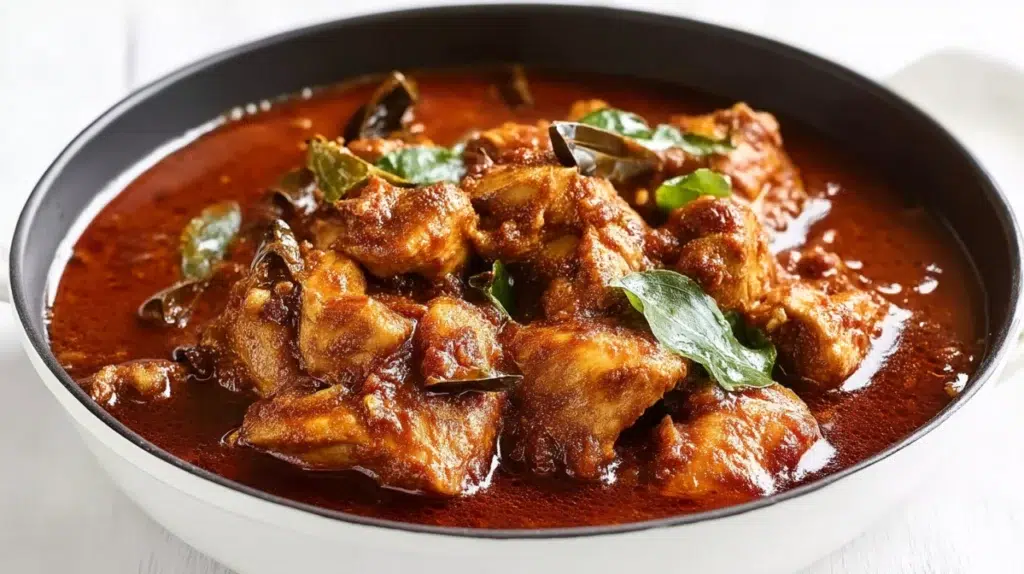
Ethiopian berbere chicken curry is chicken thighs simmered in a sauce built on two things: berbere, the complex, heat-forward spice blend at the centre of Ethiopian cooking and deeply caramelised onions cooked in niter kibbeh, the spiced clarified butter that gives Ethiopian stews their characteristic depth. It is warming, deeply coloured, richly spiced, and significantly better the next day.
The berbere does not go into a pot of liquid and simmer, it goes into hot fat first, bloomed for a minute until the kitchen fills with the smell of roasted chilies and warm spice. That minute in fat is the difference between berbere that tastes raw and powdery and berbere that has opened up into something layered and complex. Everything else in the recipe follows from getting those two things right.
Ingredients
For the niter kibbeh (spiced clarified butter)
- 200g (¾ cup + 2 tbsp) unsalted butter, niter kibbeh is Ethiopian spiced clarified butter, the cooking fat that defines Ethiopian cuisine the way ghee defines Indian cooking. Making it takes 25 minutes and keeps in the fridge for 3 months. Store-bought versions are available at Ethiopian grocery stores. Substitute for this recipe: 3 tablespoons ghee + ½ teaspoon turmeric + ½ teaspoon ground cardamom added to the pan with the onions.
- ½ small onion, roughly chopped
- 3 cloves garlic, smashed
- 1 teaspoon fresh ginger, roughly chopped
- ½ teaspoon ground turmeric
- ½ teaspoon ground cardamom
- ¼ teaspoon ground cinnamon
- ¼ teaspoon black cumin (nigella seeds), optional but traditional
For the chicken
- 1kg (2.2 lb) bone-in, skin-on chicken thighs, scored 2–3 times through to the bone. Bone-in thighs stay moist during the 25-minute simmer. Breast dries out.
- 1 tablespoon berbere spice blend, for the initial chicken rub
- Juice of ½ lemon
- ½ teaspoon salt
For the sauce
- 3 large red onions, finely diced, red onions are sweeter than white and produce a richer, more colourful sauce. The onions cook far longer than feels comfortable, 20–25 minutes, until completely soft and beginning to deepen in colour. Ethiopian cooking is famous for this extended onion cook. Do not rush it.
- 6 cloves garlic, finely minced
- 1 tablespoon fresh ginger, finely grated
- 3 tablespoons berbere spice blend, the backbone of the dish. Bloomed in the niter kibbeh before the tomatoes go in. Berbere heat levels vary significantly between brands, start with 2 tablespoons and add more after tasting if you want more heat. Homemade berbere is significantly better than most commercial blends.
- 2 tablespoons tomato paste, cooked out in the fat before the liquid goes in
- 1 × 400g tin crushed tomatoes
- 250ml (1 cup) chicken stock
- 1 teaspoon salt
- 4 hard-boiled eggs, peeled, optional but traditional. Whole peeled eggs added to the sauce for the last 10 minutes absorb the berbere colour and flavour and are served alongside the chicken, a classic element of Ethiopian chicken stews.
To serve
- Injera, Ethiopian sourdough flatbread, the traditional accompaniment. The sauce is spooned onto the injera and scooped up with torn pieces. See the injera recipe to make it from scratch. Substitute: warm flatbread, rice or crusty bread.
- Fresh cilantro and lime wedges
Step by step
- Make the niter kibbeh. Melt the butter in a small saucepan over medium-low heat. Add the onion, garlic, ginger, turmeric, cardamom, cinnamon and black cumin. Simmer very gently, barely bubbling, for 20–25 minutes until the butter is clear and golden and the solids have given up all their flavour. Strain through a fine sieve into a jar. Discard the solids. The niter kibbeh keeps refrigerated for 3 months. Niter kibbeh is not just clarified butter, it is clarified butter that has absorbed the aromatics of onion, garlic, ginger and Ethiopian spices during a long gentle infusion. It gives Ethiopian stews an aromatic depth that regular butter, oil or even ghee cannot replicate. Making it once means you have it for months of Ethiopian cooking.
- Marinate the chicken briefly. Score each chicken thigh 2–3 times through the skin and meat to the bone. Rub all over with the 1 tablespoon berbere, lemon juice and salt. Leave at room temperature for 20 minutes while the niter kibbeh is being made, or refrigerate up to overnight.
- Sear the chicken. Heat 2 tablespoons of niter kibbeh in a wide, heavy pot over medium-high heat until shimmering. Add the chicken pieces skin-side down. Sear 4–5 minutes without moving until the skin is deep golden and releases easily. Flip and sear the other side 3 minutes. Remove and set aside. The chicken is not cooked through, it will finish in the sauce.
- Caramelise the onions, the long step. Reduce heat to medium-low. Add the remaining niter kibbeh (about 3 tablespoons) to the same pot. Add the diced onions and salt. Cook, stirring every 4–5 minutes, for 20–25 minutes until the onions are completely soft, deeply golden and beginning to look jammy. This stage cannot be rushed without losing the sweetness and body that makes Ethiopian stews what they are. Ethiopian cuisine cooks onions longer than almost any other tradition. The extended caramelisation produces a deep, sweet base that gives the sauce body and colour, particularly important here because unlike Indian curry, there is no cream or coconut milk to provide richness. The onions are the sauce’s structural backbone.
- Add garlic, ginger and bloom the berbere. Add the minced garlic and grated ginger to the onions. Stir for 2 minutes until fragrant. Add the tomato paste and cook, stirring, for 2 minutes until it darkens. Add the 3 tablespoons of berbere spice blend directly to the fat and onion mixture. Stir constantly for 1–2 minutes over medium-low heat until the berbere has darkened, become intensely fragrant and the fat has taken on a deep red colour. This is the bloom, the step that transforms raw spice into a proper sauce base.Watch the heat carefully during the berbere bloom. The dried chili in berbere burns quickly and produces a bitter, acrid flavour that ruins the entire sauce. Medium-low heat, constant stirring, 60–90 seconds. As soon as the kitchen smells of roasted chili and warm spice rather than raw powder, move to the next step.
- Build the sauce and simmer the chicken. Add the crushed tomatoes and chicken stock. Stir thoroughly, scraping up everything from the bottom of the pot. Bring to a gentle boil. Return the seared chicken to the pot, nestling the pieces into the sauce. Reduce to a steady simmer, cover partially and cook for 20–25 minutes until the chicken is completely cooked through and the sauce has thickened and darkened.
- Add the eggs (if using). In the final 10 minutes of cooking, add the whole peeled hard-boiled eggs to the sauce. Pierce each egg once or twice with a fork to allow the sauce to penetrate. Simmer uncovered for 10 minutes until the eggs are stained a deep orange-red from the berbere sauce.
- Taste and finish. Adjust salt. The sauce should be thick, deeply coloured and intensely spiced, it will continue to develop and mellow overnight if made ahead. Serve immediately over injera, flatbread or rice, scattered with fresh cilantro and lime wedges alongside.

Claire’s note, on berbere heat
Berbere varies enormously in heat depending on the brand and blend. Some commercial berbere is mild enough to use 4 tablespoons without issue. Others are intensely hot and 2 tablespoons is the maximum. The first time you make this with a new berbere, start with 2 tablespoons in the sauce and taste after the simmer, if you want more heat, stir in another tablespoon and simmer 5 more minutes. You cannot remove heat once it is in the pot.
The other thing: this dish is better the next day, markedly so. The berbere continues to bloom in the sauce overnight, the acidity of the tomato softens, and the niter kibbeh integrates into everything. Make it Saturday for a Sunday dinner and do not apologise for the lack of effort on the day.
Homemade berbere spice blend (10 minutes)
Toast the following whole spices in a dry pan for 60–90 seconds until fragrant: 1 teaspoon coriander seeds, ½ teaspoon fenugreek seeds, ½ teaspoon black peppercorns, 4 green cardamom pods, 3 cloves, ½ teaspoon ajwain (carom seeds). Cool and grind with a spice grinder or mortar. Combine the ground spices with: 3 tablespoons dried red chili flakes or ground cayenne, 1 teaspoon sweet paprika, 1 teaspoon ground ginger, ½ teaspoon ground cinnamon, ½ teaspoon ground turmeric, ¼ teaspoon ground allspice, ¼ teaspoon ground nutmeg. Mix well. Store in a sealed jar up to 6 months. Makes about 6 tablespoons.
Serve with
Ethiopian berbere chicken curry is traditionally served over injera, see the injera recipe for the full sourdough flatbread method. For a weeknight version, serve over basmati rice or with warm flatbread. Alongside: Ethiopian kik alicha (yellow split pea stew) for a full Ethiopian table. The complete African food collection has the broader picture.
Add Ethiopian berbere chicken curry to your weekly meal planner as a Saturday cook, serve Sunday. It keeps 4 days refrigerated and freezes well for 3 months. And for more recipes, follow us on Pinterest.
Print
Ethiopian Berbere Chicken Curry
- Total Time: 70 minutes
- Yield: 4 servings 1x
- Diet: Gluten-Free, Dairy-Free
Description
A warming, spiced chicken curry featuring a complex blend of berbere spices and caramelised onions, rich in flavor and perfect for serving with injera.
Ingredients
- 200g (¾ cup + 2 tbsp) unsalted butter
- ½ small onion, roughly chopped
- 3 cloves garlic, smashed
- 1 teaspoon fresh ginger, roughly chopped
- ½ teaspoon ground turmeric
- ½ teaspoon ground cardamom
- ¼ teaspoon ground cinnamon
- ¼ teaspoon black cumin (nigella seeds), optional
- 1kg (2.2 lb) bone-in, skin-on chicken thighs
- 1 tablespoon berbere spice blend
- Juice of ½ lemon
- ½ teaspoon salt
- 3 large red onions, finely diced
- 6 cloves garlic, finely minced
- 1 tablespoon fresh ginger, finely grated
- 3 tablespoons berbere spice blend
- 2 tablespoons tomato paste
- 1 × 400g tin crushed tomatoes
- 250ml (1 cup) chicken stock
- 1 teaspoon salt
- 4 hard-boiled eggs, peeled, optional
- Fresh cilantro
- Lime wedges
Instructions
- Make the niter kibbeh by melting the butter in a small saucepan over medium-low heat. Add the onion, garlic, ginger, turmeric, cardamom, cinnamon, and black cumin. Simmer for 20–25 minutes until clear and golden. Strain into a jar and discard solids.
- Marinate the chicken thighs by scoring them and rubbing with berbere, lemon juice, and salt. Let sit for 20 minutes.
- Sear the chicken in 2 tablespoons of niter kibbeh over medium-high heat for 4–5 minutes skin-side down until golden. Flip and sear for 3 minutes. Set aside.
- Caramelise the onions by reducing heat and adding remaining niter kibbeh. Cook, stirring occasionally, for 20–25 minutes until deeply golden.
- Add minced garlic and grated ginger, and stir for 2 minutes until fragrant. Add tomato paste and cook for 2 minutes until it darkens.
- Stir in 3 tablespoons of berbere spice blend and cook for 1–2 minutes until fragrant.
- Build the sauce by adding crushed tomatoes and chicken stock. Return chicken to pot and simmer for 20–25 minutes until cooked through.
- Add whole boiled eggs during the last 10 minutes and pierce them to absorb the sauce.
- Taste and adjust seasoning. Serve over injera or with rice, garnished with cilantro and lime wedges.
Notes
The dish improves in flavor if made a day in advance. Adjust the berbere spice level according to personal heat preference.
- Prep Time: 20 minutes
- Cook Time: 50 minutes
- Category: Main Course
- Method: Simmering
- Cuisine: Ethiopian
Nutrition
- Serving Size: 1 serving
- Calories: 450
- Sugar: 7g
- Sodium: 600mg
- Fat: 22g
- Saturated Fat: 12g
- Unsaturated Fat: 8g
- Trans Fat: 0g
- Carbohydrates: 35g
- Fiber: 5g
- Protein: 30g
- Cholesterol: 135mg