⏱ Prep: 10 min 🔥Cook: 15 min 👤Serves: 4 🌿Vegan
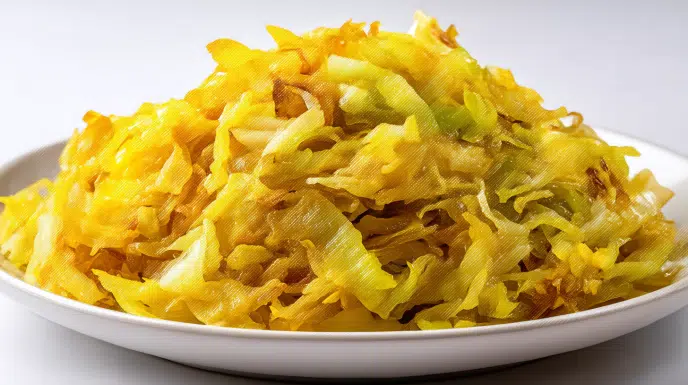
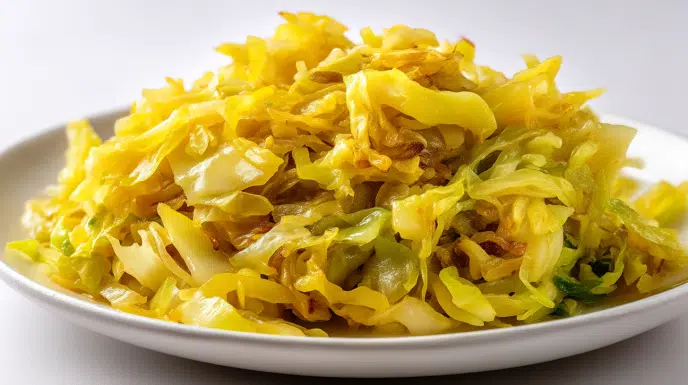
Indian fried cabbage, patta gobi sabzi is one of the most common dry vegetable dishes made in Indian homes. Shredded cabbage stir-fried in a mustard seed and cumin tadka with turmeric, green chili and ginger. No sauce, no gravy. The cabbage cooks in its own moisture, softening just enough while keeping a slight bite, absorbing the bloomed whole spices and dry masala completely. Ready in 20 minutes. The kind of dish that gets underestimated constantly and eaten completely every time.
The tadka is what separates this from plain fried cabbage. Whole spices, mustard seeds, cumin, curry leaves, bloomed in hot oil until they splutter and crackle, releasing their volatile oils into the fat before anything else goes in. That oil becomes deeply flavoured before it touches the cabbage. The dry spice powders go in on low heat and are roasted briefly before the cabbage is added, raw spice powder on raw cabbage tastes unfinished. These two stages together take four minutes and produce the flavour that makes this dish worth eating.
Ingredients
- 1 medium green cabbage (about 700g), finely shredded, quarter the cabbage, remove the core, then slice as thinly as possible. Fine shredding gives the best texture, it cooks through evenly and absorbs the spices completely. Thick chunks stay tough and don’t pick up the masala properly.
- 2 tablespoons neutral oil, vegetable, sunflower or mustard oil. Mustard oil is the North Indian traditional choice and adds a distinct pungency, heat it until just smoking then reduce the heat before adding spices. Ghee also works and adds richness.
- 1 teaspoon black mustard seeds, the first thing into the hot oil. Must fully splutter, popping and jumping in the oil, before anything else goes in. Unpopped mustard seeds taste raw and harsh; popped mustard seeds are nutty and mellow.
- ½ teaspoon cumin seeds
- ¼ teaspoon asafoetida (hing), optional but traditional. A tiny pinch of asafoetida added after the mustard seeds provides an onion-garlic-like depth without using either. Available at Indian grocery stores. Skip freely if unavailable, the dish is still excellent without it.
- 8–10 fresh curry leaves, added with the mustard seeds, they fry in the oil and infuse it with a distinctive aromatic note that dried curry leaves cannot replicate. Available at Indian grocery stores and some Asian markets. Skip if unavailable.
- 2 green chilies, slit lengthwise, adjust to heat preference. Slit rather than chopped, they add heat to the oil without making the dish fiery throughout. Remove before serving if heat-sensitive.
- 1 tablespoon ginger-garlic paste, or 1 teaspoon each of freshly grated ginger and minced garlic
- 1 small onion, thinly sliced, optional but adds sweetness and body. Many South Indian versions omit onion entirely.
- ½ teaspoon ground turmeric, goes in on low heat with the other spice powders. Gives the cabbage its golden colour and a warm earthiness.
- ½ teaspoon ground coriander
- ½ teaspoon red chili powder, or Kashmiri chili powder for colour with less heat
- ½ teaspoon garam masala, added at the end, not during cooking, garam masala is a finishing spice
- Salt to taste
- Juice of ½ lemon, squeezed over just before serving. Brightens everything.
- Fresh cilantro, chopped, for garnish
Step by step
- Build the tadka. Heat the oil in a wide kadai or heavy pan over medium-high heat until shimmering. Add the mustard seeds. Keep a lid nearby, they will splutter vigorously. Wait until they are fully popping, 20–30 seconds. Add the cumin seeds and curry leaves (stand back, the curry leaves spit in hot oil). Add the asafoetida and green chilies. Fry the whole spice mixture for 30 seconds until everything is fragrant and the curry leaves are crisp. Do not rush the tadka stage. Mustard seeds that haven’t fully popped taste raw and sharp. The oil needs to be genuinely hot before the seeds go in, test by adding one seed; if it pops immediately, the oil is ready.
- Cook the onion and aromatics. Add the sliced onion (if using) and stir-fry 2–3 minutes until softened and translucent. Add the ginger-garlic paste and cook 1 minute until the raw smell disappears.
- Roast the dry spices. Reduce the heat to low. Add the turmeric, ground coriander and red chili powder directly to the pan. Stir constantly for 30–45 seconds, the spices will toast in the residual oil and become deeply fragrant. Do not do this on high heat, the powders burn in seconds. A splash of water (1–2 tablespoons) can be added and cooked off to help the spices bloom without burning. Roasting the dry spices before the cabbage goes in removes their raw, powdery taste and develops a richer, more complex flavour. This is the step most home cooks skip by adding the cabbage and spices simultaneously and the flavour difference is noticeable.
- Add the cabbage and cook. Increase the heat to medium-high. Add all the shredded cabbage at once and toss to coat every strand in the spiced oil. Season with salt. Cook uncovered for 2 minutes, stirring frequently, then reduce to medium heat, cover with a lid and cook for 8–10 minutes, stirring every 2–3 minutes. The cabbage will release its own moisture as it cooks, no water needed. Cook until the cabbage is tender but still has a slight bite, and any excess liquid has evaporated. Texture is personal here. North Indian style tends toward fully soft cabbage; South Indian style keeps more bite. Check at 8 minutes, if the cabbage is where you want it, take it off the heat. If you want it softer, cover and cook 3–4 minutes more. Overcooked cabbage releases water and turns mushy and sulphurous.
- Finish and serve. Sprinkle the garam masala over the top and stir through off the heat, garam masala added during cooking loses most of its fragrance. Squeeze the lemon juice over, scatter fresh cilantro, and serve immediately.
Claire’s note
The single most important thing in this recipe is letting the mustard seeds fully pop before anything else goes in. Unpopped mustard seeds taste raw and sharp and give the finished dish a harsh edge that no amount of additional spice will fix. The oil must be genuinely hot, not warm, not medium, hot, before the seeds go in. Listen for the popping sound and watch for the seeds jumping in the oil. When the popping slows, move on. Everything else in the tadka follows from that moment.
Variations
- With peas (patta gobi matar): Add ½ cup of frozen peas with the cabbage. The classic North Indian household version.
- With potato (gobi aloo): Add 1 medium potato cut into small cubes, par-cook for 5 minutes separately, then add with the cabbage.
- South Indian style: Skip the onion and ginger-garlic. Add a pinch more asafoetida and double the curry leaves. Finish with 2 tablespoons of fresh grated coconut stirred through just before serving, the coconut gives a coastal, sweet contrast to the spices.
Serve with
Indian fried cabbage is a dry side dish, it is served as part of a larger Indian meal, not as a standalone. It pairs naturally with dal and steamed rice or alongside Indian chilli chicken. A spoonful of plain yogurt alongside cuts through the spice cleanly. The full Asian recipes collection has everything this dish sits alongside.
Add Indian fried cabbage to your weekly meal planner as a quick weeknight side, 20 minutes from start to plate, one pan, no prep beyond shredding the cabbage. And for more recipes, follow us on Pinterest.
Print
Indian Fried Cabbage (Patta Gobi Sabzi)
- Total Time: 25 minutes
- Yield: 4 servings 1x
- Diet: Vegan
Description
A quick and flavorful Indian dry vegetable dish made with shredded cabbage, mustard seeds, cumin, and aromatic spices. Perfect as a side dish.
Ingredients
- 1 medium green cabbage (about 700g), finely shredded
- 2 tablespoons neutral oil (vegetable, sunflower, or mustard oil)
- 1 teaspoon black mustard seeds
- ½ teaspoon cumin seeds
- ¼ teaspoon asafoetida (hing) – optional
- 8–10 fresh curry leaves
- 2 green chilies, slit lengthwise
- 1 tablespoon ginger-garlic paste
- 1 small onion, thinly sliced – optional
- ½ teaspoon ground turmeric
- ½ teaspoon ground coriander
- ½ teaspoon red chili powder
- ½ teaspoon garam masala
- Salt to taste
- Juice of ½ lemon
- Fresh cilantro, chopped – for garnish
Instructions
- Build the tadka: Heat the oil in a wide kadai or heavy pan over medium-high heat until shimmering. Add the mustard seeds. Keep a lid nearby, they will splutter vigorously. Wait until they are fully popping, 20–30 seconds. Add the cumin seeds and curry leaves. Add the asafoetida and green chilies. Fry the whole spice mixture for 30 seconds until everything is fragrant.
- Cook the onion and aromatics: Add sliced onion (if using) and stir-fry 2–3 minutes until softened. Add ginger-garlic paste and cook 1 minute until the raw smell disappears.
- Roast the dry spices: Reduce heat to low. Add turmeric, ground coriander, and red chili powder to the pan. Stir constantly for 30–45 seconds.
- Add the cabbage: Increase heat to medium-high. Toss shredded cabbage in the spiced oil and season with salt. Cook uncovered for 2 minutes, then cover and cook for 8–10 minutes, stirring occasionally.
- Finish and serve: Sprinkle garam masala, squeeze lemon juice, and garnish with fresh cilantro. Serve immediately.
Notes
Let the mustard seeds fully pop before adding other ingredients for the best flavor. Adjust cooking time for desired cabbage tenderness.
- Prep Time: 10 minutes
- Cook Time: 15 minutes
- Category: Side Dish
- Method: Stir-frying
- Cuisine: Indian
Nutrition
- Serving Size: 1 serving
- Calories: 180
- Sugar: 3g
- Sodium: 300mg
- Fat: 10g
- Saturated Fat: 1g
- Unsaturated Fat: 8g
- Trans Fat: 0g
- Carbohydrates: 22g
- Fiber: 5g
- Protein: 4g
- Cholesterol: 0mg