⏱ Marinate: 30 min 🔥Fry + sauce: 20 min 👤Serves: 4 🌏Origin: Korea
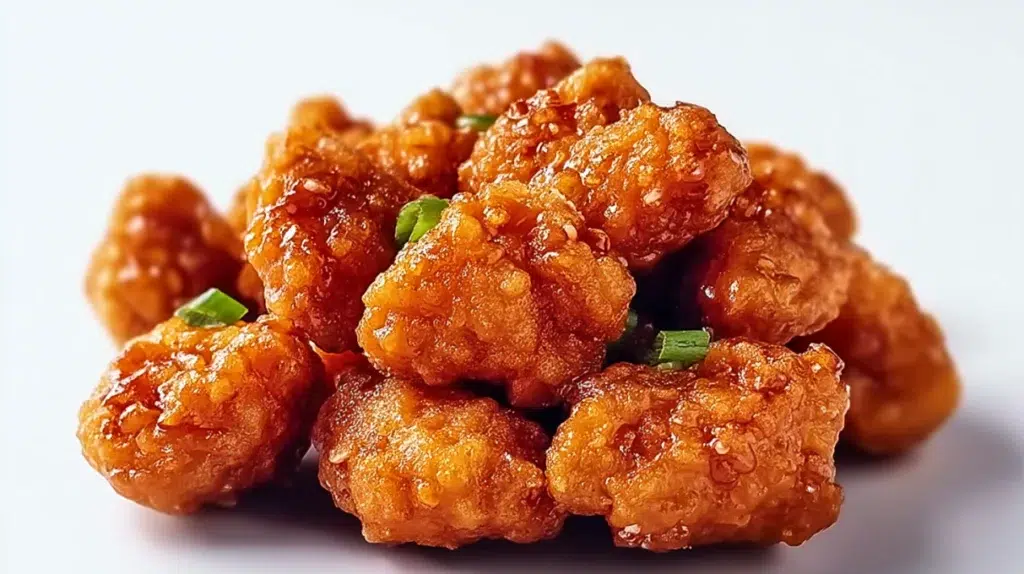
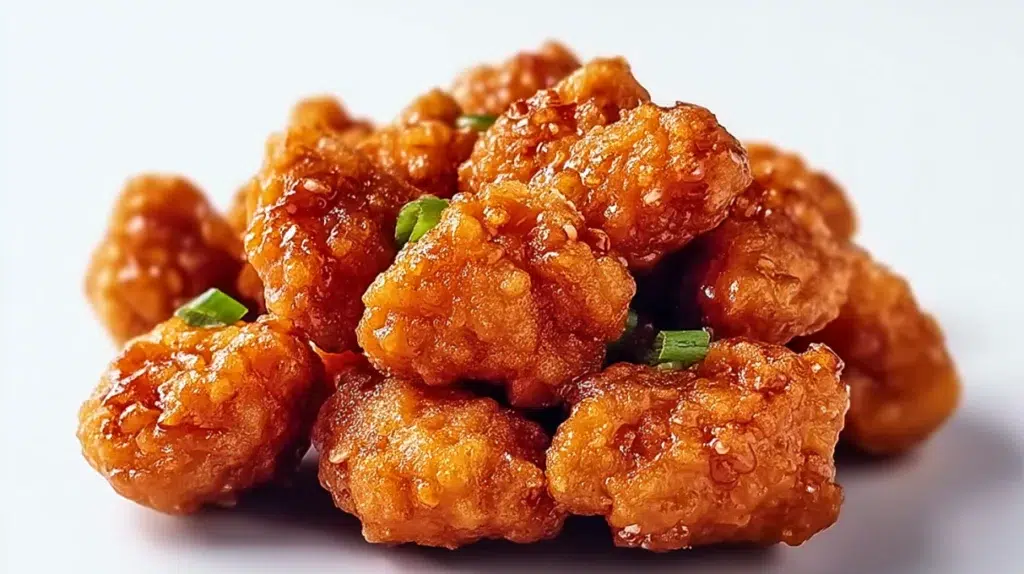
Korean popcorn chicken, dakgangjeong, is the dish that makes every other popcorn chicken seem like it was missing the point. The name breaks down simply: dak means chicken in Korean, and gangjeong refers to a traditional Korean confectionery made by deep-frying rice puffs and coating them in sticky honey syrup. The chicken version follows exactly the same logic, bite-sized pieces, twice fried until the crust shatters, then tossed in a glossy gochujang-honey glaze that clings to every surface and caramelises slightly at the edges.
The double-fry is what separates this from every imitation. First fry cooks the chicken through at lower heat. A rest, then a second fry at higher heat drives out any remaining moisture in the crust, producing a coating so crispy it holds its texture for twenty minutes after the sauce goes on. This is the technique behind every Korean fried chicken shop in Seoul and it works exactly as well in a Nashville kitchen.
Ingredients
Marinade
- 600g boneless chicken thighs, cut into 3cm bite-sized pieces, thighs stay juicy through the double fry where breast dries out. Pat completely dry with paper towels before marinating, surface moisture is the enemy of a crispy crust.
- 2 tablespoons soy sauce
- 1 tablespoon mirin or rice wine, adds a faint sweetness and helps the marinade penetrate; substitute with dry sherry or an extra teaspoon of soy sauce
- 1 teaspoon fresh ginger, finely grated
- 1 teaspoon garlic powder, or 2 cloves finely grated fresh garlic
- ½ teaspoon white or black pepper
Coating
- ½ cup potato starch, the Korean street food standard; gives a lighter, crispier, more shatteringly thin crust than cornstarch. Available at Asian grocery stores. Cornstarch is the best substitute, the result is excellent, just slightly different in texture.
- 2 tablespoons plain flour, combined with the starch for a sturdier crust that holds up under the sauce
- ½ teaspoon baking powder, creates micro-bubbles in the coating that fry up into extra-crispy surface texture; not optional
- Neutral oil for deep frying, vegetable, canola or rice bran
Gochujang glaze, make this while the chicken fries
- 3 tablespoons gochujang, Korean fermented red chilli paste; the backbone of the sauce. Available at Korean and Asian grocery stores and increasingly at mainstream supermarkets. Adjust quantity for heat preference, see the gochujang guide for brand recommendations and substitutes.
- 2 tablespoons honey
- 2 tablespoons soy sauce
- 1 tablespoon ketchup, adds body, a faint tang and helps the sauce cling; sounds odd, tastes right
- 1 tablespoon brown sugar
- 3 cloves garlic, finely grated
- 1 teaspoon fresh ginger, grated
- 1 tablespoon rice vinegar, the tang that keeps the glaze from being cloying; don’t skip it
- 1 teaspoon sesame oil, added to the sauce but stirred through off the heat for aroma
- 1 tablespoon cold unsalted butter, stirred in off the heat; emulsifies into the sauce and gives it the glossy restaurant finish that warm butter doesn’t achieve
- 3 tablespoons water, to loosen the sauce to a pourable consistency
To finish
- 1 tablespoon toasted sesame seeds
- 3 spring onions, thinly sliced
- Pickled yellow radish (danmuji), the traditional Korean side; its clean sharp crunch cuts through the rich sticky glaze perfectly. Available at Korean grocery stores.
Step by step
- Marinate the chicken. Pat the chicken pieces completely dry with paper towels. In a bowl combine the chicken with soy sauce, mirin, ginger, garlic powder and pepper. Mix well until every piece is coated. Cover and refrigerate for at least 30 minutes, or up to overnight, the longer the marinade, the deeper the flavour in the finished chicken.
- Make the coating mix. In a wide bowl or zip-lock bag, combine the potato starch, plain flour and baking powder. Mix thoroughly. When ready to fry, add the marinated chicken and toss until every piece is completely coated in the starch mixture. Shake off any excess, loose starch creates clumps in the oil not crust on the chicken.Coat the chicken immediately before frying, not in advance. Starch coating left sitting on the chicken for more than a few minutes absorbs moisture from the marinade and the crust becomes gummy rather than crispy when fried.
- First fry, cook through. Heat oil to 340°F / 170°C in a deep pan or wok, enough oil to submerge the pieces. Fry the chicken in batches for 4–5 minutes until pale golden and cooked through. Do not crowd the oil. Remove to a wire rack and rest for 3–5 minutes. Bring the oil back to temperature between batches. The chicken will look pale and underwhelming after the first fry, this is correct. The first fry is purely about cooking the chicken through and setting the structure of the coating. The color and crunch come in the second fry. Don’t be tempted to fry longer at this stage to get color.
- Make the glaze while the chicken rests. In a small saucepan over medium heat, combine the gochujang, honey, soy sauce, ketchup, brown sugar, garlic, ginger, rice vinegar and water. Stir well and bring to a gentle simmer. Cook for 3–4 minutes, stirring often, until the sauce thickens slightly and turns glossy. Remove from heat. Stir in the sesame oil and the cold butter, keep stirring until the butter melts completely into the sauce and turns it visibly glossy. Set aside.The cold butter off the heat is the step that takes the sauce from good to restaurant-quality. Cold butter emulsifies into the warm sauce and creates a glossy, velvety finish. Butter added to a still-boiling sauce splits rather than emulsifying and leaves an oily surface. Remove from heat first, then add the butter.
- Second fry, build the crust. Raise the oil to 375°F / 190°C. Fry all the chicken again for 2–3 minutes until deeply golden and audibly crispy. Remove immediately to the wire rack. The coating at this stage should be visibly darker, very firm, and shatter slightly when tapped.
- Glaze and serve immediately. Transfer the double-fried chicken to a large bowl. Pour the warm glaze over the chicken and toss quickly until every piece is coated. The glaze will cling to the crust and caramelise slightly at the edges. Scatter sesame seeds and spring onion greens over everything. Serve immediately alongside pickled radish.
The double-fry, why both fries are necessary
The first fry at lower temperature cooks the chicken through gently without over-browning the crust. During the rest period between fries, steam escapes from the interior of the crust. The second fry at higher temperature hits a crust that has already set and drives out the remaining moisture, producing a surface that is genuinely dry, genuinely hot, and therefore genuinely crispy rather than just browned. The coating that results can absorb a sticky sauce without immediately softening because there is no trapped moisture left for the sauce to work with.
This is the mechanics behind every good Korean fried chicken shop’s result, and why dakgangjeong stays crispy for twenty minutes after the sauce goes on when most fried chicken goes soft in five.
Dakgangjeong vs yangnyeom chicken, the distinction worth knowing
Both are Korean fried chicken with sauce. The differences are in the coating, the sauce texture, and the final character of the dish. Dakgangjeong has a thicker, starchier coating that produces a more substantial crunch and its sauce is drier and glossier, clinging to the surface as a glaze rather than pooling around the chicken. Yangnyeom chicken, the sweet-spicy sauced chicken you find at most Korean fried chicken chains has a thinner coating and a wetter, more ketchup-forward sauce that the chicken sits in rather than wears. Dakgangjeong is what you want when the crunch matters as much as the sauce. Yangnyeom is what you want when you want more sauce with your rice. Both are worth making.
Make it your own
Claire’s note, air fryer version
The air fryer produces a genuinely good result for dakgangjeong with about 70% of the crispness of the double-fried version. After coating the chicken, spray generously with oil, every white patch of uncoated starch needs oil or it stays chalky. Air fry at 400°F for 18–20 minutes, flipping halfway. Then toss in the warm glaze as normal. The coating holds better than expected because the baking powder in the coating still does its work.
For a milder version, reduce gochujang to 1 tablespoon and increase honey by the same amount, the glaze stays glossy and sweet with only background heat rather than a genuine spice punch. Leftovers: reheat in the oven at 400°F for 8–10 minutes, then toss in freshly warmed sauce. Never microwave, it destroys the crust completely.
Serve with
Korean popcorn chicken is traditionally served with pickled yellow radish (danmuji) whose sharp, clean crunch is the textural and flavour counterpoint the rich glaze needs. As a main course, serve over steamed rice with kimchi alongside. For the complete Korean collection the Korean recipes guide covers everything from this cuisine and for the gochujang deep-dive, the what is gochujang guide explains how to shop for it and what to do with the rest of the jar.
Add Korean popcorn chicken to your weekly meal planner, marinate overnight and the frying takes 20 minutes the next day. And for more recipes, follow us on Pinterest.
Print
Korean Popcorn Chicken (Dakgangjeong)
- Total Time: 50 minutes
- Yield: 4 servings 1x
- Diet: Poultry
Description
A deliciously crispy Korean popcorn chicken coated in a sticky gochujang-honey glaze, known for its double frying method that ensures maximum crunch.
Ingredients
- 600g boneless chicken thighs, cut into 3cm bite-sized pieces
- 2 tablespoons soy sauce
- 1 tablespoon mirin or rice wine
- 1 teaspoon fresh ginger, finely grated
- 1 teaspoon garlic powder or 2 cloves finely grated fresh garlic
- ½ teaspoon white or black pepper
- ½ cup potato starch
- 2 tablespoons plain flour
- ½ teaspoon baking powder
- Neutral oil for deep frying
- 3 tablespoons gochujang
- 2 tablespoons honey
- 2 tablespoons soy sauce
- 1 tablespoon ketchup
- 1 tablespoon brown sugar
- 3 cloves garlic, finely grated
- 1 teaspoon fresh ginger, grated
- 1 tablespoon rice vinegar
- 1 teaspoon sesame oil
- 1 tablespoon cold unsalted butter
- 3 tablespoons water
- 1 tablespoon toasted sesame seeds
- 3 spring onions, thinly sliced
- Pickled yellow radish (danmuji)
Instructions
- Marinate the chicken. Pat the chicken pieces completely dry with paper towels. In a bowl combine the chicken with soy sauce, mirin, ginger, garlic powder, and pepper. Mix well until every piece is coated. Cover and refrigerate for at least 30 minutes, or up to overnight.
- Make the coating mix. In a wide bowl or zip-lock bag, combine the potato starch, plain flour, and baking powder. Mix thoroughly. When ready to fry, add the marinated chicken and toss until every piece is completely coated.
- First fry the chicken. Heat oil to 340°F / 170°C in a deep pan or wok. Fry the chicken in batches for 4–5 minutes until pale golden and cooked through. Remove to a wire rack and rest for 3–5 minutes.
- Make the glaze while the chicken rests. In a small saucepan over medium heat, combine the gochujang, honey, soy sauce, ketchup, brown sugar, garlic, ginger, rice vinegar, and water. Cook for 3–4 minutes until the sauce thickens slightly. Remove from heat and stir in the sesame oil and cold butter.
- Second fry the chicken. Raise the oil to 375°F / 190°C. Fry all the chicken again for 2–3 minutes until deeply golden and crispy. Remove to wire rack.
- Glaze and serve immediately. Transfer the double-fried chicken to a large bowl. Pour the warm glaze over the chicken and toss quickly until every piece is coated. Scatter sesame seeds and spring onion greens over everything.
Notes
For a milder version, reduce gochujang to 1 tablespoon and increase honey by the same amount. Use pickled yellow radish as a traditional side.
- Prep Time: 30 minutes
- Cook Time: 20 minutes
- Category: Main Course
- Method: Frying
- Cuisine: Korean
Nutrition
- Serving Size: 1 serving
- Calories: 400
- Sugar: 12g
- Sodium: 800mg
- Fat: 20g
- Saturated Fat: 4g
- Unsaturated Fat: 12g
- Trans Fat: 0g
- Carbohydrates: 35g
- Fiber: 2g
- Protein: 30g
- Cholesterol: 100mg