
⏱ Prep: 20 min 🔥Cook: 1 hr 30 min 👤Serves: 4–6 🌍Origin: Lebanon
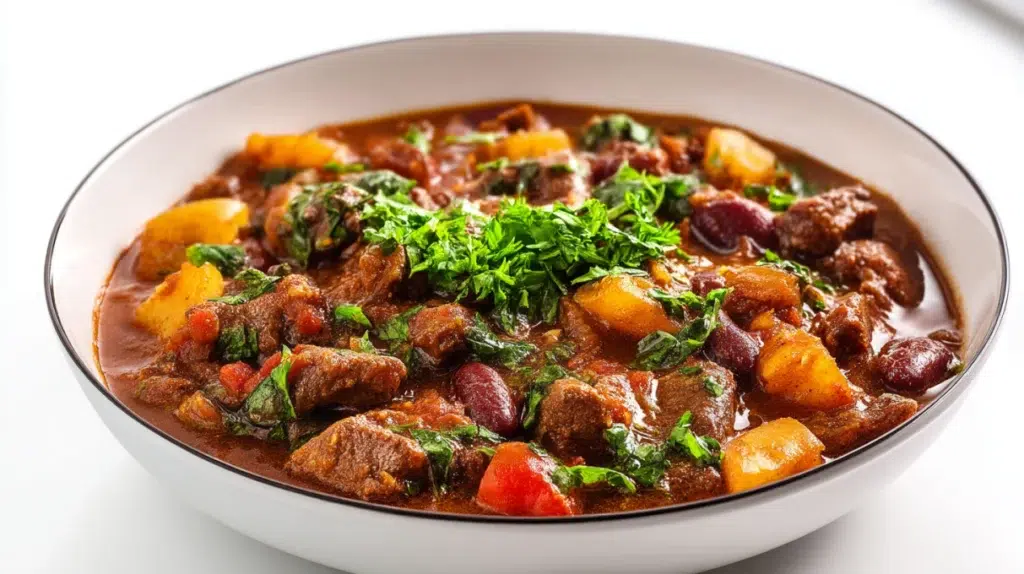
Lebanese beef stew, yakhnet batata, literally “potato stew” is the kind of dish that shows up on the Lebanese family table so reliably, so often, and so without ceremony that it rarely gets written down. It is simply what happens on a weeknight when there is beef in the fridge and potatoes in the basket. And yet it is genuinely one of the most satisfying things in Lebanese cooking: tender beef and chunky potatoes in a rich tomato broth scented with seven spice and cinnamon, built on a base of golden onion, garlic and fresh cilantro, served over vermicelli rice that soaks up every drop of the sauce.
In Lebanon, the word yakhneh refers to the whole family of stews built on this logic, browned meat, an aromatic base, a tomato and spice broth, a starring vegetable. Swap the potatoes for white beans and you have fasolia. Swap them for green beans and you have loubieh. Swap them for peas and carrots and you have bazella. The method barely changes; the personality of each dish comes entirely from what goes in. This version, with potato is the most common, the most comforting, and the one most Lebanese home cooks could make blindfolded.
Ingredients
- 700g beef stew meat, chuck, shoulder or shank cut into roughly 3cm chunks. Bone-in cuts add more body to the broth. Avoid very lean cuts, some fat is necessary for flavour and tenderness over the long simmer.
- 2 tablespoons olive oil or ghee
- 1 large onion, finely diced
- 6 cloves garlic, minced
- 1 large bunch fresh cilantro, finely chopped, about 40g. Fresh is strongly preferred; it forms the aromatic base of the stew. Dried cilantro produces a noticeably flatter result.
- 2 tablespoons tomato paste
- 1 can (400g) whole peeled tomatoes, crushed by hand, or 400g fresh ripe tomatoes, roughly chopped
- 2 teaspoons seven spice (baharat), the defining spice blend: allspice, black pepper, cinnamon, coriander, cumin, cloves and nutmeg combined. Available at Middle Eastern grocery stores or make your own. This is the flavour that makes the stew unmistakably Lebanese.
- ½ teaspoon ground cinnamon, in addition to the seven spice; cinnamon alongside meat is a cornerstone of Lebanese cooking and this extra pinch reinforces it noticeably
- ½ teaspoon ground allspice
- Salt and black pepper to taste
- 500ml water or beef broth, broth gives a richer result; water is perfectly fine
- 600g potatoes, Yukon Gold or similar waxy variety; peeled and cut into large 3–4cm chunks. Larger pieces are not laziness, they hold their shape through the full simmer without going mushy.
- 1 tablespoon pomegranate molasses, optional; stirred in at the end for a gentle sweet-sour lift that brightens the whole pot
- Fresh lemon juice, a squeeze at the end, to taste
Step by step
- Brown the beef in batches. Pat the beef pieces completely dry with paper towels. Season generously with salt and pepper. Heat the oil in a large heavy pot or Dutch oven over medium-high heat until shimmering. Brown the beef in batches, do not crowd the pot. Cook each piece without moving it for 3–4 minutes until a deep brown crust forms on one side, then turn. Remove each batch and set aside. The browning builds the fond, the darkened layer on the bottom of the pot, which becomes the flavour base of the entire broth. Crowded beef steams rather than sears and produces grey, flat-tasting meat. Work in batches even if it takes an extra ten minutes. It is worth it.
- Build the aromatic base. Reduce the heat to medium. In the same pot, add the diced onion and cook for 6–8 minutes, scraping up the fond from the bottom, until softened and golden. Add the garlic and cook 1 minute until fragrant. Add the fresh cilantro and stir for 2 minutes until it wilts and smells deeply aromatic.
- Toast the tomato paste. Add the tomato paste directly to the pot and stir constantly for 2–3 minutes until it darkens from bright red to a deep brick-red and smells faintly caramelised. This toasting step removes the raw, tinny flavour of the paste and adds a layer of sweetness and depth to the broth.
- Add spices and liquid. Add the seven spice, cinnamon and allspice. Stir for 30 seconds until the spices bloom in the oil. Add the crushed tomatoes and water or broth. Stir well, scraping up any remaining fond. Return the browned beef and all its resting juices to the pot. Bring to a boil then reduce to a steady gentle simmer.
- Simmer the beef. Cover and cook over low heat for 50–60 minutes, until the beef is genuinely tender when pierced with a fork, not just cooked through but soft and yielding, beginning to give when pressed.Don’t rush this stage. Beef stew meat needs sustained low heat to break down the collagen in the connective tissue into gelatin, which is what gives the broth its body and the meat its texture. A rolling boil makes the beef tight and chewy. A gentle simmer makes it tender.
- Add the potatoes. Add the potato chunks and stir gently to submerge them in the broth. If needed, add a splash more water so the liquid just covers everything. Replace the lid and simmer for a further 20–25 minutes until the potatoes are completely tender, soft when pierced but still holding their shape. Potatoes go in at this stage, not at the beginning. Added too early, they dissolve into the broth and lose all texture. Cut them chunky, 3–4cm for the same reason. A potato that holds its shape when served is what you are aiming for.
- Finish and adjust. Stir in the pomegranate molasses if using, and a squeeze of fresh lemon juice. Taste and adjust salt, the stew should be deeply savoury, warmly spiced and bright enough to make you want another spoonful. Serve immediately over vermicelli rice, with the broth spooned generously over both.
The yakhneh philosophy, one method, a dozen stews
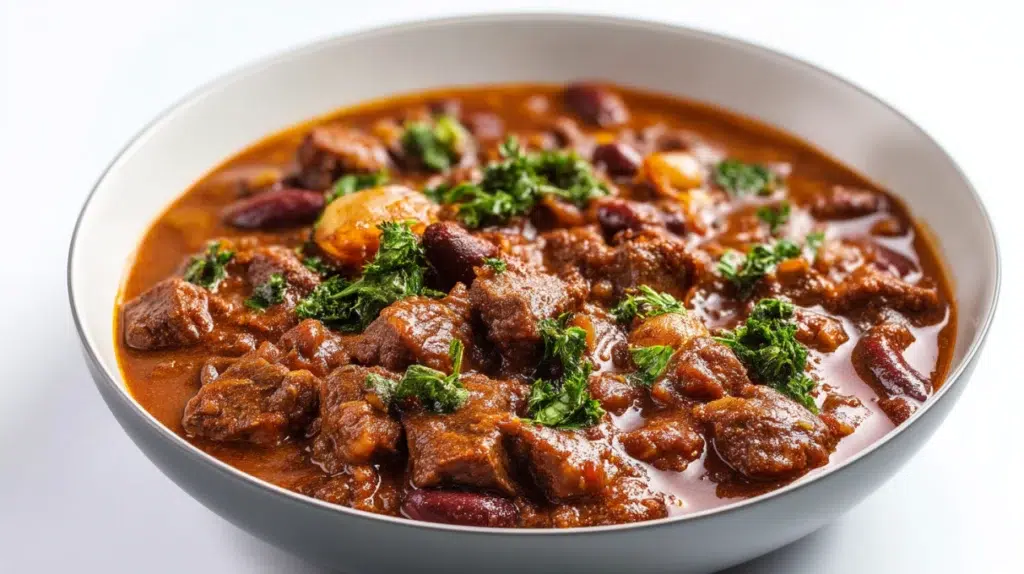
Understanding yakhnet batata means understanding that you have unlocked an entire category of Lebanese home cooking. The method, brown meat, build aromatic base with onion and cilantro, toast tomato paste, add spiced broth, simmer long, add vegetable partway through, applies directly to every other Lebanese yakhneh. The only variable is the vegetable and the timing of when it goes in.
White beans (fasolia) go in at the same point as the potatoes, already cooked from a can. Green beans (loubieh) go in slightly later, needing only 15 minutes to cook through. Peas and carrots (bazella) go in even later still, frozen peas need barely 10 minutes. Once you have made this version once, the others take no new learning. The spice profile stays the same, the broth stays the same, the logic of the pot stays the same. You simply decide what is in season and what is in the fridge.
Make it your own
Claire’s note
The pomegranate molasses finish is not traditional in every household but it is worth trying at least once, it adds something sweet, sharp and slightly complex that cuts through the richness of the beef broth in a way that lemon alone doesn’t quite achieve. The stew reheats beautifully and tastes better the next day, make a full pot on Sunday and eat it twice across the week without any guilt about that. For a pressure cooker version, brown the beef the same way, then cook under pressure for 25 minutes; add the potatoes and cook a further 8 minutes. The result is indistinguishable from the stovetop version in about a third of the time.
Serve with
Lebanese beef stew is always served over Lebanese vermicelli rice, the stew and its broth spooned generously over the rice so everything absorbs together on the plate. A spoonful of plain yogurt alongside cuts through the richness and is traditional in many Lebanese households. For the full collection the complete Lebanese recipes guide covers every dish in this tradition. The broader Middle Eastern recipes guide covers the regional context.
Add Lebanese beef stew to your weekly meal planner, it cooks itself on a low burner while you do something else and feeds the family for two days running. And for more recipes, follow us on Pinterest.
Print
Lebanese Beef Stew (Yakhnet Batata)
- Total Time: 110 minutes
- Yield: 4–6 servings 1x
- Diet: Beef
Description
A comforting Lebanese stew with tender beef and chunky potatoes in a rich tomato broth, seasoned with seven spice and cinnamon.
Ingredients
- 700g beef stew meat (chuck, shoulder, or shank) cut into 3cm chunks
- 2 tablespoons olive oil or ghee
- 1 large onion, finely diced
- 6 cloves garlic, minced
- 1 large bunch fresh cilantro (about 40g), finely chopped
- 2 tablespoons tomato paste
- 1 can (400g) whole peeled tomatoes, crushed by hand or 400g fresh ripe tomatoes, roughly chopped
- 2 teaspoons seven spice
- ½ teaspoon ground cinnamon
- ½ teaspoon ground allspice
- Salt and black pepper to taste
- 500ml water or beef broth
- 600g potatoes, peeled and cut into large 3-4cm chunks
- 1 tablespoon pomegranate molasses (optional)
- Fresh lemon juice (to taste)
Instructions
- Brown the beef in batches, patting pieces dry and seasoning with salt and pepper.
- Heat the oil in a large pot over medium-high heat and brown the beef without crowding.
- Build the aromatic base by adding the onion, cooking until softened, then adding garlic and fresh cilantro.
- Toast the tomato paste in the pot until it darkens and smells caramelized.
- Add the spices, crushed tomatoes, and water/broth, then bring to a boil and reduce to a simmer.
- Simmer the beef for 50-60 minutes until tender.
- Add the potatoes and simmer for an additional 20-25 minutes until they are tender.
- Finish with pomegranate molasses and lemon juice, adjusting salt to taste.
- Serve over vermicelli rice with broth poured over.
Notes
This dish can be made ahead as it tastes even better the next day. A spoon of yogurt alongside is traditional.
- Prep Time: 20 minutes
- Cook Time: 90 minutes
- Category: Main Course
- Method: Simmering
- Cuisine: Lebanese
Nutrition
- Serving Size: 1 serving
- Calories: 450
- Sugar: 7g
- Sodium: 500mg
- Fat: 15g
- Saturated Fat: 5g
- Unsaturated Fat: 8g
- Trans Fat: 0g
- Carbohydrates: 45g
- Fiber: 5g
- Protein: 30g
- Cholesterol: 70mg