⏱ Prep: 10 min 🔥Cook: 35 min 👤Serves: 6 Origin: Lebanon
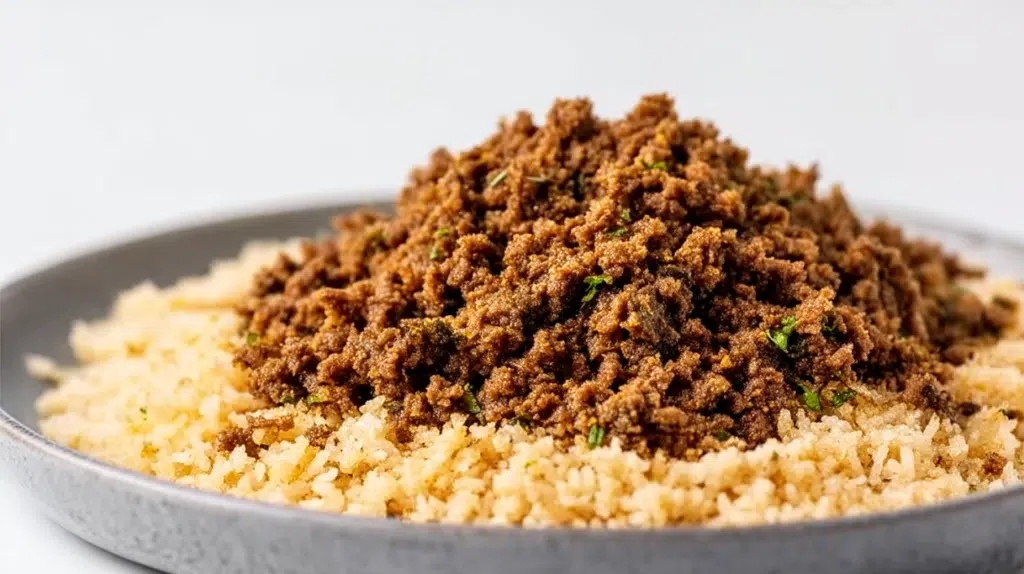
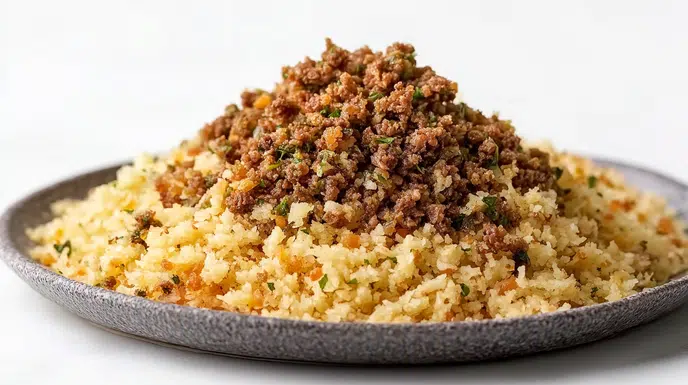
Lebanese Hashweh, means “stuffing” in Arabic, and that is exactly what it started as. Spiced ground meat cooked with rice and warm spices, stuffed into whole lambs or chickens at Lebanese celebrations for centuries. Over time, hashweh became a dish in its own right: served as a rice pilaf topped with toasted pine nuts and parsley, spooned alongside roast chicken, set out at holiday tables, eaten on ordinary weeknights when someone wanted something more than plain rice. It remains the same recipe either way, the distinction is only in how it ends up.
The flavour comes from two things done properly. First: ghee, clarified butter with a toasty, nutty richness that regular butter doesn’t quite match. Second: allspice, cinnamon and black pepper bloomed in the fat before the rice goes in, releasing their volatile oils into the dish in a way that stirring spices into finished rice never achieves. Everything else is straightforward.
Ingredients
- 350g (¾ lb) lean ground beef, or ground lamb for a richer, more traditional flavour. A half-and-half mixture of beef and lamb is excellent. Lean meat is preferred, the ghee provides sufficient fat.
- 300g (1½ cups) basmati rice, rinsed under cold water until the water runs clear, then drained. This removes excess surface starch and prevents the finished rice from clumping. Do not skip the rinse.
- 3 tablespoons ghee, the authentic fat for hashweh. The toasty, caramelised milk solids in ghee give the dish its characteristic richness. Substitute: unsalted butter, slightly less flavour but very good. Olive oil works but produces a fruitier, less rich result.
- 1 medium onion, finely diced
- 3 cloves garlic, finely minced
- 1½ teaspoons ground allspice, the dominant spice in hashweh. Allspice (bahar) carries a warm, slightly peppery, clove-like depth that defines the dish. Do not reduce.
- 1 teaspoon ground cinnamon, adds warmth and sweetness that balances the savoury meat
- ½ teaspoon black pepper
- ¼ teaspoon ground nutmeg, optional but traditional. Adds a slight warmth.
- 1 teaspoon fine salt
- 600ml (2½ cups) chicken or beef stock, stock over water. The rice absorbs the stock’s flavour completely during cooking, stock produces a noticeably richer result. Low-sodium preferred so you control the salt.
- 50g (⅓ cup) pine nuts, toasted in ghee until golden. The essential garnish. Toast them separately and carefully, pine nuts go from golden to burnt in about 20 seconds.
- 30g (¼ cup) slivered almonds, optional, toasted alongside the pine nuts. Many Lebanese families use both.
- Large handful flat-leaf parsley, finely chopped, for serving
- 2 tablespoons raisins, optional but traditional in some Lebanese and Syrian versions. Added with the rice. The slight sweetness contrasts beautifully with the savoury spiced meat.
Step by step
- Toast the pine nuts first, watch carefully. Add 1 tablespoon of ghee to a wide, heavy pot over medium heat. Add the pine nuts (and almonds if using). Stir constantly for 2–3 minutes until golden. Pine nuts are ready when they turn a deep, even golden colour, they go from golden to burnt in seconds. Remove immediately with a slotted spoon and set aside. Leave the ghee in the pot. Toast the nuts first while the pan is cool, they burn dramatically faster in an already-hot pan. Constant stirring and immediate removal are both required. Set a plate right beside the stove before you start.
- Cook the onion until golden. Add the remaining 2 tablespoons of ghee to the same pot over medium heat. Add the diced onion. Cook, stirring occasionally, for 8–10 minutes until the onion is completely soft, translucent and beginning to turn golden at the edges, not just translucent. A properly golden onion adds sweetness and depth to the dish that a barely-cooked onion cannot.
- Brown the meat. Add the ground beef (or lamb) to the golden onion. Increase heat to medium-high. Cook, breaking up the meat with a spoon as it browns, for 6–8 minutes until completely cooked through and the meat is beginning to caramelise slightly at the edges, no grey, steamed-looking meat. Add the garlic and stir for 1 minute until fragrant. Do not rush the meat browning, caramelised meat edges produce a depth of flavour that grey, steamed meat does not. Break it up small so the pieces distribute evenly through the rice. Any excess fat from the meat can be spooned off at this stage.
- Bloom the spices. Reduce heat to medium-low. Add the allspice, cinnamon, black pepper and nutmeg directly to the cooked meat. Stir constantly for 60 seconds until the spices are deeply fragrant and have coated every piece of meat. The kitchen should smell strongly of warm spice. Blooming dry spices in hot fat before adding liquid is the technique that gives hashweh its characteristic depth. Spices added with the stock or stirred in at the end taste raw and one-dimensional. 60 seconds in the fat and they open up completely.
- Add the rice and toast briefly. Add the rinsed, drained basmati rice to the pot. Stir to coat every grain in the spiced meat and ghee. Cook for 2 minutes, stirring, until the rice turns slightly translucent at the edges and smells slightly toasted. Add the raisins now if using. Toasting the rice briefly in the fat before adding liquid is the technique that keeps the grains separate and fluffy rather than sticky and clumped. The fat coats each grain, creating a barrier that prevents them from fusing as they cook.
- Add stock, season and cook. Add the salt, then pour in the stock. Stir once to combine everything evenly. Increase the heat to bring the mixture to a boil. Once boiling, reduce the heat to the lowest possible setting. Cover the pot tightly and cook for 18–20 minutes until the rice has absorbed all the liquid and is cooked through. Do not lift the lid during cooking.
- Rest 10 minutes before fluffing. Remove from the heat. Leave the pot covered and undisturbed for 10 minutes, the residual steam finishes cooking the top layer of rice and the grains firm up slightly, making them easier to separate cleanly. After resting, remove the lid and fluff the rice gently with a fork from the sides of the pot inward.
- Serve and garnish. Transfer the hashweh to a wide serving platter or bowl. Scatter the toasted pine nuts and almonds generously over the top. Add the freshly chopped parsley. Serve immediately with plain yogurt, cucumber yogurt sauce or tahini alongside and lemon wedges for squeezing.
Claire’s note
Hashweh is one of those dishes where the quality of the spices matters more than almost anything else. Allspice that has been sitting in a jar for two years tastes of almost nothing, it has lost its volatile oils through slow oxidation and produces a flat, underwhelming result regardless of how carefully everything else is done.
Buy whole allspice berries and grind them yourself, or buy ground allspice in small quantities and replace it every 6 months. Same for cinnamon, a fresh jar versus a stale one is genuinely the difference between a hashweh that makes people lean forward and ask what’s in it, and one that tastes like plain rice with meat. Check the dates on your spice jars before you start.
Using hashweh as a stuffing
The same hashweh mixture, made to the same recipe but with slightly less stock (400ml instead of 600ml, since it will continue cooking inside whatever it fills) is the stuffing for kousa mahshi (Lebanese stuffed zucchini), grape leaves, cabbage rolls and whole roast chicken. For stuffing chicken: fill the cavity, truss and roast. The chicken juices drip into the rice during roasting, enriching it further. For vegetables: fill two-thirds full, hashweh expands significantly during cooking.
Serve with
Hashweh is traditionally served with plain yogurt or cucumber yogurt alongside, the cool acidity cuts through the richness of the spiced rice. Hummus and fattoush salad complete the table. For roast chicken over hashweh, the most classic Lebanese presentation, roast a whole chicken and serve it on top of the rice on a large platter. The full Lebanese recipes collection has everything from this cuisine.
Add Lebanese hashweh to your weekly meal planner, it makes an excellent Sunday rice that works as a side dish and reheats perfectly Monday through Wednesday. Make a double batch and use the second half as a stuffing.
And for more recipes, follow us on Pinterest.
Print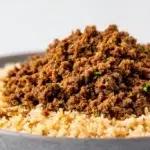
Hashweh: Lebanese Spiced Rice
- Total Time: 45 minutes
- Yield: 6 servings 1x
- Diet: Non-Vegetarian
Description
A traditional Lebanese dish of spiced ground beef and rice, cooked in ghee and topped with toasted pine nuts and parsley.
Ingredients
- 350g (¾ lb) lean ground beef or lamb
- 300g (1½ cups) basmati rice, rinsed
- 3 tablespoons ghee
- 1 medium onion, finely diced
- 3 cloves garlic, finely minced
- 1½ teaspoons ground allspice
- 1 teaspoon ground cinnamon
- ½ teaspoon black pepper
- ¼ teaspoon ground nutmeg (optional)
- 1 teaspoon fine salt
- 600ml (2½ cups) chicken or beef stock
- 50g (⅓ cup) pine nuts, toasted
- 30g (¼ cup) slivered almonds (optional)
- Large handful flat-leaf parsley, finely chopped
- 2 tablespoons raisins (optional)
Instructions
- Toast the pine nuts in 1 tablespoon of ghee over medium heat for 2–3 minutes until golden. Remove and set aside.
- Cook the onion in the same pot with the remaining 2 tablespoons of ghee for 8–10 minutes until golden.
- Brown the ground meat with the onion, cooking for 6–8 minutes until completely cooked through.
- Bloom the spices by adding allspice, cinnamon, black pepper, and nutmeg to the meat for 60 seconds.
- Add the rinsed rice to the pot and cook for 2 minutes until slightly toasted.
- Pour in the stock, add salt, and bring to a boil. Cover and reduce heat, cooking for 18-20 minutes.
- Rest for 10 minutes, then fluff the rice with a fork.
- Serve garnished with toasted pine nuts, almonds, and parsley.
Notes
Use fresh spices for the best flavor. Hashweh can also be used as a stuffing for various dishes.
- Prep Time: 10 minutes
- Cook Time: 35 minutes
- Category: Main Course
- Method: Stovetop
- Cuisine: Lebanese
Nutrition
- Serving Size: 1 serving
- Calories: 450
- Sugar: 3g
- Sodium: 550mg
- Fat: 14g
- Saturated Fat: 6g
- Unsaturated Fat: 7g
- Trans Fat: 0g
- Carbohydrates: 57g
- Fiber: 2g
- Protein: 24g
- Cholesterol: 80mg