⏱ Prep: 5 min 🔥Cook: 3–8 min 🍡Makes: 12–16 pieces 🌿Vegetarian
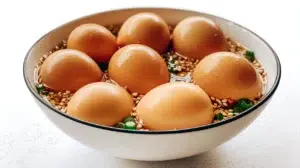
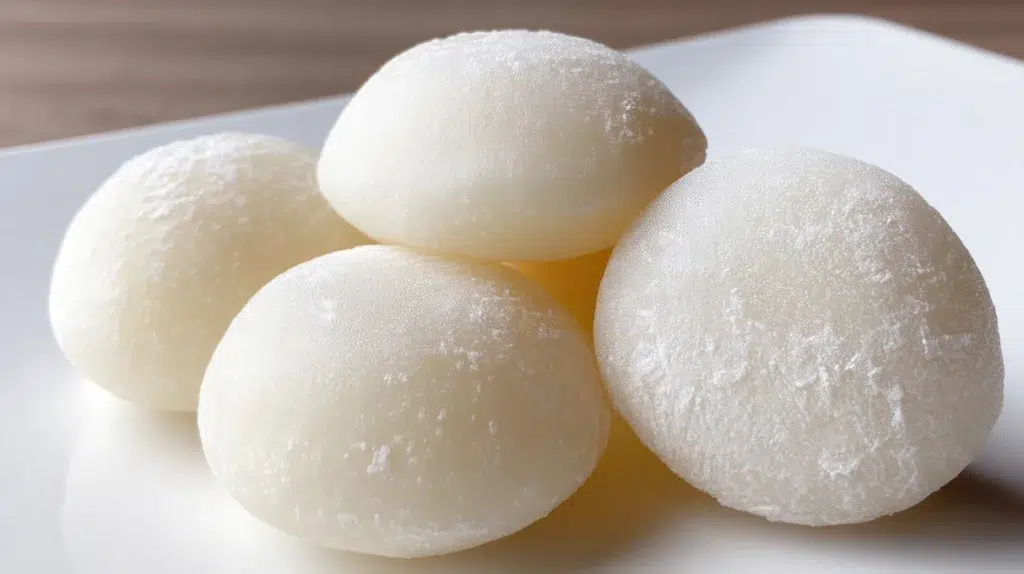
Milk mochi is three ingredients, glutinous rice flour, whole milk, sugar, cooked together until the mixture transforms from a thin, white batter into a glossy, translucent, impossibly stretchy dough. It takes under fifteen minutes, uses equipment you already own, and produces something with a texture that most people have never made at home: soft, bouncy, slightly chewy, slightly creamy, with a clean milky sweetness and almost no structural opinion about what it wants to be eaten with.
It is not traditional Japanese mochi, which is made by steaming and pounding whole glutinous rice in a labour-intensive process that produces a denser, more intensely flavoured result. Milk mochi is a modern, simplified version that uses glutinous rice flour as the shortcut, same starch, same stretch, ready in minutes rather than hours. The texture is softer and lighter than traditional mochi and the flavour is milkier and more delicate. Once you understand that distinction, you can eat it for what it is: one of the most satisfying quick desserts that a home kitchen can produce from almost nothing.
Ingredients
- 150g (1¼ cups) glutinous rice flour, also sold as sweet rice flour, sticky rice flour, or mochiko. Koda Farms Mochiko is the most widely available brand in the US. This is non-negotiable, regular rice flour, all-purpose flour, and tapioca starch all produce entirely different textures. The glutinous starch is specifically what creates the stretch, bounce and chew that defines mochi. Find it at any Asian grocery store or online.
- 30g (3 tablespoons) caster sugar, caster (superfine) sugar dissolves more readily into the batter than granulated. If only granulated is available, it works, just mix the batter a little longer to ensure it dissolves completely before cooking.
- 15g (1½ tablespoons) cornstarch (cornflour), a small addition that makes the finished mochi slightly more tender and helps it set more evenly. Optional but produces a noticeably better texture.
- 240ml (1 cup) whole milk, full-fat milk gives the best creamy flavour and the softest texture. The milk is what makes this milk mochi rather than plain mochi, it adds richness, slight creaminess, and a milky sweetness that water-based mochi doesn’t have. Substitute: coconut milk for a fragrant, dairy-free version; oat milk for a slightly lighter result.
- 1 tablespoon neutral oil, vegetable, sunflower, or light coconut oil. A small amount of fat keeps the mochi supple and prevents it from turning rubbery as it cools. Not sesame oil. Not butter, which can make the texture slightly greasy.
For dusting (essential, choose one)
- Cornstarch or potato starch, the neutral choice. Just prevents sticking, does not add flavour. Use generously on the work surface, your hands, and between pieces.
- OR kinako (roasted soybean flour) mixed with 1 tablespoon sugar and a pinch of salt, the classic Japanese coating. Nutty, toasty and subtly sweet, often described as tasting like powdered peanut butter but more delicate. Available at Japanese grocery stores and online. Mix with sugar before using as a coating.
- OR roasted peanut powder mixed with 1 tablespoon sugar, the Taiwanese style coating. Richer and nuttier than kinako, equally good.
- OR matcha powder mixed with 1 tablespoon icing sugar, for a bitter-sweet, deeply green coating
Two methods, microwave and stovetop
Method 1: Microwave (faster, easier)
- Make the batter. In a medium microwave-safe bowl, whisk together the glutinous rice flour, sugar and cornstarch until combined. Pour in the milk and neutral oil gradually, whisking constantly to prevent lumps. The batter should be smooth, pourable, and look like thick cream with no visible dry flour pockets. If any lumps remain, strain through a fine-mesh sieve, lumps in the batter become lumps in the mochi.
- Microwave in intervals. Cover the bowl loosely with microwave-safe plastic wrap or a damp paper towel, leaving a small vent for steam. Microwave on high for 1 minute. Remove, the edges of the batter will have started to set and turn slightly translucent while the centre remains white and liquid. Stir thoroughly with a wet silicone spatula, folding the cooked edges into the raw centre. Re-cover and microwave in 30-second intervals, stirring well between each, until the entire mixture has turned glossy, slightly translucent, and pulls away from the sides of the bowl as you stir. This usually takes 2–3 minutes total depending on your microwave wattage. The translucency is the doneness cue, not time, not appearance of being dry, not any other visual marker. Raw glutinous rice batter is opaque and white. Cooked mochi dough is glossy and slightly see-through, like a softly set, pale caramel. When the entire bowl has shifted to that glossy, translucent state and the dough coheres as a mass rather than flowing as a liquid, it is done. Undercooked mochi tastes starchy and raw; properly cooked mochi tastes clean and neutral with the milky sweetness of the batter.
- Turn out and shape. Immediately dust your work surface extremely generously with cornstarch or your chosen dusting powder. Scrape the hot mochi dough out of the bowl onto the dusted surface, it will be very hot and extremely sticky. Dust the top with more starch. Wait 1–2 minutes until cool enough to handle safely, then dust your hands liberally and work quickly. Pull or cut the dough into 12–16 pieces using an oiled bench scraper, oiled scissors, or simply pulling off pieces with starch-dusted hands. Shape each piece into a rough ball or square. Dust each piece with more starch as you go to prevent them sticking together. Work quickly while the mochi is still warm, it is most pliable and easiest to shape immediately out of the microwave. As it cools it firms and becomes harder to work with. If it firms up too much before you finish shaping, microwave the whole piece for 10 seconds to soften it again. A knife sticks to mochi; scissors or a bench scraper are much better cutting tools.
Method 2: Stovetop (more control, better for large batches)
- Make the batter. Whisk together the glutinous rice flour, sugar, cornstarch, milk and oil in a bowl until completely smooth. Strain through a fine-mesh sieve into a medium non-stick saucepan.
- Cook over medium-low heat. Set the saucepan over medium-low heat. Stir constantly with a silicone spatula or wooden spoon, scraping the bottom and sides of the pan continuously. After 3–4 minutes the mixture will begin to thicken at the edges. Keep stirring, do not stop or the bottom will catch and burn. After 5–8 minutes the mixture will become thick, glossy and translucent throughout, and will pull away from the sides of the pan cleanly as you stir. This is the same doneness state as the microwave method: translucent and cohesive. Medium-low heat is important. High heat cooks the outside of the dough before the inside has cooked through, producing uneven texture. Constant stirring is also important, mochi sticks aggressively to any surface it’s not actively being moved from. A good non-stick pan makes this significantly easier.
- Turn out and shape. Follow the same shaping steps as the microwave method, generously dusted surface, hot dough, work quickly, cut with scissors or a bench scraper, dust each piece as you go.
Coatings and toppings
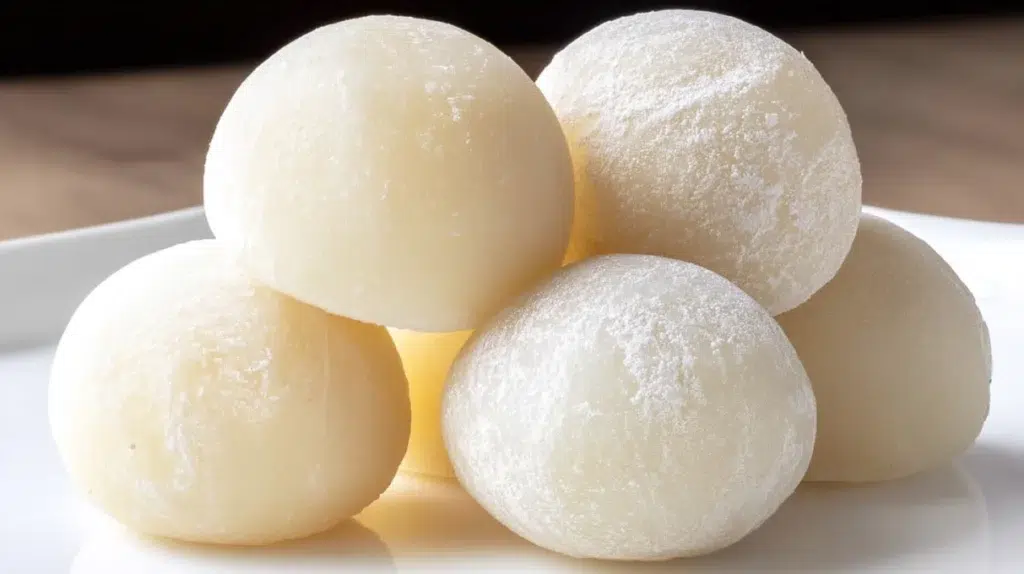
Japanese: Classic: Kinako + Kuromitsu
Roll mochi pieces in a mixture of kinako (roasted soybean flour), 1 tbsp sugar and a pinch of salt. Drizzle with kuromitsu (Japanese black sugar syrup) or substitute with dark honey or a simple brown sugar syrup. The most traditional way to eat plain mochi in Japan.
Taiwanese: Classic; Peanut Powder + Sugar
Mix roasted peanut powder with 1 tbsp sugar and a pinch of salt. Roll mochi pieces generously. Richer and nuttier than kinako, very popular in Taiwan. Sometimes combined with a small drizzle of condensed milk over the top.
Modern: Matcha + Icing Sugar
Mix 2 tsp matcha powder with 1 tbsp icing sugar. The bitterness of the matcha against the sweet, milky mochi is an excellent combination. Also looks striking, the bright green against the pale dough.
Simple: Shredded Coconut
Fine desiccated coconut or freshly toasted shredded coconut. Light, slightly sweet, and prevents sticking well. Particularly good when the mochi is made with coconut milk instead of whole milk for a fully coconut version.
Claire’s note
The single most important thing in this recipe is the dusting, not the mixing, not the cooking, not the shaping. Mochi sticks to everything with a tenacity that is difficult to overstate until you have experienced it first-hand. If you under-dust your surface or your hands, the mochi will adhere to both simultaneously and you will spend several minutes engaged in a futile negotiation with a blob of hot dough. Dust the surface as if you mean it. Dust your hands. Dust between pieces as you cut them. Use more cornstarch than you think is reasonable. The excess brushes off easily; the consequences of not using enough do not.
The second thing: microwave wattage varies. A 1000W microwave will cook mochi in about 2 minutes total. A 700W microwave might take 3.5–4 minutes. Watch for the translucency rather than following a fixed time, when the dough is entirely glossy and semi-transparent, it is done regardless of how long it has taken.
Serve with
Milk mochi is served as a dessert or snack, eaten immediately or within a few hours of making. As part of a Japanese dessert spread it sits naturally alongside the Japanese matcha souffle cheesecake, or the japanese pancakes. With a cup of matcha or hojicha tea alongside is the natural Japanese pairing. The full Japanese recipes collection covers everything from this cuisine.
Add milk mochi to your weekly meal planner as a 15-minute weekend dessert, the only advance preparation needed is having glutinous rice flour in the cupboard, which keeps for months. And for more recipes, follow us on Pinterest.
Print
Milk Mochi
- Total Time: 13 minutes
- Yield: 12–16 pieces 1x
- Diet: Vegetarian
Description
A quick and easy dessert made with glutinous rice flour, milk, and sugar, resulting in a soft and chewy treat.
Ingredients
- 150g (1¼ cups) glutinous rice flour
- 30g (3 tablespoons) caster sugar
- 15g (1½ tablespoons) cornstarch (optional)
- 240ml (1 cup) whole milk
- 1 tablespoon neutral oil (vegetable or sunflower)
- For dusting: cornstarch, kinako, roasted peanut powder, or matcha powder
Instructions
- Make the batter by whisking together the glutinous rice flour, sugar, and cornstarch in a bowl. Add the milk and neutral oil gradually, whisking until smooth.
- Microwave the batter by covering with a vented wrap and microwaving on high for 1 minute. Stir, then microwave in 30-second intervals until glossy and translucent.
- Turn the hot mochi dough out onto a generously dusted surface, shape into 12–16 pieces while they are still warm, using plenty of dusting to prevent sticking.
Notes
Ensure to dust surfaces and hands generously with cornstarch to prevent sticking. Watch for the translucency for doneness rather than strictly timing.
- Prep Time: 5 minutes
- Cook Time: 8 minutes
- Category: Dessert
- Method: Microwave
- Cuisine: Japanese
Nutrition
- Serving Size: 1 piece
- Calories: 150
- Sugar: 5g
- Sodium: 50mg
- Fat: 6g
- Saturated Fat: 3g
- Unsaturated Fat: 3g
- Trans Fat: 0g
- Carbohydrates: 22g
- Fiber: 0g
- Protein: 3g
- Cholesterol: 10mg