⏱ Prep: 20 min 🔥Cook: 20 min 👤Serves: 4
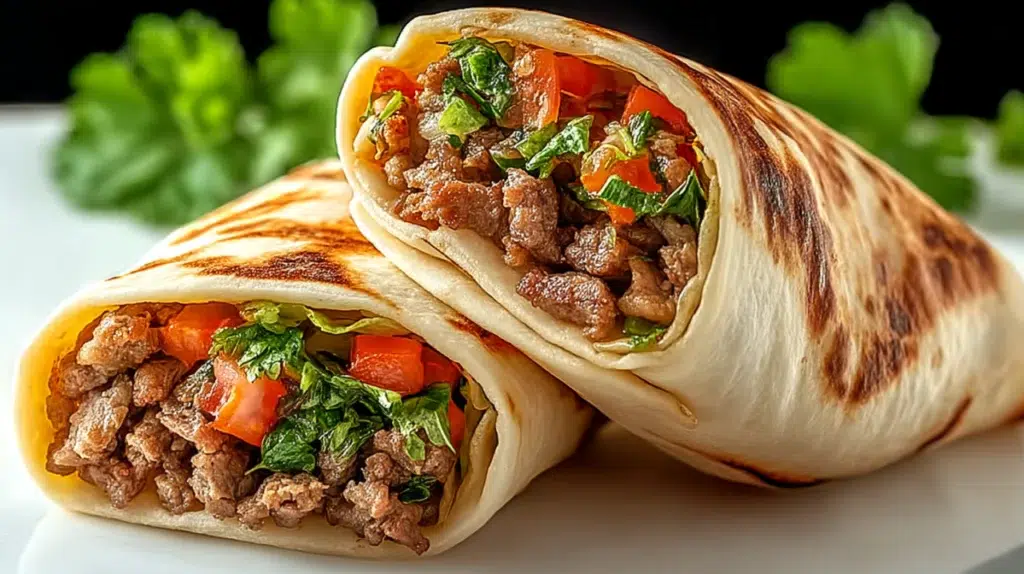
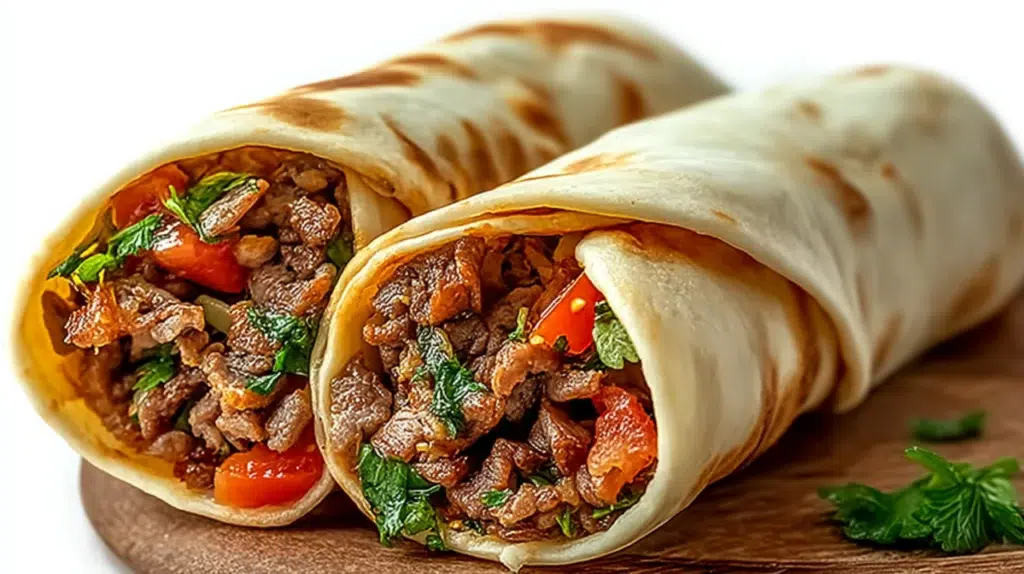
Turkish Lamb Tantuni Wrap is the street food of Mersin, Turkey’s Mediterranean port city and one of the most satisfying wraps in Turkish cuisine. Thin-sliced lamb is steam-fried in butter with cumin and pul biber until the juices caramelise and the meat is tender and slightly charred at the edges. Then the lavash bread is pressed directly onto the sizzling meat in the pan, soaking up the spiced butter and lamb juices for thirty seconds before it is lifted and filled. That thirty seconds is what makes tantuni different from every other wrap. The bread is not a container, it becomes part of the dish.
The rest is simple: sumac onions massaged until slightly softened, diced tomato, flat-leaf parsley, a squeeze of lemon. Rolled tight, eaten immediately. The flavour is direct, bold and deeply satisfying, cumin, lamb fat, sumac acidity and the slight char of a very hot pan.
Ingredients
For the lamb
- 500g (1.1 lb) boneless lamb leg or lamb shoulder, sliced against the grain into very thin strips, about 3–4mm thick and 3–4cm long. Small pieces cook fast and distribute evenly through the wrap, large chunks don’t work in tantuni. Partially freeze the lamb for 20 minutes before slicing for cleaner, thinner cuts.
- 2 tablespoons unsalted butter, the traditional fat for tantuni. Cottonseed oil is used at Mersin street stalls and is difficult to find outside Turkey. Butter is the best substitute, it adds richness and browns the meat well. A tablespoon of lamb fat rendered from the trimmings is even more authentic if available.
- 60ml (¼ cup) water, added to the pan with the lamb at the start. This is the steam stage, the water creates steam that gently cooks and tenderises the meat before it fries. Without this step the thin lamb can seize and toughen on contact with high heat.
- 1½ teaspoons ground cumin, the dominant spice in tantuni. Use more than feels comfortable, cumin is the backbone of the dish’s flavour.
- 1 teaspoon pul biber (Turkish red pepper flakes), slightly smoky, fruity and moderately hot. Available at Turkish or Middle Eastern grocery stores. Substitute: ½ teaspoon sweet paprika + ½ teaspoon chili flakes, different but workable.
- ½ teaspoon sweet paprika, for colour and a mild warmth
- ½ teaspoon black pepper
- 1 teaspoon salt
For the sumac onions
- 2 medium red onions, halved and very thinly sliced
- 1½ tablespoons sumac, the tart, lemony ground spice that is the defining flavour of the onion salad. Not optional, the sumac acidity is the main counterpoint to the rich lamb. Available at Middle Eastern grocery stores and many supermarkets.
- ½ teaspoon salt, helps draw moisture from the onion and softens it slightly during the massage
- Small handful flat-leaf parsley, roughly chopped
For the wrap
- 4 sheets thin lavash bread, the authentic wrap for tantuni. Thin, flexible, large enough to roll. Find it at Middle Eastern or Turkish grocery stores. Substitute: thin flour tortillas, the closest widely available alternative. Thick or puffy flatbreads don’t absorb the pan juices the same way and don’t roll as cleanly.
- 2 medium tomatoes, deseeded and finely diced, deseed thoroughly to prevent the wrap going soggy
- 1 lemon, cut into wedges
- Pickled green peppers or pepperoncini, served alongside, the traditional tantuni accompaniment. Their sharpness cuts through the rich lamb.
Step by step for Turkish Lamb Tantuni Wrap
- Make the sumac onions first. Place the sliced red onion in a bowl. Add the sumac and salt. Using your hands, massage the sumac and salt firmly into the onion for 2 minutes, squeeze, press and work the onion until it softens slightly and releases a little liquid, turning a deep pink from the sumac. Add the chopped parsley and toss through. Set aside. The onions improve as they sit and the sumac penetrates further. Massaging the onion is not optional. Raw sliced onion in a wrap is sharp and harsh. Massaged sumac onion is softer, slightly pickled, and the sumac flavour distributes evenly through every piece. Two minutes of firm massaging makes a genuinely different result.
- Cook the lamb, the two-stage method. Heat a large heavy skillet or cast iron pan over high heat until very hot. Add the butter. As soon as it melts and begins to foam, add the sliced lamb. Pour the water into the pan immediately. It will spit and steam aggressively, this is correct. The steam cooks the lamb gently for the first 60–90 seconds while the water evaporates. The water stage is the key technique of authentic tantuni. Street vendors in Mersin cook the meat with a small amount of water first, which tenderises the thin slices before the high-heat frying stage. Without it, very thin lamb on a very hot pan can seize and toughen in seconds. With the water, the meat is tender before the browning begins.
- Fry and season. Once the water has fully evaporated, about 2 minutes, the lamb will begin to sizzle and fry properly in the butter. Add the cumin, pul biber, paprika, black pepper and salt. Stir and toss everything together. Cook over high heat for a further 2–3 minutes, stirring frequently, until the lamb is browned at the edges, slightly caramelised and the spices have coated every piece. The pan should be sizzling and smelling intensely of cumin and lamb fat.
- Warm the lavash on the meat, the signature technique. Reduce the heat to medium. Place one sheet of lavash directly on top of the sizzling lamb in the pan. Press down gently with your palm or a spatula. Leave it for 30–45 seconds, the bread will absorb the spiced butter and lamb juices from below, soften and become pliable and fragrant. Lift it off carefully. Repeat with the remaining lavash sheets one at a time, adding the lamb back if it cools between wraps. This is the step that defines tantuni and that most home recipes miss. The lavash does not just hold the filling, it becomes flavoured from the bottom by the spiced lamb fat. Every bite of the wrap tastes of the lamb’s cooking juices rather than plain bread around a filling.
- Assemble and roll. Lay the warmed lavash flat. Place a quarter of the lamb in a line along the lower third. Add a generous handful of sumac onions. Scatter some diced tomato. Squeeze a little lemon over the filling. Fold the bottom edge up over the filling, fold both sides inward, and roll upward firmly into a tight cylinder. Place seam-side down for 20 seconds to seal. Serve immediately with pickled peppers and extra lemon alongside.
Claire’s note
Eat tantuni immediately. This is not a make-ahead wrap or a packed-lunch situation, the lavash absorbs moisture from the filling within five minutes and goes from pliable to soggy. The whole point is the contrast between the sizzling, spiced lamb and the juice-soaked but still-structured bread, eaten while everything is still hot. In Mersin, tantuni stalls wrap and hand the wrap across the counter and you eat it standing at the stall or walking away. That is the correct format. Make the sumac onions and dice the tomatoes in advance. Cook the lamb and warm the lavash to order, one wrap at a time.
Serve with
Tantuni is always served with pickled green peppers, their sharpness is the essential counterpoint to the rich, spiced lamb. A glass of cold ayran (Turkish salted yogurt drink) is the traditional accompaniment at every tantuni stall in Turkey, the cooling yogurt drink alongside the warm spiced wrap is one of those pairings that makes complete sense the moment you try it. For more Turkish cooking: Turkish Stuffed Peppers, Turkish eggs (çılbır), and the full Middle Eastern recipes collection.
Add Turkish lamb tantuni wrap to your weekly meal planner as a quick weeknight dinner, 20 minutes total, one pan, minimal washing up. Make the sumac onions the night before and the whole thing comes together in the time it takes the lamb to cook.
And for more recipes, follow us on Pinterest.
Print
Turkish Lamb Tantuni Wrap
- Total Time: 40 minutes
- Yield: 4 servings 1x
- Diet: Carnivore
Description
A satisfying wrap featuring tender, spiced lamb cooked to perfection, complemented by sumac onions and fresh tomatoes.
Ingredients
- 500g (1.1 lb) boneless lamb leg or shoulder, sliced thin
- 2 tablespoons unsalted butter
- 60ml (¼ cup) water
- 1½ teaspoons ground cumin
- 1 teaspoon pul biber (Turkish red pepper flakes)
- ½ teaspoon sweet paprika
- ½ teaspoon black pepper
- 1 teaspoon salt
- 2 medium red onions, halved and thinly sliced
- 1½ tablespoons sumac
- ½ teaspoon salt
- Small handful flat-leaf parsley, roughly chopped
- 4 sheets thin lavash bread
- 2 medium tomatoes, deseeded and finely diced
- 1 lemon, cut into wedges
- Pickled green peppers, served alongside
Instructions
- Make the sumac onions first. Place the sliced red onion in a bowl. Add the sumac and salt. Massage the mixture for 2 minutes until softened.
- Cook the lamb by heating a skillet over high heat and adding butter. Once melted, add lamb and water, cooking gently for 60–90 seconds.
- Fry and season the lamb after water evaporates. Add cumin, pul biber, paprika, black pepper, and salt. Cook for another 2–3 minutes.
- Warm the lavash on the lamb. Reduce heat and press a sheet of lavash onto the lamb to absorb flavors.
- Assemble the wrap with lamb, sumac onions, diced tomato, and lemon. Roll tightly and serve immediately with pickled peppers.
Notes
Eat tantuni immediately for the best flavor and texture. It is not suitable for make-ahead meals.
- Prep Time: 20 minutes
- Cook Time: 20 minutes
- Category: Main Course
- Method: Pan-frying
- Cuisine: Turkish
Nutrition
- Serving Size: 1 wrap
- Calories: 450
- Sugar: 4g
- Sodium: 600mg
- Fat: 20g
- Saturated Fat: 8g
- Unsaturated Fat: 9g
- Trans Fat: 0g
- Carbohydrates: 30g
- Fiber: 2g
- Protein: 25g
- Cholesterol: 70mg