⏱ Active: 20 min 🕐Rise time: 1 hr 30 min 🔥Bake: 18–20 min 👤Makes: 2 large flatbreads
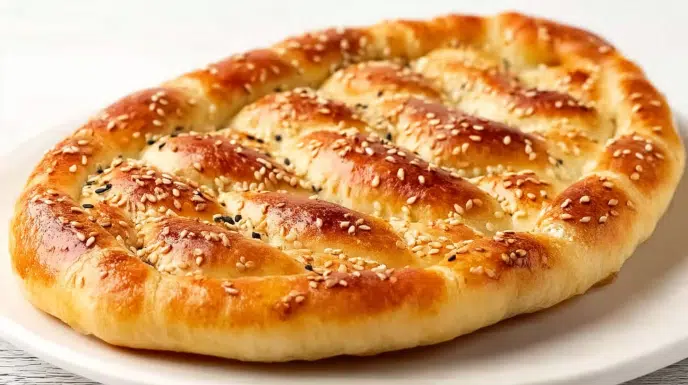
Turkish pide flatbread, ramazan pidesi is the round, soft, deeply golden yeasted flatbread that appears at every table during Ramadan in Turkey and at bakery windows all year round. It is not the same as the boat-shaped filled pide you might already know from Turkish restaurants, it is something quieter and more fundamental than that.
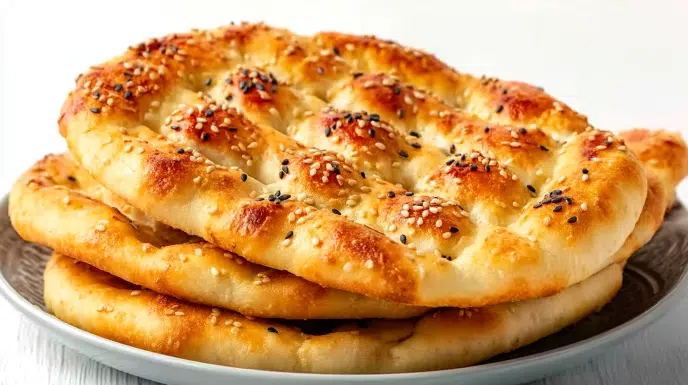
A wide, soft round of yeasted dough with a glossy egg-washed crust, a pressed diamond pattern across the surface, and a scattering of sesame seeds and nigella seeds that toast in the oven and perfume every piece you tear off. Eaten warm beside a bowl of soup, with mezze, with olive oil and cheese, or simply on its own while it is still hot from the oven.
The dough is genuinely no-knead, wetter than most bread doughs, mixed in one bowl and left to rise with a single stretch-and-fold midway through. No stand mixer, no lengthy kneading, no special equipment. A hot oven and a bit of patience with the rise times are the only requirements.
Ingredients
The dough
- 3 cups (360g) all-purpose flour, plain flour works well here; the slightly lower protein content than bread flour gives pide its characteristic soft, open-textured crumb
- 1 teaspoon instant yeast, instant yeast goes directly into the flour without pre-activating. If using active dry yeast, dissolve in the warm water first and wait 10 minutes for bubbles before adding to the flour.
- 1 teaspoon sugar, feeds the yeast and adds a very faint background sweetness to the dough
- 1 teaspoon fine salt
- 1 cup (240ml) warm water, 36–40°C / 98–105°F. Test on your inner wrist, it should feel comfortably warm, not hot. Too hot kills the yeast; too cold slows the rise dramatically.
- 2 tablespoons whole milk, adds richness and helps the crust brown more evenly
- 2 tablespoons olive oil, for the dough and for greasing the bowl
Egg wash and topping
- 1 egg, beaten with 1 tablespoon milk, the egg wash is what gives ramazan pidesi its characteristic deep golden gloss. Applied generously just before the seeds go on.
- 1 tablespoon white sesame seeds
- 1 tablespoon nigella seeds (black onion seeds / kalonji), the defining topping of ramazan pidesi alongside the sesame. Nigella seeds are peppery, faintly onion-like and slightly bitter, they contrast beautifully with the mild bread. Available at Middle Eastern, Indian and Turkish grocery stores and online. If unavailable, use all sesame seeds.
To finish
- 1 tablespoon butter, brushed over the hot flatbread immediately out of the oven while still on the tray. This keeps the crust soft rather than hardening as it cools.
Step by step
- Make the dough. In a large bowl, whisk together the flour, instant yeast, sugar and salt. Add the warm water, milk and olive oil. Mix with a spatula or your hands until no dry flour remains and a shaggy, slightly sticky dough forms. It will be wetter than a regular bread dough, this is correct. Do not add more flour. The wet dough is what gives pide its characteristic soft, open crumb. A stiffer dough produces a denser result. If the dough feels too wet to handle, wet your hands rather than flouring them, water does not change the dough’s hydration the way flour does.
- First rise, 1 hour. Drizzle a little olive oil over the dough, cover the bowl tightly with cling film or a damp kitchen towel, and leave in a warm place for 1 hour until the dough has roughly doubled in size. A warm place for rising: an oven with just the light on, a spot near a radiator, or the top of a fridge. If your kitchen is cold, the rise will take longer, up to 90 minutes is fine. The dough should look noticeably puffed and airy when ready, not flat.
- Stretch and fold. After the first rise, wet your hands. Reach under one side of the dough, pull it up as far as it will stretch without tearing, and fold it over the centre. Turn the bowl 90 degrees and repeat. Do this four times around the bowl. Cover and leave to rest for 10 minutes.
- Divide and shape. Lightly oil a large baking tray or two medium ones. Divide the dough into two equal portions. With oiled hands or on a very lightly floured surface, gently stretch each portion into a round disc about 25–28cm in diameter and roughly 1.5cm thick. Don’t roll with a rolling pin, use your hands to stretch gradually from the centre outward. Transfer to the prepared baking tray.
- Second rise, 30 minutes. Cover loosely with cling film and leave in a warm place for 30 minutes. The rounds will puff slightly and feel pillowy to a very gentle touch. Meanwhile, preheat your oven to 450°F / 230°C with a baking stone or heavy baking tray on the middle rack, the hot surface helps the base crisp quickly.
- Pattern, egg wash and seeds. Use your fingertips to press a deep diamond crosshatch pattern across the surface of each dough round, press firmly all the way through to the tray without tearing the dough. Create an indented border around the edge with your fingertips. Brush generously with the beaten egg and milk wash, cover every surface including the border. Scatter the sesame seeds and nigella seeds evenly over the top. The diamond pattern is the visual signature of ramazan pidesi, the indentations create the characteristic grid as the bread bakes and the puffed squares between them give the finished bread its distinctive look. Press firmly enough that the pattern remains visible after baking. Shallow presses disappear as the dough rises in the oven.
- Bake. Bake in the preheated oven for 18–20 minutes until the crust is a deep golden-amber and the seeds are toasted. The flatbread should sound hollow when tapped on the base. Remove from the oven and brush immediately with the butter while still hot.
- Serve warm. Ramazan pidesi is best eaten within 20–30 minutes of coming out of the oven while the crust is still soft and the interior still steaming. Tear rather than cut, it is bread made for sharing at the table.
Ramazan pidesi and its place in Turkish food culture
Ramazan pidesi is one of the most culturally significant breads in Turkish food tradition. During Ramadan, Ramazan in Turkish, the bread is baked in large quantities at local bakeries from sundown and distributed to families for iftar, the meal that breaks the fast at sunset. The diamond pattern and the specific combination of sesame and nigella seeds are the bread’s traditional identity, consistent across every bakery in Turkey regardless of region or variation in the dough recipe.
Outside of Ramadan, the same bread appears year-round but is often simply called pide ekmek, pide bread, rather than ramazan pidesi specifically. It is the bread that accompanies çorba soup, that sits beside a plate of beyaz peynir (white cheese) and olives at a Turkish breakfast table, and that disappears from the bread basket in minutes at any dinner where it appears fresh from the oven.
Make it your own
Claire’s note
The simplest upgrade to this bread is substituting 2 tablespoons of the water with plain yogurt, it adds a faint tang to the crumb and makes the texture marginally softer, which is a version used in many Turkish home kitchens. A sprinkle of za’atar mixed with the sesame and nigella seeds before baking adds an herbal note that works very well if you’re serving this alongside Middle Eastern dips.
The bread keeps well wrapped for one day but is best fresh, if you have leftovers, warm in a 350°F oven for 5 minutes directly on the rack and they come back to almost fresh quality. Do not microwave, it makes the crust rubbery.
Serve with
Ramazan pidesi is served alongside soups, particularly lentil soup or a rich lamb broth, and as part of a Turkish breakfast spread with white cheese, olives, cucumber and tomato. It pairs naturally with the filled boat-shaped version of pide the Turkish pide with minced lamb article covers that preparation in full.
Add Turkish pide flatbread to your weekly meal planner, mix the dough before dinner and it’s ready to bake with minimal active effort. And for more recipes, follow us on Pinterest.
Print
Turkish Pide Flatbread (Ramazan Pidesi)
- Total Time: 110 minutes
- Yield: 2 large flatbreads 1x
- Diet: Vegetarian
Description
A soft, yeasted flatbread traditionally served during Ramadan in Turkey, characterized by its golden crust and sesame seed topping.
Ingredients
- 3 cups (360g) all-purpose flour
- 1 teaspoon instant yeast
- 1 teaspoon sugar
- 1 teaspoon fine salt
- 1 cup (240ml) warm water
- 2 tablespoons whole milk
- 2 tablespoons olive oil
- 1 egg, beaten with 1 tablespoon milk (for egg wash)
- 1 tablespoon white sesame seeds
- 1 tablespoon nigella seeds
- 1 tablespoon butter (for brushing)
Instructions
- Make the dough: In a large bowl, whisk together the flour, yeast, sugar, and salt. Add the warm water, milk, and olive oil. Mix until a sticky dough forms.
- First rise: Drizzle olive oil over the dough, cover, and let rise for 1 hour until doubled in size.
- Stretch and fold: Wet your hands and fold the dough over itself four times. Cover and rest for 10 minutes.
- Divide and shape: Lightly oil a baking tray. Divide dough into 2 portions and stretch each into a round disc.
- Second rise: Cover and let the dough rise for 30 minutes.
- Pattern, egg wash, and seeds: Press a diamond pattern into each round, brush with egg wash, and sprinkle with sesame and nigella seeds.
- Bake: Bake in preheated oven at 450°F (230°C) for 18–20 minutes.
- Serve warm: Brush with butter immediately after baking and enjoy fresh.
Notes
For a tangy flavor, substitute some water with plain yogurt. Store the bread wrapped for one day, but best eaten fresh.
- Prep Time: 20 minutes
- Cook Time: 20 minutes
- Category: Bread
- Method: Baking
- Cuisine: Turkish
Nutrition
- Serving Size: 1 flatbread
- Calories: 250
- Sugar: 1g
- Sodium: 300mg
- Fat: 8g
- Saturated Fat: 1g
- Unsaturated Fat: 6g
- Trans Fat: 0g
- Carbohydrates: 36g
- Fiber: 2g
- Protein: 7g
- Cholesterol: 20mg