⏱ Soak: Overnight 🔥Cook: 1 hr 15 min 👤Serves: 6 🌿Diet: Vegan, Gluten-free
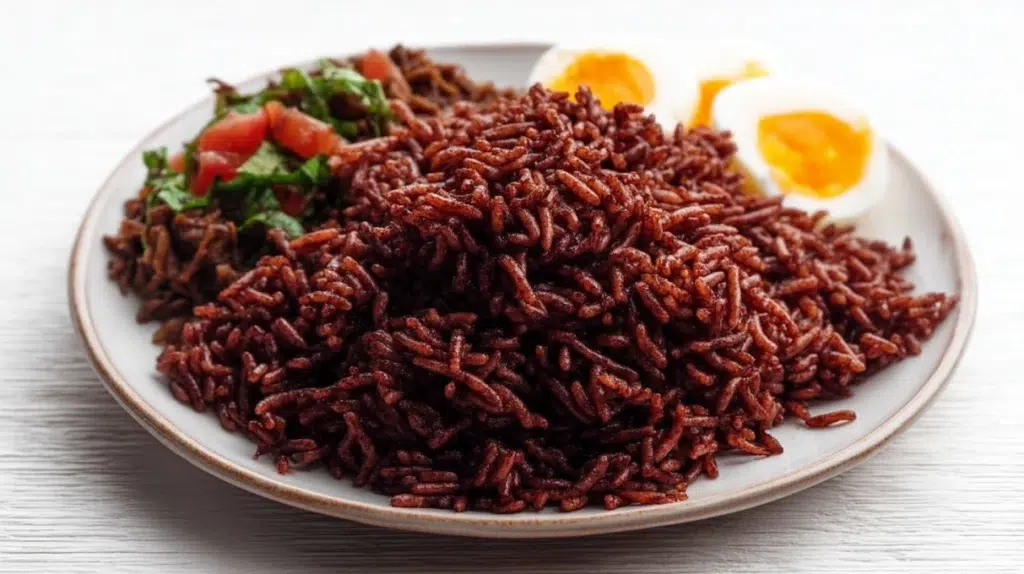
Waakye recipe, pronounced “wa-chee”, is the Ghanaian street food that has been feeding the country since dawn for generations. Black-eyed peas and jasmine rice cooked together in water colored by dried sorghum leaves until the whole pot turns a deep, gorgeous reddish-brown, then served wrapped in banana leaves with shito sauce, gari, boiled egg, fried plantains, avocado and spaghetti piled alongside. It is the most customizable, most satisfying, most visually dramatic rice dish on the African continent. And outside Ghana, almost nobody knows it exists yet.
I first had waakye at 7am from a roadside vendor in Kumasi who served it in a folded banana leaf with more toppings than I could count. I ate it standing up. I went back the next morning. And the morning after that.
What you need
For the waakye base
- 1½ cups (275g) dried black-eyed peas, soaked overnight in cold water. The overnight soak is non-negotiable, it softens the peas, dramatically reduces cooking time and ensures they cook evenly with the rice. Drain and rinse well before cooking.
- 2 cups (400g) jasmine rice, or basmati. Long-grain only, short-grain or sticky rice turns to mush before the beans finish cooking. Rinse until water runs completely clear.
- 4–6 dried sorghum leaves (waakye leaves), the single most important ingredient in this recipe. They give waakye its signature reddish-brown color and subtle earthy aroma. Available at African grocery stores, Caribbean grocery stores and Amazon. See the FAQ below for the baking soda substitute if unavailable.
- ½ teaspoon baking soda, optional. Helps the beans soften faster and deepens the color extracted from the sorghum leaves. Do not use more than this, too much baking soda makes the beans taste soapy.
- 1 teaspoon salt, added to the beans, not the rice, the beans need seasoning from the start
- 5 cups (1.2 liters) water, plus extra for boiling the beans in the first stage
Traditional accompaniments, build your plate
- Essential: Shito sauce, Ghanaian black pepper and dried fish sauce
- Essential: Gari, dry roasted cassava flakes for sprinkling
- Traditional: 1–2 hard-boiled eggs, halved
- Traditional: Cooked spaghetti, plain, lightly oiled
- Traditional: ½ avocado, sliced
- Traditional: Kelewele, Ghanaian spiced fried plantains
- Optional: Fried fish or fried chicken
- Optional: Fresh tomato and onion salad
Step by step
- Soak the beans overnight. Place the dried black-eyed peas in a large bowl. Cover with cold water by at least 3 inches, the peas will roughly double in size as they soak. Leave at room temperature for 8–12 hours. After soaking, drain completely and rinse well under cold water. The soaking water is discarded, it contains compounds that cause digestive discomfort.After soaking the peas should feel soft enough to break easily between your fingers but still hold their shape. If they still feel hard, give them another 2–3 hours.
- Prepare the sorghum leaves. Rinse the dried sorghum leaves quickly under cold water, work fast, the color begins leaching immediately on contact with water. Add the rinsed leaves to a medium saucepan with 3 cups of water. Bring to a boil and simmer for 15–20 minutes until the water turns a deep reddish-brown. This colored water is everything, it is what you will cook the beans and rice in.The longer you simmer the leaves the deeper the color of your finished waakye. For a rich dark reddish-brown simmer 20 minutes. For a lighter color 10 minutes is enough. Remove and discard the leaves after simmering, they are inedible.
- Cook the beans first. Add the soaked and drained black-eyed peas to a large heavy pot. Pour in the reddish-brown sorghum water, strain it through a sieve as you pour to remove any leaf debris. Add the baking soda and salt. Top up with additional plain water until the beans are covered by 2 inches. Bring to a boil over high heat, then reduce to a steady simmer. Cook uncovered for 30–40 minutes until the beans are tender but still holding their shape, they should yield when pressed but not be mushy.Stir occasionally and skim off any foam that rises to the surface. Check the beans at 25 minutes, the cooking time varies significantly depending on how long they were soaked and how old the dried beans are.
- Add the rice. Once the beans are tender, check the water level, there should be enough liquid in the pot to cook the rice. The ratio is approximately 1½ cups water per cup of rice. Add more water if needed. Add the rinsed jasmine rice to the pot with the beans. Stir gently once to combine. Bring back to a boil then reduce heat to the lowest setting. Cover tightly and cook for 18–22 minutes until the rice is fully cooked and all the liquid has been absorbed.Do not lift the lid during the rice cooking stage. The trapped steam is what cooks the rice evenly. Lifting the lid releases the steam and produces unevenly cooked rice.
- Rest and fluff. Remove from heat. Leave covered for 10 minutes, the resting period allows the rice to finish cooking in the residual steam and prevents the bottom layer from sticking. After 10 minutes, remove the lid and fluff gently with a fork. The waakye should be a deep reddish-brown throughout with the beans and rice evenly distributed and neither mushy nor undercooked.
- Build the plate. Scoop a generous portion of waakye onto a plate or into a bowl, traditionally into a folded banana leaf. Add accompaniments around and on top: shito sauce, a sprinkle of gari, half a hard-boiled egg, a small portion of plain spaghetti, sliced avocado and kelewele alongside. Serve immediately while the waakye is hot.There is no wrong combination of toppings. In Ghana everyone builds their plate differently and the vendor adds whatever you point at. The more toppings the more authentic the experience.
The honest note
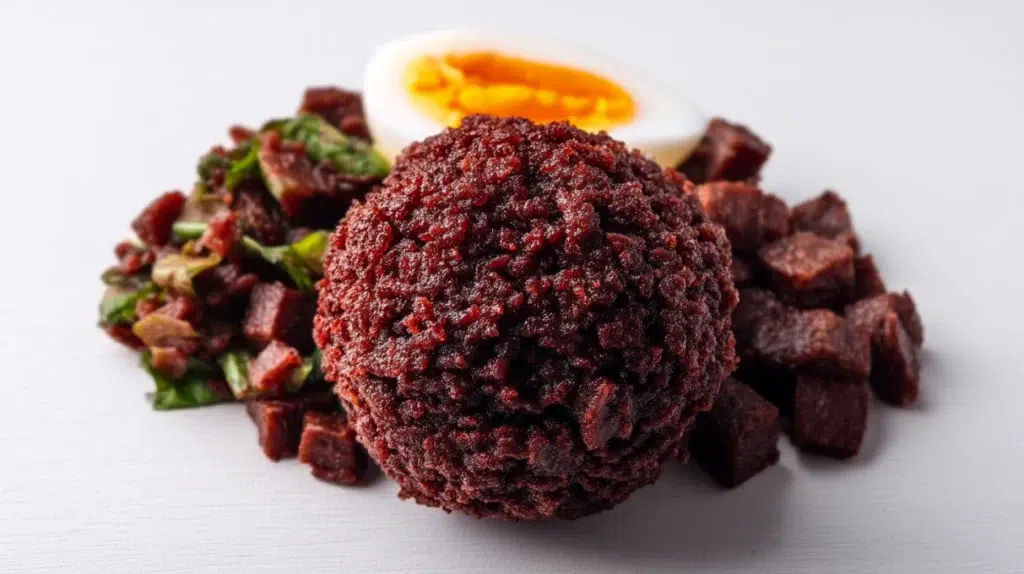
The sorghum leaves are not optional, they are the recipe. Without them you have rice and black-eyed peas, which is a perfectly good meal but it is not waakye. The leaves do two things: they color the dish the specific reddish-brown that identifies it visually across Ghana, and they add a subtle earthy, slightly tannic quality to the cooking water that flavors the rice and beans in a way nothing else replicates. Multiple sources confirm the same point, “you are not making waakye if you do not have them.” Find them at any African grocery store in the US, at Caribbean grocery stores and on Amazon, search for “waakye leaves” or “sorghum leaves” or “millet leaves.” They are inexpensive and keep for months in a sealed bag. Buy them before you plan to make this recipe, not the same day.
Make it ahead
Claire’s note
Waakye is one of the best meal-prep dishes in this entire collection. Make a large batch, it keeps refrigerated in a sealed container for 5 days and freezes for up to 3 months with no quality loss. Reheat in the microwave with a splash of water to prevent drying out, or on the stovetop over very low heat with the lid on. The flavor actually improves after a day in the fridge as the beans and rice continue absorbing the sorghum-colored cooking liquid. Shito sauce, the traditional accompaniment, keeps for weeks in the fridge and is worth making a large batch of separately. The toppings (egg, spaghetti, avocado, gari) are all assembled fresh at serving time regardless of when you made the waakye base.
Complete the meal
Waakye is the center of the plate, never the only thing on it. The traditional Ghanaian street food experience pairs it with as many of the accompaniments listed above as possible, the contrast between the soft reddish-brown rice and beans, the crispy kelewele, the spicy shito sauce and the cool avocado is what makes waakye a full sensory experience rather than just a simple rice dish. For the full picture of Ghanaian cooking and everything else in West Africa, the jollof, the soups, the stews, the complete African food collection has it all alongside the Nigerian recipes collection.
Add waakye to your weekly meal planner, soak the beans Friday night, cook Saturday morning and you have a complete meal base ready for the whole week. And for more recipes, follow us on Pinterest.
Print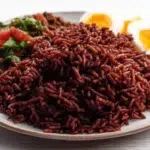
Waakye
- Total Time: 555 minutes
- Yield: 6 servings 1x
- Diet: Vegan, Gluten-free
Description
A traditional Ghanaian dish made with black-eyed peas and jasmine rice, cooked together with sorghum leaves for a distinctive reddish-brown color.
Ingredients
- 1½ cups (275g) dried black-eyed peas, soaked overnight
- 2 cups (400g) jasmine rice
- 4–6 dried sorghum leaves
- ½ teaspoon baking soda (optional)
- 1 teaspoon salt
- 5 cups (1.2 liters) water
- Shito sauce (to serve)
- Gari (to serve)
- 1–2 hard-boiled eggs, halved (to serve)
- Cooked spaghetti (to serve)
- ½ avocado, sliced (to serve)
- Kelewele (to serve)
- Fried fish or fried chicken (optional)
- Fresh tomato and onion salad (optional)
Instructions
- Soak the beans overnight in cold water, then drain and rinse.
- Prepare the sorghum leaves by rinsing, boiling in water to extract color, and simmering for 15–20 minutes.
- Cook the beans by adding them to a pot with the reddish-brown sorghum water, baking soda, and salt.
- Add the rinsed jasmine rice once the beans are tender, and cook covered for 18–22 minutes.
- Rest the rice and beans covered for 10 minutes after cooking.
- Build the plate with waakye and accompaniments like shito sauce, gari, boiled eggs, spaghetti, avocado, and kelewele.
Notes
Sorghum leaves are essential for this dish. Make larger batches for meal prep as it keeps well in the fridge and can be frozen.
- Prep Time: 480 minutes
- Cook Time: 75 minutes
- Category: Main Course
- Method: Stovetop
- Cuisine: Ghanaian
Nutrition
- Serving Size: 1 serving
- Calories: 500
- Sugar: 2g
- Sodium: 600mg
- Fat: 10g
- Saturated Fat: 1g
- Unsaturated Fat: 7g
- Trans Fat: 0g
- Carbohydrates: 80g
- Fiber: 15g
- Protein: 20g
- Cholesterol: 0mg