⏱ Marinate: 30 min 🔥Fry: 20 min 👤Serves: 4 🌿Diet: Vegan, Gluten-free
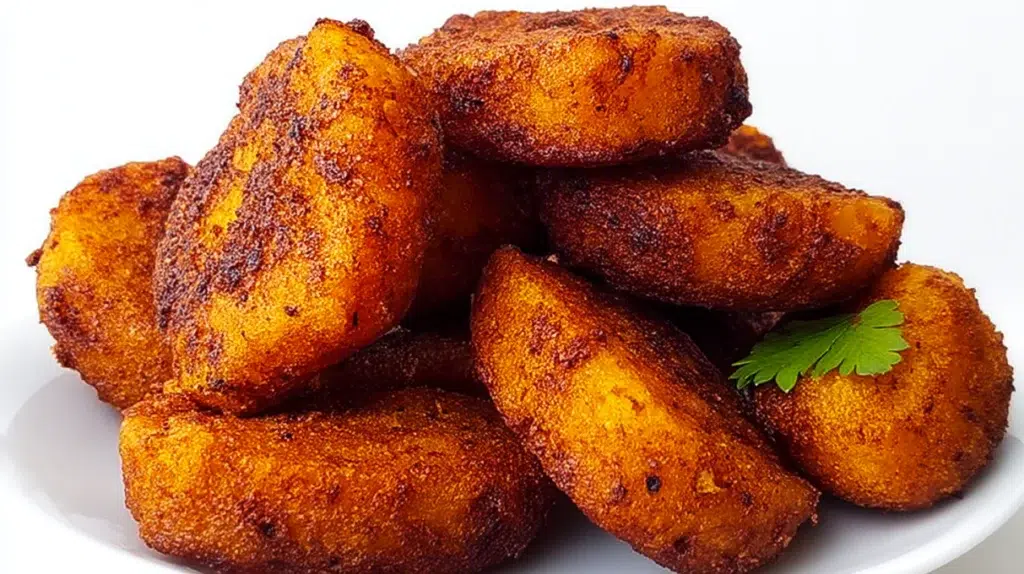
Kelewele recipe, pronounced “kay-lay-way-lay” is the Ghanaian street food that proves plantains are capable of something far more interesting than simply being fried. Ripe plantains cubed and coated in a spice paste of fresh ginger, garlic, cayenne, anise seed, nutmeg and salt, left to marinate for thirty minutes so the spices penetrate the flesh, then deep fried until the outside caramelizes into something dark, sweet, spiced and shatteringly crispy while the inside stays soft and almost jammy. Eaten hot from paper, alongside roasted groundnuts, with waakye or simply alone because nothing else is needed.
Ingredients for Kelewele
- 3 large ripe plantains, yellow with black spots, soft but not mushy. This is the critical ripeness. Too green and the plantains are starchy and bland. Too black and they are too soft, absorb too much oil and fall apart in the fryer. Yellow with significant black spotting is exactly right, sweet, firm enough to hold their shape, with enough natural sugar to caramelize against the hot oil.
- 1½ inches fresh ginger root, finely grated, or 1 teaspoon ground ginger. Fresh ginger produces a brighter, more aggressive heat. Ground ginger produces a deeper, earthier warmth. Both are authentic, street vendors use whichever is available.
- 3 cloves garlic, finely minced or grated
- ½ teaspoon cayenne pepper, adjust to heat preference. 1 teaspoon for genuinely hot kelewele. ¼ teaspoon for mild.
- ½ teaspoon anise seed powder, or anise seed ground fine in a mortar. This is the spice that makes Ghanaian kelewele taste distinctly different from any other fried plantain in West Africa. The faint licorice-sweet note against the heat and the sweetness of the ripe plantain is extraordinary. Available at African grocery stores and Amazon. Substitute: ¼ teaspoon ground star anise if anise seed powder is unavailable.
- ¼ teaspoon ground nutmeg, small amount but adds warmth and depth
- ¼ teaspoon ground cloves, optional. Adds a specific warm, slightly medicinal depth that some Ghanaian cooks include.
- ½ teaspoon salt, or to taste. Dissolve in 1 teaspoon of water before adding to ensure even distribution through the spice paste.
- 1 tablespoon fresh lime juice, optional. Adds brightness and helps the spice paste adhere to the plantain. Used in several regional Ghanaian versions.
- Vegetable oil for deep frying, enough for 3 inches depth in a heavy pot. Palm oil produces the most authentic Ghanaian color and flavor, deep golden orange with a distinct richness. Vegetable oil is an acceptable and widely used substitute.
To serve: roasted groundnuts (peanuts), the traditional Ghanaian accompaniment. The combination of hot spiced sweet plantain and cold salted peanuts is one of the great street food pairings on the African continent.
Step by step
- Make the spice paste. Combine the grated ginger, minced garlic, cayenne pepper, anise seed powder, ground nutmeg, ground cloves and salt in a large bowl. Add the lime juice if using. Stir until it forms a thick aromatic paste, it should smell extraordinary immediately. This is the entire seasoning for the kelewele, take a moment to taste it. Adjust cayenne for heat, salt to taste.The spice paste should be thick enough to coat the plantain pieces rather than running off them. If it is too dry, add 1 teaspoon of water. If too wet, the spices will wash off during frying rather than caramelizing onto the surface.
- Peel and cut the plantains. Cut off both ends of each plantain. Score the skin lengthwise and peel away. Cut each plantain in half lengthwise then cut each half into diagonal chunks, roughly 1-inch (2.5cm) pieces. Diagonal cuts produce more surface area for the spice to coat and caramelize. Uniform size is important, pieces that are significantly different in size will cook unevenly.Work quickly after cutting, ripe plantain oxidizes and darkens at the cut surfaces within minutes. Have the spice paste ready before you begin cutting.
- Coat and marinate. Add the plantain pieces to the bowl with the spice paste. Toss with clean hands until every piece is thoroughly coated on all surfaces, use your hands, not a spoon, to press the paste into the plantain flesh rather than just coating the surface. Cover and leave to marinate for 30 minutes at room temperature. This marinating time allows the spices to begin penetrating the plantain flesh rather than just sitting on the exterior.The 30-minute marinate is not optional. Kelewele fried immediately after coating tastes like spiced fried plantain. Kelewele marinated for 30 minutes tastes like the spices were cooked into the fruit from the inside. The difference is significant.
- Heat the oil. Pour vegetable oil into a heavy-bottomed pot or deep skillet to a depth of 3 inches. Heat over medium-high heat to 350°F (175°C). Test without a thermometer: drop a small piece of plantain into the oil, it should sizzle immediately and begin floating to the surface within 2–3 seconds.Oil temperature is the critical variable. Too hot and the spices burn before the plantain is cooked through, you will smell burnt ginger and see dark bitter edges. Too cool and the plantain absorbs oil and becomes greasy rather than crispy. Start at medium-high and adjust down 2–3 minutes into the first batch if the exterior is browning too fast.
- Fry in batches. Carefully lower the marinated plantain pieces into the hot oil using a slotted spoon, do not crowd the pot. Fry in batches of 8–10 pieces at a time. Cook for 5–7 minutes total, turning once halfway, until deep golden brown with darker caramelized spots at the edges. The sugar in the ripe plantain will caramelize against the oil and produce the characteristic dark edges, this is correct, not burning.Listen to the sound. The correct frying sound is an active, consistent sizzle. A very aggressive spitting sizzle means the heat is too high. A quiet, gentle bubbling means the heat is too low and the plantains are absorbing oil. Adjust between batches.
- Drain and serve immediately. Remove with a slotted spoon. Drain on paper towels for 60 seconds, no longer. Kelewele is at its absolute best within 3 minutes of leaving the oil: shatteringly crispy on the outside, soft and jammy inside, the spices vivid and hot, the sweetness of the plantain concentrated and caramelized. Serve with roasted groundnuts alongside.
What actually matters here
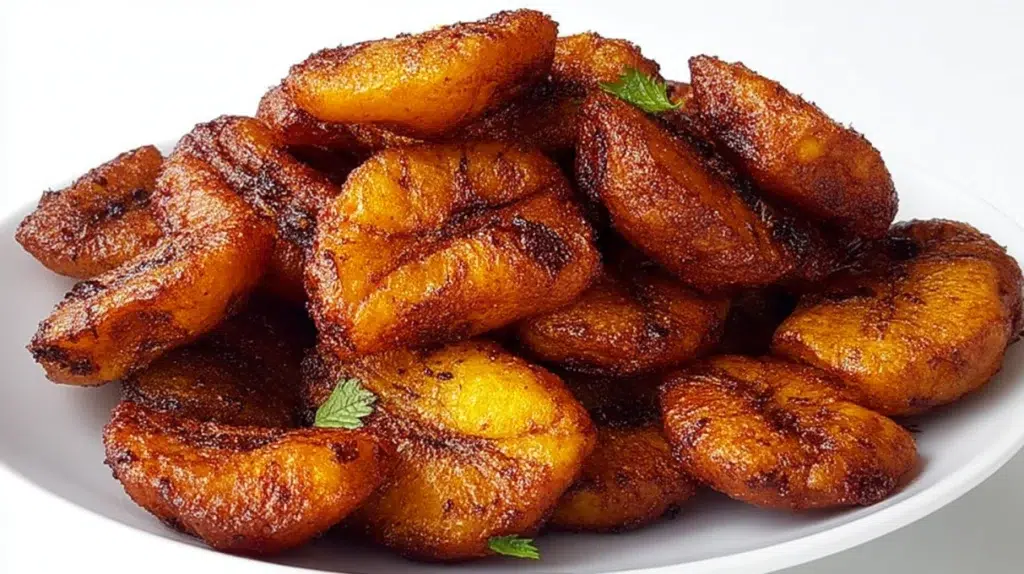
The ripeness of the plantain is the single variable that determines whether kelewele is extraordinary or merely fine. A yellow plantain with significant black spotting, at least 40–50% of the skin blackened has converted enough of its starch to sugar to caramelize properly against the hot oil. A plantain that is mostly yellow with minimal black spots is still primarily starch. It will fry into something firm, dry and slightly bitter. It will not caramelize. It will not have the specific jammy interior that defines great kelewele. The anise seed is the second most important variable, the subtle licorice note it adds is what makes Ghanaian kelewele taste unmistakably Ghanaian rather than just generic spiced fried plantain. Find it. Use it. It makes the dish.
A shortcut that works
Claire’s note
Air fryer kelewele works and produces a genuinely good result that is 70% of the way to the deep-fried version with almost no oil. Coat and marinate the plantains exactly as above. Spray an air fryer basket with oil. Add the plantains in a single layer with space between each piece. Air fry at 400°F (200°C) for 12–15 minutes, turning once at the 7-minute mark, until golden and slightly caramelized at the edges. The exterior will not achieve the same depth of caramelization as deep frying and the texture is slightly different, firmer rather than shatteringly crispy. But for a weeknight version without a pot of hot oil, it is excellent. Bake option: 425°F (220°C) on a parchment-lined tray, 20–25 minutes turning once. Similar result to air fryer.
What to eat alongside
Kelewele is the most versatile dish in Ghanaian cooking, it works as a snack, a side dish or a full meal component. The classic street food pairing is kelewele with roasted groundnuts, the combination appears on every list of essential Ghanaian food experiences and for very good reason.
On a full Ghanaian table it sits alongside waakye as one of the essential accompaniments, alongside Nigerian chicken stew or any grilled meat from the African food collection.
Add kelewele to your weekly meal planner, it takes 20 minutes active time and works as a side dish for any West African meal through the week. And for more recipes, follow us on Pinterest.
Print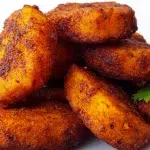
Kelewele
- Total Time: 50 minutes
- Yield: 4 servings 1x
- Diet: Vegan, Gluten-free
Description
Kelewele is a popular Ghanaian street food made from ripe plantains coated in a spicy paste and deep-fried to perfection, resulting in a crispy exterior and soft, sweet interior.
Ingredients
- 3 large ripe plantains, cubed
- 1½ inches fresh ginger root, finely grated
- 3 cloves garlic, finely minced
- ½ teaspoon cayenne pepper
- ½ teaspoon anise seed powder
- ¼ teaspoon ground nutmeg
- ¼ teaspoon ground cloves (optional)
- ½ teaspoon salt
- 1 tablespoon fresh lime juice (optional)
- Vegetable oil for deep frying
- Roasted groundnuts (for serving)
Instructions
- Make the spice paste by combining the grated ginger, minced garlic, cayenne pepper, anise seed powder, ground nutmeg, ground cloves, and salt in a large bowl. Add lime juice if using.
- Peel and cut the plantains into 1-inch diagonal chunks.
- Coat the plantain pieces with the spice paste, ensuring they are thoroughly covered, and marinate for 30 minutes.
- Heat oil in a heavy pot to 350°F (175°C).
- Fry the marinated plantain pieces in batches for 5-7 minutes until golden brown.
- Drain on paper towels for 60 seconds and serve immediately with roasted groundnuts.
Notes
Ensure the plantains are at the correct ripeness to achieve optimal sweetness and texture. Store the remaining spice paste for future use.
- Prep Time: 30 minutes
- Cook Time: 20 minutes
- Category: Snack
- Method: Deep Frying
- Cuisine: Ghanaian
Nutrition
- Serving Size: 1 serving
- Calories: 300
- Sugar: 10g
- Sodium: 450mg
- Fat: 15g
- Saturated Fat: 2g
- Unsaturated Fat: 10g
- Trans Fat: 0g
- Carbohydrates: 40g
- Fiber: 3g
- Protein: 3g
- Cholesterol: 0mg