⏱ Marinate: 2 hrs, overnight 🔥Cook: 15 min 👤Serves: 4 🌶Heat: Mild-medium
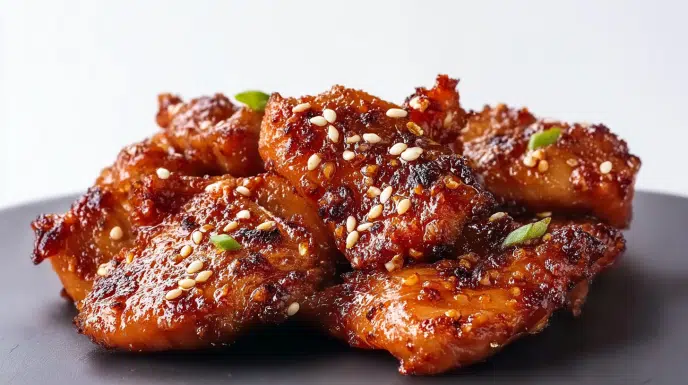
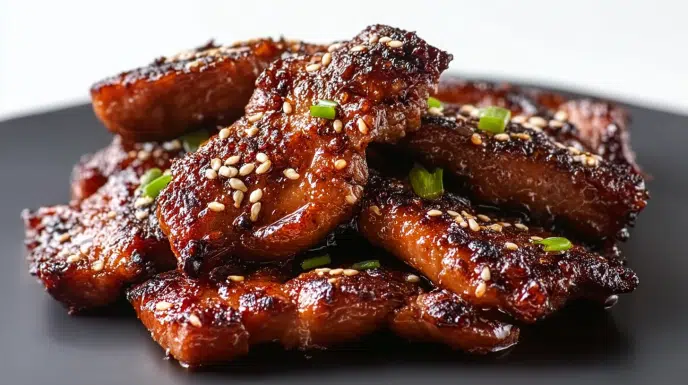
Korean chicken kalbi recipe, dak kalbi is the dish that makes you understand why Korean BBQ has spread to every city on earth that has encountered it. Boneless chicken thighs marinated in a sauce of soy sauce, gochujang, Asian pear, mirin, brown sugar, sesame oil, garlic and ginger, the pear tenderizing the meat while the sugars and gochujang build the sticky caramelized glaze that defines kalbi, then grilled or pan-seared until the outside chars and lacquers and the inside stays impossibly juicy. The marinade takes ten minutes to make. The overnight rest does everything else. The result is the kind of sticky, sweet, deeply savory grilled chicken that disappears from the table before you have finished plating.
Kalbi (갈비) traditionally refers to Korean BBQ short ribs, the beef version. Dak kalbi (닭갈비) means chicken kalbi, chicken marinated in the same galbi-style sauce and cooked the same way. Both use the same essential marinade logic: fruit for tenderness, soy for depth, sugar for caramelization, sesame for fragrance.
Ingredients
For the chicken
- 2 lbs (900g) boneless skinless chicken thighs, left whole or cut into large pieces. Thighs only, the fat content stays juicy at the high heat needed to caramelize the kalbi marinade. Breast dries out before the glaze has time to develop.
For the kalbi marinade
- ¼ cup (60ml) low-sodium soy sauce, the savory backbone of the marinade
- 2 tablespoons gochujang, adds fermented heat and body. Reduce to 1 tablespoon for a milder version. The gochujang is what separates dak kalbi from generic Korean BBQ chicken.
- 3 tablespoons brown sugar, light or dark. The sugar caramelizes against the hot grill and creates the sticky lacquered finish.
- 2 tablespoons mirin, Japanese sweet rice wine, adds a specific glossy sweetness to the glaze. Substitute: 1 tablespoon sake plus 1 teaspoon sugar.
- 1 tablespoon toasted sesame oil, adds nutty fragrance. Added to the marinade, not during cooking.
- 1 tablespoon rice vinegar, balances the sweetness and brightens the whole marinade
- ½ Asian pear, grated with all juices, the most important tenderizing ingredient in kalbi. The natural enzymes in Asian pear break down muscle fibers and produce the characteristic melt-in-your-mouth texture. Available at H Mart and Asian grocery stores. Substitute: ½ regular pear grated, or ¼ cup unsweetened pineapple juice, or ½ kiwi mashed.
- ½ small white onion, grated, adds sweetness and helps the marinade penetrate the chicken
- 5 cloves garlic, finely minced or grated
- 1 teaspoon fresh ginger, finely grated
- 2 tablespoons toasted sesame seeds
- 3 spring onions, thinly sliced, white and light green parts into the marinade, dark green parts for garnish
- ¼ teaspoon black pepper
For cooking and serving
- 1 tablespoon vegetable or avocado oil, for brushing the pan or grill grates
- Steamed jasmine rice
- Butter lettuce leaves, for wrapping
- Kimchi, essential alongside
- Extra toasted sesame seeds and spring onion greens for garnish
The method
- Make the marinade. Grate the Asian pear and white onion directly into a large bowl, include all the juice from both. Add soy sauce, gochujang, brown sugar, mirin, sesame oil, rice vinegar, minced garlic, grated ginger, sesame seeds, sliced spring onion whites and black pepper. Whisk until completely combined and the brown sugar is fully dissolved. Taste, it should be sweet, savory, slightly spicy and deeply fragrant. Adjust now.The marinade should smell extraordinary at this stage. The grated pear and onion will make it look slightly cloudy and textured, this is correct and is exactly what penetrates the chicken during marinating.
- Marinate the chicken. Add the chicken thighs to the marinade. Press and turn every piece until completely coated on all surfaces. Cover tightly and refrigerate for a minimum of 2 hours. Overnight produces the best result, 8 hours allows the pear enzymes to work fully through the thigh and the flavors to penetrate to the center rather than just the surface.Do not marinate more than 24 hours, the pear enzymes continue working and will begin breaking down the proteins too aggressively, producing a slightly mushy exterior that does not caramelize cleanly.
- Bring to room temperature. Remove the chicken from the fridge 30 minutes before cooking. Cold chicken straight from the fridge cooks unevenly, the outside caramelizes before the inside cooks through.
- Cook, grill method. Preheat an outdoor grill to medium-high heat, 400°F–450°F (200°C–230°C). Brush the grates with oil. Remove the chicken from the marinade and shake off any excess, you want a coating, not a dripping slab. Grill 6–7 minutes per side without moving until deeply golden brown with dark caramelized edges and an internal temperature of 165°F (74°C).Watch carefully, the sugar in the marinade means the chicken can go from caramelized to burnt quickly. If the outside is darkening too fast, move to indirect heat for the last few minutes.
- Cook, cast iron method. Heat a cast iron skillet over medium-high heat for 2 minutes until very hot. Add oil. Cook the chicken thighs in batches, do not crowd. 5–6 minutes per side until deeply caramelized with charred edges and 165°F internal temperature. The marinade will caramelize in the pan and produce fond, those dark sticky bits are flavor. Do not scrub them out.The cast iron method produces an extraordinary crust, arguably better than a gas grill because the radiant heat from the cast iron caramelizes the underside more aggressively than grill grates.
- Rest and slice. Transfer to a cutting board. Rest for 5 minutes, the juices redistribute and every slice stays moist. Slice across the grain into thick pieces or serve whole. The cross-section should show a deeply caramelized dark exterior with a pale, juicy interior.
- Serve. Arrange over steamed jasmine rice. Scatter spring onion greens and extra sesame seeds over the top. Serve with butter lettuce leaves for wrapping, kimchi alongside and extra gochujang for heat lovers.
What actually matters here
The Asian pear is the ingredient that separates dak kalbi from any other Korean grilled chicken recipe and understanding why changes how you cook it. Asian pear contains specific enzymes (proteases) that physically break down the muscle fibers in chicken during marinating, producing a tenderness that no amount of acid, salt or time alone can replicate. This is why kalbi has a specific melt-in-your-mouth quality that other marinades do not. The pear also contributes a subtle floral sweetness that is distinct from sugar alone. Find Asian pear at H Mart, any Korean or Asian grocery store, and increasingly at Whole Foods.
The substitute options (regular pear, kiwi, pineapple juice) all contain similar enzymes and all work, but Asian pear is the authentic choice and worth using when available.
The variation worth trying
Claire’s note
Spicy dak galbi (the Chuncheon version) adds gochugaru and extra gochujang to the marinade and is cooked in a wide skillet with cabbage, sweet potato, rice cakes (tteok) and scallions all togethern a one-pan meal where everything cooks simultaneously in the spicy sauce. To make it: add 1 tablespoon gochugaru and an extra tablespoon of gochujang to the marinade. Cook the marinated chicken in a wide pan, add 1 cup cubed sweet potato and 1 cup shredded cabbage halfway through cooking, and add pre-soaked tteok (rice cakes) in the final 5 minutes. Everything caramelizes together in the gochujang sauce. This is the Chuncheon street food version, more substantial, spicier and deeply satisfying.
Serve with
Dak kalbi is at its best served the Korean BBQ way, everyone at the table, lettuce leaves for wrapping, kimchi in the center, rice in individual bowls and the chicken on a platter in the middle. The wrap: a lettuce leaf, a piece of chicken, a smear of ssamjang or extra gochujang, a sliver of garlic and a small spoonful of rice, folded and eaten in one bite. For the complete Korean BBQ table and everything that belongs on it, the Korean BBQ guide, homemade kimchi and the full Korean recipes collection have everything.
Add Korean chicken kalbi to your weekly meal planner, marinate Sunday night, cook Monday in 15 minutes. Leftovers are extraordinary sliced over rice with a fried egg the next day. And for more recipes, follow us on Pinterest.
Print
Korean Chicken Kalbi (Dak Kalbi)
- Total Time: 135 minutes
- Yield: 4 servings 1x
- Diet: None
Description
Deliciously marinated boneless chicken thighs grilled to perfection with a sweet and savory glaze.
Ingredients
- 2 lbs (900g) boneless skinless chicken thighs
- ¼ cup (60ml) low-sodium soy sauce
- 2 tablespoons gochujang
- 3 tablespoons brown sugar
- 2 tablespoons mirin
- 1 tablespoon toasted sesame oil
- 1 tablespoon rice vinegar
- ½ Asian pear, grated
- ½ small white onion, grated
- 5 cloves garlic, minced
- 1 teaspoon fresh ginger, grated
- 2 tablespoons toasted sesame seeds
- 3 spring onions, thinly sliced
- ¼ teaspoon black pepper
- 1 tablespoon vegetable or avocado oil
- Steamed jasmine rice
- Butter lettuce leaves
- Kimchi
- Extra toasted sesame seeds and spring onion greens for garnish
Instructions
- Make the marinade: Grate the Asian pear and white onion into a large bowl. Add soy sauce, gochujang, brown sugar, mirin, sesame oil, rice vinegar, minced garlic, grated ginger, sesame seeds, sliced spring onion whites, and black pepper. Whisk until combined.
- Marinate the chicken: Add chicken thighs to the marinade, coat thoroughly, cover, and refrigerate for at least 2 hours or ideally overnight.
- Bring to room temperature: Remove chicken from the fridge 30 minutes before cooking.
- Cook using grill method: Preheat an outdoor grill to medium-high heat. Brush grates with oil and grill chicken for 6-7 minutes per side until golden brown.
- Cook using cast iron method: Heat a skillet over medium-high heat, add oil, and cook chicken in batches for 5-6 minutes per side until caramelized.
- Rest the chicken: Transfer to a cutting board and rest for 5 minutes before slicing.
- Serve: Arrange chicken over steamed jasmine rice, garnish with spring onion greens and sesame seeds, and serve with lettuce leaves and kimchi.
Notes
Use Asian pear for authentic tenderness; do not marinate for more than 24 hours. Adjust gochujang for desired spiciness.
- Prep Time: 10 minutes
- Cook Time: 15 minutes
- Category: Main Course
- Method: Grilling
- Cuisine: Korean
Nutrition
- Serving Size: 1 serving
- Calories: 350
- Sugar: 8g
- Sodium: 600mg
- Fat: 14g
- Saturated Fat: 2g
- Unsaturated Fat: 10g
- Trans Fat: 0g
- Carbohydrates: 25g
- Fiber: 1g
- Protein: 30g
- Cholesterol: 90mg