⏱ Prep: 20 min 🔥Cook: 60–75 min 👤Serves: 6–8 🌍Origin: Nigeria (Yoruba)
Nigerian tomato stew, obe ata is not a recipe. It is a skill. Once you can make it properly, you can make jollof rice, Nigerian fried rice, rice and stew, yam and stew, eba and stew, beans, plantains, essentially the entire architecture of Nigerian home cooking either contains this stew directly or is eaten alongside it. This is the pot that runs the kitchen, and the reason Nigerian cooks make it in large batches on weekends to last through the week.
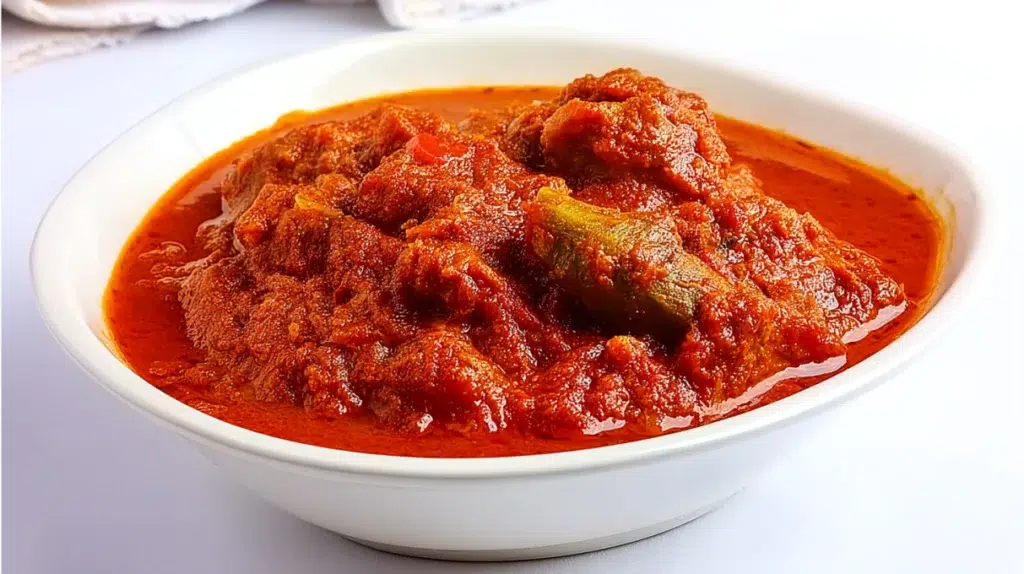
The difference between a good Nigerian tomato stew and a mediocre one is almost entirely about one thing: frying. The blended pepper base, red bell peppers (tatashe), tomatoes, scotch bonnet, onion, has to be fried in enough oil, over enough time, until every drop of water has cooked off, the raw tomato smell has disappeared completely, and the oil floats visibly back to the surface of the pot. That process takes 20–25 minutes of patient stirring. A stew that is pulled from the heat too early tastes thin, sharp, and sour.
A stew that is properly fried is deep, round, and rich in a way that makes you understand immediately why this dish has fed families across West Africa for generations.
Ingredients
For the meat
- 1 kg beef, stewing beef, chuck, or a combination of beef and tripe (shaki). Tripe absorbs the stew flavor completely and is worth seeking out at any Nigerian or African grocery store. Assorted meat (orisirisi), beef, tripe, cow skin (ponmo) and beef liver together is the full traditional version and the most flavourful.
- 1 medium onion, sliced, for cooking the meat
- 2 seasoning cubes
- 1 teaspoon curry powder
- 1 teaspoon dried thyme
- Salt to taste
- Water to cover
For the pepper blend
- 4 medium fresh tomatoes, or 400g canned chopped tomatoes; fresh tomatoes give a brighter result but canned works well
- 3 large red bell peppers (tatashe), deseeded and roughly chopped, tatashe is the sweet red bell pepper that gives obe ata its colour, body and sweetness. It is what distinguishes this stew from a purely tomato-based sauce. Available at African grocery stores; substitute with any red bell pepper.
- 2–4 scotch bonnet peppers, adjust to heat preference. 2 scotch bonnets gives a warm, present heat; 4 gives a serious kick. Substitute with 1–2 habaneros.
- 1 large onion, roughly chopped, half goes into the blend, half is sautéed in oil before adding the blend
For the stew
- 150–200ml vegetable or sunflower oil, this seems like a lot. It is correct. The stew must fry, not boil. The excess oil can be decanted after cooking and stored in the fridge, it will be deeply flavoured and excellent for the next batch of jollof rice.
- 2 additional seasoning cubes
- 1 teaspoon curry powder
- 1 teaspoon dried thyme
- Salt to taste
- Reserved meat stock from cooking the beef
Step by step
- Season and cook the meat. Place the beef (and tripe if using) in a pot. Add the sliced onion, seasoning cubes, curry powder, thyme and salt. Pour in enough water to just cover. Bring to a boil, then reduce to a steady simmer and cook until the meat is completely tender, 30–45 minutes for beef, longer for tripe which needs at least 45–60 minutes. Tripe is ready when it is soft enough to cut easily with a spoon. Drain, reserving all the stock. Set the meat aside. Season the meat generously before cooking, the seasoning absorbed during this stage is part of the final flavour of the stew. Taste the stock before using it; it should be well-seasoned and flavourful on its own.
- Optional: fry the meat. For a stew with extra depth, heat a few tablespoons of oil in a separate pan and fry the cooked beef pieces until lightly browned on the outside. This is not essential but adds another layer of flavour and helps the meat hold its texture in the stew rather than becoming soft and indistinct. Set aside again.
- Make the pepper blend. Add the fresh tomatoes, red bell peppers, scotch bonnet and half the chopped onion to a blender. Blend until completely smooth. If using canned tomatoes, drain most of the liquid first.
- Pre-cook the blend. Pour the blended pepper mix into a pot and bring to a boil over medium heat. Boil uncovered for 10–15 minutes, stirring occasionally, until the volume reduces by about a third. This pre-cooking step drives off a significant amount of water before the blend meets the hot oil, which prevents the oil from spitting violently and significantly cuts the total frying time.This step is optional but highly recommended. Skipping it means the full frying process will take 35–40 minutes instead of 20–25. Either way works; the pre-cook just makes the frying stage faster and less aggressive.
- Fry the pepper base, this is the whole recipe. Heat the oil in a large, heavy-based pot over medium-high heat. Add the remaining half of the chopped onion and sauté for 3–4 minutes until softened and beginning to colour. Add the seasoning cubes, curry powder and thyme and stir into the oil. Pour in the pre-cooked pepper blend. It will splatter stand back and use a long-handled spoon. Stir to combine.Now fry. Cook uncovered over medium heat, stirring every 2–3 minutes, for 20–25 minutes. You are watching for three things: the water to fully evaporate, the raw tomato smell to turn into a deep, cooked-down, caramelised tomato smell, and the oil to separate completely and float visibly on the surface of the stew. When all three happen, the base is ready. This is where patience matters. Pulling the stew off the heat before the oil separates produces a flat, acidic result that will not improve. Continue cooking even when it seems done, the final 5 minutes of frying are what builds the depth that makes Nigerian stew taste the way it does. Stir frequently to prevent the bottom catching.
- Add the meat and stock. Add the cooked meat to the pot and stir through the pepper base. Pour in enough of the reserved meat stock to loosen the stew to your preferred consistency, add it gradually, about 150ml at a time, and stir between additions. A good Nigerian tomato stew is thick enough to coat a spoon but pourable; it should not be so thick it sets or so thin it runs. Taste and adjust salt and seasoning cubes.
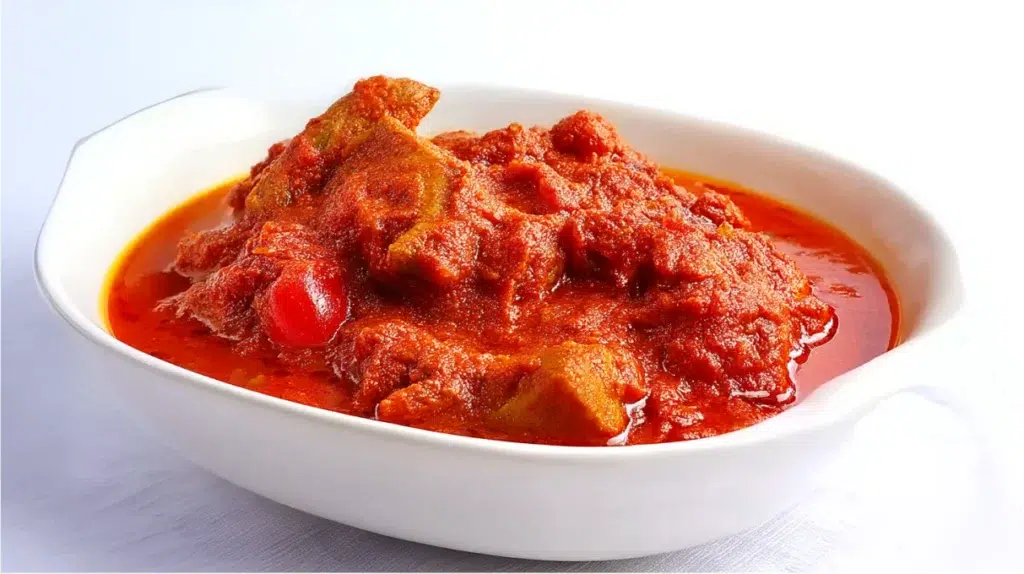
- Simmer to finish. Reduce to a gentle simmer and cook uncovered for a further 10–15 minutes until the meat is fully heated through, has absorbed the stew flavour, and the whole pot smells unified rather than separately of pepper and meat. Taste one more time. The finished stew should be rich, deeply savoury, with a visible layer of oil on the surface and a colour that is a deep brick-red rather than bright orange.
The one thing that makes or breaks this stew
Every failure in Nigerian tomato stew comes from the same place: insufficient frying. The pepper blend is mostly water when it comes out of the blender. All of that water has to cook off before the stew is finished, and the only sign that it has is the oil separating back to the surface. If you take the stew off the heat when it still smells sharp and acidic, when the oil has not separated, when the colour is still bright orange rather than deep brick-red, you will have a technically cooked but flavourlessly thin stew. Give it the time it needs.
Claire’s note
Nigerian cooks in Lagos or Kumasi or Accra would not add garlic and ginger to this base stew, the meat’s own seasoning and the pepper blend do the work, and adding garlic changes the character noticeably. I have tested it both ways. Without garlic is correct for the traditional home stew.
If you want a more aromatic version, garlic can be added to the meat during the initial cooking stage, not to the stew base itself. The buka stew version, the street food joint version common in western Nigeria, especially Yoruba bukas uses palm oil instead of vegetable oil, cooks the pot completely open the entire time, and uses proportionally more pepper than tomato.
It is a different but equally authentic stew, more intensely flavoured and deeper in colour. For that version, substitute the vegetable oil with red palm oil, reduce the tomatoes by half, and increase the tatashe and scotch bonnet accordingly.
What to do with the excess oil
After the stew has finished cooking, there will be a visible layer of oil floating on top. Do not throw it away. Spoon or pour it off into a jar, it will be richly flavoured with the pepper base, onion and spices and refrigerate it. This oil is exceptional for starting the next batch of Nigerian jollof rice, for frying eggs, for sautéing vegetables. It keeps refrigerated for at least two weeks.
Serve with
Nigerian tomato stew goes alongside steamed white rice (this is the most common pairing), over boiled yam, with eba or pounded yam, alongside beans, with boiled or fried plantain, or as the base for a second round of cooking, stir leftover stew into the pot when making Nigerian jollof rice.
For more West African and Nigerian dishes: the complete Nigerian recipes collection covers egusi soup, banga soup, Nigerian pepper soup, and puff puff.
Add Nigerian tomato stew to your weekly meal planner as a batch-cooking project, it doubles and freezes perfectly for up to 3 months. And for more recipes, follow us on Pinterest.
Print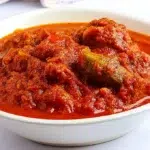
Nigerian Tomato Stew (Obe Ata)
- Total Time: 95 minutes
- Yield: 6 servings 1x
- Diet: None specified
Description
A rich and flavorful Nigerian tomato stew essential for traditional West African cooking, perfect for pairing with various dishes.
Ingredients
- 1 kg beef, stewing beef, chuck, or a combination of beef and tripe (shaki)
- 1 medium onion, sliced
- 2 seasoning cubes
- 1 teaspoon curry powder
- 1 teaspoon dried thyme
- Salt to taste
- Water to cover
- 4 medium fresh tomatoes, or 400g canned chopped tomatoes
- 3 large red bell peppers (tatashe), deseeded and roughly chopped
- 2–4 scotch bonnet peppers, adjusted to heat preference
- 1 large onion, roughly chopped (half for blending, half for sautéing)
- 150–200ml vegetable or sunflower oil
- 2 additional seasoning cubes
- 1 teaspoon curry powder
- 1 teaspoon dried thyme
- Salt to taste
- Reserved meat stock from cooking the beef
Instructions
- Season and cook the meat: Place the beef (and tripe if using) in a pot. Add the sliced onion, seasoning cubes, curry powder, thyme, and salt. Pour in enough water to just cover. Bring to a boil, then reduce to a steady simmer and cook until the meat is tender.
- Optional: Fry the meat: Heat oil in a separate pan and fry cooked beef pieces until lightly browned. Set aside.
- Make the pepper blend: Add fresh tomatoes, red bell peppers, scotch bonnet, and half the chopped onion to a blender. Blend until smooth.
- Pre-cook the blend: Pour the blended pepper mix into a pot, bring to a boil over medium heat, and boil uncovered for 10–15 minutes.
- Fry the pepper base: Heat oil in a large pot, sauté the remaining onion for 3–4 minutes, then add the seasoning cubes, curry powder, and thyme. Stir in the pre-cooked pepper blend and fry for 20–25 minutes until the oil separates.
- Add the meat and stock: Stir in the cooked meat and add reserved meat stock gradually to achieve desired consistency.
- Simmer to finish: Reduce to a gentle simmer and cook uncovered for a further 10–15 minutes, adjusting salt and seasoning as needed.
Notes
Proper frying is key to developing deep flavors; do not rush the frying stage.
- Prep Time: 20 minutes
- Cook Time: 75 minutes
- Category: Main Course
- Method: Stewing
- Cuisine: Nigerian
Nutrition
- Serving Size: 1 serving
- Calories: 500
- Sugar: 4g
- Sodium: 300mg
- Fat: 25g
- Saturated Fat: 10g
- Unsaturated Fat: 15g
- Trans Fat: 0g
- Carbohydrates: 20g
- Fiber: 5g
- Protein: 35g
- Cholesterol: 90mg