⏱ Prep: 20 min 🔥Cook: 20 min 🍬Makes: 20–25 pieces 🌿Vegan
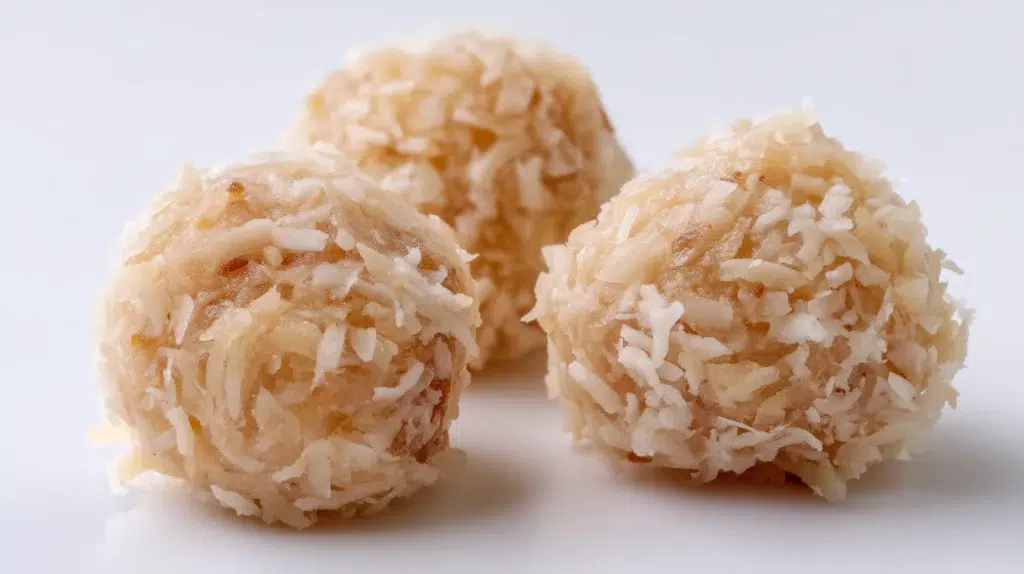
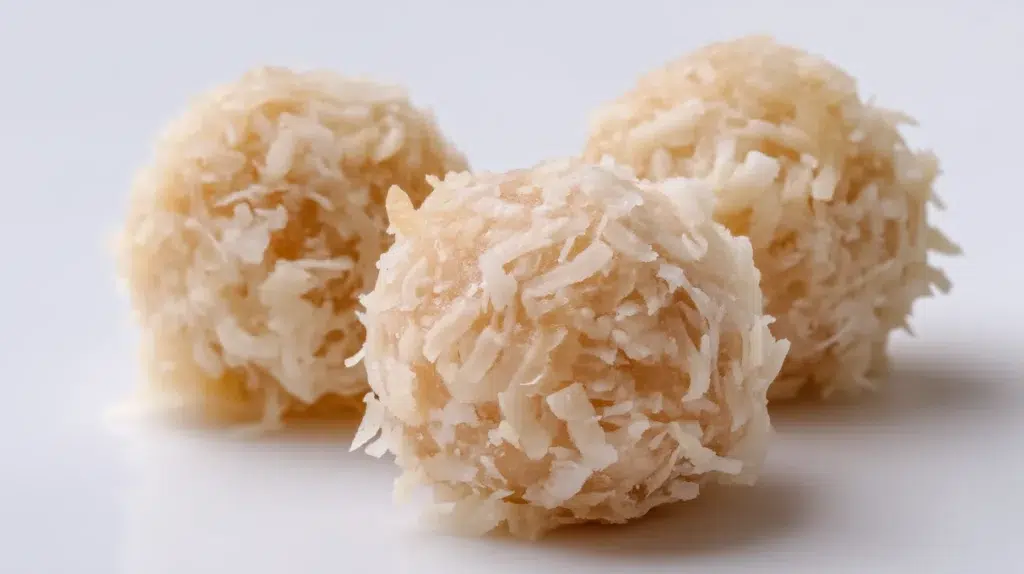
Nigerian coconut candy is fresh coconut and sugar cooked together until the sugar caramelises and the whole thing sets into a sweet, golden, slightly chewy, or fully crunchy candy. Three ingredients. Sold at markets, roadside stalls and school gates across Nigeria, wrapped in paper or plastic, disappearing within seconds of being made.
The technique is pure caramel science: sugar must reach caramelisation before the mixture is pulled from the heat. Too early and the candy never hardens, it stays sticky and soft. Too late and it burns bitter. The window between those two points is about two minutes, and the colour of the mixture is your guide.
Ingredients
- 1 medium fresh coconut (about 250g grated flesh), fresh coconut is what makes this Nigerian coconut candy rather than a generic sweet. Crack open the coconut, drain and reserve the coconut water. Remove the flesh and grate it along the length of the meat, not across it. Grating along the grain gives long, thin, fibrous strands; grating across gives a clumpy mass that doesn’t cook evenly. Desiccated coconut works as a substitute but produces a drier, less flavourful result.
- 200g (1 cup) white granulated sugar, for chewy candy. Increase to 250g for a crunchier, more brittle result. More sugar = harder candy. Less sugar = chewier candy.
- Coconut water from the cracked coconut, plus enough water to top up to 120ml, the coconut water adds flavour that plain water cannot. Pour it into the pot first; it is part of the recipe, not something to discard.
- Pinch of salt, sharpens the sweetness
- ½ teaspoon vanilla extract, optional but rounds out the caramel flavour
Step by step
- Prepare the coconut. Crack the coconut by tapping firmly around its equator with the back of a heavy knife or a hammer, rotating as you go, until it splits. Drain the coconut water into a measuring jug, reserve it. Separate the flesh from the shell using a butter knife or the tip of a spoon, working it around the edge. Peel away any dark brown skin from the flesh if you want a paler candy (optional). Grate the flesh along the grain on the medium holes of a box grater, long, thin strands, not a paste.
- Cook the sugar and liquid. Pour the coconut water into a wide, heavy-based pan. Top up with plain water to reach 120ml total liquid. Add the sugar and salt. Stir to combine. Set over medium heat and bring to a boil, stirring to dissolve the sugar. Once boiling, stop stirring, stirring a sugar syrup after boiling can cause it to crystallise.
- Add the coconut and cook down. Add the grated coconut to the boiling sugar syrup. Stir to combine. Cook over medium heat, stirring continuously, for 10–12 minutes as the liquid evaporates. The mixture will bubble actively at first, then gradually thicken as the water cooks off. Stir continuously from this point, the coconut and sugar mixture sticks and burns on the bottom of the pan if left unattended even briefly. Use a wooden spoon or silicone spatula and keep it moving.
- Watch for caramelisation, this is the critical moment. After the water has mostly evaporated (the mixture will look drier and start clumping), reduce the heat to low. Keep stirring. Within 2–4 minutes you will see the mixture begin to turn golden, from cream-coloured to pale amber. The coconut strands will start to look slightly toasted. The mixture will feel slightly grainy against the spoon as the caramel forms around each strand. Add vanilla extract if using and stir through. Pull from the heat at pale amber for chewy candy. Cook to a deeper golden amber for crunchy/brittle candy. Do not go past deep golden, burnt sugar smells acrid and tastes bitter and cannot be rescued. Once you see caramelisation beginning, you have about 90 seconds before the window closes.
- Transfer and shape immediately. Working fast, the mixture sets within minutes, scoop it onto a lightly oiled plate or tray. Use two oiled spoons or oiled hands to shape into small balls, squares or oblongs roughly the size of a large grape. Press each piece firmly to compact it. Alternatively, spread the entire mixture flat on the oiled tray and allow to cool completely, then break into irregular shards. Work quickly. The caramel continues setting as it cools and the window for shaping is short, about 3–4 minutes before it becomes too stiff to mould. Have your tray oiled and ready before the mixture goes on the heat.
- Cool completely. Leave the shaped candy to cool at room temperature for 15–20 minutes, or place in the fridge for 10 minutes to speed up setting. The pieces should be firm, golden and slightly sticky when touched, not wet, not rock hard. Store in an airtight container at room temperature for up to 1 week, or in the freezer for up to 1 month.
Claire’s note
The most common reason Nigerian coconut candy never hardens is that the sugar didn’t reach caramelisation. The mixture looks done, thick, reduced, golden-ish but if the sugar hasn’t actually caramelised, it will cool to a sticky, soft mass rather than setting firm. The colour is the only reliable test: the mixture should be visibly amber, the colour of weak tea, before it comes off the heat. If you’re not sure, cook for another 60 seconds and check again.
The second most common reason is water, the coconut was too wet (fresh coconut holds a lot of moisture) and there wasn’t enough heat to drive it all off before shaping. Cook longer than you think necessary. Also: wash the pot immediately after finishing with very hot water, cooled caramel bonds to metal and is extremely difficult to remove once it hardens.
Serve with
Nigerian coconut candy is eaten as a standalone snack, no accompaniment needed. It pairs naturally with zobo (hibiscus juice) as part of a Nigerian party spread, or alongside other Nigerian snacks like puff puff, chin chin and akara. The complete Nigerian recipes collection covers the full range of this cuisine’s snacks and sweets.
Add Nigerian coconut candy to your weekly meal planner as a batch-make treat, one batch takes 40 minutes and keeps for a week at room temperature. And for more recipes, follow us on Pinterest.
Print
Nigerian Coconut Candy
- Total Time: 40 minutes
- Yield: 20–25 pieces 1x
- Diet: Vegan
Description
A delightful Nigerian treat made with fresh coconut and sugar, resulting in a sweet, chewy candy.
Ingredients
- 1 medium fresh coconut (about 250g grated flesh)
- 200g (1 cup) white granulated sugar
- Coconut water from the cracked coconut, plus enough water to top up to 120ml
- Pinch of salt
- ½ teaspoon vanilla extract (optional)
Instructions
- Prepare the coconut. Crack the coconut by tapping firmly around its equator and drain the coconut water. Grate the flesh along the grain.
- Cook the sugar and liquid. Pour the coconut water into a pan, top with plain water to reach 120ml, add sugar and salt, and bring to a boil.
- Add the coconut to the boiling syrup and cook for 10–12 minutes, stirring continuously as the liquid evaporates.
- Watch for caramelisation. Reduce heat once mostly evaporated and keep stirring until the mixture turns golden.
- Transfer and shape the mixture immediately onto an oiled tray using oiled hands or spoons.
- Cool completely for 15–20 minutes at room temperature or 10 minutes in the fridge before serving.
Notes
Ensure the sugar reaches caramelisation for the candy to set properly. Wash the pot immediately after use to avoid caramel hardening on metal.
- Prep Time: 20 minutes
- Cook Time: 20 minutes
- Category: Snack
- Method: Cooking
- Cuisine: Nigerian
Nutrition
- Serving Size: 1 piece
- Calories: 150
- Sugar: 15g
- Sodium: 10mg
- Fat: 4g
- Saturated Fat: 3g
- Unsaturated Fat: 1g
- Trans Fat: 0g
- Carbohydrates: 30g
- Fiber: 2g
- Protein: 2g
- Cholesterol: 0mg