⏱ Prep: 10 min 🔥Cook: 45 min 👤Serves: 4 🌿Vegetarian Persian
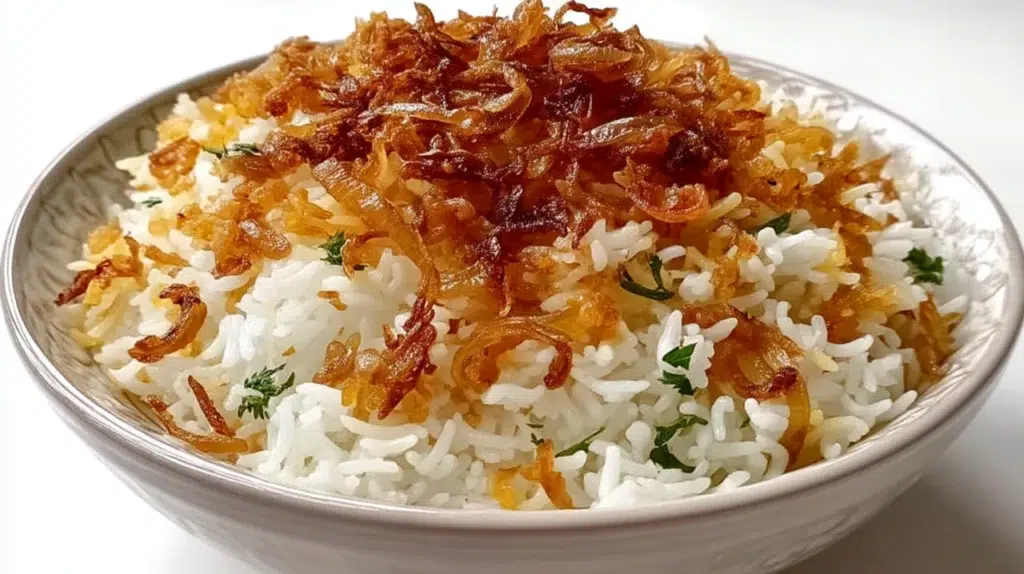
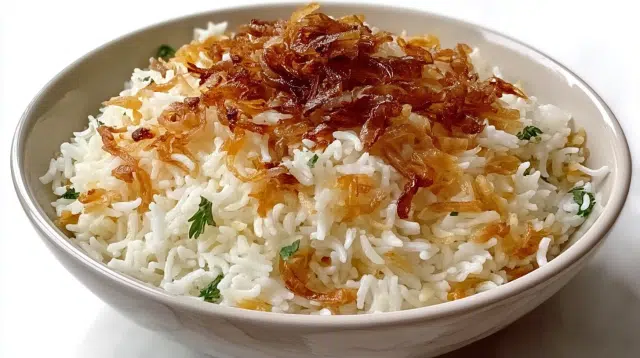
This Persian rice bowl with caramelized onion is the foundation of Iranian home cooking. Halved onions cooked in butter for 35–40 minutes until they are mahogany-dark, sweet and jammy, then piled over fragrant saffron basmati rice with zereshk (dried barberries), toasted pistachios, fresh herbs and a spoon of thick yogurt or labneh alongside. Every component is authentically Persian. The bowl format makes it a weeknight meal rather than a side dish.
The onions take patience. Thirty-five minutes on low heat with occasional stirring, not ten minutes on high, which produces pale, slightly bitter onions that taste of almost nothing. The difference between properly caramelised piyaz dagh and onion that has just been cooked is the difference between this bowl being extraordinary and being unremarkable. Everything else is straightforward.
Ingredients
For the caramelised onions (piyaz dagh)
- 4 large yellow onions (about 800g), halved and thinly sliced, yellow onions are sweeter than white and caramelise to a deeper, richer flavour. Slice as thinly and evenly as possible, thick pieces take longer and don’t soften as completely.
- 3 tablespoons unsalted butter, butter over oil for the caramelised onions. The milk solids in butter contribute to browning and add a nuttiness that oil alone cannot produce.
- 1 tablespoon neutral oil, mixed with the butter to raise the smoke point and prevent burning
- ½ teaspoon fine salt, added at the start, salt draws moisture from the onions and accelerates the caramelisation process
- ½ teaspoon ground turmeric, added halfway through cooking. Turmeric in the caramelised onion is classic Persian technique, it adds warmth, colour and a slight earthiness to the onions.
- 1 teaspoon plain flour, dusted over the onions in the final 5 minutes. Helps the strands stay separated and slightly crispy at the edges rather than clumping into a wet mass.
For the saffron rice
- 300g (1½ cups) basmati rice, rinsed until water runs clear and soaked 20 minutes, soaking is non-optional for long, separate grains. Unsoaked basmati cooks unevenly and breaks more easily.
- ¼ teaspoon saffron threads, ground with a pinch of sugar, dissolved in 3 tablespoons of hot water and steeped 10 minutes. The bloomed saffron is drizzled over the cooked rice, not cooked in it, to produce the characteristic golden patches against white grains.
- 1 tablespoon butter or ghee, stirred through the cooked rice before the saffron water is drizzled over
- Salt, the cooking water should taste well-seasoned, like pasta water
For the zereshk (barberry) topping
- 4 tablespoons zereshk (dried barberries), small, intensely tart dried berries that appear throughout Persian cooking. Available at Persian/Middle Eastern grocery stores and online. Soak in cold water for 10 minutes before using, they plump slightly and become less intensely sour. Substitute: dried cranberries roughly chopped, or pomegranate seeds for freshness.
- 1 teaspoon butter
- 1 teaspoon sugar, a small amount of sugar balances the intensity of the barberries. Do not skip, unsweetened zereshk can be overwhelmingly sour.
For the bowl
- 4 tablespoons toasted pistachios or slivered almonds, toasted in a dry pan 3–4 minutes until golden. Added just before serving, they soften quickly once on warm rice.
- Large handful fresh dill, flat-leaf parsley and/or mint, Persian cooking uses herbs abundantly. Use what you have. Dill is particularly traditional alongside saffron rice.
- 4 tablespoons thick yogurt or labneh, served alongside or spooned directly onto the bowl. The cool acidity cuts through the richness of the butter and caramelised onion.
- 1 fried egg per bowl, optional but exceptional. Fried in butter until the white is just set and the edges are golden. The runny yolk breaks into the saffron rice and caramelised onion and becomes part of the sauce.
Step by step
- Bloom the saffron. Grind the saffron threads with a pinch of sugar using a mortar and pestle. Add 3 tablespoons of hot water. Steep for 10–15 minutes. Set aside.
- Start the caramelised onions, this takes time. Melt the butter and oil together in a wide, heavy pan over medium heat. Add all the sliced onions and the salt. Stir to coat in the fat. Reduce to medium-low heat. Cook, stirring every 4–5 minutes, for 35–40 minutes total. The onions will go through stages: first they release water and become translucent (10 minutes), then they begin to soften and turn pale gold (20 minutes), then they deepen to amber and begin to look jammy (30 minutes), then they reach the dark mahogany colour and intense sweetness of fully caramelised piyaz dagh (35–40 minutes). Add the turmeric at the 20-minute mark. Dust the flour over the onions in the final 5 minutes and stir through. The only way to ruin piyaz dagh is to rush it. Medium-low heat, frequent stirring, patience. If the onions start sticking before they are deep brown, add a tablespoon of water and scrape the bottom of the pan, those stuck bits are caramelised sugar and flavour. Deglaze them back into the onions.
- Cook the rice. Bring a large pot of well-salted water to a vigorous boil. Add the soaked, drained basmati rice. Boil for 8–10 minutes until the grains are just cooked through, tender but not mushy, with a slight give when pressed. Drain immediately. Return to the dry pot or a serving bowl. Add the butter or ghee and toss gently to coat. Drizzle the bloomed saffron water over the top, do not stir it in fully. The aim is patches of golden, saffron-stained rice against white grains, not uniformly yellow rice. Drizzle the saffron water over one side or a portion of the rice rather than over the entire surface, then fold once or twice to create a natural marbled effect of golden and white grains. Full mixing produces a flat, uniform yellow colour that loses the visual contrast.
- Prepare the zereshk. Drain the soaked barberries. Melt the butter in a small pan over medium heat. Add the zereshk and sugar. Toss for 30–45 seconds until the barberries are glossy and just warmed through, no longer. They should stay plump and bright red, not shrivelled. Remove from heat.
- Fry the eggs (if using). Melt a knob of butter in a non-stick pan over medium heat. When it foams, crack in the eggs. Cook until the whites are just set with slightly crispy, golden edges and the yolks are still runny, about 2–3 minutes. Season with salt.
- Assemble the bowls. Divide the saffron rice between four bowls. Pile the caramelised onions generously over the top, they should be the dominant topping, not a garnish. Scatter the zereshk over the onions. Add the toasted nuts. Lay the fried egg on top if using. Scatter fresh herbs over everything. Add a spoon of yogurt or labneh on the side of each bowl. Serve immediately.
Claire’s note
The caramelised onions are the entire point of this bowl and they take 35–40 minutes. There is no shortcut that produces the same result. Sugar can be added to accelerate browning but it produces a cloying sweetness rather than the complex, savoury-sweet depth of properly caramelised onion. High heat produces unevenly charred, bitter onion with a raw centre.
The only method is low heat, time, and stirring. Start them first, before the rice, before everything else. By the time the rice is done and the toppings are prepared, the onions will be ready. Make a double batch, they keep in the fridge for 5 days and improve everything they touch.
Variations
With protein: Add shredded Persian saffron chicken or khoresh bademjan (Persian eggplant stew) spooned over the rice alongside the caramelised onions.
Jewelled rice version: Mix the zereshk, nuts and a handful of golden raisins directly through the rice before plating, the morasa polo (jewelled rice) approach.
Herb rice version: Fold a generous handful of finely chopped fresh dill, parsley and chives through the warm rice before adding the onions, sabzi polo style.
Serve with
Persian rice bowl with caramelised onion is a complete vegetarian meal on its own. Serve alongside Persian eggplant stew, dopiazeh aloo, or as part of a Persian spread with baba ganoush and flatbread. The full Mediterranean & Middle East collection has everything alongside it.
Add Persian rice bowl with caramelized onion to your weekly meal planner, make a double batch of caramelised onions on Sunday and use them across multiple meals throughout the week. And for more recipes, follow us on Pinterest.
Print
Persian Rice Bowl with Caramelised Onion
- Total Time: 55 minutes
- Yield: 4 servings 1x
- Diet: Vegetarian
Description
A fragrant Persian rice bowl topped with deeply caramelised onions, dried barberries, toasted nuts, and fresh herbs.
Ingredients
- 4 large yellow onions, halved and thinly sliced
- 3 tablespoons unsalted butter
- 1 tablespoon neutral oil
- ½ teaspoon fine salt
- ½ teaspoon ground turmeric
- 1 teaspoon plain flour
- 300g (1½ cups) basmati rice, rinsed
- ¼ teaspoon saffron threads
- 1 tablespoon butter or ghee
- Salt to taste
- 4 tablespoons zereshk (dried barberries)
- 1 teaspoon butter
- 1 teaspoon sugar
- 4 tablespoons toasted pistachios or slivered almonds
- Large handful fresh dill, flat-leaf parsley, and/or mint
- 4 tablespoons thick yogurt or labneh
- 1 fried egg per bowl (optional)
Instructions
- Bloom the saffron: Grind the saffron threads with a pinch of sugar using a mortar and pestle. Add 3 tablespoons of hot water and steep for 10–15 minutes.
- Start the caramelised onions: Melt the butter and oil in a wide pan over medium heat. Add sliced onions and salt. Cook on medium-low heat for 35–40 minutes, stirring every 4–5 minutes.
- Cook the rice: Bring a large pot of salted water to a boil. Add soaked basmati rice and boil for 8–10 minutes. Drain and return to the pot. Add butter or ghee and drizzle with saffron water.
- Prepare the zereshk: Drain soaked barberries. Melt butter in a small pan, add zereshk and sugar, and toss for 30–45 seconds.
- Fry the eggs if using: Melt butter in a non-stick pan, crack in eggs, and cook until whites are set and yolks are still runny.
- Assemble the bowls: Divide saffron rice in bowls, top with caramelised onions, zereshk, toasted nuts, and fresh herbs. Add yogurt or labneh and fried eggs if desired.
Notes
The caramelised onions are crucial for this dish; patience is key. Make a double batch and store leftovers for later use.
- Prep Time: 10 minutes
- Cook Time: 45 minutes
- Category: Main Course
- Method: Baking
- Cuisine: Persian
Nutrition
- Serving Size: 1 serving
- Calories: 400
- Sugar: 6g
- Sodium: 350mg
- Fat: 15g
- Saturated Fat: 5g
- Unsaturated Fat: 8g
- Trans Fat: 0g
- Carbohydrates: 50g
- Fiber: 4g
- Protein: 8g
- Cholesterol: 60mg