⏱ Prep:20 min 🔥Cook: 15 min 👤Makes: 10–12 skewers/ Serves: 4 🌡Grill: Medium-high
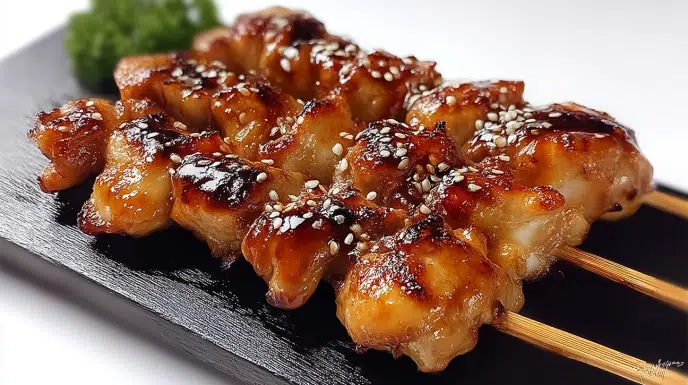
Japanese Chicken Yakitori recipe, Japan’s most beloved street food is the dish that taught me that restraint is a cooking technique. Four ingredients in the tare sauce: soy sauce, mirin, sake and sugar. Two ingredients on the skewer: chicken thigh and scallion. The technique is simply basting and turning over high heat until the tare caramelizes into a dark, lacquered glaze that clings to every surface. The result is simultaneously simple and deeply complex, the kind of food that makes you understand immediately why izakaya bars in Tokyo have been serving nothing else for a hundred years.
Yakitori literally means grilled bird. Yaki is grilled, tori is bird. The name contains the entire recipe.
Gather these first
For the tare sauce
- ½ cup (120ml) soy sauce, regular or low-sodium. Do not use dark soy sauce, it is too thick and too sweet for tare.
- ¼ cup (60ml) mirin, Japanese sweet rice wine, the defining ingredient of tare. Available at H Mart, Whole Foods and Asian grocery stores. Substitute: 2 tablespoons sake plus 2 teaspoons sugar per ¼ cup of mirin needed.
- ¼ cup (60ml) sake, Japanese rice wine. Substitute: dry sherry in equal amounts. Chinese Shaoxing wine also works.
- 2 tablespoons brown sugar or white sugar. Brown sugar adds a slight molasses depth.
- 1 clove garlic, minced, optional but adds depth. Traditional tare is garlic-free, add it for a Western adaptation.
- 1 teaspoon fresh ginger, grated, optional. Same note as garlic.
For the skewers
- 1½ lbs (680g) boneless skinless chicken thighs, cut into 1-inch (2.5cm) cubes. Thighs only, they stay juicy through the repeated basting and turning that yakitori requires. Breast dries out before the tare has time to caramelize.
- 6 scallions (green onions) white and light green parts cut into 1-inch pieces. The scallion chars alongside the chicken and becomes sweet and slightly smoky, this is negima yakitori, the most popular variation.
- 12–15 bamboo skewers, soaked in cold water for at least 30 minutes before grilling to prevent burning. Or use metal skewers.
- 1 tablespoon neutral oil for brushing the grill grates
To finish and serve
- Shichimi togarashi, Japanese seven-spice blend, sprinkled over at serving. Available at H Mart and Asian grocery stores. Optional but traditional.
- Toasted sesame seeds
- Steamed Japanese short-grain rice
Let’s cook the Japanese Chicken Yakitori
- Make the tare sauce. Combine soy sauce, mirin, sake, brown sugar, garlic and ginger in a small saucepan. Bring to a gentle boil over medium heat, stirring until the sugar dissolves completely. Reduce heat to low and simmer for 8–12 minutes until the sauce has reduced by roughly one third and coats the back of a spoon. It should be glossy, slightly syrupy and smell deeply savory and sweet.Divide the finished tare into two portions, one for basting during grilling, one reserved for serving. Never use the basting portion as a table sauce, it has touched raw or undercooked chicken during grilling.
- Soak the skewers. Place bamboo skewers in a shallow dish of cold water. Leave for 30 minutes minimum while you prepare the chicken. Dry skewers on a hot grill can catch fire and impart a burnt wood flavor to the chicken.
- Thread the skewers. Cut chicken thighs into uniform 1-inch cubes, uniformity matters for even cooking. Thread 4–5 pieces of chicken onto each skewer, alternating with 1–2 pieces of scallion between each chicken piece. The scallion sits between the chicken pieces, not at the ends where it would burn before the chicken cooks. Leave 2 inches of bare skewer at the handle end.Do not crowd the pieces too tightly, a small gap between each piece allows heat to circulate and the tare to coat all surfaces during basting.
- Heat the grill. Preheat an outdoor grill, indoor grill pan or cast iron skillet over medium-high heat. Brush the grates with neutral oil immediately before adding the skewers. The grill should be hot enough that a drop of water evaporates on contact, but not so hot that the tare burns within seconds of application.
- First cook, no sauce yet. Place the skewers on the hot grill. Cook for 3–4 minutes without touching. Flip and cook another 3 minutes. At this point the chicken should be cooked about halfway through with light browning on both sides. Do not add tare yet, adding it too early causes the sugar to burn before the chicken cooks through.This is the step most home recipes get wrong. Basting too early produces bitter, burnt tare rather than the caramelized lacquer that defines great yakitori.
- Baste and caramelize. Now brush the tare generously over one side of the skewers. Grill 1–2 minutes until the sauce caramelizes and darkens. Flip and brush the other side. Grill another 1–2 minutes. Repeat this baste-and-flip sequence 2–3 more times, each coat of tare builds the lacquered glaze that makes yakitori what it is. The chicken is done when it reaches 165°F (74°C) internally and the surface is a deep mahogany color with slightly charred edges.The final baste goes on immediately before removing from the grill, this gives the freshest, most vivid tare flavor on the finished skewer.
- Serve immediately. Arrange the skewers on a platter. Brush once more with the reserved clean tare. Sprinkle with shichimi togarashi and toasted sesame seeds. Serve alongside steamed rice with extra tare in a small dish for dipping.
The thing that makes it
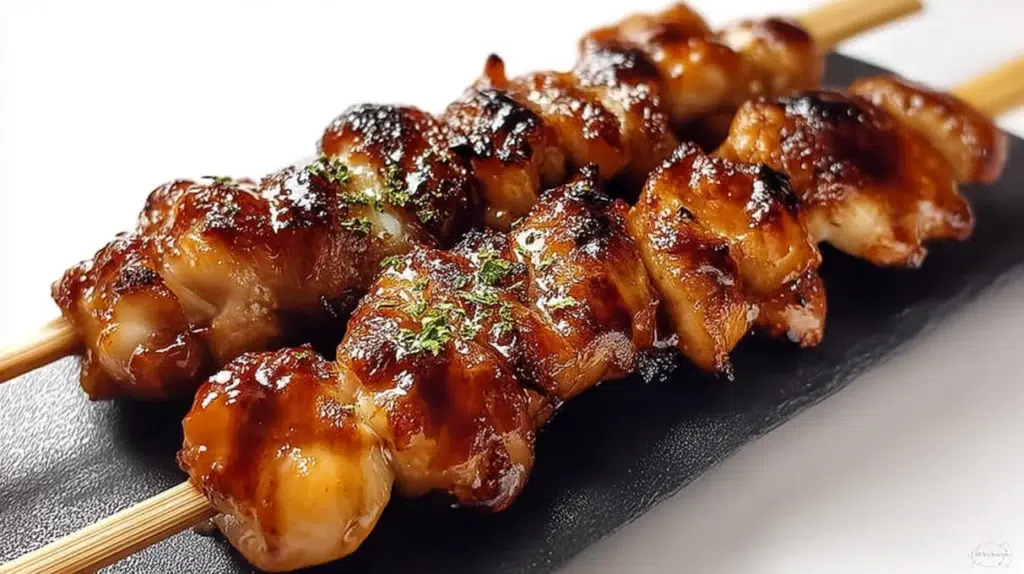
The tare is not a marinade and not a sauce in the Western sense. It is a glaze that is built up in multiple thin layers during grilling, each layer caramelizing before the next goes on, producing a lacquer of compounding depth and sweetness that no single application can replicate. This is why yakitori basted three times tastes categorically different from yakitori basted once. The technique of multiple thin glazes is called kaeshi in Japanese cooking, the same principle used in unagi (eel) glaze, in teriyaki, in any Japanese sauce that involves reduction and repeated application over heat. Apply it once and you have glazed chicken. Apply it three times with a caramelization rest between each coat and you have yakitori.
A shortcut that works
Claire’s note
The tare sauce keeps for 2 weeks in the refrigerator in a sealed jar and freezes perfectly for 3 months. Make a large batch, double or triple the recipe and you have yakitori ready in 20 minutes any night of the week. The tare also works brilliantly as a glaze for salmon, for grilled tofu, brushed over steamed rice balls (onigiri) on the grill, or as a dipping sauce for gyoza. It is one of those pantry sauces that earns its shelf space by making everything it touches significantly better. For the oven version: broil the assembled skewers at 500°F (260°C) on a wire rack for 5 minutes, flip, baste with tare, broil 4 more minutes, baste and broil a final 2 minutes. The broiler replicates the direct high heat of a grill better than any other oven method.
What to eat alongside
Yakitori is izakaya food, meant to be eaten as one of several small dishes over an extended evening rather than as a standalone main course. Serve alongside steamed short-grain rice, a bowl of miso soup, edamame sprinkled with sea salt, and quick-pickled cucumber. For the complete Japanese table, the ramen, the pantry guide and the full collection of Japanese techniques, the Japanese recipes collection has everything.
Add yakitori to your weekly meal planner, make the tare on Sunday and it keeps for two weeks. Weeknight dinner becomes a 20-minute job. And for more recipes, follow us on Pinterest.
Print
Japanese Chicken Yakitori
- Total Time: 35 minutes
- Yield: 4 servings 1x
- Diet: Gluten-Free
Description
A beloved Japanese street food featuring succulent chicken thighs and scallions grilled to perfection with a glossy tare sauce.
Ingredients
- ½ cup (120ml) soy sauce
- ¼ cup (60ml) mirin
- ¼ cup (60ml) sake
- 2 tablespoons brown sugar or white sugar
- 1 clove garlic, minced (optional)
- 1 teaspoon fresh ginger, grated (optional)
- 1½ lbs (680g) boneless skinless chicken thighs, cut into 1-inch (2.5cm) cubes
- 6 scallions (green onions), cut into 1-inch pieces
- 12–15 bamboo skewers, soaked in cold water
- 1 tablespoon neutral oil for brushing
- Shichimi togarashi for serving (optional)
- Toasted sesame seeds
- Steamed Japanese short-grain rice
Instructions
- Make the tare sauce: Combine soy sauce, mirin, sake, brown sugar, garlic, and ginger in a saucepan. Bring to a gentle boil over medium heat, stirring until dissolved. Simmer for 8–12 minutes until reduced and glossy.
- Soak the skewers: Place bamboo skewers in cold water for at least 30 minutes.
- Thread the skewers: Cut chicken into cubes and thread onto skewers, alternating with scallion pieces.
- Heat the grill: Preheat over medium-high heat and brush with neutral oil.
- Cook the skewers without sauce for 3–4 minutes, flip and cook another 3 minutes.
- Baste with tare and grill for 1–2 minutes, flip and repeat the basting and grilling process until cooked through.
- Serve immediately: Arrange skewers, brush with reserved tare, sprinkle with shichimi togarashi and sesame seeds, and serve with rice.
Notes
The tare sauce keeps for 2 weeks in the refrigerator. Can be used as a glaze for salmon or tofu.
- Prep Time: 20 minutes
- Cook Time: 15 minutes
- Category: Main Course
- Method: Grilling
- Cuisine: Japanese
Nutrition
- Serving Size: 1 skewer
- Calories: 300
- Sugar: 6g
- Sodium: 900mg
- Fat: 10g
- Saturated Fat: 2g
- Unsaturated Fat: 7g
- Trans Fat: 0g
- Carbohydrates: 30g
- Fiber: 1g
- Protein: 20g
- Cholesterol: 70mg