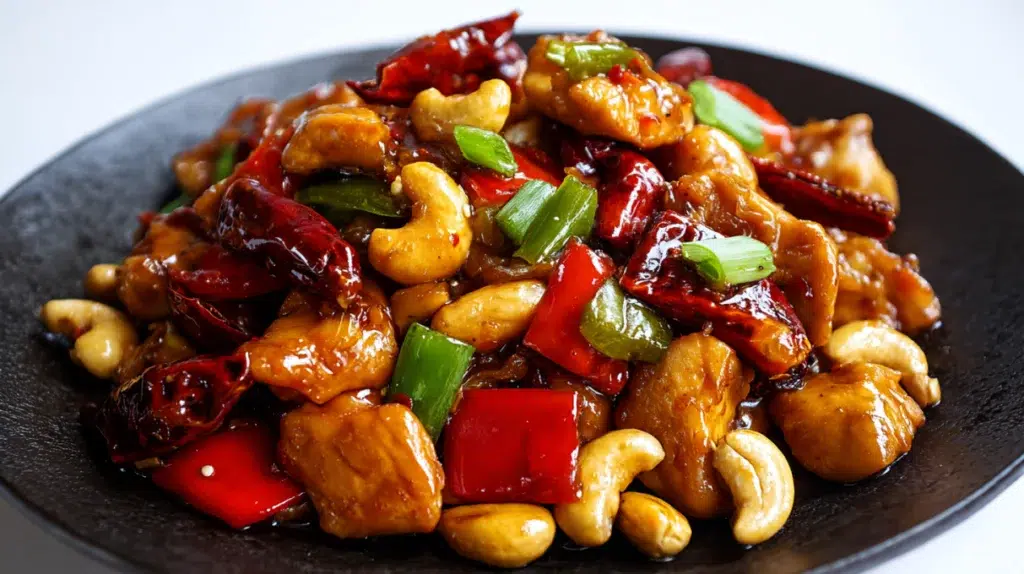
Kung pao chicken recipe is the most searched Chinese recipe in the United States, and the version most American home cooks are trying to replicate is the one from their local Chinese-American takeout: thick, sweet, glossy sauce, large chunks of chicken, heavy coating, peanuts throughout. That version is genuinely enjoyable. It is also not kung pao chicken.
The authentic dish, gong bao ji ding in Mandarin, named after a 19th-century Qing dynasty governor of Sichuan province named Ding Baozhen whose title was Gong Bao (Palace Guardian), is a dry-wok Sichuan dish. The sauce is light, just barely glossy, coating the chicken rather than drowning it. The Sichuan peppercorns produce a specific numbing sensation that fundamentally changes how the chili heat is experienced. The dried chilis char slightly in the wok before anything else is added, releasing their fragrance and adding smokiness. The peanuts are toasted and present throughout as a textural and flavor counterpoint. The whole thing cooks in under 5 minutes once the prep is done.
This is part of the Chinese recipes collection, and specifically the Sichuan recipes tradition that this dish represents at its most celebrated.
The Sichuan Context
Sichuan cuisine features a flavor profile called ma la, “numbing spicy”, that combines peppercorns and spicy chilis and is known for being very spicy and pungent. Kung pao chicken is the most internationally famous expression of this philosophy, a dish where the ma (numbing) from Sichuan peppercorns and the la (spicy heat) from dried chilis work together to produce a flavor experience that is genuinely different from simply adding chili heat.
Sichuan pepper induces a numbing, tingling sensation key to its culinary importance, a chemical compound called hydroxy-alpha sanshool causes micro-vibrations across the tongue and lips, the defining ma sensation of Sichuan cooking. This is not metaphorical, the hydroxy-alpha sanshool in Sichuan peppercorns literally activates the sensory neurons responsible for detecting touch, creating a buzzing, electrical sensation that is completely different from the burn of chili. When this numbing sensation meets chili heat, the chili feels simultaneously hotter and more interesting, the ma sensation makes the la penetrate differently.
Understanding this is what separates someone who makes kung pao chicken from someone who understands what they are making. The Sichuan peppercorns are not optional, not decorative, not interchangeable with black pepper. They are the entire point.
Authentic vs American-Chinese: The Key Differences
| Element | Authentic Sichuan | American-Chinese |
|---|---|---|
| Sauce texture | Light, barely glossy, coating | Thick, heavy, pool-forming |
| Sauce flavor | Balanced savory-sweet-vinegar | Predominantly sweet |
| Chicken cut | Small cubes, velveted | Larger chunks, breaded or plain |
| Sichuan peppercorns | Essential, prominent numbing | Usually absent |
| Dried chilis | Whole, charred, prominent | Sometimes present, often absent |
| Peanuts | Toasted, throughout | Present but often soggy |
| Cooking style | High-heat dry wok | Lower heat, sauce-dominant |
Neither is wrong in any absolute sense. They are two different dishes that share a name and a general concept. This recipe makes the authentic Sichuan version.
The Velveting Step: Non-Negotiable
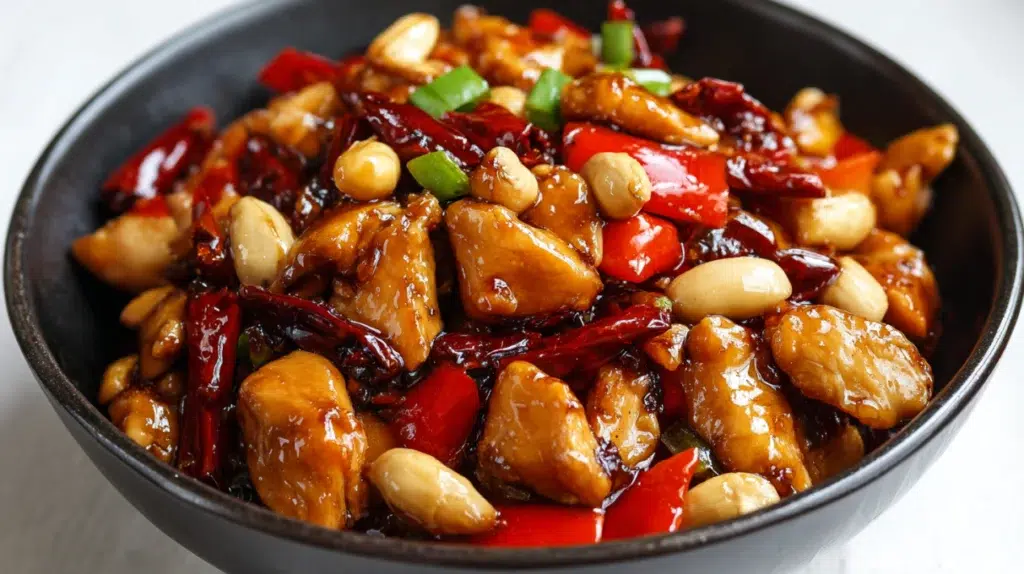
Velveting is the Chinese restaurant technique that gives chicken its characteristic silky, tender texture, and the single biggest difference between home kung pao and restaurant kung pao. The chicken is marinated in a mixture of egg white, cornstarch, shaoxing rice wine and a pinch of salt, then briefly blanched before the final stir-fry.
The cornstarch-egg white coating seals the chicken surface, preventing moisture loss when it hits the screaming hot wok. The result is chicken that stays tender and juicy despite the high-heat cooking, not dry, not tough, not chewy.
Velveting marinade:
- 1 egg white
- 1 tablespoon cornstarch
- 1 tablespoon Shaoxing rice wine (or dry sherry)
- ½ teaspoon salt
- 1 teaspoon vegetable oil
Mix, coat the chicken cubes, and rest 20-30 minutes minimum.
The Complete Kung Pao Chicken Recipe
Ingredients (serves 4)
For the chicken:
- 500g (1.1 lbs) boneless skinless chicken thighs, not breast. Thighs stay juicier at high heat and have more flavor. Cut into 2cm cubes.
- Velveting marinade (above)
For the kung pao sauce, mix together in a small bowl before starting:
- 2 tablespoons light soy sauce
- 1 tablespoon dark soy sauce
- 1 tablespoon Shaoxing rice wine
- 1 tablespoon black rice vinegar (Chinkiang vinegar), the slight sourness is key to the authentic flavor. Apple cider vinegar works as a substitute.
- 1 tablespoon sugar
- 1 teaspoon cornstarch
- 2 tablespoons water
- 1 teaspoon sesame oil
For the wok:
- 2 tablespoons vegetable oil
- 8-12 dried Facing Heaven chilis (朝天椒) or any dried Chinese red chilis, whole, seeds shaken out for moderate heat, left in for full heat
- 1 teaspoon Sichuan peppercorns, whole, lightly toasted in a dry pan for 60 seconds before using
- 4 cloves garlic, minced
- 1 thumb fresh ginger, minced
- 4 spring onions, white parts cut into 2cm lengths, green parts sliced for garnish
- 80g (⅔ cup) roasted unsalted peanuts
- 1 teaspoon cornstarch dissolved in 1 tablespoon cold water, for the final thickening if needed
Optional vegetables (add one):
- 1 medium zucchini, cut into 2cm cubes
- 1 red bell pepper, cut into 2cm squares
- 100g water chestnuts, sliced, adds a specific crunch found in many authentic versions
Method: Step by Step:
Step 1: Velvet the chicken Combine the velveting marinade ingredients. Add the chicken cubes and mix thoroughly. Marinate 20-30 minutes at room temperature. Before cooking, bring a small pot of water to a simmer (not rolling boil). Add 1 teaspoon vegetable oil to the water. Add the velveted chicken and stir gently for 60-90 seconds until just barely cooked, the chicken should look white on the outside but still very slightly pink inside. This is correct, it finishes in the wok. Drain and set aside.
Step 2: Toast the Sichuan peppercorns If you haven’t done so already, place the Sichuan peppercorns in a dry wok or skillet over medium heat for 60-90 seconds until fragrant and just beginning to smoke lightly. Do not let them burn. Remove and either leave whole or crush lightly in a mortar. The toasting unlocks their full floral, numbing character.
Step 3: Everything in order, mise en place All prep complete. Sauce mixed in a bowl. Garlic and ginger ready. Chilis ready. Peanuts out. Velveted chicken drained. Spring onion whites cut. Once the wok goes on, the dish cooks in 4 minutes.
Step 4: Char the chilis (the step most recipes rush) Heat the wok over maximum heat until smoking. Add the vegetable oil. Add the whole dried chilis immediately. Toss quickly for 20-30 seconds until they darken slightly and begin to smell toasty and fragrant, not burnt, but noticeably darker. This charring step releases the oils from the dried chilis and adds a specific smoky heat depth that you cannot achieve if the chilis just warm through without coloring.
Step 5: Aromatics Add the toasted Sichuan peppercorns, garlic, ginger and spring onion whites to the charred chilis. Toss 20-30 seconds until fragrant. Work fast.
Step 6: Chicken Add the velveted chicken. Spread across the wok surface and leave untouched for 30 seconds, let it pick up some color. Then toss continuously for 60-90 seconds until the chicken is just cooked through and picking up the chili and peppercorn flavors.
Step 7: Sauce Pour the mixed sauce around the edge of the wok (not directly onto the chicken) in a slow stream. It will sizzle immediately as it hits the hot surface. Toss everything together rapidly. The sauce will reduce and thicken from the cornstarch in about 30 seconds, it should barely coat the chicken with a light glossy film. If it thickens too much too fast, add a splash of water.
Step 8: Peanuts and finish Add the peanuts and any optional vegetables. Toss 30 seconds. The sauce should coat everything lightly, not pool at the bottom of the wok. Remove from heat immediately. The residual heat continues cooking.
Serve over steamed jasmine rice. Scatter the green spring onion tops. Serve immediately.
The Sauce Ratio: Why It Matters
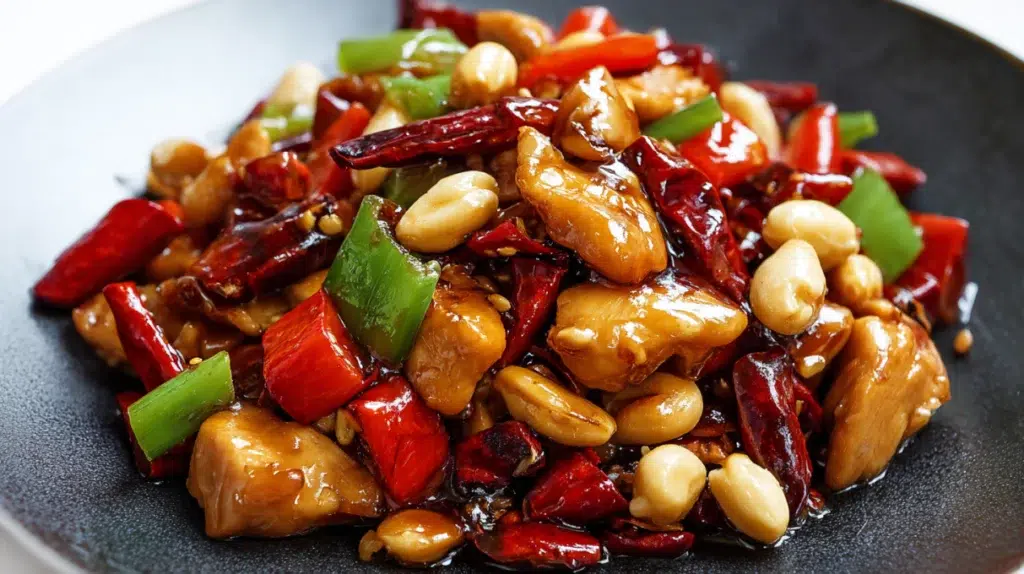
The sauce in authentic kung pao is light by design. The ratio in this recipe, 2 tablespoons light soy, 1 tablespoon each of dark soy, rice wine, vinegar and sugar, produces a sauce that coats rather than floods. The vinegar (Chinkiang black rice vinegar specifically) adds the slight sourness that cuts through the richness of the peanuts and balances the sweetness of the sugar. This balance, savory, sweet, sour, spicy, numbing is the entire dish.
The American restaurant version doubles the sugar, removes or reduces the vinegar, eliminates the Sichuan peppercorns and increases the cornstarch, producing something sweeter, thicker and much less complex. Both are real things. One is kung pao chicken.
Working With Sichuan Peppercorns
Sichuan peppercorns were banned from import into the United States from 1968 until 2004 due to citrus canker concerns, which explains why the American-Chinese version of kung pao developed without them and why many Americans have never experienced the ma sensation.
Where to buy: Chinese grocery stores, H Mart, Whole Foods (increasingly), Amazon. Buy whole peppercorns rather than pre-ground, ground Sichuan pepper loses its numbing compound within weeks of grinding.
How to use: Always toast before using (dry pan, 60-90 seconds). Use whole in the wok for fragrance and visual impact, or grind and use as a finishing seasoning. Start with less than you think you need 1 teaspoon of whole peppercorns produces a noticeable but not overwhelming ma sensation. Adjust upward as you get used to the feeling.
The first time you eat them: The numbing sensation typically builds for 2-3 minutes after eating and then fades. It is not painful, not unpleasant, and genuinely interesting. Some people find it takes a couple of exposures before they understand and enjoy it.
Frequently Asked Questions
Can I use chicken breast instead of thighs?
Breast works but is less forgiving, it dries out faster at high heat. If using breast, cut slightly larger (2.5cm) and be careful not to overcook during the velveting stage. The velveting step is even more important with breast than with thighs.
What if I can’t find Sichuan peppercorns?
The dish will still be good but it will not have the ma sensation that defines it. No direct substitute exists, black pepper, white pepper and pink peppercorns do not produce the numbing effect. If you cannot find them locally, order from Amazon.
How do I control the heat level?
Two adjustments: shake the seeds out of the dried chilis before using (seeds carry most of the heat) and adjust the number of chilis used. Start with 6-8 deseeded chilis for moderate heat. The Sichuan peppercorns do not add heat, they add the numbing sensation that changes how the heat is experienced.
What is Chinkiang vinegar?
Black rice vinegar from the city of Zhenjiang in Jiangsu province, dark, slightly smoky, malty and less sharp than white vinegar. The defining vinegar of eastern and Sichuan Chinese cooking. Available at Chinese grocery stores. Substitute: apple cider vinegar works acceptably. White wine vinegar is too sharp.
Planning your week? Add kung pao chicken to your weekly meal planner, it cooks in under 5 minutes once the velveting prep is done the night before.
More From the Chinese Recipes Collection:
- Chinese Recipes: The Complete Guide
- Chinese Fried Rice: The Technique That Works
- Dim Sum at Home: Dumplings, Buns and More
- Chinese Pantry Guide: Every Essential Ingredient
- Sichuan Recipes: Mapo Tofu, Dan Dan Noodles and More
Authentic Kung Pao Chicken
- Total Time: 35 minutes
- Yield: 4 servings 1x
- Diet: Gluten-free
Description
A traditional Sichuan dish that balances numbing spice with savory, sweet, and sour flavors, featuring velvetted chicken and toasted peanuts.
Ingredients
- 500g (1.1 lbs) boneless skinless chicken thighs, cut into 2cm cubes
- 1 egg white
- 1 tablespoon cornstarch
- 1 tablespoon Shaoxing rice wine
- ½ teaspoon salt
- 1 teaspoon vegetable oil (for marinade)
- 2 tablespoons light soy sauce
- 1 tablespoon dark soy sauce
- 1 tablespoon Shaoxing rice wine
- 1 tablespoon black rice vinegar
- 1 tablespoon sugar
- 1 teaspoon cornstarch
- 2 tablespoons water
- 1 teaspoon sesame oil
- 2 tablespoons vegetable oil (for wok)
- 8–12 dried Facing Heaven chilis, whole
- 1 teaspoon Sichuan peppercorns, lightly toasted
- 4 cloves garlic, minced
- 1 thumb fresh ginger, minced
- 4 spring onions, white parts cut into 2cm lengths
- 80g (⅔ cup) roasted unsalted peanuts
- Optional: 1 medium zucchini or 1 red bell pepper or 100g water chestnuts
Instructions
- Velvet the chicken by mixing marinade ingredients and marinating chicken for 20-30 minutes.
- Bring a pot of water to a simmer, add chicken and cook until just barely done.
- Toast the Sichuan peppercorns in a dry pan for 60-90 seconds until fragrant.
- Prepare all ingredients and have them ready before cooking.
- Char the dried chilis in a hot wok with vegetable oil for 20-30 seconds.
- Add the toasted Sichuan peppercorns, garlic, ginger, and spring onion whites. Toss until fragrant.
- Add the velveted chicken. Spread and let it color for 30 seconds, then toss.
- Pour the sauce mixture around the edge of the wok, then quickly toss everything together.
- Finish by adding peanuts and optional vegetables; toss for 30 seconds.
Notes
Serve over steamed jasmine rice for an authentic experience. Adjust the number of chilis based on desired heat level.
- Prep Time: 30 minutes
- Cook Time: 5 minutes
- Category: Main Course
- Method: Stir-frying
- Cuisine: Chinese
Nutrition
- Serving Size: 1 serving
- Calories: 400
- Sugar: 6g
- Sodium: 750mg
- Fat: 15g
- Saturated Fat: 2g
- Unsaturated Fat: 10g
- Trans Fat: 0g
- Carbohydrates: 45g
- Fiber: 4g
- Protein: 30g
- Cholesterol: 70mg