Dim sum at home is the Chinese cooking project most people want to attempt and most people feel intimidated by, and the intimidation, while understandable, is only partially justified.
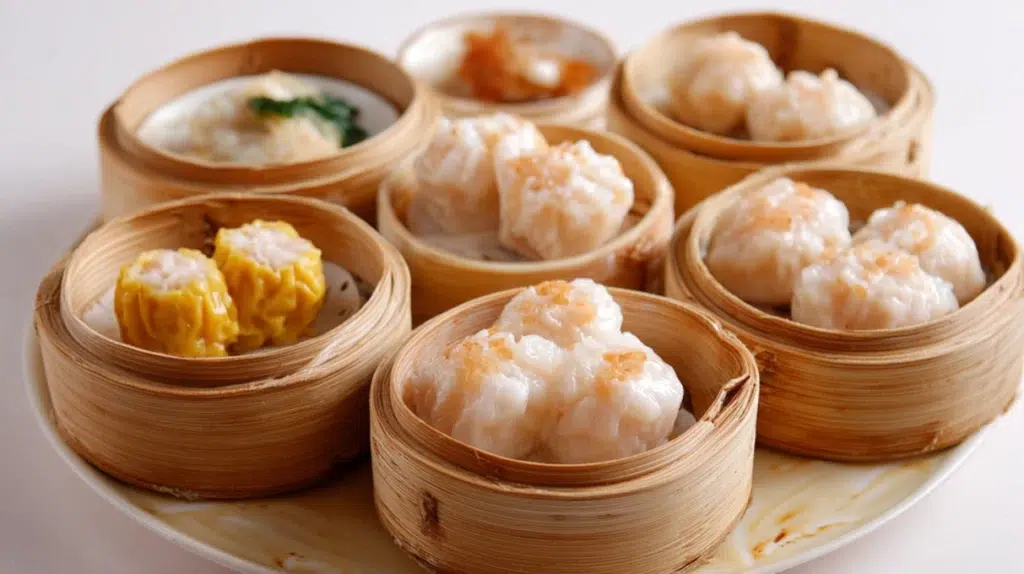
Some dim sum is genuinely demanding. Har gow (shrimp dumplings in translucent rice flour wrappers) requires a specific wheat starch dough that behaves differently from regular flour, a specific folding technique, and a bamboo steamer that produces the precise moisture and heat the wrappers need. This is not the place to start. Cheung fun (rice noodle rolls) requires a specific rice flour batter steamed in thin sheets, another specialist technique.
But potstickers (pan-fried jiaozi) require nothing more specialist than a rolling pin, a frying pan and patience with the folding. Siu mai (open-topped pork and shrimp cups) skip the folding challenge entirely because they are open at the top. Char siu bao (steamed barbecue pork buns) require a yeasted dough that is genuinely approachable. These three form the ideal home dim sum starting point.
This guide gives you all three, plus har gow once you are ready with every technique explained precisely.
This is part of the Chinese recipes collection, the most ambitious home cooking project in the collection, and the most rewarding when it works.
Table of Contents
The Yum Cha Tradition
Dim sum is thought to have originated in teahouses along the Silk Road as long ago as 2,500 years, the yum cha tradition of drinking tea with small dishes remains a weekly highlight in Guangzhou and Hong Kong. Yum cha, literally “drink tea” is the Cantonese Sunday morning ritual of gathering with family at a teahouse, selecting an endless procession of bamboo steamer baskets from rolling trolleys, drinking pu-erh or chrysanthemum tea, and spending two to three unhurried hours eating in a way that is communal, conversational and deeply pleasurable.
The principle translates perfectly to home cooking. Set the bamboo steamers going. Arrange the dishes on the table as they finish. Let people eat at their own pace, choosing what appeals. Pour tea throughout. The format, many small dishes, shared slowly is one of the most sociable ways to eat in any food culture.
Chinese dumplings are typically filled with a combination of shrimp, pork, beef and vegetables flavoured with soy, one of the most widely enjoyed categories of food across East Asia. The specific varieties in this article, har gow, siu mai, jiaozi, represent three completely different dough types, three different folding methods and three completely different results in the mouth. Understanding what makes each one distinct is the key to making all of them well.
What You Need Before Starting
Equipment:
- Bamboo steamer(s): 25cm diameter is the standard home size. Available at Chinese grocery stores for around $10. Line with parchment paper or parchment dim sum liners (sold alongside) to prevent sticking.
- Rolling pin: ideally a thin wooden Chinese rolling pin (about 30cm long, untapered). Works significantly better than a large French rolling pin for thin dumpling wrappers.
- Large heavy frying pan with a lid, for potstickers.
- Pastry brush, for the egg or water wash on bao dough.
Pantry for dim sum fillings:
- Light soy sauce, sesame oil, Shaoxing rice wine, oyster sauce, the four liquids in almost every dim sum filling
- Fresh ginger, garlic, spring onion, the aromatics
- Ground pork, raw shrimp, the proteins
1. Jiaozi: Potstickers, The Essential Chinese Dumpling
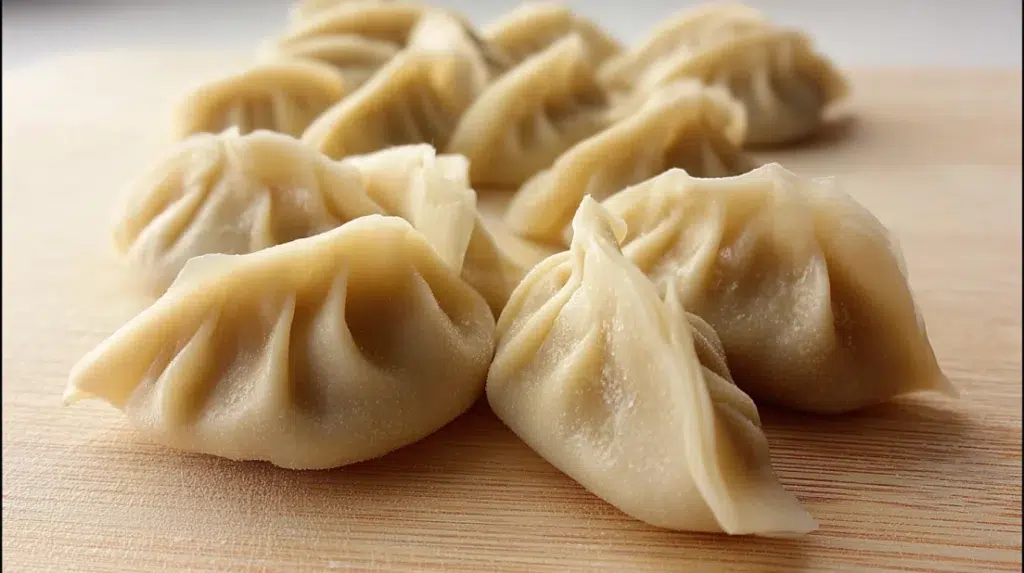
Jiaozi are the most eaten dumpling in China, served boiled, steamed or pan-fried (in which form they are called guotie, or potstickers in English). The pan-fried version is the most satisfying to make at home: crispy on the bottom from contact with the pan, soft and steamed on top from the water-and-steam finish, the filling inside perfectly seasoned and juicy.
Dumpling Dough
Ingredients (makes approximately 30 wrappers)
- 300g (2½ cups) plain flour
- 160ml (⅔ cup) just-boiled water, not boiling, not cold. The hot water partially cooks the starch, producing a softer, more pliable dough than cold water.
- Pinch of salt
Method: Combine flour and salt in a bowl. Pour the hot water in a thin stream while stirring with a chopstick or fork. When the dough is cool enough to handle, knead by hand for 8-10 minutes until very smooth and elastic, it should feel like soft playdough, not sticky. Wrap in cling film and rest 30 minutes minimum. This rest allows the gluten to relax, making rolling much easier.
Rolling: Divide dough into 3 portions. Roll each into a rope approximately 2cm diameter. Cut into 10 equal pieces. Roll each piece into a thin circle approximately 8-9cm diameter, rotating the wrapper as you roll to keep it round. The center should be very slightly thicker than the edge, this prevents the bottom from tearing when the dumpling cooks. Keep finished wrappers under a damp cloth to prevent drying.
Pork and Ginger Filling
Ingredients (fills approximately 30 jiaozi)
- 300g (10 oz) ground pork, not lean. Fat keeps the filling juicy.
- 200g (7 oz) napa cabbage, finely shredded, salt it with 1 teaspoon salt, leave 10 minutes, then squeeze every drop of water out. This step prevents the filling from becoming watery during cooking.
- 3 spring onions, finely sliced
- 1 tablespoon fresh ginger, grated
- 2 tablespoons light soy sauce
- 1 tablespoon Shaoxing rice wine
- 1 teaspoon sesame oil
- 1 teaspoon sugar
- White pepper
Mix all filling ingredients thoroughly. Stir in one direction only, this develops the protein structure and makes the filling hold together rather than crumbling. Refrigerate 20 minutes before using.
Folding Jiaozi: The Half-Moon Pleat
Place 1 heaped teaspoon of filling in the center of a wrapper. Do not overfill, the edges need bare dough to seal. Fold the wrapper in half to form a half-moon. Press the center of the seam to seal. Using your thumb and index finger, pleat the front edge of the dough toward the center, pressing each pleat firmly against the flat back edge. Work from center outward in 3-4 pleats on each side. Press the ends firmly closed. The finished dumpling should stand upright on its flat base.
If pleating is frustrating: a simple sealed half-moon with a firmly pressed seam is completely acceptable. The dumpling will taste identical.
Cooking: The Potsticker Method
Heat 2 tablespoons of vegetable oil in a heavy frying pan over medium-high heat. Add dumplings in a single layer, flat side down, without crowding. Cook undisturbed for 2-3 minutes until the bottom is deep golden brown.
Add 60ml (4 tablespoons) of cold water to the pan, it will spit aggressively. Cover immediately with the lid. Steam for 4-5 minutes until the water has evaporated and the filling is cooked through. Remove the lid for the final minute to re-crisp the bottom.
Serve immediately with dipping sauce: 2 tablespoons light soy sauce, 1 tablespoon black rice vinegar, 1 teaspoon sesame oil, 1 teaspoon finely sliced fresh chili. Mix and serve alongside.
2. Siu Mai: Open-Topped Pork and Shrimp Cups
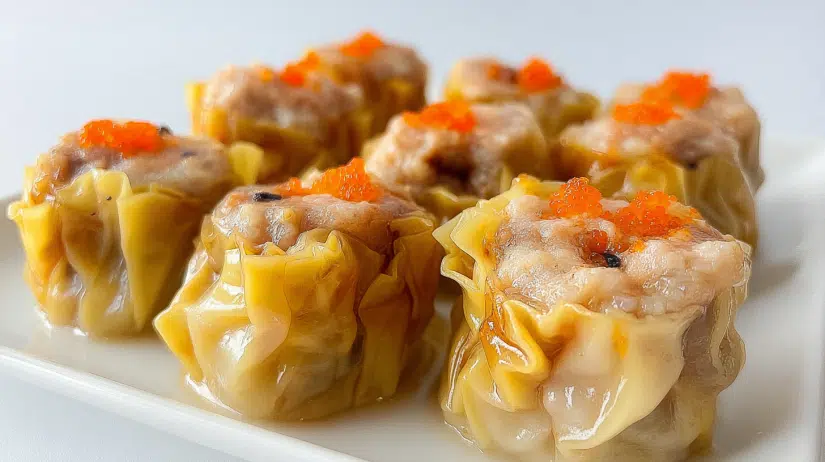
Siu mai are the most beginner-friendly dim sum, open at the top, which means no sealing, no folding challenge. The thin wrapper is simply gathered and pressed around the filling to form a cup shape. The filling is visible from the top and traditionally garnished with a single pea or small piece of carrot.
Siu Mai Wrappers
Use store-bought round wonton wrappers (available at Asian grocery stores and H Mart), thinner than jiaozi wrappers and ideal for siu mai. Or use the jiaozi dough recipe above, rolled to 7-8cm circles.
Siu Mai Filling
Ingredients (makes approximately 20 siu mai)
- 250g (9 oz) ground pork
- 150g (5 oz) raw shrimp, peeled and very roughly chopped, leave chunky for texture
- 3 dried shiitake mushrooms, soaked in hot water 20 minutes, squeezed dry and finely diced
- 2 spring onions, finely sliced
- 1 tablespoon oyster sauce
- 1 tablespoon light soy sauce
- 1 teaspoon sesame oil
- 1 teaspoon sugar
- 1 teaspoon fresh ginger, grated
- 1 tablespoon cornstarch, binds the filling and helps it hold its shape
Mix all ingredients thoroughly in one direction.
Shaping Siu Mai
Hold a wrapper flat in your non-dominant hand. Place 1 tablespoon of filling in the center. Gather the edges of the wrapper upward around the filling, pleating gently as you go, forming a cylinder with an open top. Press the filling down with a wet thumb to compact and level it. The wrapper should form a cup shape around the filling, open at the top. Press gently around the outside of the wrapper to ensure it adheres.
Garnish each siu mai with a single frozen pea or small square of carrot pressed lightly into the filling.
Cooking Siu Mai
Line a bamboo steamer with parchment paper. Place siu mai in the steamer with space between each. Steam over boiling water for 8-10 minutes until the pork is fully cooked through. Serve immediately directly from the bamboo basket.
3. Char Siu Bao: Steamed Barbecue Pork Buns
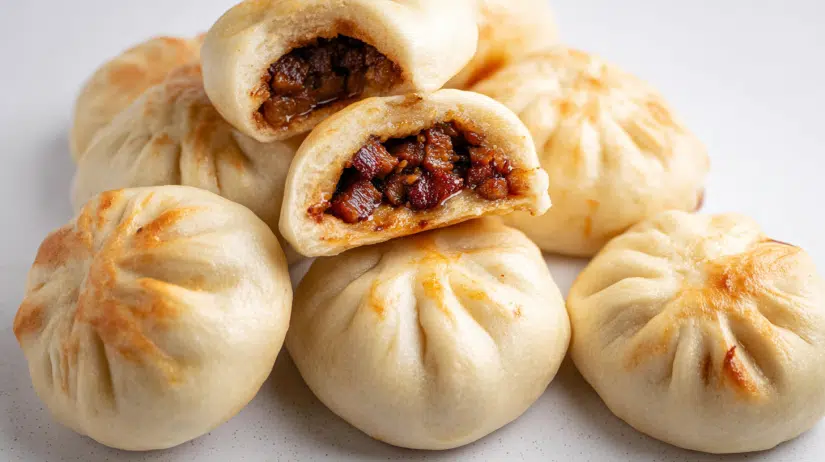
Char siu bao are the most universally loved dim sum item, soft, pillowy yeasted buns filled with sweet-savory barbecue pork. The steamed version has a smooth white exterior and is completely different in texture from the baked golden version, softer, more delicate, with a specific pillowy quality from the milk in the dough.
Bao Dough
Ingredients (makes 12 bao)
- 300g (2½ cups) plain flour plus extra for dusting
- 5g (1½ teaspoons) instant yeast
- 30g (2½ tablespoons) sugar
- ½ teaspoon baking powder, adds extra lift
- 100ml (7 tablespoons) whole milk, warm
- 80ml (5½ tablespoons) warm water
- 2 tablespoons vegetable oil
- ½ teaspoon salt
Method: Combine flour, yeast, sugar, baking powder and salt. Add warm milk, water and oil. Mix to a smooth dough. Knead 8 minutes until very smooth. The dough should feel slightly tacky but not sticky. Cover and rest in a warm place 45-60 minutes until doubled in size.
Char Siu Filling
Ingredients:
- 300g (10 oz) char siu pork, Chinese BBQ pork, available ready-made at Chinese grocery store deli counters. Or see note below.
- 2 tablespoons oyster sauce
- 1 tablespoon hoisin sauce
- 1 tablespoon light soy sauce
- 1 tablespoon sugar
- 1 teaspoon sesame oil
- 2 teaspoons cornstarch dissolved in 3 tablespoons water
Dice the char siu finely. Heat a small pan over medium heat. Add all sauce ingredients and stir to combine. Add the diced pork. Cook 2-3 minutes until the sauce thickens and coats the pork. Cool completely before using as filling.
No char siu available: Mix 300g pork shoulder (or any pork) with 2 tablespoons hoisin, 1 tablespoon honey, 1 tablespoon soy sauce, 1 tablespoon Shaoxing rice wine, and a pinch of five spice. Roast at 200°C / 400°F for 20 minutes. Cool and dice.
Shaping and Steaming Bao
Divide the risen dough into 12 equal pieces. Roll each into a circle approximately 10cm diameter, thicker in the center than the edge. Place 1 tablespoon of filling in the center. Gather the edges upward, pleating firmly with your fingers as you work around the circumference, twisting the gathered top to seal. Place each bao sealed-side down on a small square of parchment paper.
Rest 15 minutes covered: the bao should puff slightly.
Steam over boiling water for 12-14 minutes. Do not open the lid during steaming, steam loss causes the bao to collapse. After 12 minutes, turn off the heat and leave covered for 3 more minutes before opening.
4. Har Gow: For When You’re Ready to Go Further
Har gow, translucent shrimp dumplings are considered the benchmark of dim sum skill. The wrapper is made from wheat starch (not regular flour), which produces the characteristic glassy, semi-translucent appearance. They are genuinely difficult to make well. The dough tears easily. The folding requires practice. Every har gow master spends years on this one wrapper alone.
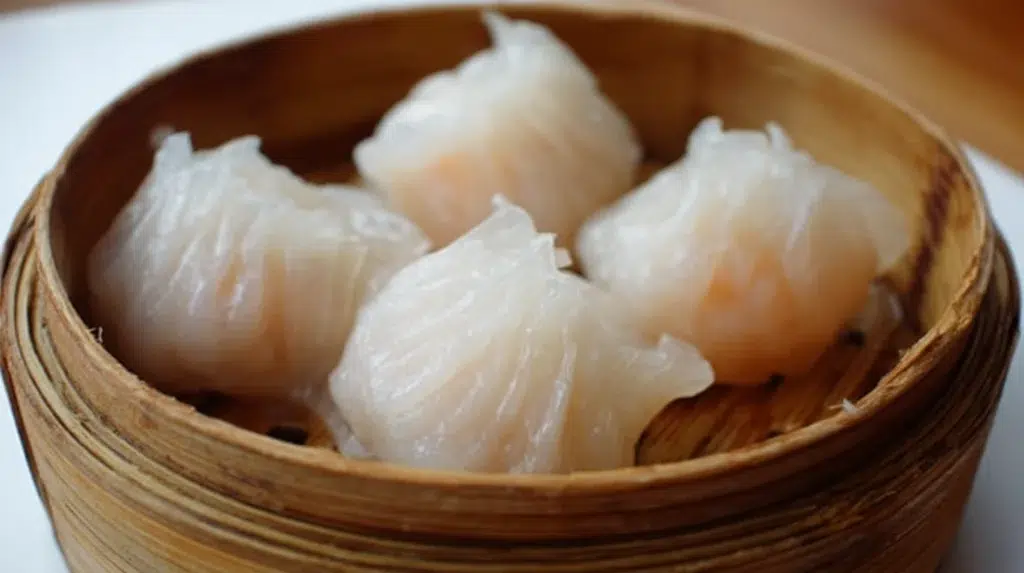
The shortcut: Buy fresh or frozen har gow from a Chinese grocery store, steam at home and serve alongside your homemade jiaozi and siu mai. There is no shame in this. Professional dim sum chefs spend their entire careers on har gow alone.
When you are ready to attempt it: The wheat starch dough is made from 150g wheat starch (not flour, wheat starch is the starch extracted from wheat, available at Chinese grocery stores) plus 50g tapioca starch and 180ml boiling water. Mix, knead briefly, rest covered 10 minutes. Roll very thin using a cleaver or flat-bottomed glass (the traditional method). Fill with a simple shrimp and bamboo shoot filling. The folding is 7-9 pleats on one side pressed against the flat other side. Steam 6-7 minutes.
The Dim Sum Table: Serving Everything Together
Dim sum is meant to be shared across the table simultaneously, not served in courses. Set out the dipping sauce in a central dish. Bring all the steamers to the table as they finish. Pour tea constantly, pu-erh is traditional and cuts through the richness, jasmine is lighter and fragrant, chrysanthemum is clean and slightly sweet.
The ideal home dim sum spread: potstickers, siu mai and char siu bao from this article, plus store-bought spring rolls crisped in the oven, store-bought rice rolls from a Chinese grocery store, and a plate of roast duck or char siu from a Chinese BBQ shop. The combination of homemade and excellent purchased items is exactly how most Hong Kong families eat dim sum at home, the point is the shared table, not that every element was made from scratch.
Frequently Asked Questions
Can dumpling wrappers be made ahead?
Yes, roll them out, dust lightly with cornstarch to prevent sticking, stack in groups of 5-6, wrap in cling film and refrigerate for up to 24 hours. Bring to room temperature before filling.
Can assembled dumplings be frozen?
Yes, the best method. Arrange on a floured baking tray without touching, freeze solid (1-2 hours), then transfer to zip-lock bags. Cook from frozen: add 2 minutes to the steaming or potsticker cooking time. Do not defrost first, they become wet and the wrapper softens before cooking.
Why did my bao deflate after steaming?
The lid was opened during steaming, causing a sudden temperature drop that collapses the dough. Always turn off heat and rest covered for 3 minutes before opening.
How do I stop dumplings from sticking to the bamboo steamer?
Line with parchment paper cut to size, or use commercial dim sum liners (pre-cut parchment circles with holes). Cabbage leaves also work. Never steam directly on unlined bamboo, the dumplings will bond permanently to the wood.
What tea should I serve with dim sum?
Pu-erh (aged fermented tea) is traditional, its earthy, slightly musty quality cuts through fatty dumpling fillings. Chrysanthemum tea is the most neutral and palate-cleansing. Jasmine is fragrant and widely enjoyed. Avoid green tea with dim sum, the grassiness clashes with the savory fillings
Planning your week? Add a dim sum Sunday to your weekly meal planner, make the filling the night before and assemble fresh on the morning.
More From the Chinese Recipes Collection:
- Chinese Recipes: The Complete Guide
- Chinese Fried Rice: The Technique That Works
- Kung Pao Chicken : The Sichuan Original
- Chinese Pantry Guide: Every Essential Ingredient
- Sichuan Recipes: Mapo Tofu, Dan Dan Noodles and More