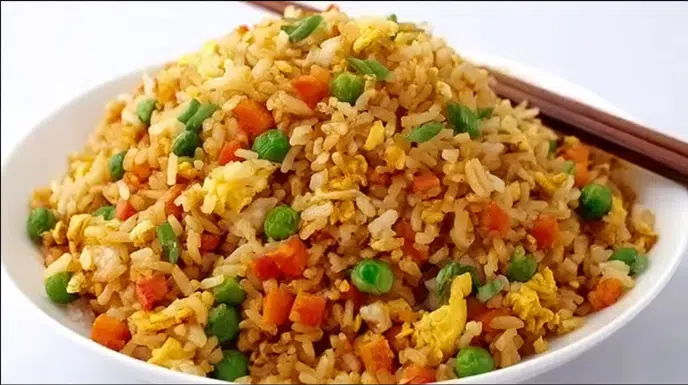
Chinese fried rice recipe searches are among the most common kitchen queries in the world, and almost every home cook has been disappointed at least once by a result that was soggy, clumped, or tasteless compared to what they were hoping for.
The reason is almost never the ingredients. Chinese fried rice has five components: rice, egg, soy sauce, aromatics and a protein or vegetable. Every kitchen in America has all of these. The reason fried rice fails at home is technique, specifically, four technique rules that are non-negotiable, that most recipes mention briefly in passing, and that this article explains precisely and completely.
Get these four things right and your fried rice will taste like the best Chinese restaurant version you have had. Miss any one of them and it will not, regardless of what ingredients you use.
This is part of the Chinese recipes collection, the weeknight dish that underpins Chinese home cooking.
The Four Rules
Rule 1: Day-Old Rice, Always
Fresh-cooked rice contains too much moisture. When it hits a hot wok, it steams rather than frying, the grains clump together, absorb oil unevenly and never develop the lightly toasted, separated character that makes good fried rice what it is. By contrast, rice that has been cooked, cooled and refrigerated overnight has lost most of its surface moisture. The starch has retrograded slightly, making each grain firmer and more distinct. When it hits the hot wok, it fries rather than steams, each grain picks up color, develops a slight toasted quality and separates easily.
The fix if you do not have day-old rice: Spread freshly cooked rice on a baking sheet in a thin, even layer and refrigerate uncovered for at least 2 hours, or freeze for 30 minutes. The rapid moisture loss partially replicates the effect of overnight refrigeration. It works, not perfectly, but well enough for the same day.
Which rice: Long-grain jasmine rice is the standard for Chinese fried rice. Its slightly fragrant quality and lower starch content produce better separation than short-grain or medium-grain rice. Cooked with slightly less water than the package suggests produces a drier, less sticky result, ideal for frying.
Rule 2: Screaming Hot Wok Before Anything Goes In
The wok has been used for some 3,000 years in China, its round bottom concentrates heat and its sloping sides allow food to be moved away from direct heat while other ingredients cook below. This 3,000-year design history is why the wok is the correct tool for fried rice. The round bottom creates an intensely hot central zone. The sloping sides create a cooler outer zone. An experienced Chinese cook uses both constantly, ingredients cooking furiously at the bottom while others rest on the sides staying warm without overcooking.
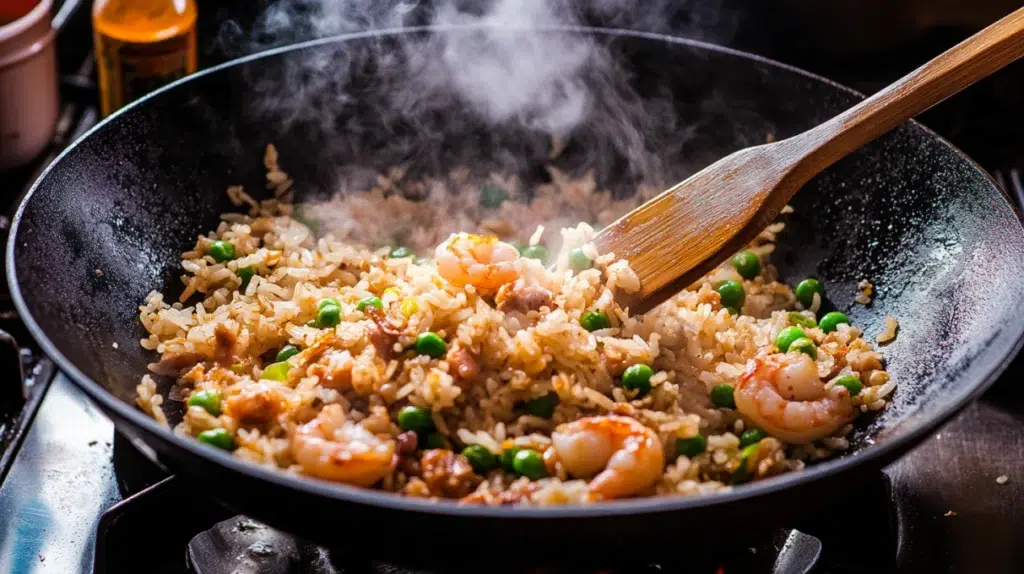
At home: heat the wok over your highest burner for 2-3 minutes before anything enters the pan. It should be visibly smoking, a thin wisp of smoke rising from the dry wok surface means the temperature is where it needs to be. Add oil only at this point, swirl to coat the entire surface, and add ingredients immediately. A wok that is not hot enough before the oil goes in will produce fried rice that sticks, stews and steams rather than frying cleanly.
No wok: A large, heavy carbon steel or stainless steel skillet (not non-stick, non-stick cannot reach or sustain the temperatures required) heated to its absolute maximum on a gas burner is the best available substitute. Results will be slightly less dramatic than a wok but genuinely good.
Rule 3: Eggs Before the Rice, Not After
The most common fried rice mistake: adding beaten egg to the pan after the rice, letting it pool around the grains and scramble in chunks. This produces recognizable egg pieces in the rice but does not coat the grains or give the rice its characteristic golden color.
The correct technique: push the rice to one side of the wok, add beaten egg to the empty hot surface, let it begin to set (10-15 seconds), then immediately fold the partially set egg into the rice before it finishes cooking. This folding action coats every grain of rice in a thin layer of egg as the egg finishes cooking. The result is rice where the egg is fully integrated rather than present as separate pieces, each grain lightly golden, the entire dish cohesive.
Rule 4: Soy Sauce Last, Drizzled Around the Edge
Adding soy sauce directly onto the rice cools the wok and steams the rice unevenly. Instead, drizzle the soy sauce around the upper edge of the hot wok (or skillet) so it runs down the hot surface before reaching the rice. The contact with the superheated metal briefly caramelizes the soy sauce, adding a toasted, slightly smoky quality to its flavor before it coats the rice. This single technique change produces a noticeably more complex, deeper flavor with the same amount of soy sauce.
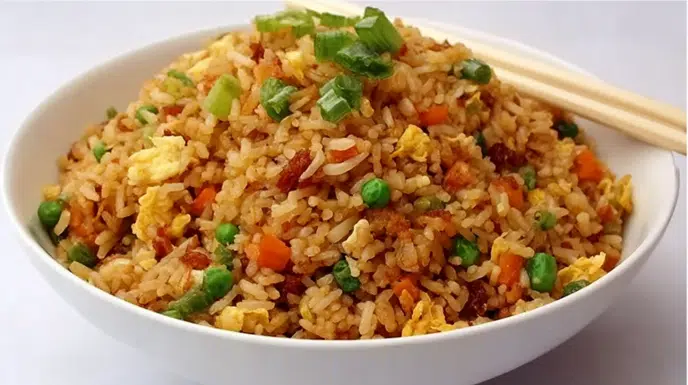
The Complete Chinese Fried Rice Recipe
Ingredients (serves 4 as a side, 2 as a main)
The rice:
- 400g (2 cups) cooked long-grain jasmine rice, day-old, refrigerated. This is approximately 150g dry rice cooked, which doubles in volume.
The eggs:
- 3 large eggs, beaten with a pinch of salt
The aromatics:
- 3 cloves garlic, finely minced
- 1 thumb-size piece fresh ginger, finely minced, optional but adds depth
- 3 spring onions, white and green parts separated, white parts for cooking, green parts for garnish
The seasoning:
- 2 tablespoons light soy sauce (生抽)
- 1 teaspoon dark soy sauce (老抽), for color. The dark soy gives fried rice its characteristic golden-brown hue. Do not use regular soy sauce for both, the dish will be too salty.
- 1 teaspoon sesame oil, added off heat at the very end, never for cooking
- White pepper, a generous pinch, the correct pepper for Chinese fried rice
The oil:
- 2 tablespoons neutral oil, vegetable, canola or peanut oil. Not sesame oil, not olive oil.
Optional protein (add one):
- 150g cooked shrimp, peeled, pre-cooked
- 150g char siu (Chinese BBQ pork), sliced
- 150g cooked chicken, shredded
- 3 strips bacon or 100g lardons, cooked crispy
Optional vegetables (add any):
- 100g frozen peas, added from frozen directly to the wok
- 100g sweetcorn kernels, fresh or frozen
- 1 medium carrot, finely diced and blanched 2 minutes
- 100g bean sprouts, added at the very end, 30 seconds only
Method: Step by Step:
Step 1: Prepare everything before the wok goes on This is not optional. Fried rice cooks in under 5 minutes at high heat. Nothing can be chopped, measured or retrieved from the refrigerator once cooking starts. Lay out: beaten eggs in a bowl, minced garlic and ginger together in a small bowl, rice broken up into individual grains with your hands (do this now, cold rice clumps and must be separated before hitting the wok), soy sauces measured and ready, spring onions separated, protein ready if using.
Step 2: Heat the wok Place the wok or skillet over the highest burner on full heat. Leave for 2-3 minutes until visibly smoking. Do not rush this step.
Step 3: Cook the protein (if using) Add 1 tablespoon of oil to the smoking wok. Add your protein and toss for 60-90 seconds until heated through and lightly charred at the edges. Remove and set aside. This separate cooking keeps the protein from overcooking during the rice stage.
Step 4: Cook the aromatics Add the remaining oil. Add the garlic, ginger and white parts of the spring onion. Stir-fry 30 seconds, no more. The garlic should be fragrant and just beginning to color. Do not let it burn.
Step 5: Add the rice Add the broken-up cold rice all at once. Press it flat against the wok surface. Leave untouched for 60-90 seconds, you want the bottom layer to develop some color and a very slight crust. Then toss and stir to bring the bottom layer up and expose fresh rice to the heat. Repeat this press-and-toss sequence 3-4 times over 2-3 minutes. The rice should begin to look slightly more separate and develop a faint toasted quality.
Step 6: The egg Push all the rice to one side of the wok, exposing the empty base. Add the beaten egg to the bare hot surface. Immediately begin to scramble with the spatula, 10-15 seconds until partially but not fully set. Before the egg finishes cooking, fold it into the rice with broad sweeping motions. Continue tossing for 30 seconds until the egg is fully cooked and integrated into every grain.
Step 7: Season Add the protein back into the wok and toss to combine. Drizzle the light soy sauce around the edge of the wok, not directly onto the rice. Watch it sizzle and caramelize on the hot surface as it runs down to the rice. Add the dark soy sauce the same way. Toss everything together. Add frozen peas or other vegetables now and toss 30 more seconds.
Step 8: Finish and serve Remove from heat. Add white pepper and drizzle sesame oil over the rice. Toss once more. Scatter the green spring onion tops over the top. Serve immediately, fried rice sits for no one.
The Variations
Egg Fried Rice: The Simplest Version
The purist approach: rice, egg, garlic, spring onion, light and dark soy sauce. Nothing else. This is the version served as a side dish throughout Chinese restaurants and the one that best demonstrates technique, with no protein or vegetables to hide behind, the quality of the rice preparation and the wok technique are the entire dish.
Yangzhou Fried Rice: The Classic Combination
The most celebrated regional fried rice in China, from Yangzhou in Jiangsu province. Cooked shrimp, char siu pork, egg, spring onions, frozen peas and carrot, seasoned with light soy and white pepper. The combination of sweet shrimp and savory pork with the egg coating is the standard against which all Chinese fried rice is measured.
Kimchi Fried Rice: The Korean-Chinese Crossover
Not traditional Chinese but widely eaten across East Asia, fermented kimchi roughly chopped and fried with the rice, producing an intensely savory, slightly sour, deeply flavored result that is completely different from plain fried rice and completely addictive. Add a fried egg on top.
House Special: Everything at Once
Shrimp, chicken, char siu, egg, peas, corn and spring onion. The version that appears at every Chinese restaurant as the most generous option on the fried rice menu. Works because fried rice is generous by nature, the technique handles multiple components easily and the flavors all belong together.
Why Restaurant Fried Rice Always Tastes Better
Southern Chinese cuisine is known for its freshness and light cooking methods, stir-frying over high heat is one of its defining techniques, producing dishes that preserve the character of each ingredient. Restaurant wok burners produce 150,000 BTU, ten to fifteen times the output of a home gas burner. This heat differential is the reason restaurant fried rice has a smoky wok hei quality that is essentially impossible to fully replicate at home.
What you can do: cook in smaller batches than a restaurant (never more than 2 portions at once), use the absolute maximum heat your stove produces, and accept that what you achieve at home is excellent fried rice, not restaurant fried rice. The distinction matters less than you might think, a proper technique on a home stove produces something genuinely excellent in its own right. The goal is not to replicate the restaurant, but to understand what you are working with and maximize it.
Frequently Asked Questions
Can I use freshly cooked rice?
Yes, with the baking-sheet trick, spread fresh rice on a sheet pan in a thin layer and refrigerate uncovered for 2 hours minimum, or freeze for 30 minutes. It works reasonably well. Day-old refrigerated rice is better. Plan ahead when possible.
What is the difference between light and dark soy sauce in fried rice?
Light soy sauce (sheng chou) provides the saltiness and savory flavor. Dark soy sauce (lao chou) provides the deep golden-brown color characteristic of Chinese fried rice and a slightly sweeter, more complex background note. Use both, the combination is what makes the color and flavor correct. Using only light soy produces pale, flat-tasting rice. Using only dark soy produces very dark rice with a slightly bitter quality.
My fried rice is soggy, what went wrong?
Three possible causes: the rice was too freshly cooked and still wet, the wok was not hot enough before the rice went in, or too much was cooked at once (overcrowding causes steaming). Address whichever applies and the next batch will be better.
Can I make fried rice without a wok?
Yes, a large, heavy stainless steel or carbon steel skillet heated to maximum temperature on your largest burner works well. Avoid non-stick entirely, it cannot sustain the heat required and will not produce the slight fond (caramelized rice crust) that makes fried rice good.
Is sesame oil for cooking or finishing?
Finishing only, always. Toasted sesame oil has a low smoke point and loses most of its flavor when heated for cooking. It is added off heat at the very end, its job is fragrance and a background nutty note, not cooking fat.
Planning your week? Add Chinese fried rice to your weekly meal planner, it uses up leftover rice and comes together in under 10 minutes once the prep is done.
More From the Chinese Recipes Collection:
- Chinese Recipes: The Complete Guide
- Kung Pao Chicken: The Sichuan Original
- Dim Sum at Home: Dumplings, Buns and More
- Chinese Pantry Guide: Every Essential Ingredient
Chinese Fried Rice
- Total Time: 25 minutes
- Yield: 4 servings 1x
Description
A classic Chinese fried rice recipe that ensures perfectly separated grains and deep flavor with simple techniques.
Ingredients
- 400g (2 cups) cooked long-grain jasmine rice, day-old and refrigerated
- 3 large eggs, beaten with a pinch of salt
- 3 cloves garlic, finely minced
- 1 thumb-size piece fresh ginger, finely minced (optional)
- 3 spring onions, white and green parts separated
- 2 tablespoons light soy sauce
- 1 teaspoon dark soy sauce
- 1 teaspoon sesame oil
- White pepper, a generous pinch
- 2 tablespoons neutral oil (vegetable, canola or peanut oil)
- Optional protein: 150g cooked shrimp, char siu, chicken or bacon
- Optional vegetables: 100g peas, sweetcorn, carrot, or bean sprouts
Instructions
- Prepare everything before the wok goes on. Lay out beaten eggs, minced garlic, ginger, and prepared rice.
- Heat the wok over the highest burner for 2-3 minutes until visibly smoking.
- Cook the protein (if using) by adding 1 tablespoon of oil to the wok and tossing for 60-90 seconds. Remove and set aside.
- Cook the aromatics by adding the remaining oil and stir-frying garlic, ginger, and white parts of spring onion for 30 seconds.
- Add the broken-up cold rice to the wok, pressing flat against the surface. Leave untouched for 60-90 seconds to develop color.
- Fold the beaten egg into the rice by pushing rice to one side, scrambling the egg on the other and integrating it into the rice.
- Season by adding back the protein and drizzling light soy sauce around the edge of the wok. Toss everything together.
- Finish by adding any vegetables, tossing for 30 more seconds. Remove from heat, add white pepper and drizzle sesame oil over the rice. Scatter green spring onion tops before serving.
Notes
Ensure to use day-old rice for the best texture. Use high heat to achieve a smoky flavor.
- Prep Time: 15 minutes
- Cook Time: 10 minutes
- Category: Main Course
- Method: Stir-frying
- Cuisine: Chinese
Nutrition
- Serving Size: 1 serving
- Calories: 400
- Sugar: 3g
- Sodium: 800mg
- Fat: 15g
- Saturated Fat: 2g
- Unsaturated Fat: 8g
- Trans Fat: 0g
- Carbohydrates: 55g
- Fiber: 3g
- Protein: 12g
- Cholesterol: 150mg