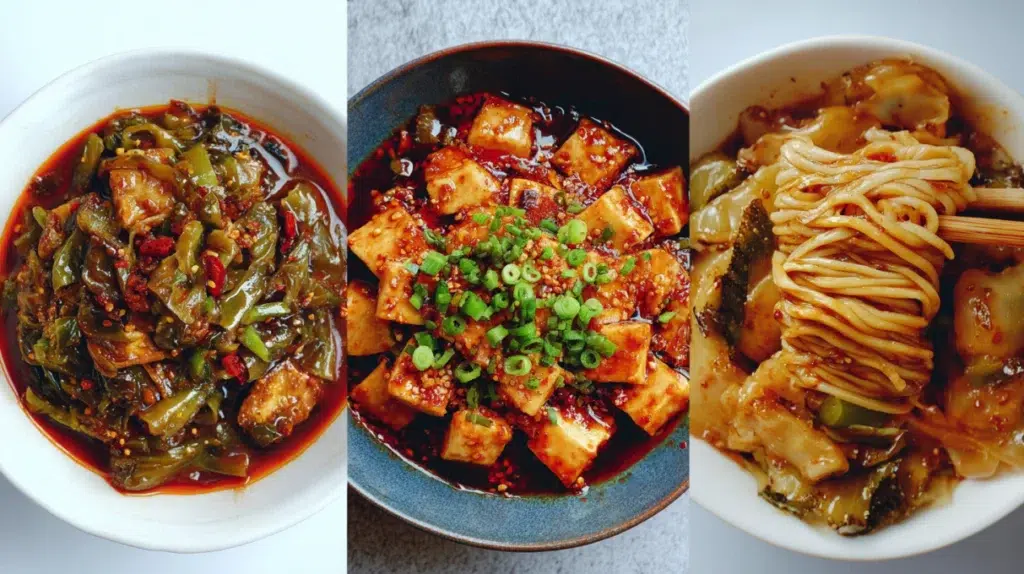
Sichuan recipes are searched more than the cooking of any other single Chinese province and the reason is the ma la.
Ma la (麻辣), numbing spicy is the defining sensory experience of Sichuan cooking. The tingling, electric numbness that Sichuan peppercorns produce on the tongue and lips changes how every other flavor in the dish is experienced. Chili heat arrives differently when the mouth is already slightly numbed. Savory depth cuts through differently. Sweetness registers differently. Ma la is not just a flavor, it is a different state of the palate, and cooking that uses it well is genuinely unlike anything else in the world.
Chuan cuisine, the cooking of Sichuan province is known for being very spicy and pungent, featuring a flavor profile called ma la that combines peppercorns numbing the mouth with spicy chilis. This combination has made Sichuan cooking one of the most internationally famous regional cuisines in the world and the most searched Chinese regional food by a significant margin.
This is part of the Chinese recipes collection. The Chinese pantry article covers every Sichuan ingredient in detail. This article covers the dishes.
Table of Contents
Why Sichuan Food Tastes the Way It Does
Sichuan province, called Tianfu Zhi Guo, “Heaven on Earth,” by the Chinese, sits in the upper Yangtze River valley with a mild, humid climate and fertile basin that produces the extraordinary agricultural wealth behind its cuisine. The Sichuan Basin is surrounded on all sides by mountain ranges that historically made the province geographically isolated, difficult to enter, difficult to leave. This isolation produced a culture and a food tradition that developed independently, intensely, and with remarkable self-confidence.
The bold, aggressive flavors of Sichuan cooking are not accidental, they are a response to the province’s warm, damp climate, where strong, pungent flavors were traditionally believed to help the body regulate against humidity. Garlic, ginger, chili and Sichuan peppercorn, the four aromatics of Sichuan cooking, all generate internal warmth. The combination, in generous quantities, produces a cuisine that is not merely spicy but fully dimensional: simultaneously numbing, hot, savory, sour, sweet and fragrant in a single mouthful.
Chili peppers arrived in Sichuan from the Americas via trade routes in the 17th century. Within 200 years they had become so fundamental to Sichuan cooking that it is impossible to imagine the cuisine without them, a speed of adoption that reflects how naturally the chili’s heat complemented the existing numbing tradition of Sichuan peppercorns. The combination of a pre-existing numbing spice and a newly arrived heat spice produced ma la and ma la produced the food culture we have now.
The Five Flavors of Sichuan Cooking
Sichuan cooking is traditionally described as having five essential flavor profiles, not all dishes use all five, but understanding them gives you the vocabulary to understand what any Sichuan dish is trying to achieve.
Ma la (麻辣), Numbing spicy: The most famous. Sichuan peppercorns plus chili, mapo tofu, kung pao chicken, Sichuan hotpot, dry-fried green beans.
Gan la (干辣), Purely spicy: Chili heat without the numbing used when the goal is direct, clean heat rather than the ma la combination. Chili oil dressed cold noodles, spicy wontons.
Jiao ma (椒麻), Pepper and numbing: Sichuan peppercorn without prominent chili, fragrant, tingling, deeply aromatic. Used in cold dishes and some stir-fries.
Yu xiang (鱼香), Fish-fragrant: No fish involved. A specific sauce profile using doubanjiang, ginger, garlic, vinegar and sugar that produces a flavor described as “fish-fragrant”, sweet, sour, savory and spicy simultaneously. Fish-fragrant eggplant (yu xiang qiezi), fish-fragrant shredded pork.
Guai wei (怪味), Strange flavor: Literally “strange” or “odd”, a complex combination of sweet, sour, spicy, numbing, savory and sesame simultaneously. Used in cold noodles and cold chicken dishes.
The Essential Sichuan Pantry
Before the recipes, three ingredients that are non-negotiable for real Sichuan cooking at home:
Pixian doubanjiang, fermented broad bean and chili paste from Pixian county. The heart and soul of Sichuan cooking. No substitute.
Sichuan peppercorns, whole, toasted before use. Without them, you are making spicy Chinese food, not Sichuan food. Available on Amazon if not locally.
Chili oil (辣椒油), made by pouring hot oil over dried chili flakes, often with Sichuan peppercorns and aromatics. Used as a finishing oil and dressing throughout Sichuan cooking. Buy Lao Gan Ma brand (available everywhere) or make your own.
Full ingredient details and brand recommendations are in the Chinese pantry guide.
Recipe 1: Mapo Tofu (麻婆豆腐)
Mapo tofu is the dish that best captures Sichuan cooking’s specific genius: a deeply savory, spicy, numbing sauce of pork mince, doubanjiang, fermented black beans, ginger and garlic, carrying silken tofu that absorbs the sauce completely while remaining impossibly tender. The contrast between the assertive sauce and the delicate tofu is the entire dish, and it is extraordinary.
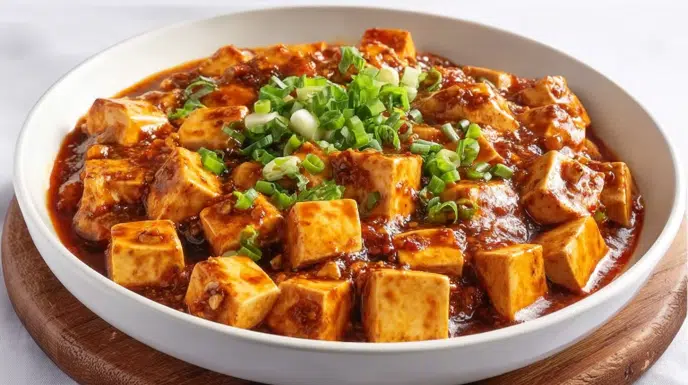
The name comes from a pockmarked (ma) old woman (po) who supposedly invented the dish at her restaurant in Chengdu in the 19th century. Whether true or not, the story is entirely believable, this is exactly the kind of dish that would be invented by someone who had been cooking in Chengdu for decades and understood exactly what the combination of doubanjiang and silken tofu could produce.
Ingredients (serves 4 as part of a shared meal)
- 400g (14 oz) silken tofu, firm silken, not extra-firm. The texture must be delicate. Cut into 2.5cm cubes.
- 200g (7 oz) ground pork, not lean. Fat is essential to the sauce’s richness.
- 2 tablespoons Pixian doubanjiang, the defining ingredient. Do not reduce.
- 1 tablespoon fermented black beans (douchi), roughly chopped
- 4 cloves garlic, minced
- 1 thumb fresh ginger, minced
- 300ml (1¼ cups) chicken stock, warm
- 1 tablespoon light soy sauce
- 1 teaspoon dark soy sauce
- 1 teaspoon sugar
- 2 teaspoons Sichuan peppercorns, toasted and ground. Applied at the end.
- 2 tablespoons vegetable oil
- 2 teaspoons cornstarch dissolved in 3 tablespoons cold water, for thickening
- 2 spring onions, green parts only, sliced, for garnish
- Chili oil to finish
Method:
Heat oil in a wok over medium-high heat. Add the ground pork, breaking it apart, and cook until fully browned with some crispy edges, 3-4 minutes. Push to one side.
Add the doubanjiang to the empty side of the wok. Fry for 60-90 seconds, stirring constantly, until the paste darkens slightly and the oil turns a deep red-orange. This frying step is essential, it blooms the doubanjiang’s flavors and colors the entire dish.
Add the fermented black beans, garlic and ginger. Stir everything together and cook 30 seconds until fragrant.
Pour in the warm chicken stock. Add light soy, dark soy and sugar. Stir to combine. Bring to a gentle simmer.
Carefully slide the tofu cubes into the simmering sauce. Do not stir, use a gentle rocking motion or carefully spoon sauce over the tofu to avoid breaking the cubes. Simmer 3-4 minutes until the tofu is heated through and has absorbed the color of the sauce.
Pour the cornstarch slurry around the edge of the wok in a thin stream, gently stirring the sauce (not the tofu) to incorporate. The sauce will thicken in 30 seconds to a glossy, coating consistency.
Taste. Adjust with more soy for saltiness, more doubanjiang for heat and depth, a drop of rice vinegar if it needs brightness.
Remove from heat. Scatter the ground toasted Sichuan peppercorns over the top. Drizzle chili oil. Scatter spring onion greens. Serve immediately over steamed rice, the sauce and rice together are the meal.
Recipe 2: Dan Dan Noodles (担担面)
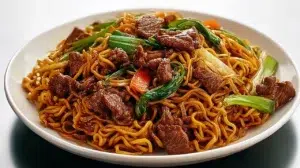
Dan dan noodles are the street food of Chengdu, named for the “dan dan” carrying poles that street vendors used to transport their noodle stations through the city. A portion of thin wheat noodles under a sauce of sesame paste, chili oil, Sichuan peppercorns, soy sauce and vinegar, topped with a small amount of spiced pork mince and preserved vegetables. Cold, or barely warm. Eaten fast, standing up, in a paper bowl.
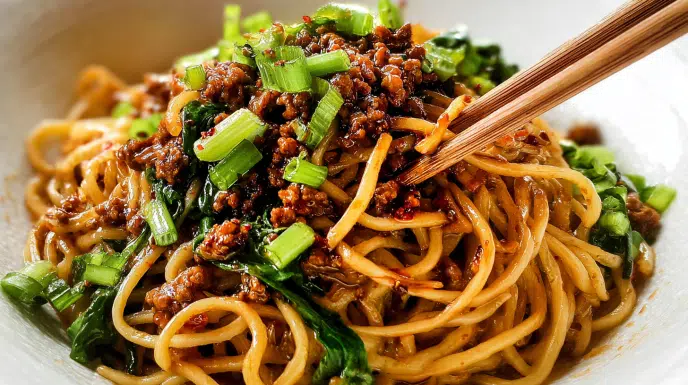
The sauce is the entire dish, the noodles are just the vehicle.
Ingredients (serves 2)
For the sauce (mix in a bowl):
- 2 tablespoons sesame paste (Chinese sesame paste or tahini, tahini works, Chinese sesame paste is better)
- 1 tablespoon chili oil, more to taste
- 1 tablespoon light soy sauce
- 1 tablespoon Chinese black vinegar (Chinkiang)
- 1 teaspoon sugar
- 1 teaspoon toasted Sichuan peppercorns, ground
- 2 tablespoons warm noodle cooking water, loosens the sauce to the right consistency
For the pork topping:
- 150g (5 oz) ground pork
- 1 tablespoon doubanjiang
- 1 tablespoon soy sauce
- 1 teaspoon Shaoxing rice wine
- 2 tablespoons ya cai (Yibin preserved vegetables), available at Chinese grocery stores. This specific ingredient adds the salty, slightly tangy crunch that defines authentic dan dan noodles. Substitute: finely chopped kimchi, squeezed dry.
For the noodles:
- 200g (7 oz) thin Chinese wheat noodles, the thinner the better for this dish
Method:
Cook the pork in a dry wok over medium-high heat, breaking apart until fully crowned and crispy. Add doubanjiang and cook 30 seconds. Add soy sauce, Shaoxing wine and ya cai. Stir and cook 1 minute. Set aside.
Cook noodles according to packet instructions. Reserve 4 tablespoons of the cooking water before draining.
Add 2 tablespoons of the noodle cooking water to the sauce mixture. Stir vigorously until smooth and pourable.
Drain noodles. Divide between 2 bowls. Pour the sauce over each portion. Top with the pork mixture. Add more chili oil, ground Sichuan peppercorn and a handful of sliced spring onions. Toss just before eating.
Recipe 3: Fish-Fragrant Eggplant (鱼香茄子, Yu Xiang Qiezi)
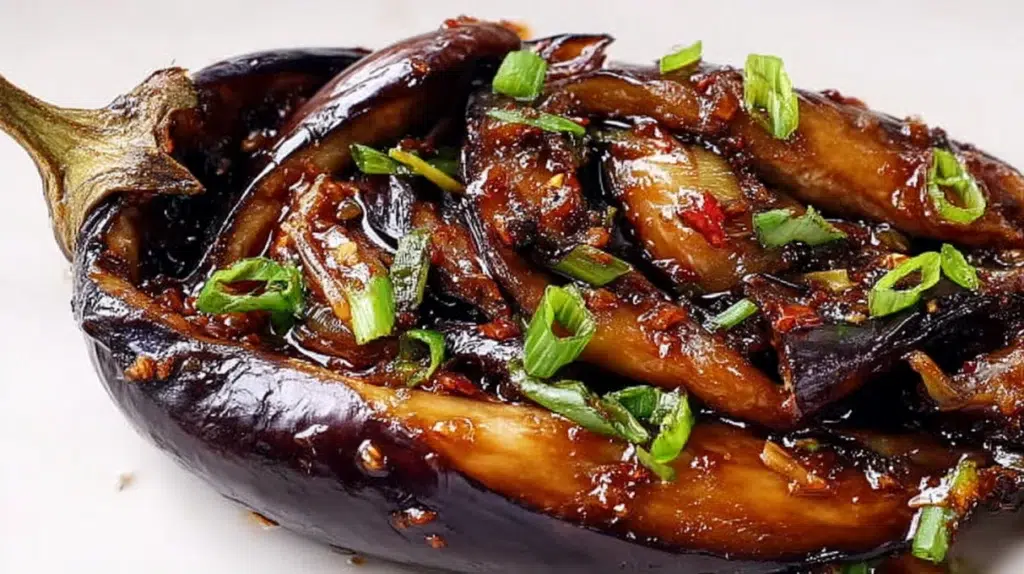
Fish-fragrant eggplant contains no fish. The “fish-fragrant” (yu xiang) refers to a specific sauce profile, doubanjiang, ginger, garlic, vinegar, sugar and soy sauce, historically used to cook fish in Sichuan but now applied to other ingredients for its sweet-sour-spicy-savory complexity. Applied to eggplant, which absorbs flavor like a sponge, the result is extraordinary, deeply flavored, silky-textured eggplant in a sauce that has real complexity and balance.
Ingredients (serves 4)
- 3 medium Chinese eggplants (the long, thin variety, absorb less oil and have fewer seeds than globe eggplant)
- 150g (5 oz) ground pork, or omit for vegetarian
- 1 tablespoon Pixian doubanjiang
- 4 cloves garlic, minced
- 1 thumb fresh ginger, minced
- 3 spring onions, white parts for cooking, green parts for garnish
For the fish-fragrant sauce (mix together):
- 1 tablespoon light soy sauce
- 1 tablespoon Chinese black vinegar
- 1 tablespoon sugar
- 1 teaspoon Shaoxing rice wine
- 1 teaspoon cornstarch dissolved in 2 tablespoons water
Method:
Cut eggplant into 5cm batons. Salt generously and rest 20 minutes, this draws moisture and prevents excess oil absorption. Pat dry thoroughly.
Heat 3 tablespoons oil in a wok over high heat. Fry the eggplant in two batches until soft, slightly charred and collapsed, 4-5 minutes per batch. Remove. The eggplant should be very soft, almost silky. Set aside.
Add another tablespoon of oil. Fry the pork until browned. Add doubanjiang, fry 60 seconds until the oil turns red. Add garlic, ginger and spring onion whites, fry 30 seconds.
Return the eggplant to the wok. Pour in the fish-fragrant sauce. Toss gently to coat everything. Cook 1-2 minutes until the sauce thickens and clings to the eggplant. Scatter spring onion greens. Serve over rice.
Recipe 4: Twice-Cooked Pork (回锅肉, Hui Guo Rou)
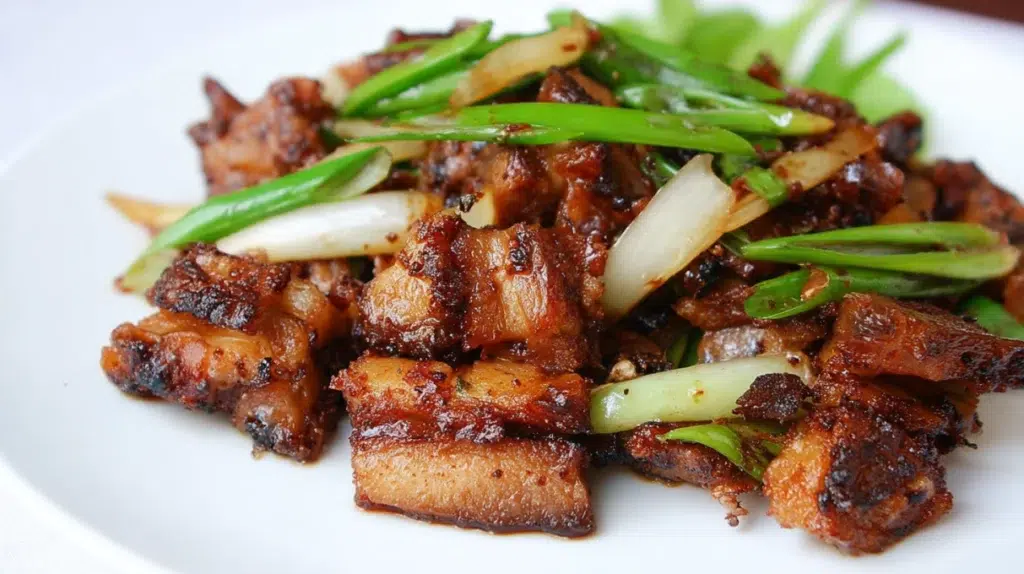
Twice-cooked pork is Sichuan’s great pork dish, and possibly its oldest. Pork belly is first boiled whole until tender, then sliced and returned to the wok to fry until the fat renders and the edges curl and caramelize. The combination of the boiled interior (tender, moist) and the fried exterior (slightly crispy, intensely savory) produces a texture that no single-cook method can replicate.
Ingredients (serves 4)
- 500g (1.1 lbs) skin-on pork belly, in one piece
- 2 tablespoons doubanjiang
- 1 tablespoon sweet bean paste (tianmianjiang) or hoisin sauce
- 1 tablespoon light soy sauce
- 1 teaspoon sugar
- 3 cloves garlic, sliced
- 1 thumb ginger, sliced
- 2 leeks or 4 spring onions, cut into 4cm lengths
- 1 green bell pepper, cut into rough chunks, traditional Sichuan addition
Method:
Simmer the pork belly whole in water with a few slices of ginger and a splash of Shaoxing wine for 30-35 minutes until just cooked through but still firm. Remove and cool completely, refrigerate 30 minutes for easier slicing. Slice into 5mm thick pieces.
Heat 1 tablespoon oil in a wok over high heat. Add the pork belly slices. Fry until the fat begins to render and the edges curl slightly, 2-3 minutes. The rendered fat from the pork now coats the wok.
Add the doubanjiang and sweet bean paste. Stir to coat the pork and fry 60 seconds until everything is glazed and slightly caramelized. Add garlic and fry 20 seconds. Add the leeks and green pepper. Toss over high heat 1-2 minutes until just tender but still with bite. Add soy sauce and sugar. Toss once more and serve immediately over rice.
FAQ about Sichuan Recipes
Is mapo tofu vegetarian?
The traditional version uses ground pork and sometimes chicken stock, not vegetarian. A fully vegetarian version works well: replace pork with finely chopped king oyster mushrooms fried until golden, use vegetable stock, and ensure the doubanjiang brand has no meat additives. The result is excellent.
What is the correct heat level for Sichuan cooking?
This is personal. The recipes here use moderate amounts of doubanjiang and chili oil, noticeable heat but not incapacitating. Increase or decrease doubanjiang and chili oil to suit. The Sichuan peppercorn amount should stay consistent regardless of heat level, its function is the ma sensation, not heat.
Where do I start if I’ve never cooked Sichuan food before?
Dan dan noodles. The sauce comes together in a bowl before anything cooks. The pork topping takes 5 minutes. The noodles take 3. The total time is under 20 minutes and the result is genuinely extraordinary. Once you have made dan dan noodles, mapo tofu is the obvious next step.
Can I make Sichuan dishes less oily?
Sichuan cooking uses more oil than most other Chinese traditions, the oil carries flavor and is part of the texture. Reducing oil significantly changes the character of the dish. A better approach: use the amount of oil called for, serve with plain steamed rice which balances the richness, and eat smaller portions of the Sichuan dish with more rice alongside.
Planning your week? Add mapo tofu to your weekly meal planner, it cooks in under 20 minutes and tastes better the next day reheated over rice.
More From the Chinese Recipes Collection: